
Historical sources on the Second Red Scare
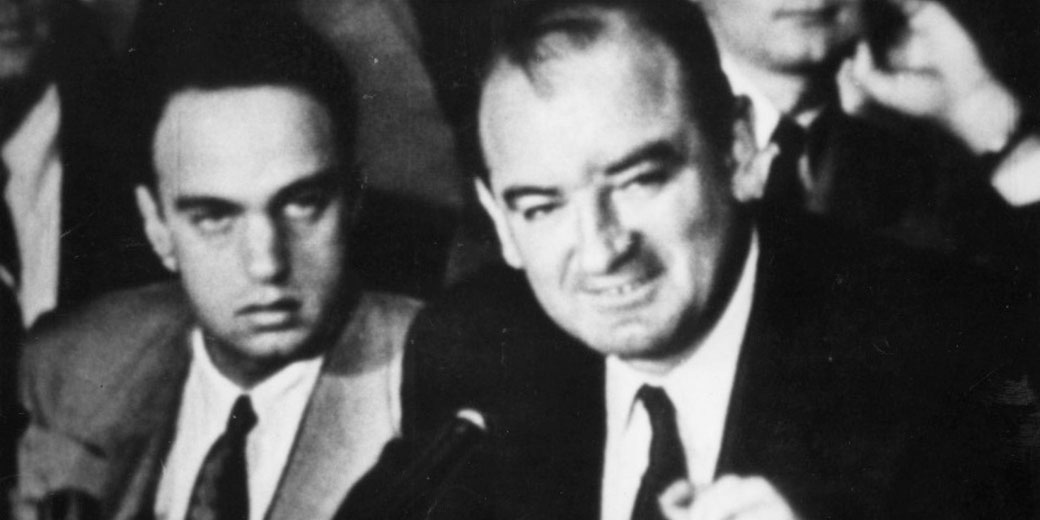
In the years that followed the Second World War, fear of communist influence became a powerful force in American political life.
Many leaders in the United States believed that agents of the Soviet Union had infiltrated government departments, labour unions, universities, and cultural institutions.
As tensions with the Soviet Union intensified during the early Cold War, these suspicions produced a period that historians now call the Second Red Scare.
The following sources examine key documents, statements, and events from this period, including President Harry S. Truman’s loyalty order, testimony from FBI Director J. Edgar Hoover, the sentencing of the Rosenbergs, the investigations led by Senator Joseph McCarthy, and the eventual Senate condemnation of McCarthy’s conduct in 1954.
Source 1
PRESCRIBING PROCEDURES FOR THE ADMINISTRATION OF AN EMPLOYEES LOYALTY PROGRAM IN THE EXECUTIVE BRANCH OF THE GOVERNMENT
WHEREAS each employee of the Government of the United States is endowed with a measure of trusteeship over the democratic processes which are at the heart and sinew of the United States; and WHEREAS it is of vital importance that persons employed in the Federal service be of complete and unswerving loyalty to the United States; and WHEREAS, although the loyalty of by far the overwhelming majority of all Government employees is beyond question, the presence within the Government service of any disloyal or subversive person constitutes a threat to our democratic processes; and WHEREAS maximum protection must be afforded the United States against infiltration of disloyal persons into the ranks of its employees, and equal protection from unfounded accusations of disloyalty must be afforded the loyal employees of the Government: NOW, THEREFORE, by virtue of the authority vested in me by the Constitution and statutes of the United States, including the Civil Service Act of 1883 (22 Stat. 403), as amended, and section 9A of the act approved August 2, 1939 (18 U.S.C. 61i), and as President and Chief Executive of the United States, it is hereby, in the interest of the internal management of the Government, ordered as follows:...
[Part V — Standards for disloyalty determination]
The standard for the refusal of employment or the removal from employment in an executive department or agency on grounds relating to loyalty shall be that, on all the evidence, reasonable grounds exist for belief that the person involved is disloyal to the Government of the United States.
Contextual statement:
Harry S. Truman was the 33rd President of the United States, serving from 1945 to 1953. He signed Executive Order 9835 on 21 March 1947, establishing the Federal Employees Loyalty Program as a response to growing fears about communist infiltration of the U.S. government. The order was published in the Federal Register (Volume 12, p. 1935) and is held in the records of the Harry S. Truman Presidential Library.
Bibliographical reference:
Truman, H. S. (1947, March 21). Executive Order 9835 — Prescribing procedures for the administration of an employees loyalty program in the executive branch of the Government. 12 Federal Register 1935. Available from the Harry S. Truman Presidential Library: https://www.trumanlibrary.gov/library/executive-orders/9835/executive-order-9835
Copyright: Public domain
Source 2
“The aims and responsibilities of the House Committee on un-American Activities and the Federal Bureau of Investigation are the same–the protection of the internal security of this nation. The methods whereby this goal may be accomplished differ, however...
The FBI is essentially an investigative agency. It is our duty to get the facts. We do not establish policies–that is the responsibility of higher authority. We do not make decisions as to prosecutions–that is the responsibility of the attorney general, his assistants, and the various United States attorneys...
The communist movement in the United States began to manifest itself in 1919. Since then it has changed its name and its party line whenever expedient and tactical. But always it comes back to fundamentals and bills itself as the party of "Marxism-Leninism." As such, it stands for the destruction of our American form of government; it stands for the destruction of American Democracy; it stands for the destruction of free enterprise; and it stands for the creation of a "Soviet of the United States" and ultimate world revolution.
What is important is the claims of communists themselves that for every party member there are ten others ready, willing, and able to do the party's work. Herein lays the greatest menace of communism. For there are the people who infiltrate and corrupt various spheres of American life. So rather than the size of the Communist Party, the way to weigh its true importance is by testing its influence, its ability to infiltrate.”
Contextual statement:
J. Edgar Hoover served as Director of the Federal Bureau of Investigation from 1924 until his death in 1972, making him the longest-serving FBI director in American history. He delivered this testimony on 26 March 1947 before the House Committee on Un-American Activities during hearings on bills to curb or outlaw the Communist Party. The testimony was published by the U.S. Government Printing Office as part of the official hearing transcript of the 80th Congress, 1st Session.
Bibliographical reference:
Hoover, J. E. (1947, March 26). Testimony before the House Committee on Un-American Activities. In Bills to curb or outlaw the Communist Party of the United States: Hearings before the Committee on Un-American Activities, House of Representatives, 80th Congress, 1st session (Part 2, pp. 33–50). U.S. Government Printing Office.
Copyright: Public domain.
Source 3
I consider your crime worse than murder. Plain deliberate contemplated murder is dwarfed in magnitude by comparison with the crime you have committed. In committing the act of murder, the criminal kills only his victim. The immediate family is brought to grief and when justice is meted out the chapter is closed. But in your case, I believe your conduct in putting into the hands of the Russians the A-bomb years before our best scientists predicted Russia would perfect the bomb has already caused, in my opinion, the Communist aggression in Korea, with the resultant casualties exceeding 50,000 and who knows but that millions more of innocent people may pay the price of your treason. Indeed, by your betrayal you undoubtedly have altered the course of history to the disadvantage of our country.
Contextual statement:
Irving R. Kaufman was a federal judge in the U.S. District Court for the Southern District of New York who presided over the espionage trial of Julius and Ethel Rosenberg. He delivered this sentencing statement on 5 April 1951 when he condemned both defendants to death for conspiracy to transmit atomic secrets to the Soviet Union. The Rosenbergs were executed at Sing Sing Prison on 19 June 1953.
Bibliographical reference:
Kaufman, I. R. (1951, April 5). Sentencing statement. United States v. Julius Rosenberg, Ethel Rosenberg, and Morton Sobell, U.S. District Court for the Southern District of New York.
Copyright: Public domain.
Source 4
Resolved, That the Senator from Wisconsin, Mr. McCarthy, failed to cooperate with the Subcommittee on Privileges and Elections of the Senate Committee on Rules and Administration in clearing up matters referred to that subcommittee which concerned his conduct as a Senator and affected the honor of the Senate and, instead, repeatedly abused the subcommittee and its members who were trying to carry out assigned duties, thereby obstructing the constitutional processes of the Senate, and that this conduct of the Senator from Wisconsin, Mr. McCarthy, is contrary to senatorial traditions and is hereby condemned.
Contextual statement:
The United States Senate passed Resolution 301 on 2 December 1954 by a vote of 67 to 22, formally condemning Senator Joseph R. McCarthy of Wisconsin for conduct contrary to senatorial traditions. McCarthy had risen to national prominence in February 1950 when he claimed to hold a list of communists working in the State Department, and he spent four years conducting aggressive investigations into alleged communist infiltration of the U.S. government.
APA Reference:
U.S. Senate. (1954, December 2). Senate Resolution 301, 83rd Congress, 2nd Session. Records of the United States Senate, Record Group 46, SEN 83A-B4. National Archives. https://www.archives.gov/milestone-documents/censure-of-senator-joseph-mccarthy
Copyright: Public domain
Source 5
Resolved, That the Speaker of the House of Representatives be, and he is hereby, authorized to appoint a special committee to be composed of seven Members for the purpose of conducting an investigation of (1) the extent, character, and objects of Nazi propaganda activities in the United States, (2) the diffusion within the United States of subversive propaganda that is instigated from foreign countries and attacks the principle of the form of government as guaranteed by our Constitution, and (3) all other questions in relation thereto that would aid Congress in any necessary remedial legislation.
[The committee's final report (House Report No. 153, 74th Congress, 1935) stated: "To the true and real American, communism, naziism, and fascism are all equally dangerous, equally alien and equally unacceptable to American institutions."]
Contextual statement:
The U.S. House of Representatives passed this resolution on 20 March 1934 to create a special investigative committee chaired by Representatives John W. McCormack and Samuel Dickstein. The McCormack-Dickstein Committee was tasked specifically with investigating Nazi propaganda activities in the United States, and it is the direct predecessor of what became the House Un-American Activities Committee (HUAC). The resolution was recorded in Volume 78 of the Congressional Record at page 4934.
Bibliographical reference:
U.S. House of Representatives. (1934, March 20). House Resolution 198, 73rd Congress. 78 Congressional Record 4934.
Copyright: Public domain
Source 6
Resolved, That the Speaker of the House of Representatives be, and he is hereby, authorized to appoint a special committee to be composed of seven members for the purpose of conducting an investigation of (1) the extent, character, and object of un-American propaganda activities in the United States, (2) the diffusion within the United States of subversive and un-American propaganda that is instigated from foreign countries or of a domestic origin and attacks the principle of the form of government as guaranteed by the Constitution, and (3) all other questions in relation thereto that would aid Congress in any necessary remedial legislation.
Contextual statement:
This resolution, passed on 26 May 1938, created the Special Committee on Un-American Activities chaired by Representative Martin Dies Jr. of Texas, commonly known as the Dies Committee. It replaced the specific reference to "Nazi propaganda" found in the 1934 resolution with the broader term "un-American propaganda activities," giving the committee a wider mandate that increasingly turned toward investigating communist organisations. The Dies Committee became a permanent standing committee of the House of Representatives in 1946 under the name HUAC.
APA Reference:
U.S. House of Representatives. (1938, May 26). House Resolution 282, 75th Congress. Finding aid available at: https://historycms.house.gov/Records-and-Research/Finding-Aids/Special-PIs/Records-of-the-Special-Committee-on-Un-American-Activities,-1938-1944-(The-Dies-Committee)/
Copyright: Public domain
Source 7
Senator Joseph R. McCarthy was a little-known junior senator from Wisconsin until February 1950 when he claimed to possess a list of 205 card-carrying Communists employed in the U.S. Department of State. From that moment Senator McCarthy became a tireless crusader against Communism in the early 1950s, a period that has been commonly referred to as the "Red Scare." As chairman of the Senate Permanent Investigation Subcommittee, Senator McCarthy conducted hearings on communist subversion in America and investigated alleged communist infiltration of the Armed Forces. His subsequent exile from politics coincided with a conversion of his name into a modern English noun "McCarthyism," or adjective, "McCarthy tactics," when describing similar witch hunts in recent American history. McCarthy was censured by the U.S. Senate on December 2, 1954 and died May 2, 1957.
Contextual statement:
This historical overview was published by the Eisenhower Presidential Library, which is a federal institution operated by the National Archives and Records Administration (NARA) in Abilene, Kansas. The Library preserves and provides access to the records of the Eisenhower presidency (1953–1961), a period that overlapped directly with the height of McCarthyism and the Red Scare. The overview was written by NARA staff as an educational resource to accompany the Library's primary source document collections on this topic.
Bibliographical Reference:
Eisenhower Presidential Library, National Archives and Records Administration. (n.d.). McCarthyism / The "Red Scare." https://www.eisenhowerlibrary.gov/research/online-documents/mccarthyism-red-scare
Copyright: Public domain