
Historical sources on the Roaring Twenties
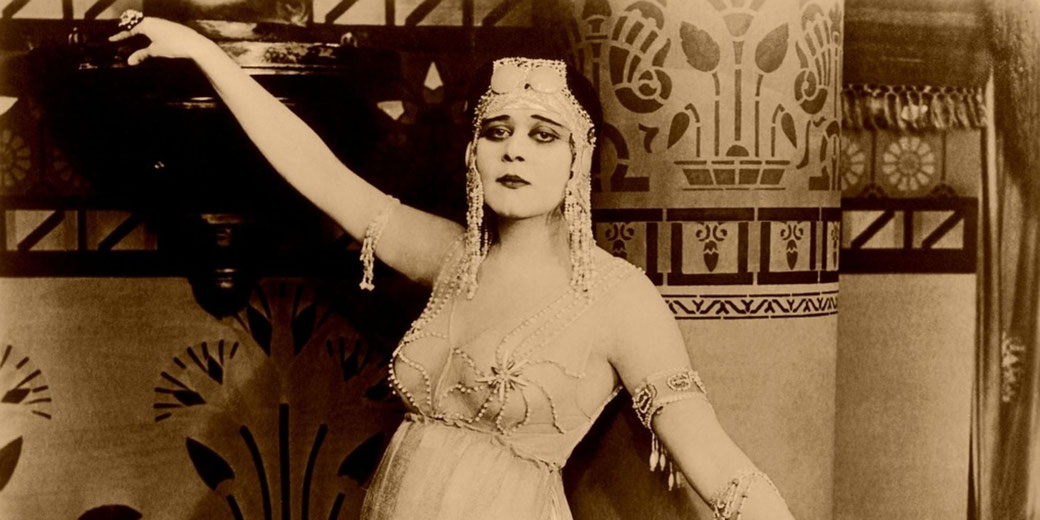
During the 1920s, the United States experienced a period of rapid economic growth, cultural change, and social tension, often described as the 'Roaring Twenties'.
The following sources present a range of perspectives from this decade, including political speeches, cultural commentary, economic analysis, and personal reflections.
Together, they highlight key features of the era such as industrial expansion, mass production, new consumer habits, the spread of jazz music, changing roles for women, and the impact of Prohibition.
Source 1
Extract A
“No Congress of the United States ever assembled, on surveying the state of the Union, has met with a more pleasing prospect than that which appears at the present time. In the domestic field there is tranquility and contentment, harmonious relations between management and wage earner, freedom from industrial strife, and the highest record of years of prosperity. In the foreign field there is peace, the good will which comes from mutual understanding, and the knowledge that the problems which a short time ago appeared so ominous are yielding to the touch of manifest friendship. The great wealth created by our enterprise and industry, and saved by our economy, has had the widest distribution among our own people, and has gone out in a steady stream to serve the charity and the business of the world. The requirements of existence have passed beyond the standard of necessity into the region of luxury.”
Extract B
“The practical application of economy to the resources of the country calls for conservation. This does not mean that every resource should not be developed to its full degree, but it means that none of them should be wasted. We have a conservation board working on our oil problem. This is of the utmost importance to the future well-being of our people in this age of oil-burning engines and the general application of gasoline to transportation. The Secretary of the Interior should not be compelled to lease oil lands of the Osage Indians when the market is depressed and the future supply is in jeopardy. While the area of lands remaining in public ownership is small, compared with the vast area in private ownership, the natural resources of those in public ownership are of immense present and future value. This is particularly true as to minerals and water power.”
Contextual information:
Calvin Coolidge was the 30th President of the United States from 1923 to 1929. He delivered this annual message (equivalent to the modern State of the Union address) to Congress on 4 December 1928, at the height of the economic prosperity of the 1920s. The address surveyed the condition of the nation across domestic and foreign affairs.
Bibliographical reference:
Coolidge, C. (1928, December 4). Sixth annual message to the Congress of the United States. Congressional Record, 70th Cong., 2d Sess. U.S. Government Printing Office. https://www.presidency.ucsb.edu/documents/sixth-annual-message-5
Copyright: This is a work of the President of the United States in his official capacity and is in the public domain under 17 U.S.C. § 105.
Source 2
Extract A
“JAZZ is upon us everywhere. To deny the fact is to assume the classic ostrich pose, head buried in the sand, tail-feathers to the sun. To shout alarm hysterically from the housetops, is to exhibit over-confidence in clamorous indignation as a purifier of morals, if it be not wholly to ignore historic precedent.”
Extract B
“Good jazz is a composite, the happy union of seemingly incompatible elements. Good jazz is the latest phase of American popular music. It is the upshot of a transformation which started some twenty years ago, and culminated in something unique, unmatched in any other part of the world.”
Contextual information:
Carl Engel (1883–1944) was a German-born American musicologist who later became Chief of the Music Division at the Library of Congress. He wrote this article for The Atlantic Monthly in August 1922, at a time when jazz music was spreading rapidly across the United States and generating considerable public debate about its cultural value.
Bibliographical reference:
Engel, C. (1922). Jazz: A musical discussion. The Atlantic Monthly, 130(2), 182–189.
Copyright: Public domain.
Source 3
Extract A
“We build our cars absolutely interchangeable. All parts are as nearly alike as chemical analysis, the finest machinery, and the finest workmanship can make them. No fitting of any kind is required, and it would certainly seem that two Fords standing side by side, looking exactly alike and made so exactly alike that any part could be taken out of one and put into the other, would be alike.”
Extract B
“Our big changes have been in methods of manufacturing. They never stand still. I believe that there is hardly a single operation in the making of our car that is the same as when we made our first car of the present model. That is why we make them so cheaply. The few changes that have been made in the car have been in the direction of convenience in use or where we found that a change in design might give added strength.”
Extract C
“The place to start manufacturing is with the article. The factory, the organization, the selling, and the financial plans will shape themselves to the article. You will have a cutting edge on your business chisel and in the end you will save time. Rushing into manufacturing without being certain of the product is the unrecognized cause of many business failures. People seem to think that the big thing is the factory or the store or the financial backing or the management. The big thing is the product, and any hurry in getting into fabrication before designs are completed is just so much waste time. I spent twelve years before I had a Model T—which is what is known to-day as the Ford car—that suited me. We did not attempt to go into real production until we had a real product.”
Extract D
“Manufacturing is not buying low and selling high. It is the process of buying materials fairly and, with the smallest possible addition of cost, transforming those materials into a consumable product and giving it to the consumer. Gambling, speculating, and sharp dealing, tend only to clog this progression.”
Contextual information:
Henry Ford (1863–1947) was the founder of the Ford Motor Company and the person most closely associated with the development of mass production in the automotive industry. He wrote this book in collaboration with journalist Samuel Crowther, and it was published in 1922. By that date, the Ford Motor Company had already produced over five million Model T cars.
Bibliographical reference:
Ford, H., & Crowther, S. (1922). My life and work (Introduction, pp. 1–25; Chapter IV). Doubleday, Page & Company.
Copyright: Public domain.
Source 4
Extract A (Eighteenth Amendment, Section 1)
“After one year from the ratification of this article the manufacture, sale, or transportation of intoxicating liquors within, the importation thereof into, or the exportation thereof from the United States and all territory subject to the jurisdiction thereof for beverage purposes is hereby prohibited.”
Extract B (National Prohibition Act, Title II, Section 3)
“No person shall on or after the date when the eighteenth amendment to the Constitution of the United States goes into effect, manufacture, sell, barter, transport, import, export, deliver, furnish or possess any intoxicating liquor except as authorized in this Act, and all the provisions of this Act shall be liberally construed to the end that the use of intoxicating liquor as a beverage may be prevented.”
Contextual information:
The Eighteenth Amendment to the United States Constitution was ratified on 16 January 1919 and came into effect on 17 January 1920. The National Prohibition Act (commonly called the Volstead Act, after its sponsor, Congressman Andrew Volstead of Minnesota) was passed by Congress on 28 October 1919 to provide the enforcement mechanism for the amendment. Together, these two legal instruments created the era of Prohibition in the United States.
Bibliographical reference:
U.S. Const. amend. XVIII (1919); National Prohibition Act, Pub. L. No. 66-66, tit. II, § 3, 41 Stat. 305, 308 (1919). Full text available at United States Statutes at Large, Vol. 41, pp. 305–323.
Copyright: These are works of the United States Government (a constitutional amendment and a federal statute) and are in the public domain under 17 U.S.C. § 105.
Source 5
“If one judges by appearances, I suppose I am a flapper. I am within the age limit. I wear bobbed hair, the badge of flapperhood. (And, oh, what a comfort it is!). I powder my nose. I wear fringed skirts and bright-colored sweaters, and scarfs, and waists with Peter Pan collars, and low-heeled “finale hopper” shoes. I adore to dance. I spend a large amount of time in automobiles. I attend hops, and proms, and ball-games, and crew races, and other affairs at men’s colleges. But none the less some of the most thoroughbred superflappers might blush to claim sistership or even remote relationship with such as I.”
Contextual information:
Ellen Welles Page was a nineteen-year-old American woman when she wrote this article for The Outlook, a progressive weekly magazine published in New York City. The article appeared on 6 December 1922 and offered a self-described flapper’s defence of the younger generation’s behaviour to the “older generation” of parents and teachers.
Bibliographical reference:
Page, E. W. (1922, December 6). A flapper’s appeal to parents. The Outlook, 132(14), 607.
Copyright: Public domain.
Source 6
Extract A
“The speakeasy is the successor of the saloon. It differs from the saloon only in that it is unlicensed and that the entrance is more or less guarded. In some neighborhoods the speakeasy is as open and notorious as the saloon ever was, and pays its tribute to the police and to the politicians for protection. In other localities it is fitted up in the back room of a soft-drink parlor, in a basement, in a flat above a store, or in any other place that affords the necessary concealment. Its patrons gain admission through some sign of recognition, a password, or by being known to the doorkeeper.”
Extract B
“The leader of one of the most powerful gangs in Chicago is Alphonse Capone, more commonly known as ‘Scarface Al’ Capone. He came to Chicago from Brooklyn, New York, in 1920, and entered the employ of John Torrio, then the chief lieutenant of ‘Big Jim’ Colosimo. After the assassination of Colosimo in May, 1920, Torrio succeeded to the leadership of the Colosimo organization, and Capone rose with him. When Torrio retired from active leadership, after he had been shot and seriously wounded by gunmen of the rival O’Banion gang in January, 1925, Capone succeeded to the headship of the gang. Under his leadership the gang has expanded its operations to include the manufacture and sale of beer and liquor, the operation of gambling houses and houses of prostitution, the control of certain labor and business associations, and the protection of these enterprises through political influence and the corruption of public officials.”
Contextual information:
John Landesco (1890–1954) was an American sociologist at the University of Chicago who studied organised crime in the city. His study, “Organized Crime in Chicago,” formed Part III of the Illinois Crime Survey, a comprehensive investigation commissioned by the Illinois Association for Criminal Justice in cooperation with the Chicago Crime Commission. The survey was published in 1929.
Bibliographical reference:
Landesco, J. (1929). Organized crime in Chicago. In J. H. Wigmore (Ed.), The Illinois Crime Survey (Part III, pp. 817–1087). Illinois Association for Criminal Justice.
Copyright: Public domain.
Source 7
“The development of instalment selling in the United States during the past decade has been one of the most significant phenomena in the field of distribution. From a device originally employed only for the sale of relatively expensive durable goods such as pianos, sewing machines and household furniture, the instalment plan has spread until it now embraces almost every type of consumers’ durable commodity, including automobiles, electrical appliances, radio receiving sets, washing machines, vacuum cleaners, mechanical refrigerators, phonographs and jewelry. The bulk of automobiles sold in the United States to-day is sold on the instalment plan.”
Contextual information:
Edwin Robert Anderson Seligman (1861–1939) was an American economist and professor of political economy at Columbia University. He was one of the most respected economists in the United States during the early twentieth century. This two-volume study, published by Harper & Brothers in 1927, was the standard academic treatment of the rapidly growing practice of instalment buying (also called hire-purchase) in 1920s America.
Bibliographical reference:
Seligman, E. R. A. (1927). The economics of instalment selling: A study in consumers’ credit, with special reference to the automobile (Vol. I, pp. 1–2). Harper & Brothers.
Copyright: Public domain.