
Historical sources on the rise of Napoleon
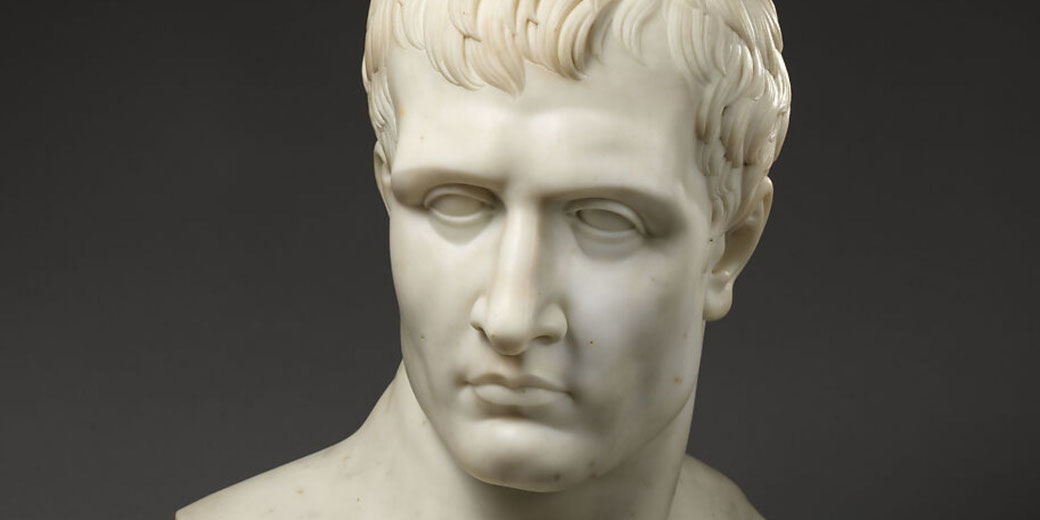
The following sources on Napoleon Bonaparte trace his early life in Corsica, his education, his military career, and the political changes that accompanied his rise to power during the French Revolution and its aftermath.
These extracts include memoirs written by close associates, official reports, later historical interpretations, and Napoleon’s own words, which together present differing perspectives on his character, abilities, and actions.
By working through these materials, you can examine how interpretations of Napoleon developed over time, assess the reliability and usefulness of each source, and build a more critical understanding of how historical narratives are constructed.
Source 1
Extract A
“NAPOLEON BONAPARTE was born at Ajaccio, in Corsica, on the 15th of August 1769; the original orthography of his name was Buonaparte, but he suppressed the [u] during his first campaign in Italy. His motives for so doing were merely to render the spelling conformable with the pronunciation, and to abridge his signature. He signed Buonaparte even after the famous 13th Vendemiaire.”
Extract B
“M. de Buonaparte (Napoleon), born 15th August 1769, height 4 feet 10 inches 10 lines, is in the fourth class, has a good constitution, excellent health, character obedient, upright, grateful, conduct very regular; has been always distinguished by his application to mathematics. He knows history and geography very passably. He is not well up in ornamental studies or in Latin in which he is only in the fourth class. He will be an excellent sailor. He deserves to be passed on to the Military School of Paris.”
Extract C
“General Bonaparte repeatedly applied for the erasure of my name, from the month of April 1797, when I rejoined him at Leoben, to the period of the signature of the treaty of Campo-Formio; but without success. He desired his brother Louis, Berthier, Bernadotte, and others, when he sent them to the Directory, to urge my erasure; but in vain. He complained of this inattention to his wishes to Bottot, when he came to Passeriano, after the 18th Fructidor. Bottot, who was secretary to Barras, was astonished that I was not erased, and he made fine promises of what he would do.”
Extract D
“The catastrophe of Aboukir came like a thunderbolt upon the General-in-Chief. In spite of all his energy and fortitude, he was deeply distressed by the disasters which now assailed him. To the painful feelings excited by the complaints and dejection of his companions in arms was now added the irreparable misfortune of the burning of our fleet. He measured the fatal consequences of this event at a single glance. We were now cut off from all communication with France, and all hope of returning thither, except by a degrading capitulation with an implacable and hated enemy.”
Extract E
“He and his two colleagues, who were Sieyes and Roger Ducos, signed, on the 5th Nivose, a decree, setting forth that in future the only festivals to be celebrated by the Republic were the 1st Vendemiaire and the 14th of July, intending by this means to consecrate provisionally the recollection of the foundation of the Republic and of liberty.”
Contextual information:
Louis de Bourrienne was a French diplomat and the personal secretary of Napoleon Bonaparte. He was a childhood schoolmate of Napoleon at Brienne and later worked at his side during several military campaigns. His memoirs were first published in 1829, drawing on his direct observation of Napoleon’s early life and career.
Bibliographical reference:
Bourrienne, L. A. F. de. (1885). Memoirs of Napoleon Bonaparte (R. W. Phipps, Ed.; Vol. 1, pp. 1, 11; Vol. 2, pp. 1–2, Vol. 3, p. 47; Vol. 4, p. 14). Richard Bentley and Son. (Original work published 1829).
Copyright: Public domain.
Source 2
“August 15th, 1769. Birth at Ajaccio. I was called Napoleon, that for centuries past had been the name given to the second son in our family.”
“April 26th, 1786, Valence: To-day Paoli enters his sixty-first year. The Corsicans have already, in a just cause, shaken off the yoke of the Genoese; they can do as much with that of the French. Amen!”
“October 30th, 1785. Second lieutenant of artillery, regiment of La Fere.”
Contextual information:
R. M. Johnston compiled Napoleon’s personal writings, including letters and diary entries, into a chronological record published in 1910. The entries above are Napoleon’s own words, written at the dates indicated. Johnston was a Canadian-born historian who held a position at Harvard University.
Bibliographical reference:
Bonaparte, N. (1910). The Corsican: A diary of Napoleon’s life in his own words (R. M. Johnston, Comp.; pp. 3, 5, 18). Houghton Mifflin Company.
Copyright: Public domain.
Source 3
“But the greatest of these national heroes was also the last — Pascal Paoli. Fitted for his task by birth, by capacity, by superior training, this youth was in 1755 made captain-general of the island, a virtual dictator in his twenty-ninth year. His success was as remarkable as his measures were wise. Elections were regulated so that strong organization was introduced into the loose democratic institutions which had hitherto prevented sufficient unity of action in troubled times. An army was created from the straggling bands of volunteers, and brigandage was suppressed. Wise laws were enacted and enforced — among them one which made the blood-avenger a murderer, instead of a hero as he had been. Moreover, the foundations of a university were laid in the town of Corte, which was the hearthstone of the liberals because it was the natural capital of the west slope, connected by difficult and defensible paths with every cape and bay and intervale of the rocky and broken coast. The Genoese were gradually driven from the interior, and finally they occupied but three harbor towns.”
“On May fifteenth, 1768, the price to be paid having been fixed, a definitive treaty with Genoa was signed whereby she yielded the exercise of sovereignty to France, and Corsica passed finally from her hands. Paoli appealed to the great powers against this arbitrary transfer, but in vain. The campaign of subjugation opened at once, Buttafuoco, with a few other Corsicans, taking service against his kinsfolk. The soldiers of the Royal Corsican regiment, which was in the French service, and which had been formed under his father’s influence, flatly refused to fight their brethren. The French troops already in the island were at once reinforced, but during the first year of the final conflict the advantage was all with the patriots; indeed, there was one substantial victory on October seventh, 1768, that of Borgo, which caused dismay at Versailles.”
Contextual information:
William Milligan Sloane was an American historian who held the Seth Low professorship of history at Columbia University. His four-volume Life of Napoleon Bonaparte was first published in 1896 and revised for a library edition in 1910. The extracts above cover the period of Corsican resistance against Genoese and then French control.
Bibliographical reference:
Sloane, W. M. (1910). The life of Napoleon Bonaparte (Rev. library ed., Vol. 1, pp. 14–15, 22). The Century Co.
Copyright: Public domain.
Source 4
“The altruistic enthusiasts of the National Assembly gave place to the practical politicians of the Convention, the diplomatists of the Directory, the generals of the Consulate. The Empire was far from realising that bright vision of a regenerate nation which had dazzled the eyes of Frenchmen in the first hours of the States-General. Liberty was sacrificed to efficiency; equality to man’s love for titles of honour; fraternity to desire of glory.”
Contextual information:
François Mignet was a French historian and journalist who was a close observer of the events of the French Revolution. His history was first published in Paris in 1824, making it one of the earliest historical surveys of the Revolution written after the events themselves. The passage above places the sequence of French governing bodies in chronological order.
Bibliographical reference:
Mignet, F. A. M. (1846). History of the French Revolution from 1789 to 1814 (R. M. Johnston, Intro.). G. Bell. (Original work published 1824).
Copyright: Public domain.
Source 5
“Notwithstanding the influence which the commandant of artillery had acquired, he found himself occasionally thwarted by the members of the Convention upon mission to the siege of Toulon, who latterly were Freron, Ricord, Salicetti, and the younger Robespierre. These representatives of the people, knowing that their commission gave them supreme power over generals and armies, never seem to have paused to consider whether nature or education had qualified them to exercise it, with advantage to the public and credit to themselves. They criticised Buonaparte’s plan of attack, finding it impossible to conceive how his operations, being directed against detached fortifications at a distance from Toulon, could be eventually the means of placing the town itself with facility in their hands. But Napoleon was patient and temporizing; and having the good opinion of Salicetti, and some intimacy with young Robespierre, he contrived to have the works conducted according to his own plan.”
Contextual information:
Sir Walter Scott was a Scottish novelist and poet who produced a nine-volume biography of Napoleon, published in 1827. Scott drew on published memoirs and official documents when writing this work. The extract above describes Napoleon’s role as commandant of the artillery at the Siege of Toulon in 1793, making his position in the chain of command clear.
Bibliographical reference:
Scott, W. (1827). Life of Napoleon Bonaparte (Vol. 2, Ch. 2). Longman, Rees, Orme, Brown and Green.
Copyright: Public domain.
Source 6
“Vanguard, off the Mouth of the Nile, 3 August 1798. My Lord, Almighty God has blessed his Majesty’s Arms in the late Battle, by a great Victory over the Fleet of the Enemy, who I attacked at sunset on the 1st of August, off the Mouth of the Nile. The Enemy were moored in a strong Line of Battle for defending the entrance of the Bay, (of Shoals,) flanked by numerous Gun-boats, four Frigates, and a Battery of Guns and Mortars on an Island in their Van; but nothing could withstand the Squadron your Lordship did me the honour to place under my command. Their high state of discipline is well known to you, and with the judgment of the Captains, together with their valour, and that of the Officers and Men of every description, it was absolutely irresistible. Could anything from my pen add to the character of the Captains, I would write it with pleasure, but that is impossible.”
Contextual information:
Admiral Horatio Nelson commanded the British squadron at the Battle of the Nile on 1 to 2 August 1798 and wrote this official dispatch two days after the action from his flagship HMS Vanguard. The dispatch was addressed to Admiral Lord St. Vincent, commander of the British Mediterranean Fleet. It is the primary British account of the battle that destroyed the French fleet during Napoleon’s Egyptian Expedition.
Bibliographical reference:
Nelson, H. (1845). Dispatch of 3 August 1798. In N. H. Nicolas (Ed.), The dispatches and letters of Vice Admiral Lord Viscount Nelson (Vol. 3, pp. 48–49). Henry Colburn.
Copyright: Public domain.