
Historical sources on pre-colonial Australia
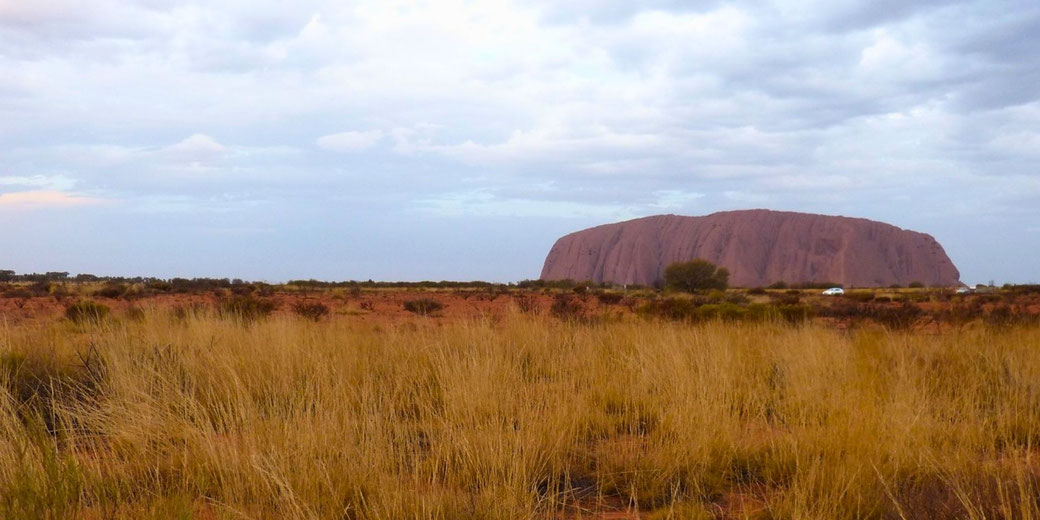
The sources below provide a valuable window into the lives, beliefs, social organisation, and environmental knowledge of Aboriginal peoples in Australia before European colonisation.
Drawn from the observations of explorers, colonial officials, anthropologists, and early settlers, these accounts show a wide range of Aboriginal experiences, from food gathering, trade, and movement across Country to spiritual beliefs, leadership structures, and land management through cultural burning.
Source 1
"To cultivation of the ground they are utter strangers, and wholly depend for food on the few fruits they gather; the roots they dig up in the swamps; and the fish they pick up along shore, or contrive to strike from their canoes with spears. Fishing, indeed, seems to engross nearly the whole of their time, probably from its forming the chief part of a subsistence, which, observation has convinced us, nothing short of the most painful labour, and unwearied assiduity [hard work and constant attention], can procure."
"The canoes in which they fish are as despicable [poorly made] as their huts [small shelters], being nothing more than a large piece of bark tied up at both ends with vines [thin plant stems used as rope]. A canoe is seldom seen without a fire in it, to dress [cook] the fish by, as soon as caught: fire they procure by attrition [rubbing sticks together]."
Contextual information:
Watkin Tench (c. 1758-1833) was a captain of the British Marines who arrived at Botany Bay with the First Fleet in January 1788, becoming one of the earliest European observers of the Eora and Cadigal peoples of the Port Jackson region. He wrote this account at Sydney Cove between January and July 1788, drawing on direct observation. His account is regarded as among the most accurate and detailed records of the Aboriginal peoples of the Sydney region at the time of first European contact.
Bibliographical reference:
Tench, W. (1789). A narrative of the expedition to Botany Bay: With an account of New South Wales, its productions, inhabitants, &c. (Chapter XI, pp. 57-58). J. Debrett.
Copyright: Public domain.
Source 2
"In habit they are truly nomadic [moving from place to place without a permanent home], seldom remaining many weeks in one locality, and frequently not many days. The number travelling together depends, in a great measure, upon the period of the year, and the description of food that may be in season. If there is any particular variety more abundant than another, or procurable only in certain localities, the whole tribe generally congregate [gather together] to partake of it. Should this not be the case, then they are probably scattered over their district in detached groups, or separate families."
"At certain seasons of the year, usually in the spring or summer, when food is most abundant, several tribes meet together in each other's territory for the purpose of festivity [celebration] or war, or to barter [trade goods] and exchange such food, clothing, implements [tools], weapons, or other commodities as they respectively possess; or to assist in the initiatory [entry] ceremonies by which young persons enter into the different grades of distinction amongst them."
"It is true that they do not cultivate the ground; but have they, therefore, no interest in its productions? Does it not supply grass for the sustenance of the wild animals upon which in a great measure they are dependent for their subsistence? -- does it not afford roots and vegetables to appease their hunger? -- water to satisfy their thirst, and wood to make their fire? ... Was it nothing that they were driven from the lands where their fathers lived, where they were born and which were endeared to them by associations equally strong with the associations of more civilised people?"
"Without entering upon the abstract question concerning the right of one race of people to wrest [forcibly take] from another their possessions, simply because they happen to be more powerful than the original inhabitants ... we have unhesitatingly entered upon, occupied, and disposed of its lands, spreading forth a new population over its surface, and driving before us the original inhabitants."
Contextual information:
Edward John Eyre (1815-1901) was a British explorer and colonial administrator who worked as Protector of Aborigines at the River Murray in South Australia between 1841 and 1844. He wrote this account drawing on over eight years of direct experience with Aboriginal communities across south-eastern Australia. These chapters were published as Volume II of his Journals in 1845 and offer one of the most detailed early European records of Aboriginal life.
Bibliographical reference:
Eyre, E. J. (1845). Journals of expeditions of discovery into central Australia and overland from Adelaide to King George's Sound in the years 1840-1: Including an account of the manners and customs of the Aborigines and the state of their relations with Europeans (Vol. II, Chapters II, III, pp. 155, 160, 171-172, 291-292). T. & W. Boone.
Copyright: Public domain.
Source 3
"EVERY individual of the tribes with which we are dealing is born into some totem [a natural object or animal that a person is spiritually connected to, often inherited through birth]--that is, he or she belongs to a group of persons each one of whom bears the name of, and is especially associated with, some natural object. The latter is usually an animal or plant; but in addition to those of living things, there are also such totem names as wind, sun, water, or cloud--in fact there is scarcely an object, animate or inanimate [living or non-living], to be found in the country occupied by the natives which does not give its name to some totemic group of individuals."
"Now not only must a Matthurie man take as wife a Kirarawa woman, but he must only take one of some particular totem. Thus a wild duck Matthurie man marries a snake Kirarawa woman, a cicada marries a crow, a dingo a water-hen, an emu a rat, a wild turkey a cloud, and a swan a pelican. Every child, male or female, of a wild duck Matthurie man belongs to the class Kirarawa, and to the totem snake to which his mother belonged. Thus in every family the father belongs to one class and totem, while the mother and all the children belong to another."
"The whole past history of the tribe may be said to be bound up with these totemic ceremonies, each of which is concerned with the doings of certain mythical [legendary, from the far-distant past] ancestors who are supposed to have lived in the dim past, to which the natives give the name of the 'Alcheringa' [the Dreamtime]."
"Going back to this far-away time, we find ourselves in the midst of semi-human creatures endowed with powers not possessed by their living descendants and inhabiting the same country which is now inhabited by the tribe, but which was then devoid of many of its most marked features, the origin of which, such as the gaps and gorges in the Macdonnell Ranges [a mountain range in central Australia, near present-day Alice Springs], is attributed to these mythical Alcheringa ancestors."
Contextual information:
Baldwin Spencer (1860-1929) was a British-Australian biologist and anthropologist at the University of Melbourne, and Francis James Gillen (1855-1912) was an Australian postmaster and sub-protector of Aborigines at Alice Springs. Between 1896 and 1897 they conducted intensive fieldwork with the Arrernte people of central Australia, witnessing ceremonies firsthand and recording detailed ethnographic accounts. Their 1899 book was the first major scholarly study of the Dreamtime and totemic religion of the central Australian tribes and is a foundational text in Australian anthropology.
Bibliographical reference:
Spencer, B., & Gillen, F. J. (1899). The native tribes of central Australia (Chapter IV, pp. 112-113, 114, 119-120). Macmillan.
Copyright: Public domain.
Source 4
"All that is seen by a general superficial [surface-level] view of an Australian tribe is, that there is a number of families who roam over certain tracts of country, in search of food, and that while they appear to show a considerable respect to the old men, all the males enjoy such liberty of action, that each may be considered to do what seems best to himself."
"In one of their tribal councils the old men spoke first, after them the younger men, then the old men directed what should be done." [recorded by Howitt about the Wiimbaio people of the lower Murray River]
"The oldest Headman would be the chief or principal man in the council of elders. He could carry a measure by his own voice, as the Kamilaroi [a large group of Aboriginal people of inland New South Wales] have great respect for age. The Headman had a great amount of authority, and all the disputes among the members of his division of the tribe would be settled by him."
Contextual information:
Alfred William Howitt (1830-1908) was a British-Australian explorer and anthropologist who spent decades working in south-eastern Australia and building direct relationships with Aboriginal communities across Victoria and New South Wales. He conducted his ethnographic research over many years through conversation with Aboriginal people and published this comprehensive study in 1904. His accounts of Elders and tribal decision-making draw on testimony from communities across a wide region.
Bibliographical reference:
Howitt, A. W. (1904). The native tribes of south-east Australia (Chapter VI, pp. 295-296, 298). Macmillan.
Copyright: Public domain.
Source 5
"Fire, grass, kangaroos, and human inhabitants, seem all dependent on each other for existence in Australia; for any one of these being wanting, the others could no longer continue. Fire is necessary to burn the grass, and form those open forests in which we find the large forest-kangaroo; the native applies that fire to the grass at certain seasons, in order that a young green crop may subsequently spring up, and so attract and enable him to kill or take the kangaroo with nets. In summer, the burning of long grass also discloses vermin [small animals], birds' nests, etc., on which the females and children, who accompany the movement, feed."
"The omission of the annual periodical burning by the natives, of the grass and young saplings [young trees], has already produced in the open forest lands nearest to Sydney, thick forests of young trees, where, formerly, a man might gallop without impediment [obstacles], and see whole miles before him. Kangaroos are no longer to be seen there; the grass is choked by underwood [low-growing shrubs and plants]."
Contextual information:
Sir Thomas Livingstone Mitchell (1792-1855) was a Scottish soldier and surveyor who worked as Surveyor-General of New South Wales from 1828 until his death. He led four major expeditions into eastern Australia and published detailed accounts of the country and its Aboriginal inhabitants. His 1848 book records observations from expeditions into tropical Australia in the 1840s and contains some of the earliest European descriptions of deliberate burning of country by Aboriginal peoples.
Bibliographical reference:
Mitchell, T. L. (1848). Journal of an expedition into the interior of tropical Australia, in search of a route from Sydney to the Gulf of Carpentaria (p. 412). Longman, Brown, Green, and Longmans.
Copyright: Public domain.