
Historical sources on the Korean War
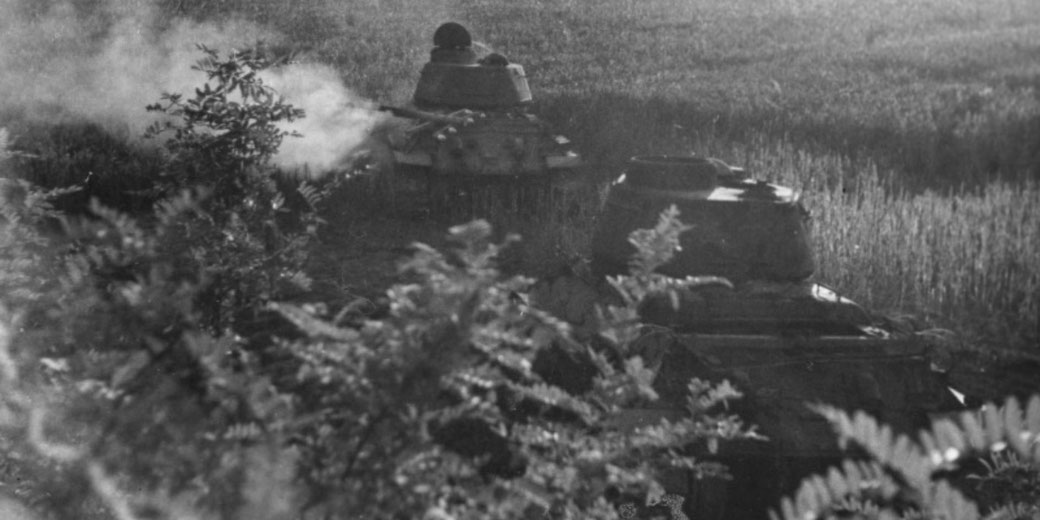
The Korean War began in a divided peninsula that had already experienced several years of political conflict after the end of the Second World War.
In 1945 the United States and the Soviet Union occupied Korea on either side of the 38th Parallel, which soon became the line that separated two rival governments.
By 1948 the Republic of Korea in the south and the Democratic People’s Republic of Korea in the north each claimed authority over the entire country.
Armed conflict erupted on 25 June 1950 when North Korean forces crossed the 38th Parallel and advanced toward Seoul. The United Nations responded with military support for South Korea, and a brutal three-year war followed.
The sources below examine the causes of the conflict, the early fighting, key military decisions, and the armistice that halted the war in July 1953.
Source 1
“All the critical events which occurred in Korea after 1945 grew out of the joint occupation of the country at the end of World War II by the United States and the USSR. The boundary between the two occupation forces was the 38th Parallel. [...] The 38th Parallel had nothing to commend it as a military or political boundary. It crossed Korea at the country’s widest part without respect to terrain features; it came close to several important towns; and it cut off the Ongjin Peninsula in the west from the rest of Korea south of the Parallel…
“South Korea held an election on 10 May 1948 under the auspices of the United Nations, sending 200 representatives to the National Assembly. The National Assembly held its first meeting on 31 May, and elected Syngman Rhee Chairman. On 12 July the Assembly adopted the Constitution of the Republic of Korea and formally proclaimed it the next day. Three days later the Assembly elected Syngman Rhee President. On 15 August 1948 the government of the Republic of Korea was formally inaugurated and the U.S. Army Military Government in Korea terminated.”
“Meanwhile, events in North Korea took a course which seems to have been guided by a deliberately planned political purpose. On 10 July 1948 the North Korean People’s Council adopted a draft resolution and set 25 August as the date for an election of members of the Supreme People’s Assembly of Korea. This assembly on 8 September adopted a constitution of the Democratic People’s Republic of Korea and, the next day, claimed for this government jurisdiction over all Korea. Kim Il Sung took office 10 September as Premier of the Democratic People’s Republic of Korea.”
“Thus, three years after U.S. military authorities accepted the surrender of the Japanese south of the 38th Parallel there were two Korean governments in the land, each hostile to the other and each claiming jurisdiction over the whole country. Behind North Korea stood the Soviet Union; behind South Korea stood the United States and the U.N. Temporary Commission on Korea.”
Contextual Information:
Roy E. Appleman was a U.S. Army combat historian who was commissioned to write the official history of the Korean War after serving in Korea from 1951 to 1954. He conducted hundreds of interviews with participants of all ranks and spent nine years producing this volume. This passage is drawn from the opening chapter, which provides the political and geographical background to the conflict.
Bibliographical Reference:
Appleman, R. E. (1961). South to the Naktong, North to the Yalu: June–November 1950 (United States Army in the Korean War, CMH Pub 20-2, pp. 3–5). U.S. Army Center of Military History.
Copyright: Public domain.
Source 2
“Following World War II, in 1948, the Korea Peninsula was divided between a Soviet-backed government in the north and an American-backed government in the south. War broke out along the 38th parallel on June 25, 1950. On that day, North Korean troops coordinated an attack at several strategic points along the parallel and headed south toward Seoul.”
“Amid the tensions of the Cold War, the United Nations Security Council responded to the attack by adopting a resolution that condemned the invasion as a ‘breach of the peace.’ The United States and other UN member nations sent troops to support South Korea. The three-year conflict claimed the lives of millions of soldiers and civilians.”
Contextual Information:
This extract comes from the U.S. National Archives’ contextual summary published alongside the original Korean War Armistice Agreement. The National Archives is the official repository for United States government records and provides publicly accessible historical commentary on its milestone documents.
Bibliographical Reference:
National Archives. (n.d.). Armistice agreement for the restoration of the South Korean state (1953): Milestone documents. U.S. National Archives. https://www.archives.gov/milestone-documents/armistice-agreement-restoration-south-korean-state
Copyright: Public domain.
Source 3
“At the outbreak of the Korean War in June 1950, the U.S. Army combat units nearest the scene were the four infantry divisions performing occupation duties in Japan. When the Army of the Republic of Korea, supported only by U.S. air and naval forces, was unable to halt the North Korean aggressors, these divisions, seriously understrength and only partially trained and equipped for fighting, provided the troops that were committed initially to action in response to the call of the United Nations Security Council.”
“On the evening of 30 June, Lt. Col. Charles B. Smith, Commanding Officer, 1st Battalion, 21st Infantry Regiment, 24th Infantry Division, went to bed at 9 o’clock in his quarters at Camp Wood near Kumamoto, Kyushu, tired and sleepy after having been up all the previous night because of an alert. An hour and a half later his wife awakened him, saying, ‘Colonel Stephens is on the phone and wants you.’ At the telephone Smith heard Col. Richard W. Stephens, Commanding Officer, 21st Infantry, say to him, ‘The lid has blown off – get on your clothes and report to the CP.’ Thus began Task Force Smith as seen by its leader.”
“About 0300 on 5 July, the delaying force reached the position which Smith had previously selected. The infantry units started setting up weapons and digging in at the pre-designated places. Colonel Perry moved his guns into the positions behind the infantry that he had selected the previous afternoon. All units were in place, but not completely dug in, before daylight.”
Contextual Information:
These passages come from a chapter from the same book as Source 1, covering the first commitment of American ground forces to the Korean War. Appleman describes Task Force Smith, a small American detachment sent to Osan, south of Seoul, in early July 1950. The engagement at Osan on 5 July 1950 was the first ground combat between United States and North Korean forces during the war. Task Force Smith was made up of around 540 soldiers from the 24th Infantry Division who were rushed from occupation duty in Japan to try to slow the North Korean advance.
Bibliographical Reference:
Appleman, R. E. (1961). South to the Naktong, North to the Yalu: June–November 1950 (United States Army in the Korean War, CMH Pub 20-2, pp. 59–66). U.S. Army Center of Military History.
Copyright: Public domain.
Source 4
“MacArthur had decided on an amphibious operation against the enemy even before the first clash between American and North Korean soldiers at Osan. On 2 July he asked Washington for a Marine RCT. [...] MacArthur then believed that he could land an assault force from the 1st Cavalry Division and the Marine RCT against the enemy’s rear at Inch’on as early as 22 July. This force would envelop Seoul and seize the high ground to the north.”
“General MacArthur’s refusal to abandon his mid-September date was influenced by his knowledge of the Inch’on area as well as by his desire to relieve the pressure on the Pusan Perimeter as quickly as he could. [...] From 15 to 18 September the tidal surges would be high enough to cover the extensive mud flats that fronted Inch’on Harbor and landing craft could be brought in. The next opportunity would not come until mid-October.”
Contextual Information:
James F. Schnabel was a U.S. Army officer and historian who began research on the Korean War just three days after the North Korean invasion. He was assigned to the Historical Branch at General MacArthur’s headquarters in Tokyo and spent nearly three years conducting research in Japan and Korea. This passage describes the planning of Operation CHROMITE, the amphibious landing at Inchon (Inch’on) that took place on 15 September 1950. The landing was one of the war’s most significant turning points, cutting North Korean supply lines and enabling the recapture of Seoul.
Bibliographical Reference:
Schnabel, J. F. (1972). Policy and direction: The first year (United States Army in the Korean War, CMH Pub 20-1, pp. 139–145). U.S. Army Center of Military History.
Copyright: Public domain.
Source 5
“Agreement between the Commander-in-Chief, United Nations Command, on the one hand, and the Supreme Commander of the Korean People’s Army and the Commander of the Chinese People’s volunteers, on the other hand, concerning a military armistice in Korea.”
“The undersigned, the Commander-in-Chief, United Nations Command, on the one hand, and the Supreme Commander of the Korean People’s Army and the Commander of the Chinese People’s Volunteers, on the other hand, in the interest of stopping the Korean conflict, with its great toil of suffering and bloodshed on both sides, and with the objective of establishing an armistice which will insure a complete cessation of hostilities and of all acts of armed force in Korea until a final peaceful settlement is achieved, do individually, collectively, and mutually agree to accept and to be bound and governed by the conditions and terms of armistice set forth in the following articles and paragraphs, which said conditions and terms are intended to be purely military in character and to pertain solely to the belligerents in Korea.”
“All of the provisions of this Armistice Agreement, other than Paragraph 12, shall become effective at 2200 hours on 27 July 1953. Done at Panmunjom, Korea at 10:00 hours on the 27th day of July 1953, in English, Korean and Chinese, all texts being equally authentic.”
Contextual Information:
This is the actual text of the Korean War Armistice Agreement, signed on 27 July 1953. The document was signed by U.S. Army Lt. Gen. William K. Harrison, Jr. on behalf of the United Nations Command, and by General Nam Il on behalf of the Korean People’s Army and the Chinese People’s Volunteers. It is a purely military document, and no nation is a formal signatory. The armistice suspended hostilities but was not a peace treaty, which means North and South Korea technically remain in a state of war.
Bibliographical Reference:
Korean War Armistice Agreement, July 27, 1953. Treaties and Other International Agreements Series #2782. General Records of the United States Government, Record Group 11. National Archives. https://catalog.archives.gov/id/5730903
Copyright: Public domain.