
Historical sources on the Great Depression
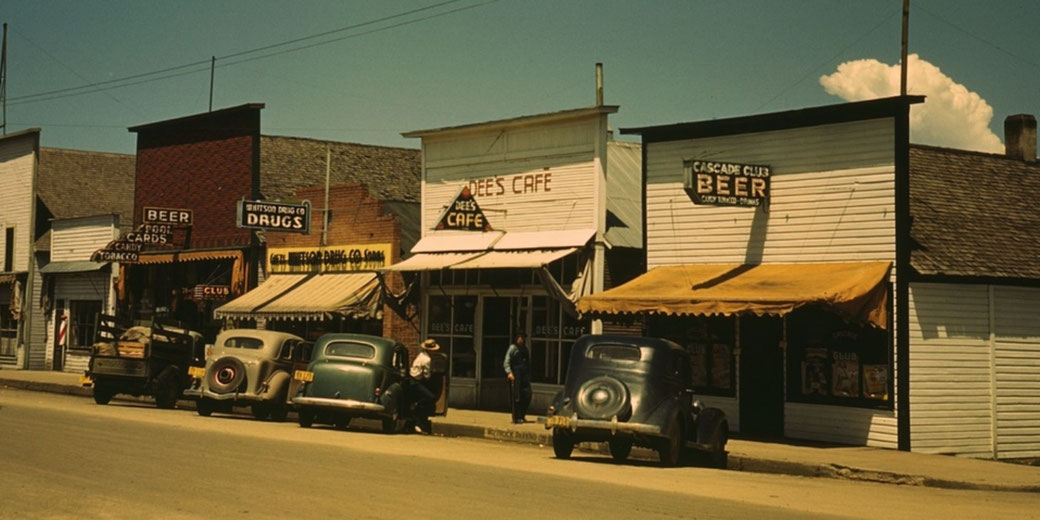
Historical sources on the Great Depression help show how Americans explained, experienced, and responded to one of the worst economic crises of the twentieth century.
These extracts trace the story from Herbert Hoover’s early explanation of the 1929 stock market crash, through later investigations into speculation and risky lending, to Franklin D. Roosevelt’s calls for recovery through the New Deal.
They also reveal the human cost of unemployment, the collapse of savings and markets, and the eventual impact of wartime industrial production.
Source 1
"The country has enjoyed a large degree of prosperity and sound progress during the past year with a steady improvement in methods of production and distribution and consequent advancement in standards of living. Progress has, of course, been unequal among industries, and some, such as coal, lumber, leather, and textiles, still lag behind. The long upward trend of fundamental progress, however, gave rise to over-optimism as to profits, which translated itself into a wave of uncontrolled speculation [gambling with money] in securities [shares and investments], resulting in the diversion [movement] of capital [money] from business to the stock market and the inevitable crash. The natural consequences have been a reduction in the consumption of luxuries and semi-necessities by those who have met with losses, and a number of persons thrown temporarily out of employment. Prices of agricultural products dealt in upon the great markets have been affected in sympathy with the stock crash."
Contextual information:
Herbert Hoover was the 31st President of the United States, having taken office in March 1929. He delivered this address to a joint session of Congress on 3 December 1929, just weeks after the stock market collapsed in October of that year. The message was one of his first official responses to the financial crisis, in which he acknowledged the crash and outlined his view of its causes.
Bibliographical reference:
Hoover, H. (1974). Annual message to Congress on the state of the union, December 3, 1929. In Public papers of the presidents of the United States: Herbert Hoover, 1929 (pp. 404–435). United States Government Printing Office.
Copyright: This is a work of the United States Government and is in the public domain under 17 U.S.C. § 105.
Source 2
"Brokers' [share dealers'] loans rose from a maximum of $1,926,800,000 in the year 1922 to a peak of $8,549,338,979 in the month of October 1929. Accompanying this tremendous expansion of borrowings by brokers [share dealers], the average price of stocks, based on Standard Statistics' Index [a measure of share prices], rose from $60 in 1922 to $212 in 1929. Following the stock-market collapse on October 24, 1929, brokers' loans declined $3,000,000,000 in 10 days and over $8,000,000,000 in 3 years, reaching a low of $241,599,943 on August 1, 1932. Concurrently [At the same time], the average price of stocks declined from $212 to $35. The insatiable [impossible to satisfy] demand for credit during the boom years drove the rate of interest on call loans [short-term loans that could be recalled at any time] up to 15 percent to 20 percent per annum [per year]. Attracted by this unprecedented [never before seen] interest return, banking and nonbanking lenders poured into the securities [shares and investments] markets billions of dollars for speculative [gambling] purposes."
Contextual information:
This report was produced by the United States Senate's Committee on Banking and Currency after a series of hearings held between 1932 and 1934. The investigation was led by chief counsel Ferdinand Pecora, whose name the report came to bear. It was one of the most thorough official examinations of the causes of the 1929 stock market crash, drawing on testimony from senior bankers and financial officials.
Bibliographical reference:
United States Senate, Committee on Banking and Currency. (1934). Stock exchange practices: Report pursuant to S. Res. 84 (72d Cong.) and S. Res. 56 and S. Res. 97 (73d Cong.) (S. Rep. No. 73-1455, p. 31). United States Government Printing Office.
Copyright: This is a work of the United States Government and is in the public domain under 17 U.S.C. § 105.
Source 3
"More important, a host of unemployed citizens face the grim [serious and frightening] problem of existence, and an equally great number toil [work hard] with little return. Only a foolish optimist [a person who unrealistically expects good outcomes] can deny the dark realities of the moment. Yet our distress comes from no failure of substance. We are stricken [struck down] by no plague of locusts [swarms of insects that destroy crops]. Compared with the perils [dangers] which our forefathers conquered because they believed and were not afraid, we have still much to be thankful for. Nature still offers her bounty [generous supply] and human efforts have multiplied it. Plenty is at our doorstep, but a generous use of it languishes [wastes away] in the very sight of the supply. Primarily this is because the rulers of the exchange of mankind's goods have failed, through their own stubbornness and their own incompetence [inability to do the job properly], have admitted their failure, and abdicated [given up their responsibilities]. Practices of the unscrupulous [dishonest] money changers stand indicted [formally accused of wrongdoing] in the court of public opinion, rejected by the hearts and minds of men."
"In such a spirit on my part and on yours we face our common difficulties. They concern, thank God, only material things. Values have shrunken to fantastic levels; taxes have risen; our ability to pay has fallen; government of all kinds is faced by serious curtailment [reduction] of income; the means of exchange are frozen in the currents of trade; the withered leaves of industrial enterprise lie on every side; farmers find no markets for their produce; the savings of many years in thousands of families are gone."
Contextual information:
Franklin D. Roosevelt was inaugurated as the 32nd President of the United States on 4 March 1933, having defeated Herbert Hoover in the presidential election of November 1932. He delivered this address at the United States Capitol in Washington, D.C., at a moment when American unemployment had reached its peak and the banking system was on the verge of total collapse. The speech announced a new direction in government policy that would become known as the New Deal.
Bibliographical reference:
Roosevelt, F. D. (1989). Inaugural address, March 4, 1933. In Inaugural addresses of the presidents of the United States from George Washington 1789 to George Bush 1989 (pp. 235–236). United States Government Printing Office.
Copyright: This is a work of the United States Government and is in the public domain under 17 U.S.C. § 105.
Source 4
"In the early spring of this year there were actually and proportionately [in relative terms] more people out of work in this country than in any other Nation in the world. Fair estimates showed twelve or thirteen millions unemployed last March. Among those there were, of course, several millions who could be classed as normally unemployed—people who worked occasionally when they felt like it, and others who preferred not to work at all. It seems, therefore, fair to say that there were about ten millions of our citizens who earnestly, and in many cases hungrily, were seeking work and could not get it. Of these, in the short space of a few months, I am convinced that at least four millions have been given employment—or, saying it another way, 40 percent of those seeking work have found it."
Contextual information:
Franklin D. Roosevelt began a series of informal radio broadcasts to the American public shortly after becoming President in March 1933. These broadcasts became known as "Fireside Chats" because Roosevelt spoke in plain, conversational language directed at ordinary listeners in their own homes. In this Fireside Chat, broadcast on 22 October 1933, Roosevelt reported on the progress of his government's economic recovery programme, the New Deal, and provided figures on the state of unemployment in America.
Bibliographical reference:
Roosevelt, F. D. (1933, October 22). Fireside chat on the recovery program [Radio broadcast transcript]. The American Presidency Project, University of California Santa Barbara.
Copyright: This is a work of the United States Government and is in the public domain under 17 U.S.C. § 105.
Source 5
"Unemployment was the overriding [most important] fact of life when Franklin D. Roosevelt became President of the United States on March 4, 1933. An anomaly [oddity] of the time was that the government did not systematically collect statistics on joblessness, actually did not start doing so until 1940. The Bureau of Labour Statistics [the government agency responsible for tracking employment data] later estimated that 12,830,000 persons were out of work in 1933, about one-fourth of a civilian labor force of over fifty-one million. March was the record month, with about fifteen and a half million unemployed. There is no doubt that 1933 was the worst year, and March the worst month for joblessness in the history of the United States."
Contextual information:
Irving Bernstein was a labour historian who wrote this account as part of the official history of the United States Department of Labour. The chapter was commissioned by the federal government to document the experiences of American workers during the Great Depression and the Second World War. As a government publication, it draws on official employment statistics compiled by the Bureau of Labour Statistics.
Bibliographical reference:
Bernstein, I. (n.d.). Americans in depression and war (Chapter 5). United States Department of Labour. https://www.dol.gov/general/aboutdol/history/chapter5
Copyright: This is a work of the United States Government and is in the public domain under 17 U.S.C. § 105.
Source 6
"I want to make it clear that it is the purpose of the nation to build now with all possible speed every machine, every arsenal [weapons factory], every factory that we need to manufacture our defense material. We have the men—the skill—the wealth—and above all, the will. I am confident that if and when production of consumer or luxury goods in certain industries requires the use of machines and raw materials that are essential for defense purposes, then such production must yield, and will gladly yield, to our primary and compelling purpose. So I appeal to the owners of plants—to the managers—to the workers—to our own Government employees—to put every ounce of effort into producing these munitions [weapons and military supplies] swiftly and without stint [holding back]."
"Guns, planes, ships and many other things have to be built in the factories and the arsenals [weapons factories] of America. They have to be produced by workers and managers and engineers with the aid of machines which in turn have to be built by hundreds of thousands of workers throughout the land. In this great work there has been splendid cooperation between the Government and industry and labor; and I am very thankful. American industrial genius, unmatched throughout all the world in the solution of production problems, has been called upon to bring its resources and its talents into action. We must be the great arsenal of democracy."
Contextual information:
Franklin D. Roosevelt delivered this Fireside Chat on 29 December 1940, more than a year before the United States formally entered the Second World War following the Japanese attack on Pearl Harbour in December 1941. At this point, Germany had conquered most of Western Europe and Britain was fighting alone. Roosevelt used this broadcast to argue that American factories needed to shift to full-scale weapons production in support of the Allied nations. The industrial mobilisation [the process of organising industry for war] that followed this speech drove American unemployment down sharply, bringing the Great Depression to an effective end.
Bibliographical reference:
Roosevelt, F. D. (1940, December 29). Fireside chat on national security [Radio broadcast transcript]. The American Presidency Project, University of California Santa Barbara.
Copyright: This is a work of the United States Government and is in the public domain under 17 U.S.C. § 105.