
Historical sources on the WWI Gallipoli Campaign
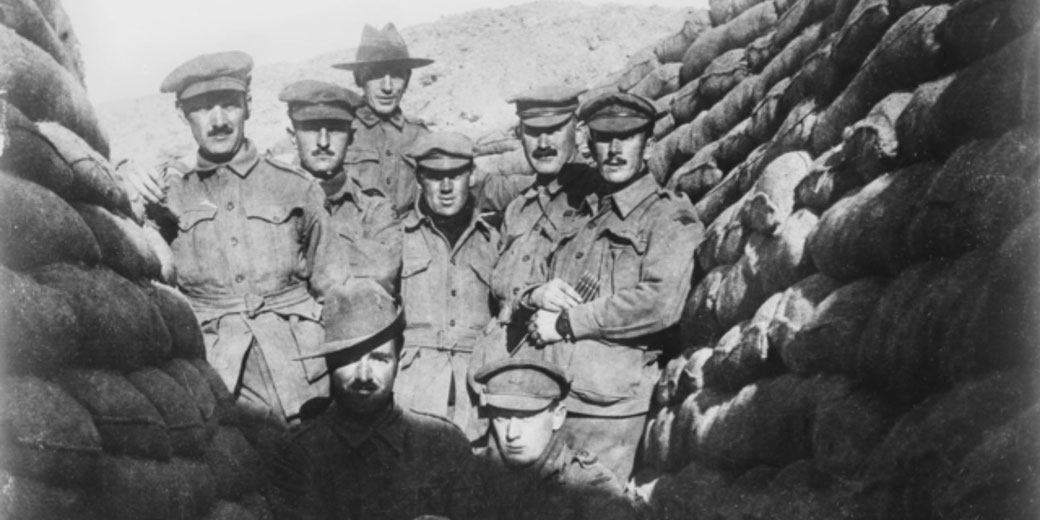
These sources present a detailed account of the Gallipoli Campaign, which was a major Allied operation during World War I that ended in failure and heavy losses.
They include both primary and secondary materials, which range from official reports and later historical analysis to personal accounts written by soldiers and commanders who took part in the fighting.
Through these perspectives, students can examine the planning of the campaign, the experience of combat at places such as Anzac Cove and Suvla Bay, and the reasons behind the eventual evacuation.
Source 1
Extract A
"April 25, 2015, marks 100 years since the first landing of Australian and New Zealand troops (known as the ANZACs, for Australian and New Zealand Army Corps) at the Gallipoli peninsula (Gelibolu in Turkish) in Turkey during World War I. A few years ago I wrote about the significance of April 25th, ANZAC Day, which is a public holiday in both countries. Commemorative events are held throughout Australia and New Zealand and all over the world, including here in the United States. Of particular significance are the ceremonies held at the place of the battle."
Extract B
"In 1985, the Turkish government officially recognized the name “Anzac Cove” (Anzak Koyu in Turkish) for the particular beach where the ANZACs landed. The cove originally “received this name as early as 29 April 1915, by request of the commander of the Anzac Corps, Lieutenant General Sir William Birdwood.” Official recognition of the name resulted from an agreement between the Australian, New Zealand, and Turkish governments."
Extract C
"The Gallipoli campaign of the allied forces (New Zealand, Australia, Great Britain (including Ireland), Newfoundland, France and India) dragged on for many months and was ultimately unsuccessful, and even labelled a disaster, as the Ottoman forces repelled advances and counter-attacked. The Allies eventually evacuated the area in December 1915. The ANZACs and other allied troops suffered heavy losses, as did the Ottoman forces."
Contextual information:
This blog post was written for the Law Library of Congress’s “In Custodia Legis” blog to mark the centenary of the ANZAC landing at Gallipoli. It is a secondary source by a legal specialist at the Library of Congress and summarises the historical significance of ANZAC Day, the Gallipoli campaign, and later commemorations, drawing on official statements and historical records.
Bibliographical reference:
Law Library of Congress. (2015, April 24). Centenary of the landing at Anzac Cove during World War I. In In Custodia Legis (Law Library of Congress blog). Retrieved April 4, 2026, from https://blogs.loc.gov/law/2015/04/centenary-of-the-landing-at-anzac-cove-during-world-war-i/
Copyright: Work of the U.S. federal government (Library of Congress); in the public domain.
Source 2
Extract A
"The Gallipoli Campaign executed in the Dardanelles Strait in April 1915 was one of the few events in the war that incorporated land, sea, subsurface, air, and multinational operations at all levels of war that today can be recognized as a true joint operation. The attempt by the allied nations in February and March of 1915 to execute a naval assault through the Dardanelles to threaten the Ottoman Empire’s capital of Constantinople (now Istanbul) had three objectives: force the empire’s surrender, open a route behind the German lines, and bolster ailing ally Russia, who could not face the Ottomans and Germans on its own. Once the naval attack was stymied by effective shore-to-ship artillery firing from hardened forts and the mining of the strait, the allies planned to conduct amphibious landings, allowing the army to seize the fortifications and silence the enemy guns so the navy could pass safely to Constantinople."
Extract B
"The Dardanelles Commission was formed by order of the British government to determine the origin, inception, and conduct of operations. In 1917, the commission issued its first report, which determined that the entire operation lacked unity of effort from the top down. The report stated, “It is impossible to read all the evidence, or to study the voluminous papers which have been submitted to us, without being struck with the atmosphere of vagueness and want of precision which seems to have characterised the proceedings of the War Council.” This council was dominated by the overbearing personalities of Secretary of State for War Lord Herbert Kitchener and First Lord of the Admiralty Winston Churchill, neither of whom were experts in naval or amphibious warfare. The commission found that the specialists present were hesitant to express their opinions or voice dissent due to the personalities of these two men."
Contextual information:
Major Patrick William Naughton is a U.S. Army officer; his article “Gallipoli: Lessons from the Great War on the Projection of Power and Joint Forcible Entry” was published in Joint Force Quarterly (JFQ 93, 2nd Quarter 2019) by National Defense University Press. It is a modern secondary analysis that draws heavily on contemporary official documents, including the Dardanelles Commission reports, to explain the objectives, planning, and failures of the Gallipoli campaign.
Bibliographical reference:
Naughton, P. W. (2019). Gallipoli: Lessons from the Great War on the projection of power and joint forcible entry. Joint Force Quarterly, 93, 93–99. Washington, DC: National Defense University Press. Retrieved from https://ndupress.ndu.edu/Portals/68/Documents/jfq/jfq-93/jfq-93_93-99_Naughton.pdf
Copyright: Works prepared by U.S. military personnel in the course of their official duties are U.S. government works and are in the public domain.
Source 3
"Before they went into action, their artillery was taken from them, and they landed at Suvla and Anzac without a single gun. They were a Division of the new Army entirely made up of men who had no previous military experience, and who had never heard a shot fired. Yet, the very day they landed, they found themselves precipitated into the most tremendous and bloody conflict, exposed to heavy shrapnel and machine-gun fire, on an open strand, where cover was impossible."
Contextual information:
Bryan Cooper was an Irish officer who served with the 10th (Irish) Division in the First World War. His book The Tenth (Irish) Division in Gallipoli was first published in London in 1918 and describes the experiences of the division at Suvla Bay and related operations, based on his own service and reports from fellow officers. The quoted paragraph comes from the foreword by Irish politician John E. Redmond, which summarises the division’s first combat experience at Suvla and Anzac.
Bibliographical reference:
Redmond, J. E. (1918). Foreword. In B. Cooper, The tenth (Irish) division in Gallipoli (pp. ix–x). London, UK: Herbert Jenkins.
Copyright: Public domain
Source 4
"Discussing the landing of the New Divisions in Suvla Bay and the diversion to be made by Legge on the right by storming Lone Pine, Birdwood makes it clear in a letter just to hand, that he has told his two Divisional Generals everything. I had not yet gone into some of these details with Hunter-Weston, Stopford or Bailloud, all Corps Commanders, for I am afraid of the news filtering down to the juniors and from them, in the mysterious way news does pass, to the rank and file of both services. Thence to the Turks is but a step. Were the Turks to get wind of our plan, there would be nothing for it but to change the whole thing, even now, at the eleventh hour."
Contextual information:
General Sir Ian Hamilton was the British commander-in-chief of the Mediterranean Expeditionary Force during the Gallipoli campaign. His Gallipoli Diary, published in two volumes in 1920, is a primary source that reproduces his daily diary entries, letters, and reflections written during the campaign. The quoted paragraph, from Volume II, was written in July 1915 as Hamilton was planning the August offensive combining the Suvla Bay landings with ANZAC attacks such as Lone Pine.
Bibliographical reference:
Hamilton, I. (1920). Gallipoli diary (Vol. 2, pp. 15–16). New York, NY: George H. Doran.
Copyright: Public domain
Source 5
Extract A
"‘It may be of interest to readers to hear the origin of the word “Anzac.” When I took over the command of the Australian and New Zealand Army Corps in Egypt a year ago, I was asked to select a telegraphic code address for my Army Corps, and then adopted the word “Anzac.” Later on, when we had effected our landing here in April last, I was asked by General Headquarters to suggest a name for the beach where we had made good our first precarious footing, and then asked that this might be recorded as “Anzac Cove”—a name which the bravery of our men has now made historical, while it will remain a geographical landmark for all time.”
Extract B
‘Our eight months at “Anzac” cannot help stamping on the memory of every one of us days of trial and anxiety, hopes, and perhaps occasional fears, rejoicings at success, and sorrow—very deep and sincere—for many a good comrade whom we can never see again.’"
Extract C
"‘The Anzac Book was to have been a New Year Magazine to help this little British Australasian fraternity in Turkey to while away the long winter in the trenches. … It was after the contributions had been finally sent in, and when the work of editing was in full swing, that there came upon most of us from the sky the news that Anzac was to be evacuated. Such finishing touches as remained to be added after December 19th were given to the work in Imbros. The date for the publication was necessarily delayed. And it was realised by everyone that this production, which was to have been a mere pastime, had now become a hundred times more precious as a souvenir. Certainly no book has ever been produced under these conditions before.’"
Extract D
"‘The Commander-in-Chief desires to express to all ranks in the Dardanelles Army his unreserved appreciation of the way in which the recent operations, ending in the evacuation of the “Anzac” and “Suvla” positions, have been carried to an issue successful beyond his hopes. The arrangements made for withdrawal, and for keeping the enemy in ignorance of the operation which was taking place, could not have been improved. The General Officer Commanding Dardanelles Army, and the General Officers Commanding the Australian and New Zealand and 9th Army Corps, may pride themselves on an achievement without parallel in the annals of war. … Regimental officers, non-commissioned officers and men carried out, without a hitch, the most trying operation which soldiers can be called upon to undertake—a withdrawal in the face of the enemy—in a manner reflecting the highest credit on the discipline and soldierly qualities of the troops.’
Extract E
‘It is no exaggeration to call this achievement one without parallel. To disengage and to withdraw from a bold and active enemy is the most difficult of all military operations; and in this case the withdrawal was effected by surprise, with the opposing forces at close grips—in many cases within a few yards of each other. Such an operation, when succeeded by a re-embarkation from an open beach, is one for which military history contains no precedent.’"
Contextual information:
The Anzac Book was compiled on the Gallipoli peninsula in the closing weeks of 1915 from writings and drawings by soldiers of the Australian and New Zealand Army Corps, then edited on the nearby island of Imbros by the Australian war correspondent C. E. W. Bean for publication by Cassell in London in 1916. In his introduction, Lieutenant‑General Sir William Birdwood, who commanded the Australian and New Zealand Army Corps, explains how he chose “Anzac” as the telegraphic code name for the corps and for “Anzac Cove,” while the editor’s note and the Commander‑in‑Chief’s special order record the sudden decision and skilful execution of the December 1915 evacuation from the Anzac and Suvla positions, giving a contemporary officer’s view of both the origin of the term ANZAC and the final withdrawal from Gallipoli.
Bibliographical reference:
Bean, C. E. W. (Ed.). (1916). Introduction; Editor’s note; Special A. & N.Z.A.C. Orders: 6. The evacuation of Anzac. In The Anzac book (pp. ix–x, xiii–xv, 154–156). Cassell and Company.
Copyright: Public domain
Source 6
Extract A
"Truly, as the convoy steamed through the Mediterranean there were some among the New Zealanders who were disappointed that the short voyage to England and the battle-front in France was to be delayed. In the Red Sea a wireless was received instructing the Force to prepare for a disembarkation in Egypt. The news spread rapidly from ship to ship. Some expressed disappointment that anything should occur to defer, for even a few weeks, our landing in France."
Extract B
"The attack from “The Nek” formed a spectacular episode in the Battle of Sari Bair. The troops were massed in the trenches on Russell’s Top overlooking The Nek, a narrow saddle leading to the enemy’s position. At 4.30 a.m. the first line of Australians charged over the open, and were met by a storm of rifle and machine-gun fire which mowed them down almost to a man before they reached the Turkish trench. A second line followed and met the same fate. A third line was sent forward with equal gallantry, but only a few survivors ever struggled back. The last line was wisely held back. The ground in front of the Turkish trenches was literally heaped with dead."
Contextual information:
Major Fred Waite was a New Zealand engineer officer who served with the Main Body and the New Zealand and Australian Division in 1914–15, and who wrote this soon after the war as Volume I of New Zealand’s official popular history of its Great War effort, published under government authority which drew on his own service and official records.
Bibliographical reference:
Waite, F. (1919). The New Zealanders at Gallipoli (Chapter II: The voyage to Egypt; Chapter XIV: The Battle of Sari Bair). Auckland, New Zealand: Whitcombe and Tombs, for the New Zealand Government.
Copyright: Public domain