
Historical sources on the French Revolution
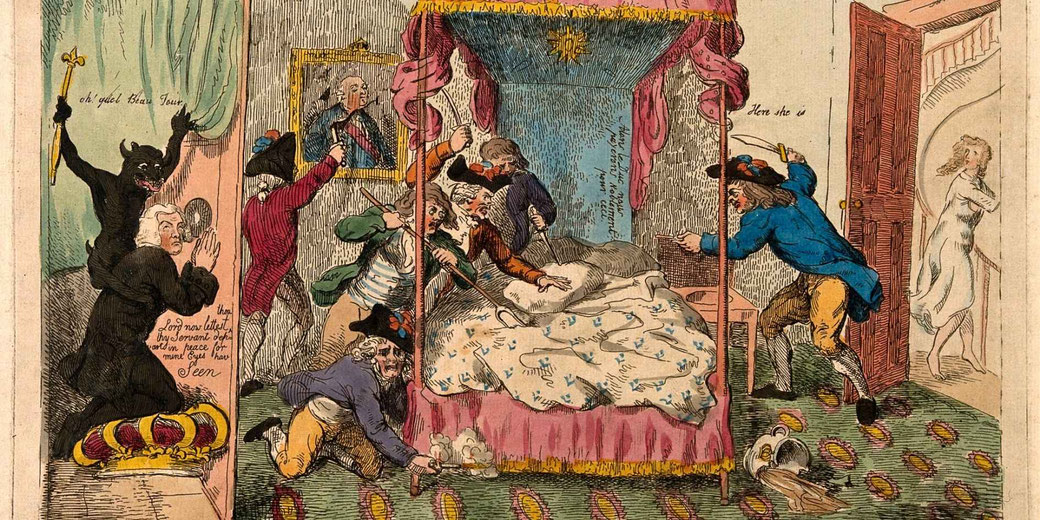
The sources on this page bring together a range of historical accounts examining the causes, events, and consequences of the French Revolution.
They include primary documents such as the Declaration of the Rights of Man and of the Citizen, the Tennis Court Oath, and the August Decree abolishing feudalism, as well as eyewitness and contemporary accounts by figures including Arthur Young and Emmanuel-Joseph Sieyès.
These sources provide material for practising source analysis skills including origin, audience, motive, reliability, and usefulness.
Source 1
Extract A
"Louis XVI, grandson of Louis XV, came to the throne in 1774. He showed some, but not all, of the characteristics of his family. He was of sluggish intelligence, and extremely slow, not to say embarrassed, in speech. He was heavy in build and in features. His two great interests were locksmithing, which he had learned as a boy, and running the deer and the boar in the great royal forests, St. Germain, Fontainebleau, Rambouillet. He had all the Bourbon insouciance, and would break off an important discussion of the Council from indifference, incompetence, or impatience, to go off hunting."
Extract B
"The noblesse, supreme as a caste, almost divided influence with the Church. The two, hand in hand, dominated France outside the larger towns. Each village had its curé and its seigneur. The curé collected his tithes and inculcated the precepts of religion, precepts which at the close of the 18th century, preached Bourbonism as one of the essential manifestations of Providence on earth. The seigneur, generally owning the greater part of all freehold property, not only weighed as a landlord but exercised many exclusive privileges, and applied the most drastic of sanctions to the whole as the local administrator of justice. Before the wars of religion began the French noble was still mediaeval in that he belonged to a caste of military specialists and that his provincial castle was both his residence and his stronghold."
Extract C
"With its finances in such condition the Bourbon monarchy plunged into war with England in 1778, and, for the satisfaction of Yorktown and the independence of the United States, spent 1,500 millions of francs, nearly four years' revenue. At that moment it was estimated that the people of France paid in taxation about 800 millions annually, about one-half of which reached the King's chest. But the burden of debt was so great that by 1789, nearly 250 millions were paid out annually for interest."
Extract D
"It was the Controleur whose function was to fill the Court's bottomless purse. Under this strain and that of the American war, a man of humble origin but of good repute as an economist and accountant was called to the office, the Geneva banker, Jacques Necker. For three years he attempted to carry the burden of the war by small economies effected at many points, which produced the minimum of result with the maximum of friction. Finally, in 1781, the Queen drove him from office."
Extract E
"The old constitutional theory of the States-General was that it was an assembly of the whole French nation, represented by delegates, and divided into three classes. Thus it was tribal in that it comprised every Frenchman within its scope, and feudal in that it formed the caste distinctions, noble, clergy, people. In other words it afforded little ground for comparison with the English Parliament; the point at which it approached it nearest being in the matter of the power to vote the taxation levied by the Crown; but this power the States-General had lost so far back as the 15th century."
Extract F
"On the 14th, a new step was taken, and the deputies, belonging now to a body that was clearly no longer the Tiers Etat, voted themselves a National Assembly. This was, in a sense, accomplishing the Revolution."
Extract G
"The Club Breton began to develop very rapidly after the removal to Paris. Its members, styling themselves Amis de la Constitution, eventually settled themselves in quarters conveniently near the palace at the Jacobin monastery. Here the club quickly became a debating association, and the headquarters of a party. Early in 1790 it began to develop a system of affiliating clubs all through France, and by August of that year had planted 150 Jacobin colonies in direct correspondence with the mother society. By 1794 this number had grown to a thousand, and Jacobinism had become a creed. But in 1789 and 1790 the Jacobins were as yet moderate in their views; they were the men who wanted to create a constitution under the monarchy; they were presided during that period by such men as the Duc de Noailles, the Duc d'Aiguillon, and Mirabeau."
Extract H
"The moderate Jacobins left, and, at the neighbouring Feuillants, founded a new society that was gradually to become more and more retrograde. The few advanced Jacobins retained possession of the old club, with its great affiliation of country clubs, infused a radical element into its membership, and soon, making of Robespierre its mouthpiece and its prophet, advanced in the direction of imposing his doctrine of political salvation on France."
Contextual information:
Robert Matteson Johnston (1867–1920) was an Assistant Professor of History at Harvard University who specialised in modern European and military history. He published this single-volume history in 1909 as part of an effort to make scholarly accounts of the Revolution accessible to general readers and university students. Johnston drew on French archival material as well as the major nineteenth-century historians of the period.
Bibliographical reference:
Johnston, R. M. (1909). The French Revolution: A short history (pp. 12–13, 33–34, 35, 37–38, 47, 55, 94–95, 124). Henry Holt and Company.
Copyright: Public domain.
Source 2
Extract A
"Singular Guillotin, respectable practitioner: doomed by a satiric destiny to the strangest immortal glory that ever kept obscure mortal from his resting-place, the bosom of oblivion! Guillotin can improve the ventilation of the Hall; in all cases of medical police and hygiène be a present aid: but, greater far, he can produce his 'Report on the Penal Code'; and reveal therein a cunningly devised Beheading Machine, which shall become famous and world-famous. This is the product of Guillotin's endeavours, gained not without meditation and reading; which product popular gratitude or levity christens by a feminine derivative name, as if it were his daughter: La Guillotine!"
Extract B
"Late at night, the Duke de Liancourt, having official right of entrance, gains access to the Royal Apartments; unfolds, with earnest clearness, in his constitutional way, the Job's-news. 'Mais,' said poor Louis, 'c'est une révolte, Why, that is a revolt!' — 'Sire,' answered Liancourt, 'it is not a revolt, — it is a revolution.'"
Extract C
"For, lo, the great Guillotine, wondrous to behold, now stands there; the Doctor's Idea has become Oak and Iron; the huge cyclopean axe 'falls in its grooves like the ram of the Pile-engine,' swiftly snuffing-out the light of men!"
Extract D
"We are now, therefore, got to that black precipitous Abyss; whither all things have long been tending; where, having now arrived on the giddy verge, they hurl down, in confused ruin; headlong, pellmell, down, down;—till Sansculottism have consummated itself; and in this wondrous French Revolution, as in a Doomsday, a World have been rapidly, if not born again, yet destroyed and engulfed. Terror has long been terrible: but to the actors themselves it has now become manifest that their appointed course is one of Terror; and they say, Be it so. 'Que la Terreur soit à l'ordre du jour.'"
Extract E
"Wherefore we will, at all events, call this Reign of Terror a very strange one. Dominant Sansculottism makes, as it were, free arena; one of the strangest temporary states Humanity was ever seen in. A nation of men, full of wants and void of habits! The old habits are gone to wreck because they were old: men, driven forward by Necessity and fierce Pythian Madness, have, on the spur of the instant, to devise for the want the way of satisfying it."
Contextual information:
Thomas Carlyle (1795–1881) was a Scottish historian and essayist whose three-volume history of the French Revolution, published in 1837, became one of the most celebrated literary accounts of the period in the English language. Carlyle wrote in a vivid, dramatic prose style and based his work on extensive reading of French eyewitness accounts and earlier historians. The work introduced the phrase "Reign of Terror" into wide English usage.
Bibliographical reference:
Carlyle, T. (1837). The French Revolution: A history (Vol. I, Book 4; Vol. I, Book 5, Ch. 7; Vol. III, Book 1; Vol. III, Book 5, Ch. 1; Vol. III, Book 5). Chapman and Hall.
Copyright: Public domain.
Source 3
Extract A
"As might be expected, the character of King Louis XVI has suffered more distortion at the hands of historians than has any other of the revolutionary figures; and this because he combined with that personal character of his a certain office to which were traditionally attached certain points of view and methods of action which the historian takes for granted when he deals with the character of the man. He was very slow of thought, and very slow of decision. His physical movements were slow. The movement of his eyes was notably slow. He had a way of falling asleep under the effort of fatigue at the most incongruous moments. The things that amused him were of the largest and most superficial kind. Horse-play, now and then a little touched with eccentricity, and very plain but unexpected jokes."
Extract B
"After the successful assertion by the Commons of their new usurped powers over the crown, just described, a second attempt at coercion, backed by the foreign mercenary troops in the service of the king, failed. The depots of arms at the Invalides and the Bastille in Paris were sacked by the populace, and the latter was taken by force upon the same day, July 14th, 1789. The first principles of the Revolution were laid in resolutions of the parliament at Versailles during the summer, notably the declaration known as that of the 'Rights of Man' and the abolition of the feudal property of the nobility."
Contextual information:
Hilaire Belloc (1870–1953) was an Anglo-French writer, historian, and Member of Parliament who wrote prolifically on the French Revolution and its leading figures. His 1911 study aimed to give English readers a sympathetic account of the revolutionary leaders and their aims. Belloc held French citizenship by birth and read the original French sources directly.
Bibliographical reference:
Belloc, H. (1911). The French Revolution (pp. 37–40, 83–84). Williams and Norgate.
Copyright: Public domain.
Source 4
Extract A
"The states-general, which they convoked on pressing occasions, for the purpose of obtaining subsidies, and which were composed of the three orders of the nation, the clergy, the nobility, and the third estate or commons, had no regular existence."
Extract B
"Under the feudal regime, this royal democracy gave way to a royal aristocracy. Absolute power ascended higher, the nobles stripped the people of it, as the prince afterwards despoiled the nobles. At this period the monarch had become hereditary; not as king, but as individually possessor of a fief; the legislative authority belonged to the seigneurs, in their vast territories or in the barons' parliaments; and the judicial authority to the vassals in the manorial courts."
Contextual information:
François Mignet (1796–1884) was a French historian and journalist who served as director of the archives of the Ministry of Foreign Affairs in Paris. His history of the French Revolution, first published in 1824, was one of the earliest scholarly accounts written by a French historian who had access to official documents. The introduction provides background on French government before 1789, including the role of the Estates-General and the feudal system.
Bibliographical reference:
Mignet, F. A. (1846). History of the French Revolution from 1789 to 1814 (Introduction). George Bell & Sons. (Original work published 1824)
Copyright: Public domain.
Source 5
"The agents of the Terror spared neither age nor sex; neither the eminence of high attainment nor the insignificance of dull mediocrity won mercy at their hands. The miserable Du Barri was dragged from her obscure retreat to share the fate of a Malesherbes, a Bailly, a Lavoisier. Robespierre was no more protected by his cold incorruptibility, than was Barnave by his eloquence, Hébert by his sensuality, Danton by his practical good sense. Nothing availed to save from the all-devouring guillotine."
Contextual information:
Lionel Cecil Jane (1879–1932) was a British historian who taught at the University of Oxford and wrote on European political history. He composed this introduction for the 1915 reissue of Mignet's classic French Revolution history. The passage summarises the indiscriminate violence of the Reign of Terror and names many of its most famous victims.
Bibliographical reference:
Jane, L. C. (1915). Introduction. In F. A. Mignet, History of the French Revolution from 1789 to 1814. George Bell & Sons.
Copyright: Public domain.
Source 6
"A war with England increased the difficulties of the government. In 1778 Louis, reluctantly following public opinion, assisted the English colonies in America in their struggle for independence. There were only three means of meeting the expenses of the war: increased taxation, economy, and loans. The first was impossible; the second only possible to a limited extent; and Necker, therefore, was compelled to borrow. The loans that he opened were quickly filled up, because men of the middle class, who were the chief lenders, believed that their interests were safe while he directed the finances. But the public debt was greatly increased, and the prospect of the future, with reforms uneffected in the system of taxation, rendered them more dark."
Contextual information:
Bertha Meriton Gardiner (1845–1925) was a British historian who wrote a number of accessible historical works for school students and general readers. Her account of the French Revolution was first published around 1886 as part of the Epochs of Modern History series, designed specifically for use in schools. The passage explains how French support for American independence directly caused the financial crisis that led to the Revolution.
Bibliographical reference:
Gardiner, B. M. (1921). The French Revolution, 1789–1795 (pp. 25–26). Longmans, Green, and Co. (Original work published ca. 1886)
Copyright: Public domain.
Source 7
"This imposing ceremony was performed on the 2d of December, 1804, in the Cathedral of Notre Dame, in the midst of all that was splendid and illustrious in the Capital of France. With a view to show his power rather than to acknowledge the jurisdiction of the Pope, either temporal or spiritual, Napoleon summoned Pius VII. to be in attendance on the day of his inauguration at Paris. In compliance with this, the unresisting Pope left Rome on the 5th of November, and blessed the Emperor and Empress, and also consecrated the diadems. Napoleon, however, placed the crown on his own head, and then on the head of Josephine, who received it kneeling on a cushion at the foot of the altar steps. We are told that 'throughout the ceremonial his aspect was thoughtful; it was on a stern and gloomy brow that with his own hands he planted the symbol of successful ambition and uneasy power, and the shouts of the deputies present, sounded faint and hollow amidst the silence of the people.'"
Contextual information:
This passage comes from an illustrated nineteenth-century historical narrative that drew on engravings by the French artist Achille Reveil and accompanying historical text describing major events in Napoleon's life. The work was published in Boston in 1888 and was intended as a popular illustrated history for English-speaking readers. The passage describes Napoleon's coronation as Emperor on 2 December 1804, including the famous detail that he placed the crown on his own head.
Bibliographical reference:
Reveil, A. (1888). The Napoleon gallery: Or, illustrations of the life and times of the emperor of France. Estes & Lauriat.
Copyright: Public domain.
Source 8
"On the 30th of April appeared the proposition of the Tribunate to found a Government in France under the authority of one individual; on the 18th of May came the 'Senatus-consulte', naming Napoleon Bonaparte EMPEROR."
Contextual information:
Louis Antoine Fauvelet de Bourrienne (1769–1834) was a French diplomat who served as Napoleon's private secretary from 1797 to 1802 and had been his classmate at the military school of Brienne. His memoirs, first published in French in 1829, are a primary source written by someone who knew Napoleon personally from boyhood through to the height of his power. The passage records the legal mechanism by which Napoleon was officially named Emperor in 1804.
Bibliographical reference:
Bourrienne, L. A. F. de. (1891). Memoirs of Napoleon Bonaparte (R. W. Phipps, Ed.; Vol. 7). Charles Scribner's Sons. (Original work published 1829–1831)
Copyright: Public domain.
Source 9
Extract A (Article XVII):
"The National Assembly solemnly proclaims the King, Louis XVI, the Restorer of French Liberty."
Extract B (Articles I and IV):
"The National Assembly hereby completely abolishes the feudal system. It decrees that, among the existing rights and dues, both feudal and censuel, all those originating in or representing real or personal serfdom shall be abolished without indemnification."
Contextual information:
This decree was passed by the National Assembly on the night of 4–5 August 1789 in response to peasant uprisings across France known as the Great Fear. It is one of the foundational legislative documents of the French Revolution and formally ended feudal privileges in France. The decree explicitly names King Louis XVI and identifies the body passing the law as the National Assembly.
Bibliographical reference:
National Assembly of France. (1906). Decree of the National Assembly abolishing the feudal system, August 11, 1789. In J. H. Robinson (Ed.), Readings in European history (Vol. 2, pp. 404–409). Ginn and Company. (Original work issued 1789)
Copyright: Public domain.
Source 10
"The representatives of the French people, organized as a National Assembly, believing that the ignorance, neglect, or contempt of the rights of man are the sole cause of public calamities and of the corruption of governments, have determined to set forth in a solemn declaration the natural, unalienable, and sacred rights of man, in order that this declaration, being constantly before all the members of the Social body, shall remind them continually of their rights and duties; in order that the acts of the legislative power, as well as those of the executive power, may be compared at any moment with the objects and purposes of all political institutions and may thus be more respected, and, lastly, in order that the grievances of the citizens, based hereafter upon simple and incontestable principles, shall tend to the maintenance of the constitution and redound to the happiness of all."
Contextual information:
This is the preamble to the Declaration of the Rights of Man and of the Citizen, adopted by the National Assembly on 26 August 1789. The document set out the foundational principles of the new revolutionary regime, drawing on Enlightenment ideas and the example of the American Declaration of Independence. It identifies the body that issued it as the National Assembly and dates the Revolution firmly to 1789.
Bibliographical reference:
National Assembly of France. (1789). Declaration of the rights of man and of the citizen, August 26, 1789. Avalon Project, Lillian Goldman Law Library, Yale Law School. https://avalon.law.yale.edu/18th_century/rightsof.asp
Copyright: Public domain.
Source 11
Extract A (preamble):
"The National Assembly, considering that it has been called to establish the constitution of the realm, to bring about the regeneration of public order, and to maintain the true principles of monarchy; nothing may prevent it from continuing its deliberations in any place it is forced to establish itself; and, finally, the National Assembly exists wherever its members are gathered."
Extract B (the oath):
"We swear never to separate ourselves from the National Assembly, and to reassemble wherever circumstances require, until the constitution of the realm is drawn up and fixed upon solid foundations."
Contextual information:
The Tennis Court Oath was sworn on 20 June 1789 by deputies of the Third Estate after they were locked out of their meeting hall at Versailles. The deputies had three days earlier declared themselves the National Assembly and refused to recognise the authority of the King to dissolve them. The oath represents the moment when the Third Estate openly defied royal authority and committed itself to writing a new constitution.
Bibliographical reference:
National Assembly of France. (1789). The Tennis Court Oath, June 20, 1789. Gazette nationale, ou Le moniteur universel.
Copyright: Public domain.
Source 12
Extract A
"What is the Third Estate? Everything. What has it been hitherto in the political order? Nothing. What does it desire to be? Something. Who then shall dare to say that the Third Estate has not within itself all that is necessary for the formation of a complete nation? It is the strong and robust man who has one arm still shackled. If the privileged order should be abolished, the nation would be nothing less, but something more. Therefore, what is the Third Estate? Everything; but an everything shackled and oppressed. What would it be without the privileged order? Everything, but an everything free and flourishing. Nothing can succeed without it, everything would be infinitely better without the others."
Extract B
"It would like to have genuine representatives at the Estates-General, namely deputies drawn from its own order, entitled to interpret its will and to defend its interests."
Contextual information:
Emmanuel-Joseph Sieyès (1748–1836) was a French Catholic clergyman and political theorist whose pamphlet, published in January 1789, became one of the most influential texts of the early Revolution. Sieyès was himself elected to the Estates-General as a deputy of the Third Estate and went on to play a leading role in revolutionary politics. The pamphlet attacked the privileges of the nobility and clergy and argued that the Third Estate alone constituted the French nation.
Bibliographical reference:
Sieyès, E.-J. (1899). What is the Third Estate? In M. Whitcomb (Ed.), Translations and reprints from the original sources of European history (Vol. 6, pp. 32–35). University of Pennsylvania History Department. (Original work published 1789)
Copyright: Public domain.
Source 13
"What have kings, and ministers, and parliaments, and states to answer for their prejudices, seeing millions of hands that would be industrious idle and starving through the execrable maxims of despotism, or the equally detestable prejudices of a feudal nobility."
Contextual information:
Arthur Young (1741–1820) was an English agricultural writer who travelled extensively through France in 1787, 1788, and 1789, recording his observations of pre-revolutionary conditions in a detailed journal. He was a careful observer who spoke directly with farmers, landowners, and ordinary people, and his eyewitness account provides one of the most valuable contemporary records of the state of France on the eve of the Revolution. The passage records his condemnation of the feudal nobility and the suffering of ordinary French people.
Bibliographical reference:
Young, A. (1906). Travels in France during the years 1787, 1788, 1789. In J. H. Robinson (Ed.), Readings in European history (Vol. 2, p. 377). Ginn and Company. (Original work published 1792)
Copyright: Public domain.