
Historical sources on the end of the Cold War
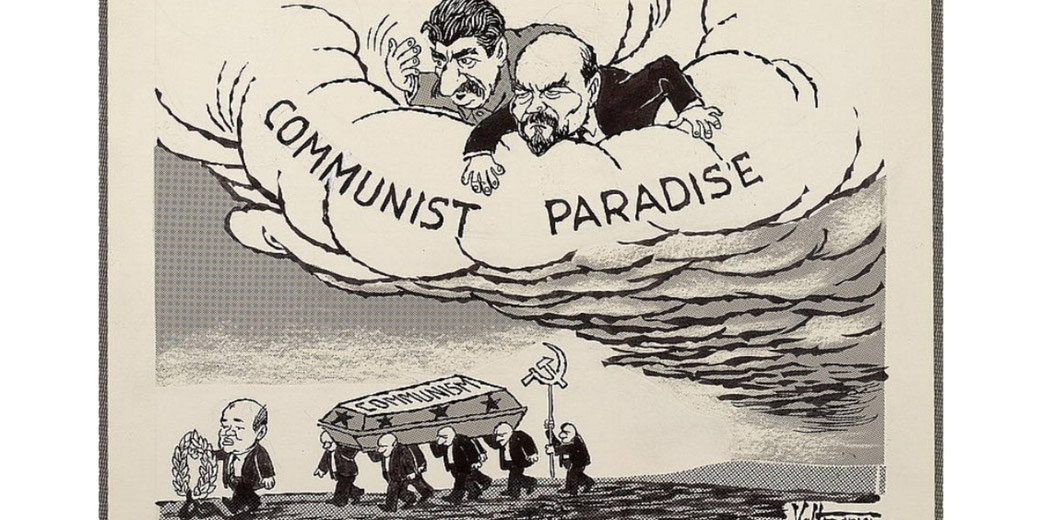
The Cold War lasted for more than four decades and divided the world into rival political and military camps led by the United States and the Soviet Union.
By the late twentieth century, however, a series of dramatic developments brought this long period of tension to an end.
Economic difficulties within the Soviet Union, reform policies introduced by Mikhail Gorbachev, growing demands for political freedom, and a number of unexpected crises steadily weakened the authority of the communist state.
The sources below examine several key moments in this process, including the Chernobyl nuclear disaster of 1986, the reform policies of perestroika and glasnost, the fall of the Berlin Wall in 1989, the failed August Coup of 1991, and the independence of the Soviet republics.
Source 1
“Beginning with its hasty construction on August 13, 1961, and for 28 years thereafter, the Berlin Wall stood as a grim symbol of the Iron Curtain that divided Western Bloc nations from the Eastern Bloc. The decision to build the heavily fortified wall emerged from the Soviet Union’s desperate attempt to stanch the flow of thousands of refugees from East Germany to West Germany, with many escaping through West Berlin. The overnight construction of the wall cut an immediate divide between neighbors, families, and friends—many of whom would not see each other again for many years. [...] Thirty years ago, on November 9, 1989, the government of East Germany released a press statement that was incorrectly interpreted to mean that it would finally grant exit visas from East Germany to West Germany without exception. The ensuing flood of thousands of East Germans yearning to escape from behind the Iron Curtain overwhelmed the border guards at the Bornholmer Strasse crossing point in Berlin. The guards’ increasingly desperate pleas to their superiors for orders gave way to a bloodless decision to let them go. After nearly 30 years, the Berlin Wall finally came down, and its destruction was followed by the dissolution of the Soviet Union on December 26, 1991.”
Contextual information:
This is from a feature article by the U.S. National Archives, prepared to mark the thirtieth anniversary of the Berlin Wall’s fall. It explains why the Wall was built, describes the events of 9 November 1989 in detail, and explicitly links the opening of the Wall to the later dissolution of the Soviet Union on 26 December 1991.
Bibliographical reference:
National Archives. (2019, November 7). Marking the 30th anniversary of the Berlin Wall’s fall. National Archives. https://www.archives.gov/news/topics/berlin-wall-anniversary
Copyright: Public Domain
Source 2
“A series of events from 1989 to 1991 led to the final collapse of the Union of Soviet Socialist Republics (USSR), paving the way for the establishment of new, independent republics in the Baltics and Central Asia and the creation of the Russian Federation. Formally established in 1922, at its height the USSR was composed of fifteen republics, the largest of which was Russia. In 1987, seventy years after the 1917 revolution that established a communist state in Russia, the Soviet Union was in decline. Severe economic problems combined with an international arms race and evidence of imperial overstretch made reforms necessary if the unified nation was to survive. Taking office as chief of the Communist Party of the Soviet Union and the leader of the USSR in 1985, Mikhail Gorbachev attempted to implement the necessary reforms through his dual policies of ‘perestroika,’ or economic restructuring, and ‘glasnost,’ or political openness.”
“Finally, in the summer of 1991, Gorabchev reached an agreement with a number of the republics in which they would become sovereign, but remain loosely federated. Before the final agreement was signed, however, a group of Soviet loyalists attempted a coup to preserve the splintering Soviet Union. After the military failed to fall into line, however, the coup fell apart. In the wake of the coup attempt, Gorbachev faced blame for allowing the hardliners behind it to reach their relatively high positions of power. He stepped aside, and Yeltsin led Russia into the new, post-Soviet era. In the wake of the disintegration of the Soviet Union, the now independent states of the Russian Federation, Ukraine, and Belarus came together to create the Commonwealth of Independent States (CIS). With the exception of Georgia and the Baltic States, the former Soviet Republics joined the CIS by the end of the year. Georgia, Estonia, Latvia and Lithuania all also established their independence in 1991.”
Contextual information:
These paragraphs come from an interpretive essay by the U.S. Department of State’s Office of the Historian. The first gives the formal establishment date of the USSR (1922) and defines perestroika as “economic restructuring” and glasnost as “political openness,” while the second explains that the August 1991 coup attempt failed, describes Gorbachev’s loss of power, and identifies the Commonwealth of Independent States (CIS) and the new independent republics—including Estonia, Latvia and Lithuania—as products of the Soviet breakup in 1991.
Bibliographical reference:
U.S. Department of State, Office of the Historian. (2008). Dissolution of the USSR and the establishment of independent republics, 1991. U.S. Department of State. https://2001-2009.state.gov/r/pa/ho/time/pcw/108229.htm
Copyright: Public Domain
Source 3
“In April 1986, Chernobyl’ (Chornobyl’ in Ukrainian) was an obscure city on the Pripiat’ River in north-central Ukraine. Almost incidentally, its name was attached to the V.I. Lenin Nuclear Power Plant located about twenty-five kilometers upstream. On April 26, the city's anonymity vanished forever when, during a test at 1:21 A.M., the No. 4 reactor exploded and released thirty to forty times the radioactivity of the atomic bombs dropped on Hiroshima and Nagasaki. The world first learned of history's worst nuclear accident from Sweden, where abnormal radiation levels were registered at one of its nuclear facilities.”
Contextual information:
This paragraph is from the “Chernobyl” section of the Library of Congress exhibition Revelations from the Russian Archives: Internal Workings of the Soviet Union. Written by Library of Congress staff, it dates the explosion of Reactor 4 precisely to 26 April 1986 and emphasises both the magnitude of the release and the way the accident was first detected abroad.
Bibliographical reference:
Library of Congress. (n.d.). Chernobyl. In Revelations from the Russian archives: Internal workings of the Soviet Union. Library of Congress. https://www.loc.gov/exhibits/archives/intn.html
Copyright: Public Domain
Source 4
“From modest beginnings at the Twenty-Seventh Party Congress in 1986, perestroika, Mikhail Gorbachev's program of economic, political, and social restructuring, became the unintended catalyst for dismantling what had taken nearly three-quarters of a century to erect: the Marxist-Leninist-Stalinist totalitarian state.”
Contextual information:
This sentence comes from the “Perestroika” section of the same Library of Congress exhibition. It characterises perestroika explicitly as Gorbachev’s program of “economic, political, and social restructuring,” giving students a fuller sense of the policy than a bare dictionary definition.
Bibliographical reference:
Library of Congress. (n.d.). Perestroika. In Revelations from the Russian archives: Internal workings of the Soviet Union. Library of Congress. https://www.loc.gov/exhibits/archives/intn.html
Copyright: Public Domain
Source 5
“Mikhail Gorbachev needed to enlist the support of writers and journalists to promote his reforms. He did so by launching his policy of glasnost’ in 1986, challenging the foundations of censorship by undermining the authority of the Union of Writers to determine which works were appropriate for publication. Officials from the Union were required to place works directly in the open market and to allow these works to be judged according to reader preferences, thereby removing the barrier between writer and reader and marking the beginning of the end of Communist party censorship. [...] A prime mover of change was Mikhail Gorbachev, whose policy of glasnost’ allowed freedom of expression and resulted in the abandonment of Marxist-Leninist ideology and a loss of legitimacy for the party.”
Contextual information:
This paragraph is drawn from the “Attacks on Intelligentsia: Censorship” and concluding discussion sections of Revelations from the Russian Archives. It shows concretely how glasnost’ meant “openness” in practice—loosening censorship and expanding freedom of expression—and links that openness to the erosion of the Communist Party’s ideological legitimacy.
Bibliographical reference:
Library of Congress. (n.d.). Attacks on intelligentsia: Censorship and concluding discussion. In Revelations from the Russian archives: Internal workings of the Soviet Union. Library of Congress. https://www.loc.gov/exhibits/archives/intn.html
Copyright: Public Domain
Source 6
“Peaceful coexistence technically remains the fundamental basis for Soviet foreign policy, and Kosygin and Brezhnev did not attempt a sweeping doctrinal revision comparable to that effected by Stalin in 1924 or by his successors in 1953–1956. Nonetheless, there were significant modifications in the interpretation of peaceful coexistence under Kosygin and Brezhnev. When these men took power in late 1964 it was already clear that many of the optimistic assumptions upon which Khrushchev based his doctrine of peaceful coexistence were open to question, or at least serious qualification. [...] By the late 1960s, the new leaders had restored a degree of balance between Soviet policy and rhetoric. The Soviet Union had both improved its military capabilities and scaled back its claims regarding what military power could accomplish. On the domestic front, the regime still claimed that it was making progress toward overtaking the West and that the Council for Mutual Economic Assistance (Comecon) was, economically, ‘the most dynamic’ region of the world. At the same time, however, the regime abandoned the practice of giving specific dates for the overtaking of the West or the establishment of full Communism in the USSR. The latter, in fact, they pushed off to the indefinite future, as Soviet ideologies elaborated the concept of ‘developed socialism’—a stage which could last for decades or even longer.”
Contextual information:
This analytical paragraph is by John Van Oudenaren in a National Defense University study of Soviet foreign policy. It situates the doctrine of “developed socialism” within the Brezhnev–Kosygin leadership, explaining that Soviet ideologues under Brezhnev elaborated “developed socialism” as a prolonged stage meant to replace earlier promises of imminent communism—information that points students toward Leonid Brezhnev as the leader associated with this concept.
Bibliographical reference:
Van Oudenaren, J. (n.d.). The tradition of change in Soviet foreign policy. In Understanding Soviet foreign policy (pp. 7–8). National Defense University Press. https://www.govinfo.gov/content/pkg/GOVPUB-D5_400-PURL-LPS31622/pdf/GOVPUB-D5_400-PURL-LPS31622.pdf
Copyright: Public Domain
Source 7
“FORCIBLY ANNEXED TO THE SOVIET UNION fifty-one years earlier, the Baltic states—Estonia, Latvia, and Lithuania—regained independence in 1991 after an abortive coup in Moscow that accelerated the collapse of the Soviet regime. Having been, in the words of former British foreign secretary Douglas Hurd, ‘stolen or kidnapped from the European family,’ these nations embarked on a course of political and economic restructuring and reintegration with the West. Their experience with independent statehood and, to a lesser extent, with democracy in the 1920s and 1930s (an advantage not enjoyed by the other former Soviet republics), as well as their ability to maintain a strong sense of national identity under foreign hegemony, has helped them in their efforts to deal with the legacies of Soviet rule. The challenges, nonetheless, remain formidable.”
Contextual information:
This is the opening paragraph of the Introduction to Estonia, Latvia, and Lithuania: Country Studies, compiled by the Federal Research Division of the Library of Congress for the U.S. Department of the Army. It clearly states that Estonia, Latvia and Lithuania “regained independence in 1991 after an abortive coup in Moscow,” tying Baltic independence to the failure of the August 1991 coup and giving students both the year and the political context.
Bibliographical reference:
Iwaskiw, W. R. (Ed.). (1996). Estonia, Latvia, and Lithuania: Country studies (Introduction, p. xix). Federal Research Division, Library of Congress. https://tile.loc.gov/storage-services/master/frd/frdcstdy/es/estonialatvialit00iwas_0/estonialatvialit00iwas_0.pdf
Copyright: Public Domain