
Historical sources on the Cuban Missile Crisis
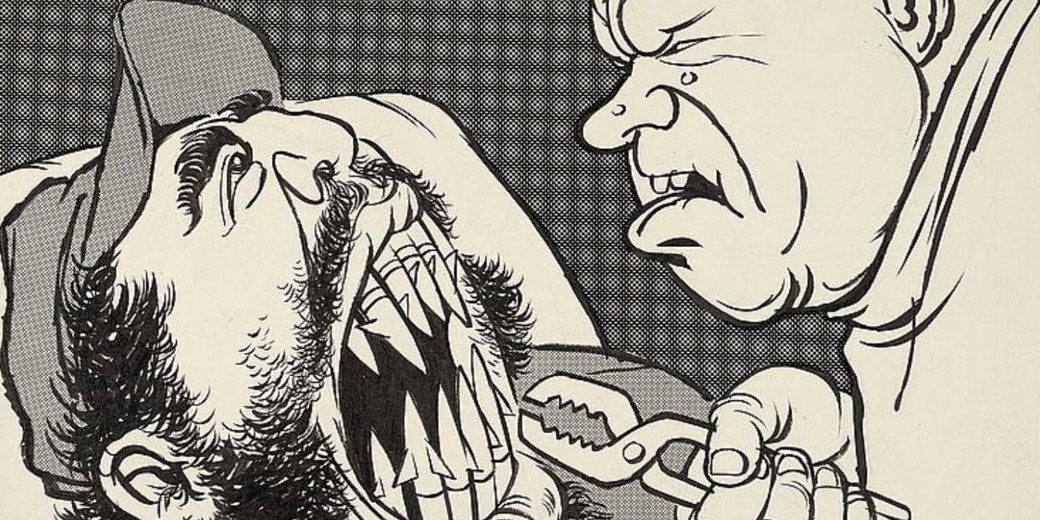
In October 1962, the United States and the Soviet Union confronted each other over the placement of nuclear missiles in Cuba, a confrontation that brought the world close to nuclear war.
The crisis began after American reconnaissance flights on 14 October photographed Soviet missile sites under construction on the island, which lay only ninety miles from the coast of Florida.
President John F. Kennedy publicly revealed the discovery in a televised address on 22 October and ordered a naval quarantine of Cuba to prevent further delivery of offensive weapons.
Soviet leader Nikita Khrushchev defended the deployment as a response to American missiles in Turkey and warned that the blockade constituted aggression.
The sources below include Kennedy’s address to the American public, official historical accounts from the United States Department of State, and letters exchanged between Kennedy and Khrushchev at the height of the crisis.
Source 1
“This Government, as promised, has maintained the closest surveillance of the Soviet military build-up on the island of Cuba. Within the past week, unmistakable evidence has established the fact that a series of offensive missile sites is now in preparation on that imprisoned island. The purpose of these bases can be none other than to provide a nuclear strike capability against the Western Hemisphere. Upon receiving the first preliminary hard information of this nature last Tuesday morning at 9 A.M., I directed that our surveillance be stepped up. And having now confirmed and completed our evaluation of the evidence and our decision on a course of action, this Government feels obliged to report this new crisis to you in fullest detail.”
“Acting, therefore, in the defense of our own security and of the entire Western Hemisphere, and under the authority entrusted to me by the Constitution as endorsed by the Resolution of the Congress, I have directed that the following initial steps be taken immediately: First: To halt this offensive buildup a strict quarantine on all offensive military equipment under shipment to Cuba is being initiated. All ships of any kind bound for Cuba from whatever nation or port will, if found to contain cargoes of offensive weapons, be turned back. This quarantine will be extended, if needed, to other types of cargo and carriers. We are not at this time, however, denying the necessities of life as the Soviets attempted to do in their Berlin blockade of 1948.”
Contextual Information:
President John F. Kennedy delivered this televised address to the American public on the evening of 22 October 1962 from the Oval Office. It was the first time the US government publicly acknowledged the presence of Soviet nuclear missiles in Cuba. Kennedy’s reference to “last Tuesday morning” refers to 14 October 1962, when a U-2 reconnaissance aircraft photographed the missile sites.
Bibliographical Reference:
Kennedy, J. F. (1962, October 22). Radio and television report to the American people on the Soviet arms buildup in Cuba [Transcript]. John F. Kennedy Presidential Library and Museum. https://www.jfklibrary.org/learn/about-jfk/historic-speeches/address-during-the-cuban-missile-crisis
Copyright: Public Domain.
Source 2
“After the failed U.S. attempt to overthrow the Castro regime in Cuba with the Bay of Pigs invasion, and while the Kennedy administration planned Operation Mongoose, in July 1962 Soviet premier Nikita Khrushchev reached a secret agreement with Cuban premier Fidel Castro to place Soviet nuclear missiles in Cuba to deter any future invasion attempt. Construction of several missile sites began in the late summer, but U.S. intelligence discovered evidence of a general Soviet arms build-up on Cuba, including Soviet IL–28 bombers, during routine surveillance flights, and on September 4, 1962, President Kennedy issued a public warning against the introduction of offensive weapons into Cuba. Despite the warning, on October 14 a U.S. U–2 aircraft took several pictures clearly showing sites for medium-range and intermediate-range ballistic nuclear missiles (MRBMs and IRBMs) under construction in Cuba.”
“The President decided upon a middle course. On October 22, he ordered a naval ‘quarantine’ of Cuba. The use of ‘quarantine’ legally distinguished this action from a blockade, which assumed a state of war existed; the use of ‘quarantine’ instead of ‘blockade’ also enabled the United States to receive the support of the Organization of American States.”
“On October 24, Khrushchev responded to Kennedy’s message with a statement that the U.S. ‘blockade’ was an ‘act of aggression’ and that Soviet ships bound for Cuba would be ordered to proceed. Nevertheless, during October 24 and 25, some ships turned back from the quarantine line; others were stopped by U.S. naval forces, but they contained no offensive weapons and so were allowed to proceed.”
“Attorney General Robert Kennedy then met secretly with Soviet Ambassador to the United States, Anatoly Dobrynin, and indicated that the United States was planning to remove the Jupiter missiles from Turkey anyway, and that it would do so soon, but this could not be part of any public resolution of the missile crisis. The next morning, October 28, Khrushchev issued a public statement that Soviet missiles would be dismantled and removed from Cuba. The crisis was over but the naval quarantine continued until the Soviets agreed to remove their IL–28 bombers from Cuba and, on November 20, 1962, the United States ended its quarantine. U.S. Jupiter missiles were removed from Turkey in April 1963.”
Contextual Information:
This account was published by the Office of the Historian at the U.S. Department of State as part of its “Milestones in the History of U.S. Foreign Relations” series. The Office of the Historian is the federal government’s official body responsible for compiling and publishing the documentary record of American foreign policy. The article draws on declassified government records and the Foreign Relations of the United States (FRUS) series.
Bibliographical Reference:
U.S. Department of State, Office of the Historian. (n.d.). The Cuban Missile Crisis, October 1962. Milestones in the History of U.S. Foreign Relations. https://history.state.gov/milestones/1961-1968/cuban-missile-crisis
Copyright: Public Domain.
Source 3
“You are disturbed over Cuba. You say that this disturbs you because it is 90 miles by sea from the coast of the United States of America. But Turkey adjoins us; our sentries patrol back and forth and see each other. Do you consider, then, that you have the right to demand security for your own country and the removal of the weapons you call offensive, but do not accord the same right to us? You have placed destructive missile weapons, which you call offensive, in Turkey, literally next to us. How then can recognition of our equal military capacities be reconciled with such unequal relations between our great states? This is irreconcilable.”
“I therefore make this proposal: We are willing to remove from Cuba the means which you regard as offensive. We are willing to carry this out and to make this pledge in the United Nations. Your representatives will make a declaration to the effect that the United States, for its part, considering the uneasiness and anxiety of the Soviet State, will remove its analogous means from Turkey. Let us reach agreement as to the period of time needed by you and by us to bring this about.”
Contextual Information:
This letter was sent by Soviet Premier Nikita Khrushchev to President Kennedy on 27 October 1962, at one of the most dangerous moments of the crisis. It was broadcast publicly over Moscow Radio and proposed a deal: the Soviet Union would remove its missiles from Cuba if the United States removed its Jupiter missiles from Turkey. The letter is published in the Foreign Relations of the United States (FRUS) series, Volume VI, Kennedy-Khrushchev Exchanges, Document 66.
Bibliographical Reference:
Khrushchev, N. S. (1962, October 27). Letter from Chairman Khrushchev to President Kennedy [Document 66]. In J. P. Glennon (Ed.), Foreign relations of the United States, 1961–1963: Vol. VI. Kennedy-Khrushchev exchanges (pp. 178–181). U.S. Government Printing Office. https://history.state.gov/historicaldocuments/frus1961-63v06/d66
Copyright: Public Domain.
Source 4
“In order to eliminate as rapidly as possible the conflict which endangers the cause of peace, to give an assurance to all people who crave peace, and to reassure the American people, who, I am certain, also want peace, as do the people of the Soviet Union, the Soviet Government, in addition to earlier instructions on the discontinuation of further work on weapons construction sites, has given a new order to dismantle the arms which you described as offensive, and to crate and return them to the Soviet Union.”
“I regard with respect and trust the statement you made in your message of October 27, 1962, that there would be no attack, no invasion of Cuba, and not only on the part of the United States, but also on the part of other nations of the Western Hemisphere, as you said in your same message. Then the motives which induced us to render assistance of such a kind to Cuba disappear. It is for this reason that we instructed our officers—these means as I had already informed you earlier are in the hands of the Soviet officers—to take appropriate measures to discontinue construction of the aforementioned facilities, to dismantle them, and to return them to the Soviet Union.”
Contextual Information:
This letter from Khrushchev to Kennedy, dated 28 October 1962, was broadcast publicly over Moscow’s TASS news agency. It announced the Soviet decision to dismantle and remove the missiles from Cuba, effectively ending the crisis. In exchange, Kennedy gave assurances that the United States would not invade Cuba. The text is held and published by the John F. Kennedy Presidential Library and Museum.
Bibliographical Reference:
Khrushchev, N. S. (1962, October 28). Letter from Chairman Khrushchev to President Kennedy, October 28, 1962. John F. Kennedy Presidential Library and Museum. https://microsites.jfklibrary.org/cmc/oct28/doc1.html
Copyright: Public Domain.
Source 5
“Following his election in November 1960, President John F. Kennedy learned of the invasion plan, concluded that Fidel Castro was a Soviet client posing a threat to all of Latin America and, after consultations with his advisors, gave his consent for the CIA-planned clandestine invasion of Cuba to proceed. Launched from Guatemala, the attack went wrong almost from the start. Components of Brigade 2506 landed at the Bay of Pigs on April 17, 1961 and were defeated within 2 days by Cuban armed forces under the direct command of Castro.”
“The failed invasion strengthened the position of Castro’s administration, which proceeded to openly proclaim its intention to adopt socialism and pursue closer ties with the Soviet Union. It also led to a reassessment of Cuba policy by the Kennedy administration.”
Contextual Information:
This account was published by the Office of the Historian at the U.S. Department of State as part of its “Milestones in the History of U.S. Foreign Relations” series. It covers the April 1961 Bay of Pigs invasion, in which CIA-trained Cuban exiles attempted to overthrow Fidel Castro’s government, and the subsequent covert programme known as Operation Mongoose.
Bibliographical Reference:
U.S. Department of State, Office of the Historian. (n.d.). The Bay of Pigs invasion and its aftermath, April 1961–October 1962. Milestones in the History of U.S. Foreign Relations. https://history.state.gov/milestones/1961-1968/bay-of-pigs
Copyright: Public Domain.