
Historical sources on the Berlin Blockade
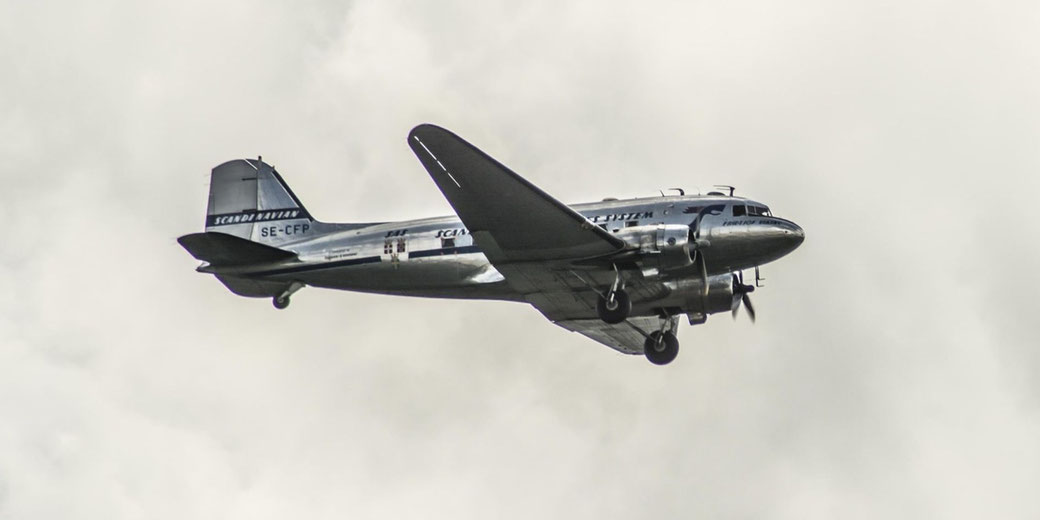
In the tense years that followed the Second World War, Germany became the central arena of growing rivalry between the United States and the Soviet Union.
The city of Berlin lay deep inside the Soviet occupation zone, but was itself divided between the four victorious Allied powers.
In June 1948, Soviet authorities cut all road, rail, and canal routes into the western sectors of the city in an attempt to force the Western Allies to abandon their position.
The blockade created a severe humanitarian crisis for the millions of people living in West Berlin and tested the resolve of the United States, Britain, and their partners.
The following historical sources examine the origins of the blockade, the political tensions that led to the crisis, and the remarkable airlift that kept Berlin alive during one of the first major confrontations of the Cold War.
Source 1
"At the end of the Second World War, U.S., British, and Soviet military forces divided and occupied Germany. Also divided into occupation zones, Berlin was located far inside Soviet-controlled eastern Germany. The United States, United Kingdom, and France controlled western portions of the city, while Soviet troops controlled the eastern sector. As the wartime alliance between the Western Allies and the Soviet Union ended and friendly relations turned hostile, the question of whether the western occupation zones in Berlin would remain under Western Allied control or whether the city would be absorbed into Soviet-controlled eastern Germany led to the first Berlin crisis of the Cold War. The crisis started on June 24, 1948, when Soviet forces blockaded rail, road, and water access to Allied-controlled areas of Berlin. The United States and United Kingdom responded by airlifting food and fuel to Berlin from Allied airbases in western Germany. The crisis ended on May 12, 1949, when Soviet forces lifted the blockade on land access to western Berlin...
"The year 1947 saw major shifts in occupation policy in Germany. On January 1, the United States and United Kingdom unified their respective zones and formed Bizonia, which caused tensions between East and West to escalate. In March, the breakdown of the Moscow Conference of Foreign Ministers and the enunciation of the Truman Doctrine served to harden the lines of an increasingly bipolar international order. In June, Secretary of State George Marshall announced the European Recovery Program. The purpose of the Marshall Plan—as the program came to be called—was not only to support economic recovery in Western Europe, but also to create a bulwark against Communism by drawing participating states into the United States' economic orbit...
"Two and a half million Berliners, spread between four zones of occupation, faced profound privations: Allied bombing had reduced the city to rubble, shelter and warmth were scarce, the black market dominated the city's economic life, and starvation loomed...
"In June, without informing the Soviets, U.S. and British policymakers introduced the new Deutschmark to Bizonia and West Berlin. The purpose of the currency reform was to wrest economic control of the city from the Soviets, enable the introduction of Marshall Plan aid, and curb the city's black market. Soviet authorities responded with similar moves in their zone. Besides issuing their own currency, the Ostmark, the Soviets blocked all major road, rail, and canal links to West Berlin, thus starving it of electricity, as well as a steady supply of essential food and coal...
"On June 13, 1948, the administrator of U.S.-occupied Germany General Lucius Clay reported to Washington that 'There is no practicability in maintaining our position in Berlin and it must not be evaluated on that basis.... We are convinced that our remaining in Berlin is essential to our prestige in Germany and in Europe. Whether for good or bad, it has become a symbol of the American intent.' The Truman administration agreed. Based upon written agreements with the Soviet Union in 1945, the only connections to Berlin left to the Western Allies were air corridors from West Germany used to supply Berlin by air...
"The United States launched 'Operation Vittles' on June 26, with the United Kingdom following suit two days later with 'Operation Plainfare.' Despite the desire for a peaceful resolution to the standoff, the United States also sent to the United Kingdom B-29 bombers, which were capable of carrying nuclear weapons...
"In time, the airlift became ever more efficient and the number of aircraft increased. At the height of the campaign, one plane landed every 45 seconds at Tempelhof Airport. By spring 1949, the Berlin Airlift proved successful. The Western Allies showed that they could sustain the operation indefinitely. At the same time, the Allied counter-blockade on eastern Germany was causing severe shortages, which, Moscow feared, might lead to political upheaval...
"On May 11, 1949, Moscow lifted the blockade of West Berlin. The Berlin Crisis of 1948–1949 solidified the division of Europe. Shortly before the end of the blockade, the Western Allies created the North Atlantic Treaty Organization (NATO)."
Contextual statement:
The Office of the Historian maintains "Milestones in the History of U.S. Foreign Relations," a series of short essays on key episodes in American diplomacy. This essay was written by professional historians employed by the Department of State.
Bibliographical reference:
Office of the Historian, U.S. Department of State. (n.d.). The Berlin Airlift, 1948–1949. Milestones in the History of U.S. Foreign Relations. https://history.state.gov/milestones/1945-1952/berlin-airlift
Copyright: Public domain
Source 2
"It is logical that the United States should do whatever it is able to do to assist in the return of normal economic health in the world, without which there can be no political stability and no assured peace. Our policy is directed not against any country or doctrine but against hunger, poverty, desperation and chaos. Its purpose should be the revival of a working economy in the world so as to permit the emergence of political and social conditions in which free institutions can exist...
"Europe's requirements for the next three or four years of foreign food and other essential products—principally from America—are so much greater than her present ability to pay that she must have substantial additional help, or face economic, social and political deterioration of a very grave character...
"Such assistance, I am convinced, must not be on a piece-meal basis as various crises develop. Any assistance that this Government may render in the future should provide a cure rather than a mere palliative.”
Contextual statement:
Context: This is the founding document of the Marshall Plan. Secretary of State George C. Marshall delivered it as the commencement address at Harvard University. As a speech by a federal official acting in his official capacity, it is a U.S. government work in the public domain. Marshall outlined the dire economic conditions in postwar Europe and called for a comprehensive American aid program. The speech launched what became the European Recovery Program (ERP), universally known as the Marshall Plan.
Bibliographical reference:
Marshall, G. C. (1947, June 5). Remarks by the Secretary of State at Harvard University [Speech]. State Department handout version, June 4, 1947. George C. Marshall Foundation. https://www.marshallfoundation.org/the-marshall-plan/speech/
Copyright: Public domain
Source 3
"The Berlin Blockade was a defining moment in the Cold War in Europe. Moscow expanded its control throughout Eastern Europe after 1945, creating satellite regimes from Poland to Bulgaria and Yugoslavia. After Communists took power in Czechoslovakia in February 1948, the vortex of the East-West conflict shifted to Germany, where the Russians shared control with three other occupying powers—France, the United Kingdom, and the United States (US). The Soviets cut off road, rail, and barge traffic between Berlin and the Western occupation zones of Germany on 24 June 1948. The US and its allies apparently faced an inevitable choice between challenging the blockade on the ground, which might trigger a third world war, or withdrawing from the city, which would destroy American credibility in Europe, undermine the Marshall Plan, and open the way to Soviet political advances in Germany and the rest of Europe...
"The Berlin Airlift enabled the West to avoid this stark choice. Begun as an improvised stopgap to buy time, it evolved into an efficient organization that kept 2.2 million Berliners alive for nearly a year. The US nicknamed its part of the airlift 'Operation Vittles,' while the British called theirs 'Operation Plainfare.' Despite the different nicknames, the airlift succeeded because of teamwork. The British and American armies delivered food, coal, and dozens of other daily necessities to nine airfields in western Germany. From there, aircrews from the US Air Force, US Navy, Royal Air Force, and British civilian contract carriers flew cargoes into Berlin...
"Moscow may have counted on the Berliners to lose heart or winter weather to ground the airlift. Neither happened. In the famous 'Easter Parade' of 16 April 1949, a plane landed in Berlin every 62 seconds. On 12 May 1949 the Russians gave up and reopened surface routes to the city. The airlift continued until 30 September, stockpiling supplies against a possible new blockade. By then the allies had flown about 2,326,500 tons of supplies to Berlin in just over 278,100 flights.”
Contextual statement:
This is an official history published by United States Air Forces in Europe (USAFE). The author, Daniel F. Harrington, was a historian in the USAFE History Office.
Bibliographical reference;
Harrington, D. F. (2008). The Air Force can deliver anything: A history of the Berlin Airlift. United States Air Forces in Europe, Office of History. https://media.defense.gov/2018/Jan/24/2001869016/-1/-1/1/The%20Air%20Force%20Can%20Deliver%20Anything%20a%20History%20of%20the%20Berlin%20Airlift.PDF
Copyright: Public domain
Source 4
"In 1948 the Soviet blockade cut the city of Berlin off from food, fuel, and other necessities from the West and threatened the Western position in post-World War II Europe. The U.S. Air Force and Royal Air Force answered with air power, creating an air bridge of supplies that delivered 2.3 million tons of cargo to the beleaguered city over the next fifteen months...
"Like the rest of Germany, Berlin had suffered enormous damage. In May 1945, 2.8 million people remained in the city, down from a prewar population of 4.6 million. Of the prewar work force, only 28.5 percent remained. The medical profession had been especially hard hit, with only 2,400 of the 6,500 prewar doctors remaining. Housing space had been seriously reduced. Some 70 percent had been damaged, but could still provide shelter, and an additional 10 percent was reparable; but 20 percent had been demolished. Bomb damage had been concentrated within the city center, where 70 percent of the area had been completely devastated. Only 43 percent of the work places in Berlin survived. Hospital beds had been reduced from 33,000 to 8,500. None of Berlin's eighty-seven sewer systems functioned, so diseases like typhus and dysentery spread quickly, a situation exacerbated by the shortage of physicians. The Allies had rendered Berlin's drinking water system unusable. The food system was also critical. Berlin could produce only 2 percent of that necessary.”
Contextual statement:
Written by Roger G. Miller and published by the Air Force History and Museums Program, this is the most comprehensive official U.S. Air Force history of the airlift. The report documentation page states: "Approved for public release; distribution is unlimited."
Bibliographical reference:
Miller, R. G. (1998). To save a city: The Berlin Airlift, 1948–1949 (pp. 1–4). Air Force History and Museums Program. GPO Stock No. 008-070-00734-7. https://www.amc.af.mil/Portals/12/documents/To%20Save%20a%20City_Berlin%20Airlift%201948-1949.pdf
Copyright: Public domain
Source 5
"The United States Government wishes to call to the attention of the Soviet Government the extremely serious international situation which has been brought about by the actions of the Soviet Government in imposing restrictive measures on transport which amount now to a blockade against the sectors in Berlin occupied by the United States, United Kingdom and France. The United States Government regards these measures of blockade as a clear violation of existing agreements concerning the administration of Berlin by the four occupying powers...
"This population includes hundreds of thousands of women and children, whose health and safety are dependent on the continued use of adequate facilities for moving food, medical supplies and other items indispensable to the maintenance of human life in the western sectors of Berlin. The most elemental of these human rights which both our Governments are solemnly pledged to protect are thus placed in jeopardy by these restrictions. It is intolerable that any one of the occupying authorities should attempt to impose a blockade upon the people of Berlin...
"The United States Government categorically asserts that it is in occupation of its sector in Berlin with free access thereto as a matter of established right deriving from the defeat and surrender of Germany and confirmed by formal agreements among the principal Allies. It further declares that it will not be induced by threats, pressures or other actions to abandon these rights."
Contextual statement:
This is a formal U.S. government protest delivered by Secretary of State George C. Marshall to Soviet Ambassador Alexander Panyushkin on July 6, 1948, just twelve days into the blockade.
Bibliographical reference:
Marshall, G. C. (1948, July 6). The Secretary of State to the Soviet Ambassador (Panyushkin). In Foreign Relations of the United States, 1948, Germany and Austria (Vol. II, Document 575, pp. 951–953). U.S. Government Printing Office. https://history.state.gov/historicaldocuments/frus1948v02/d575
Copyright: Public domain
Source 6
[Cable of June 13, 1948]
"There is no practicability in maintaining our position in Berlin and it must not be evaluated on that basis.... We are convinced that our remaining in Berlin is essential to our prestige in Germany and in Europe. Whether for good or bad, it has become a symbol of the American intent."
[Cable of June 27, 1948]
"I have already arranged for our maximum airlift to start on Monday [June 28]. For a sustained effort, we can use seventy Dakotas [C-47s]. The number which the British can make available is not yet known, although General Robertson is somewhat doubtful of their ability to make this number available."
[Late June 1948]
"While 2,000 tons a day is required in normal foods, 600 tons a day (using dried foods to the maximum extent) will substantially increase the morale of the German people and will unquestionably seriously disturb the Soviet blockade. To accomplish this, it is urgent that we be given approximately 50 additional transport planes to arrive in Germany at the earliest practicable date, and each day's delay will of course decrease our ability to sustain our position in Berlin."
Contextual statement:
General Lucius D. Clay was the U.S. Military Governor of Germany during the blockade. His official government cables are public domain as U.S. government documents. Two key cables are widely quoted in government publications.
Bibliographical reference:
Clay, L. D. (1948, June 13). Cable to Washington [Government cable]. Quoted in Office of the Historian, U.S. Department of State, The Berlin Airlift, 1948–1949. https://history.state.gov/milestones/1945-1952/berlin-airlift
Copyright: Public domain
Source 7
"If the Council of Foreign Ministers fails to reach agreement, and the Soviets reimpose the Berlin blockade, it follows that their decision to take this step would have very serious implications.... Thus, we should not assume that the next blockade would be intended only to resume the same nuisance position as has existed for the last ten months...
"There is now no question as to the practicability of the airlift provided Soviet action does not seriously interfere. The Acting Secretary of the Army's study for the Secretary of Defense, dated 18 May 1949, on the 'Support of Berlin Throughout Indefinite Period of Blockade' concludes essentially that the Berlin airlift can be continued indefinitely provided that adequate funds are made available upon request."
Contextual statement:
Originally classified TOP SECRET, this document is a report to the National Security Council by the Acting Secretary of Defense, dated June 1, 1949.
Bibliographical reference:
National Security Council. (1949, June 1). NSC 24/2: Possible U.S. courses of action in the event the USSR reimposes the Berlin blockade (Document 408). In Foreign Relations of the United States, 1949, Council of Foreign Ministers; Germany and Austria (Vol. III). U.S. Government Printing Office. https://history.state.gov/historicaldocuments/frus1949v03/d408
Copyright: Public domain
Source 8
"Post war Germany was divided into three sections—the Allied part was controlled by the United States, Great Britain and France and other part by the Soviet Union. The city of Berlin, although located in the eastern Soviet half, was also divided into four sectors—West Berlin occupied by Allied interests and East Berlin occupied by Soviets. In June 1948, the Soviet Union attempted to control all of Berlin by cutting surface traffic to and from the city of West Berlin. Starving out the population and cutting off their business was their method of gaining control. The Truman administration reacted with a continual daily airlift which brought much needed food and supplies into the city of West Berlin. This Airbridge to Berlin lasted until the end of September of 1949—although on May 12, 1949, the Soviet government yielded and lifted the blockade...
"When the airlift began, there were only two airfields in Berlin; Tempelhof with one runway in the US sector and Gatow with one runway in the British sector. In 1945, when the Americans arrived in Berlin, Tempelhof's lone runway was sodded and had been used only for small aircraft and fighters during the latter stages of World War II. It was beautifully equipped with hangars and a large terminal building, but it was surrounded by high apartment buildings which required a 500 foot ceiling in thick weather."
Contextual statement:
The Truman Library, part of the National Archives system, maintains a digital collection on the Berlin Airlift with introductory text and scanned primary documents.
Bibliographical reference:
Harry S. Truman Presidential Library & Museum. (n.d.). Berlin Airlift [Online collection]. National Archives. https://www.trumanlibrary.gov/library/online-collections/berlin-airlift
Copyright: Public domain