
Historical sources on the Australian Gold Rush
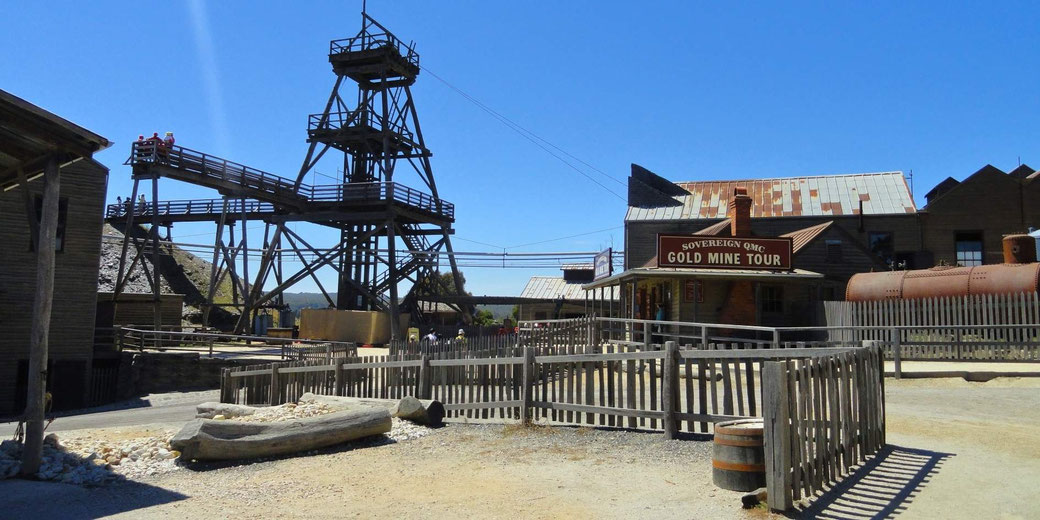
The sources on this page present a clear and detailed account of the Australian gold rush and its immediate impact on colonial society.
Beginning with the first public report of gold discoveries in 1851, they trace how news of gold spread rapidly and drew thousands of migrants from across the world to places such as Victoria and New South Wales.
They also reveal the tensions that followed, particularly through the experiences of miners who protested against licence fees and harsh policing, which culminated in the events at Eureka in 1854.
As a group, these sources allow you to examine the gold rush as a turning point in Australian history through contemporary reports, eyewitness testimony, and official data.
Source 1
"It is no longer any secret that gold has been found in the earth in several places in the western country. The fact was first established on the 12th February, 1851, by Mr. E. H. Hargraves, a resident of Brisbane Water, who returned from California a few months since. While in California, Mr. Hargraves felt persuaded that from the similarity of the geological formation there must be gold in several districts of this colony, and when he returned here his expectations were realized. What the value of the discovery may be it is impossible to say. Three men, who worked for three days with very imperfect machinery realized £2 4s. 8d. each per diem."
Contextual information:
The Sydney Morning Herald was the leading newspaper of the colony of New South Wales. This report, published on 2 May 1851, was the first public announcement of payable gold having been found in Australia, appearing approximately eleven weeks after Hargraves' initial find near Bathurst on 12 February 1851. The SMH used "the western country" in this first report; a second report published on 15 May 1851 names the site as Ophir specifically.
Bibliographical reference:
The gold discovery. (1851, May 2). Sydney Morning Herald, p. 3.
Copyright: Public domain.
Source 2
Extract A
"for one pound ten shilling sterling a head we were duly licensed for one month to dig, search for, and remove gold"
Extract B
"the thirty shillings a month for the gold licence became a nuisance."
Extract C
"'Was, then, the obnoxious mode of collecting the tax the sole cause of discontent: or was the tax itself (two pounds for three months) objected to at the same time?' 'I think the practical miner, who had been hard at work night and day, for the last four or six months, and, after all, had just bottomed a shicer, objected to the tax itself, because he could not possibly afford to pay it. And was it not atrocious to confine this man in the lousy lock-up at the Camp, because he had no luck?'"
Extract D
"That this meeting being convinced that the obnoxious licence-fee is an imposition and an unjustifiable tax on free labour, pledges itself to take immediate steps to abolish the same by at once burning all their licences."
Extract E
"I awoke. Sunday morning. It was full dawn, not daylight. A discharge of musketry — then a round from the bugle — the command 'forward' — and another discharge of musketry was sharply kept on by the red-coats (some 300 strong) advancing on the gully west of the stockade, for a couple of minutes. The shots whizzed by my tent. I jumped out of the stretcher and rushed to my chimney facing the stockade. The forces within could not muster above 150 diggers."
Contextual information:
Raffaello Carboni (1817–1875) was an Italian-born goldminer who was present at the Eureka Stockade at Ballarat on 3 December 1854 and was subsequently tried for high treason and acquitted. He wrote The Eureka Stockade in the months immediately following the rebellion, and it was published in Melbourne in 1855 as the only full eyewitness account of events by a participant.
Bibliographical reference:
Carboni, R. (1855). The Eureka stockade: The consequence of some pirates wanting on quarter-deck a rebellion. J.P. Atkinson. (pp. 2, 4, 17, Ch. XXX, Ch. LVI.
Copyright: Public domain.
Source 3
"Their fame soon spread to the adjacent colonies, and thousands hastened to the spot, desirous of participating in the newly found treasures. When the news reached home, crowds of emigrants from the United Kingdom hurried to our shores. Inhabitants of other European countries quickly joined in the rush. Americans from the Atlantic States were not long in following. Stalwart Californians left their own gold-yielding rocks and placers to try their fortunes at the southern Eldorado. Last of all, swarms of Chinese arrived eager to unite in the general scramble for wealth."
Contextual information:
Henry Heylyn Hayter (1821–1895) served as Government Statist of Victoria from 1874 to 1895, making him the colony's official keeper of population and economic records. Notes on the Colony of Victoria was published in 1876 as an official government reference work drawing on census data and colonial records, and was written about the Victorian goldfields specifically.
Bibliographical reference:
Hayter, H. H. (1876). Notes on the colony of Victoria: Historical, geographical, meteorological, and statistical. Government Printer.
Copyright: Public domain.
Source 4
"The number of inhabitants in Victoria on the night of the 2nd April 1871 was 731,528; the number on the 7th April 1861, or ten years previously, was 540,322; the increase was therefore 191,206, or at the rate of 35.39 per cent. In 1851, or the year of separation from New South Wales and of the discovery of gold, the population amounted to 77,345."
Contextual information:
The Census of Victoria 1871 was an official document of the colonial Government of Victoria, recording the population on the night of 2 April 1871. The census report included retrospective population data comparing 1871 figures with those recorded in 1861 and 1851, providing a direct measure of population change across the gold rush period.
Bibliographical reference:
Government of Victoria. (1871). Census of Victoria, 1871. Government Printer. (Introductory report, p. 1)
Copyright: Public domain.
Source 5
"Melbourne (including suburbs) has always had about one-third of the total colonial population, while Sydney and Adelaide respectively have been much the same."
Contextual information:
William Westgarth (1815–1889) was a Scottish-born merchant, politician, and historian who settled in Melbourne in 1840 and was a prominent figure in the early colonial period. Personal Recollections of Early Melbourne and Victoria was published in 1888, drawing on nearly five decades of direct observation of the colony's growth from a small settlement into a major city.
Bibliographical reference:
Westgarth, W. (1888). Personal recollections of early Melbourne and Victoria. George Robertson & Co. (Ch. VIII)
Copyright: Public domain.