
Historical sources on the Normans
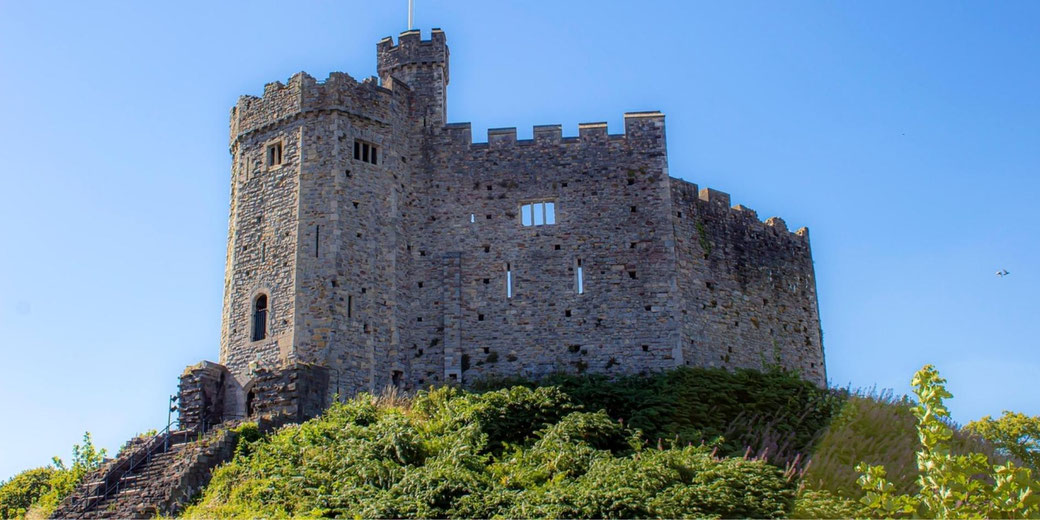
This page brings together a range of historical sources on the Normans, from their Scandinavian settlement in northern France to their conquest of England and expansion into Sicily.
The extracts include modern historical writing, medieval chronicles, discussion of the Bayeux Tapestry, evidence about motte-and-bailey castles, and a confronting account of the Harrowing of the North.
Together, these sources help you examine how the Normans secured land, adapted to new cultures, used castles and administration to control conquered regions, and justified their rule through written and visual evidence.
Source 1
Extract A
"The main fact is clear, namely that the Frankish king, Charles the Simple, granted Rollo as a fief a considerable part, the eastern part, of later Normandy. Apparently Rollo did homage for his fief in feudal fashion by placing his hands between the hands of the king, something, we are told, which 'neither his father, nor his grandfather, nor his great-grandfather before him had ever done for any man.' Legend goes on to relate, however, that Rollo refused to kneel and kiss the king's foot, crying out in his own speech, 'No, by God!' and that the companion to whom he delegated the unwelcome obligation performed it so clumsily that he overturned the king, to the great merriment of the assembled Northmen. Rollo did not receive the whole of the later duchy, but only the region on either side of the Seine which came to be known as Upper Normandy, and it was not till 924 that the Northmen acquired also middle Normandy, or the Bessin, while the west, the Cotentin and the Avranchin, fell to them only in 933."
Extract B
"The colonization of Normandy was, of course, only a small part of the work of this heroic age of Scandinavian expansion. The great emigration from the North in the ninth and tenth centuries has been explained in part by the growth of centralized government and the consequent departure of the independent, the turbulent, and the untamed for new fields of adventure; but its chief cause was doubtless that which lies back of colonizing movements in all ages, the growth of population and the need of more room. Five centuries earlier this land-hunger had pushed the Germanic tribes across the Rhine and Danube and produced the great wandering of the peoples which destroyed the Roman empire; and the Viking raids were simply a later aspect of this same Völkerwanderung, retarded by the outlying position of the Scandinavian lands and by the greater difficulty of migration by sea."
Extract C
"As to Rollo's personality, we have only the evidence of later Norman historians of doubtful authority and the Norse saga of Harold Fairhair. If, as seems likely, their accounts relate to the same person, he was known in the north as Hrolf the Ganger, because he was so huge that no horse could carry him and he must needs gang afoot. A pirate at home, he was driven into exile by the anger of King Harold, whereupon he followed his trade in the Western Isles and in Gaul, and rose to be a great Jarl among his people. The saga makes him a Norwegian, but Danish scholars have sought to prove him a Dane, and more recently the cudgels have been taken up for his Swedish origin."
Extract D
"It was chiefly the work of Roger, though Guiscard aided him throughout the earlier years and claimed a share in the results for himself, as well as vassalage for Roger's portion. The decisive turning-point was a joint enterprise, the siege and capture of Palermo in 1072, which gave the Normans control of the Saracen capital, the largest city in Sicily, with an all-anchoring harbor from which it took its name."
Contextual information:
Charles Homer Haskins was Gurney Professor of History and Political Science at Harvard University and one of the foremost medieval historians of the early twentieth century. The Normans in European History was published in 1915 and originated as a series of eight lectures delivered before the Lowell Institute in February 1915 and at the University of California later that year.
Bibliographical reference:
Haskins, C. H. (1915). The Normans in European history (pp. 27–29, 211). Houghton Mifflin.
Copyright: Public domain.
Source 2
Extract A
"So King Charles and Duke Robert agreed that the best thing to be done was very much what Alfred had done with Guthrum, to grant to Rolf part of the land as his own, if he would be baptized and hold it as the man of the king. So Rolf was baptized with Duke Robert to his godfather, and he took his name in baptism, though he was still commonly spoken of as Rolf. And he received the city of Rouen and the land from the Epte to the Dive, as a fief from King Charles, and became his man. So Rolf and his followers settled down in the land which from them was called the Land of the Northmen and afterwards the Duchy of Normandy."
Extract B
"Under him and his son William Longsword most of the Normans gradually became Christians, and left off their Scandinavian tongue and learned to speak French. By the end of William's reign nothing but French was spoken at Rouen; but in the lands to the west, which had been won more lately, men still spoke Danish, and many still clave to the gods of the North."
Extract C
"The effect of the Norman Conquest of England was neither to make England subject to Normandy nor to make it a Norman land. It gave to England a much higher place in the world in general than it had held before. At home, Englishmen were neither driven out nor turned into Normans, but the Normans in England were turned into Englishmen. But in this work of turning themselves into Englishmen, they made, bit by bit, many changes in the laws of England, and in the language, manners, and thoughts of Englishmen."
Extract D
"By the Norman Conquest of England we understand that series of events during the latter part of the eleventh century by which a Norman Duke was set on the throne of England, and was enabled to hand down the crown of England to his descendants. The Norman Conquest of England does in truth mean a great deal more than the mere transfer of the crown from one prince or one family to another, or even than the transfer of the crown from a prince born in the land to a prince who came from beyond sea."
Extract E
"When the Normans crossed the sea to conquer England, the English had been much longer settled in the land which from them was called England than the Normans had been in the land which from them was called Normandy. It was in the fifth century that the English began to settle in those parts of the isle of Britain which from them took the name of England. But it was not till the beginning of the tenth century that the Normans settled in that part of the mainland of Gaul which from them took the name of Normandy."
Extract F
"With Edward's election the connexion between English and Norman affairs becomes closer still; we might almost say that the Norman Conquest began in his time. Men thought that, by choosing Edward, the English royal house was restored to the crown; but it was in truth very much as if a Norman king had been chosen. Harthacnut had as much Norman blood in him as Edward, but he had not been brought up in Normandy; his feelings and ways were Danish. But Edward's feelings and ways were all Norman."
Contextual information:
Edward Augustus Freeman was Regius Professor of Modern History at the University of Oxford. His A Short History of the Norman Conquest of England was first published in 1880 as a condensed version of his five-volume work on the same subject, and the third edition was issued by the Clarendon Press in 1908.
Bibliographical reference:
Freeman, E. A. (1908). A short history of the Norman Conquest of England (3rd ed., pp. 1–2, 5, 9–12, 24). Clarendon Press. (Original work published 1880)
Copyright: Public domain.
Source 3
Extract A
"Meantime Earl William came up from Normandy into Pevensey on the eve of St. Michael's mass; and soon after his landing was effected, they constructed a castle at the port of Hastings. This was then made known to King Harold, and he then gathered a large force, and came against him at the hoary apple-tree. And William came against him by surprise, before his army was drawn up in battle array. But the king nevertheless strenuously opposed him, with the men who would stand by him, and there was great slaughter on either side. There was slain King Harold, and Leofwine his brother, and Earl Gyrth his brother, with many good men: and the French gained the field of battle, as God granted them for the sins of the nation."
Extract B
"Then sent he his men over all England into each shire; commissioning them to find out 'How many hundreds of hides were in the shire, what land the king himself had, and what stock upon the land; or, what dues he ought to have by the year from the shire.' Also he commissioned them to record in writing, 'How much land his archbishops had, and his diocesan bishops, and his abbots, and his earls;' and though I may be prolix and tedious, 'What, or how much, each man had, who was an occupier of land in England, either in land or in stock, and how much money it were worth.' So very narrowly, indeed, did he commission them to trace it out, that there was not one single hide, nor a yard of land, nay, moreover (it is shameful to tell, though he thought it no shame to do it), not even an ox, nor a cow, nor a swine was there left, that was not set down in his writ. And all the recorded particulars were afterwards brought to him."
Contextual information:
The Anglo-Saxon Chronicle is a collection of annals recording events in Anglo-Saxon England, originally compiled during the reign of King Alfred the Great (c. 890 CE) and continued by anonymous scribes until the mid-twelfth century.
Bibliographical reference:
Ingram, J. (Trans.). (1823). The Anglo-Saxon Chronicle. Longman. (Original work composed ca. 890–1154 CE)
Copyright: Public domain.
Source 4
"The Bayeux Tapestry is probably the most famous and the most remarkable of mediaeval embroideries. In it is given the complete story of a great exploit and one that must always be of particular interest to the English and French peoples — the story of the Norman Conquest. None of the main incidents leading up to the Conquest itself are omitted. The arrival of Harold in Normandy, his stay with William, his swearing of loyalty, his return to England, the death of Edward the Confessor, the subsequent election of Harold to the throne of England, with the expedition itself culminating in the Battle of Hastings, are all shown in the course of the story. It is as much a defence of William's conduct as a history of his triumph. The Tapestry is generally considered to be contemporary, or almost contemporary, with the events it portrays, and it is evident that if such be the case it is an historical document of the very first importance."
Contextual information:
Francis Frederick Locker Birrell was a British writer and critic. His Guide to the Bayeux Tapestry was published by the Victoria and Albert Museum's Textile Department and provided a scene-by-scene description of the embroidered cloth held in Bayeux, Normandy. The guide was intended for general audiences and includes commentary on the historical accuracy of the Tapestry's depictions.
Bibliographical reference:
Birrell, F. F. L. (n.d.). Guide to the Bayeux Tapestry. Victoria and Albert Museum, Textile Department.
Copyright: Public domain.
Source 5
Extract A
"The Bayeux Tapestry gives us five representations of castles, all of which are of the motte-and-bailey type. These are the castles of Dol, Rennes, Dinan, Bayeux, and Hastings. All these are shown as mottes with stockades on top of them."
Extract B
"The erection of castles was in fact the primary means by which the Norman Conquest was carried out and secured. Every important town, every strategical position, was occupied by a castle, which was generally of the motte-and-bailey type, a type which could be very rapidly constructed."
Contextual information:
Ella Sophia Armitage was a British historian and archaeologist who specialised in the study of early Norman fortifications. Her The Early Norman Castles of the British Isles was published in 1912 and is the first systematic scholarly survey of motte-and-bailey castle sites across England, Wales, Scotland, and Ireland. Armitage drew on documentary sources, archaeological fieldwork, and the Bayeux Tapestry depictions.
Bibliographical reference:
Armitage, E. S. (1912). The early Norman castles of the British Isles (pp. 80–82, 94–96). John Murray.
Copyright: Public domain.
Source 6
"The King stopped at nothing to hunt his enemies. He cut down many people and destroyed homes and land. Nowhere else had he shown such cruelty. This made a real change. To his shame, William made no effort to control his fury, punishing the innocent with the guilty. He ordered that crops and herds, tools and food be burned to ashes. More than 100,000 people perished of starvation. I have often praised William in this book, but I can say nothing good about this brutal slaughter. God will punish him."
Contextual information:
Ordericus Vitalis (1075–c. 1142) was a Benedictine monk of mixed English and Norman parentage, born in Shropshire and raised at the Abbey of Saint-Evroul in Normandy. His Historia Ecclesiastica, written between approximately 1115 and 1141, is one of the most detailed contemporary accounts of Norman England and Normandy. The passage above describes William the Conqueror's campaign of devastation across northern England during the winter of 1069–70, known as the Harrowing of the North. The figure of 100,000 deaths given by Ordericus should be treated critically with students: the estimated population of England at the time of Domesday (1086) was around 2.25 million, so this figure may be rhetorical rather than precise.
Bibliographical reference:
Ordericus Vitalis. (1853). The ecclesiastical history of England and Normandy (Vol. 2, Bk. 4; T. Forester, Trans.). Henry G. Bohn. (Original work written ca. 1115–1141 CE)
Copyright: Public domain.