
Historical sources on the medieval Catholic church
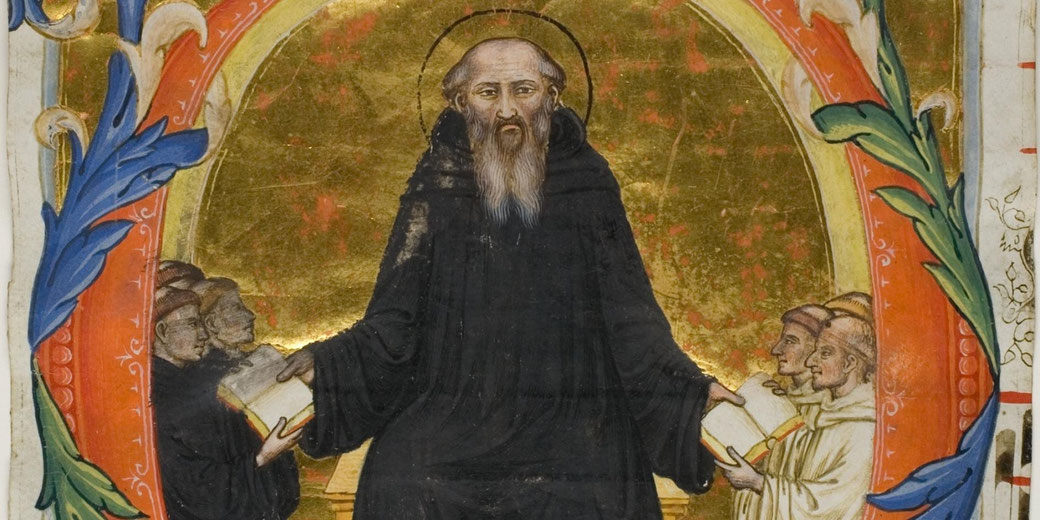
From the rise of Christianity within the Roman Empire to the growth of monasteries, bishops, councils, and Church wealth during the Middle Ages, these historical sources provide evidence about how the medieval Catholic Church developed into one of the most powerful institutions in European history.
The extracts below examine important beliefs such as the Trinity, the authority of bishops, the organisation of monastic life, and the relationship between the Church and political rulers.
They also show how medieval Christianity influenced education, warfare, social order, and economic life across Europe.
Source 1
Extract A
"Our Christian aera, which was introduced by the Roman abbot Dionysius Exiguus, in the sixth century, and came into general use two centuries later, during the reign of Charlemagne, puts the Nativity Dec. 25, 754 Anno Urbis, that is, after the founding of the city of Rome. Nearly all chronologers agree that this is wrong by at least four years. Christ was born a.u. 750 (or b.c. 4), if not earlier."
Extract B
"According to Matthew 2:1 (Comp. Luke 1:5, 26), Christ was born 'in the days of king Herod' I. or the Great, who died, according to Josephus, at Jericho, a.u. 750, just before the Passover, being nearly seventy years of age, after a reign of thirty-seven years. Allowing two months or more for the events between the birth of Christ and the murder of the Innocents by Herod, the Nativity must be put back at least to February or January, a.u. 750 (or b.c. 4), if not earlier."
Contextual information:
Philip Schaff (1819–1893) was a Swiss-American church historian who spent most of his career at Union Theological Seminary in New York. He wrote his multi-volume History of the Christian Church between 1858 and 1892, drawing on German scholarly methods to produce what became a standard English-language reference work on Christian history.
Bibliographical reference:
Schaff, P. (1882). History of the Christian Church: Vol. I. Apostolic Christianity, A.D. 1–100 (§16, "Chronology of the Life of Christ"). Charles Scribner's Sons.
Copyright: Public domain.
Source 2
Extract A
"It is my purpose to write an account of the lines of succession of the holy apostles, as well as of the times that have elapsed from the days of our Saviour to our own; and to relate the many important events that are said to have occurred in the history of the Church; and to mention those who have governed and presided over the Church in the most prominent parishes, and those who in each generation have proclaimed the divine word either orally or in writing."
Extract B
"The bishops of the most important churches are recorded to have been these: for the church of Antioch, Evodius, who was the first after the most holy apostle Peter; and secondly, Ignatius, who is known to many even now by his epistles … Among those of Jerusalem, James, the brother of the Lord, to whom the episcopal seat there was entrusted by the apostles."
Contextual information:
Eusebius of Caesarea (c. 260–340 AD) was Bishop of Caesarea in Palestine and is often called the "Father of Church History." He wrote his Ecclesiastical History around 313 AD, drawing on earlier written records and documents held in church libraries, making it the most important surviving account of the early Church's organisation and leadership.
Bibliographical reference:
Eusebius of Caesarea. Ecclesiastical History (A. C. McGiffert, Trans., 1890). In P. Schaff & H. Wace (Eds.), A Select Library of the Nicene and Post-Nicene Fathers of the Christian Church, Second Series, Vol. I (Book I, Ch. 1, §1; Book III, Ch. 22). Christian Literature Publishing Co.
Copyright: Public domain.
Source 3
"See that ye all follow the bishop, even as Jesus Christ does the Father, and the presbytery as ye would the apostles; and reverence the deacons, as being the institution of God. Let no man do anything connected with the Church without the bishop. Let that be deemed a proper Eucharist, which is either under the bishop, or under one to whom he has entrusted it. Wherever the bishop shall appear, there let the multitude also be; even as, wherever Jesus Christ is, there is the Catholic Church."
Contextual information:
Ignatius of Antioch (c. 35–107 AD) was Bishop of Antioch in Syria and one of the earliest Christian writers after the New Testament authors. He wrote a series of letters to various Christian communities while being transported to Rome for execution, and these letters are the earliest surviving texts to describe clearly how bishops held authority over individual churches and their surrounding districts.
Bibliographical reference:
Ignatius of Antioch. Epistle to the Smyrnaeans (Ch. 8). In J. B. Lightfoot & J. R. Harmer (Trans. & Eds., 1891), The Apostolic Fathers (p. 159). Macmillan.
Copyright: Public domain.
Source 4
Extract A
"Listen, O my son, to the precepts of thy master, and incline the ear of thy heart, and cheerfully receive and faithfully execute the admonitions of thy loving Father, that by the toil of obedience thou mayest return to Him from whom by the sloth of disobedience thou hast gone away."
Extract B
"It is well known that there are four kinds of monks. The first kind is that of Cenobites, that is, the monastic, who live under a rule and an Abbot. The second kind is that of Anchorites, or Hermits, who, not in the first fervour of their conversion, but after long probation in a monastery, having learned by the help of many brethren how to fight against the devil, go out well armed from the ranks of the community to the solitary combat of the desert."
Extract C
"The workshop, however, where we should diligently execute all these things, is the enclosure of the monastery, and stability in the community."
Extract D
"The third degree of humility is, that a man for the love of God subject himself to a Superior in all obedience, imitating the Lord, of Whom the Apostle saith: 'He was made obedient even unto death.'"
Contextual information:
Benedict of Nursia (c. 480–547 AD) was an Italian Christian monk who founded the monastery of Monte Cassino in central Italy and served as its abbot. He wrote the Regula Benedicti — the Rule of Saint Benedict — around 530 AD as a practical guide to community monastic life, and it became the foundation document for Western Christian monasticism for the next thousand years.
Bibliographical reference:
Benedict of Nursia. The Holy Rule of St. Benedict (B. Verheyen, Trans., 1902). St. Benedict's Abbey. (Hosted by Christian Classics Ethereal Library, public-domain edition.)
Copyright: Public domain.
Source 5
"The endowment of one or more priests to say or sing Mass for the soul of the endower, or for the souls of persons named by him, and also, in the greater number of cases, to perform certain other offices, such as those of choir member in a collegiate church or cathedral, or of curate in outlying districts."
Contextual information:
The Catholic Encyclopedia was published in New York between 1907 and 1913 by the Robert Appleton Company under the editorial supervision of Charles Herbermann and a team of Catholic scholars. It was written to provide authoritative reference articles on Catholic doctrine, history, and practice, and its entries on medieval religious institutions draw directly on primary Church documents and canon law.
Bibliographical reference:
Herbermann, C. G. (Ed.). (1908). Chantry. In The Catholic Encyclopedia (Vol. 3, p. 564). Robert Appleton Company.
Copyright: Public domain.
Source 6
Extract A
"CHIVALRY (O. Fr. chevalerie, from Late Lat. caballerius), the knightly class of feudal times, possessing its own code of rules, moral and social. The primary sense in the middle ages is 'knights' or 'fully armed and mounted fighting men.' Thence the term came to mean that gallantry in battle and high sense of honour in general expected of knights. Thus 'to do chivalry' was a medieval phrase for 'to act the knight.'"
Extract B
"Chivalry taught the world the duty of noble service willingly rendered. It upheld courage and enterprise in obedience to rule, it consecrated military prowess to the service of the Church, glorified the virtues of liberality, good faith, unselfishness and courtesy, and above all, courtesy to women."
Contextual information:
The 11th edition of the Encyclopædia Britannica was published in Cambridge between 1910 and 1911 and is widely regarded as one of the most authoritative English-language reference works ever produced. Its articles on medieval history and institutions were written by leading academic specialists of the era, and the entry on chivalry draws on a wide body of medieval primary sources including Ramon Llull and Geoffrey de Charny.
Bibliographical reference:
Encyclopædia Britannica (11th ed.). (1911). Chivalry (Vol. 6, p. 246); Knighthood and Chivalry (Vol. 15, pp. 851–858). Cambridge University Press.
Copyright: Public domain.
Source 7
"We believe in one God, the Father Almighty, maker of all things visible and invisible; and in one Lord Jesus Christ, the Son of God, the only-begotten of his Father, of the substance of the Father, God of God, Light of Light, very God of very God, begotten, not made, being of one substance with the Father. By whom all things were made, both which be in heaven and in earth. Who for us men and for our salvation came down and was incarnate and was made man. He suffered and the third day he rose again, and ascended into heaven. And he shall come again to judge both the quick and the dead. And we believe in the Holy Ghost."
Contextual information:
The Nicene Creed was adopted at the First Council of Nicaea in 325 AD, convened by Emperor Constantine I. It was produced by approximately 300 bishops gathered from across the Roman Empire to settle a theological dispute about the nature of Christ's relationship to God, and its affirmation of the Father, Son and Holy Spirit as sharing one substance became the definitive statement of Trinitarian belief for the Catholic Church.
Bibliographical reference:
First Council of Nicaea. The Creed of Nicaea (325 AD) (H. R. Percival, Trans., 1900). In P. Schaff & H. Wace (Eds.), A Select Library of the Nicene and Post-Nicene Fathers of the Christian Church, Second Series, Vol. XIV: The Seven Ecumenical Councils (pp. 3–4). Charles Scribner's Sons.
Copyright: Public domain.
Source 8
"The clergy depended for their maintenance chiefly upon the income from lands and the tithe. These sources of income had been amply secured to them, partly by the munificent grants of pious sovereigns, partly by the no less liberal bequests of the faithful who relied upon the prayers of the Church to shorten their time in purgatory. The accumulation of wealth in ecclesiastical hands was therefore enormous, and it formed one of the great problems of the later Middle Ages to find some means of arresting this absorption of the resources of nations by an organisation which gave them no return in taxes or in service."
Contextual information:
Henry Charles Lea (1825–1909) was an American historian based in Philadelphia who spent several decades researching the medieval Catholic Church using primary documents from European archives. His History of the Inquisition of the Middle Ages, published in three volumes in 1887–88, is regarded as a landmark of secular scholarly history writing and remains a standard reference on medieval Church institutions and power.
Bibliographical reference:
Lea, H. C. (1888). A History of the Inquisition of the Middle Ages (Vol. I, p. 8). Harper & Brothers.
Copyright: Public domain.
Source 9
"It is our desire that all the various nations which are subject to our Clemency and Moderation, should continue to profess that religion which was delivered to the Romans by the divine Apostle Peter, as it hath been preserved by faithful tradition and which is now professed by the Pontiff Damasus and by Peter, Bishop of Alexandria, a man of apostolic holiness. According to the apostolic teaching and the doctrine of the Gospel, let us believe in the one deity of the Father, the Son and the Holy Spirit, in equal majesty and in a holy Trinity. We authorize the followers of this law to assume the title of Catholic Christians; but as for the others, since, in our judgment they are foolish madmen, we decree that they shall be branded with the ignominious name of heretics, and shall not presume to give to their conventicles the name of churches. They will suffer in the first place the chastisement of the divine condemnation and in the second the punishment of our authority, which in accordance with the will of Heaven we shall decide to inflict. Given in Thessalonica on the third day from the Calends of March, during the fifth consulate of Gratian Augustus and first of Theodosius Augustus."
Contextual information:
Emperor Theodosius I (347–395 AD) issued this decree on 27 February 380 AD from the city of Thessalonica, in what is today northern Greece. It was addressed to the population of Constantinople and declared Nicene Christianity — belief in the Trinity — to be the only legitimate religion of the Roman Empire, making all other religious practices within the empire illegal.
Bibliographical reference:
Theodosius I. Edict of Thessalonica (Cunctos Populos), Codex Theodosianus 16.1.2 (380 AD). In W. K. Boyd. (1905). The Ecclesiastical Edicts of the Theodosian Code (Studies in History, Economics and Public Law, Vol. XXIV, No. 2, pp. 45–46). Columbia University Press.
Copyright: Public domain.