
Historical sources on Marco Polo
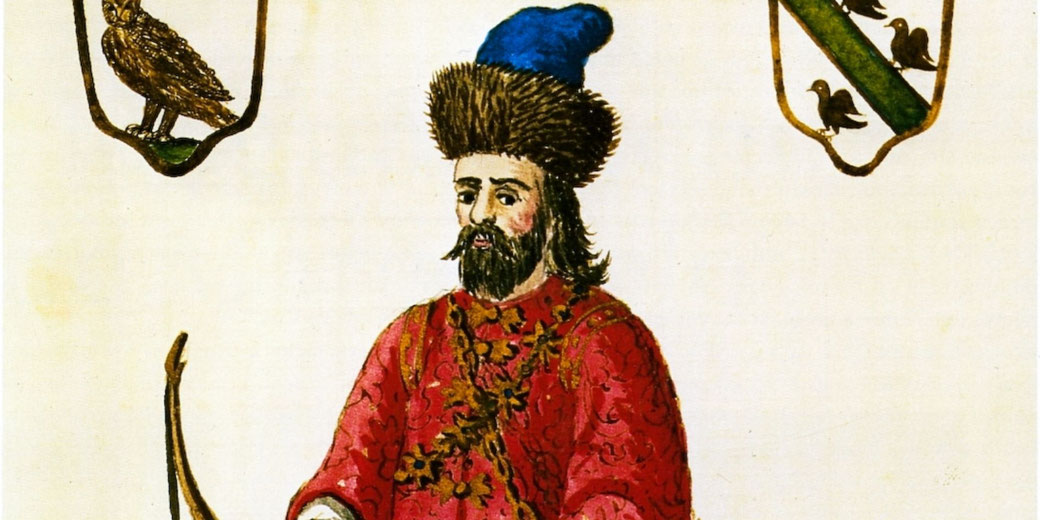
The sources below provide a valuable insight into the life and travels of Marco Polo, one of the most famous European travellers of the medieval period.
Through descriptions of the court of Kublai Khan, accounts of journeys across Asia, and explanations of the writing of the Travels, these extracts demonstrate how Europeans understood the Mongol Empire and the societies of the East during the late thirteenth century.
They also raise important historical questions about the reliability of Marco Polo’s claims, the purpose of his writing, and the influence his book had upon European ideas about Asia for centuries afterward.
Source 1
Extract A
"Great Princes, Emperors, and Kings, Dukes and Marquises, Counts, Knights, and Burgesses! and People of all degrees who desire to get knowledge of the various races of mankind and of the diversities of the sundry regions of the World, take this Book and cause it to be read to you. For ye shall find therein all kinds of wonderful things, and the divers histories of the Great Hermenia, and of Persia, and of the Land of the Tartars, and of India, and of many another country of which our Book doth speak, particularly and in regular succession, according to the description of Messer Marco Polo, a wise and noble citizen of Venice, as he saw them with his own eyes. Some things indeed there be therein which he beheld not; but these he heard from men of credit and [good reputation]. And we shall set down things seen as seen, and things heard as heard only, so that no jot of falsehood may mar the truth of our Book."
Extract B
"He told them in their message that they should pray the Pope on his part to send him as many as a hundred persons of our Christian faith; intelligent men, acquainted with the Seven Arts, well qualified to enter into controversy, and able clearly to prove by force of argument to idolaters and other kinds of folk, that the Law of Christ was best, and that all other religions were false and naught; and that if they would prove this, he and all under him would become Christians and the Church's [subjects]."
Extract C
"Now it came to pass that Marco, the son of Messer Nicolo, sped wondrously in learning the customs of the Tartars, as well as their language, their manner of writing, and their practice of war; in fact he came in brief space to know several languages, and four sundry written characters. And he was discreet and prudent in every way, insomuch that the Emperor held him in great esteem. And so when he discerned Mark to have so much sense, and to conduct himself so well and beseemingly, he sent him on an [mission] of his, to a country which was a good six months' journey distant. The young gallant executed his commission well and with discretion."
Extract D
"Now it came to pass that the Queen BOLGANA, wife of ARGON, Lord of the Levant, departed this life. And in her Will she had desired that no Lady should take her place, or succeed her as Argon's wife, except one of her own family. And when Argon heard thereof, he straightway sent off three of his Barons, by name OULATAI, APUSCA, and COJA, as his Ambassadors to the Great Kaan, to beg that he would give him to wife one of the [women] of the family of his deceased queen, Bolgana. And the Great Kaan granted his request, and caused search to be made through that family for a Lady both fair and good; and one was found who was of [about] seventeen years of age, a very handsome and [charming] [young woman], whose name was COCACIN. And this Lady was sent to be the wife of Argon. Now the [route] over land was [blocked] by certain wars that were [going on] between the [Mongol] princes; and so the Ambassadors were advised to proceed by sea."
Extract E
"Now am I come to that part of our Book in which I shall tell you of the great and wonderful magnificence of the Great Kaan now reigning, by name CUBLAY KAAN; Kaan being a title which signifyeth 'The Great Lord of Lords,' or Emperor. And of a surety he hath good right to such a title, for all men know for a certain truth that he is the most potent man, as regards forces and lands and treasure, that existeth in the world, or ever hath existed from the time of our First Father Adam until this day."
Extract F
"When you have left the city of Changan and have travelled for three days through a splendid country, passing a number of towns and villages, you arrive at the most noble city of Kinsay, a name which is as much as to say in our tongue 'The City of Heaven,' as I told you before. And since we have got thither I will enter into particulars about its magnificence; and these are well worth the telling, for the city is beyond dispute the finest and the noblest in the world. In this we shall speak according to the written statement which the Queen of this Realm sent to Bayan the conqueror of the country for transmission to the Great Kaan, in order that he might be aware of the surpassing grandeur of the city and might be moved to save it from destruction or injury. I will tell you all the truth as it was set down in that document."
Contextual information:
Marco Polo (c. 1254-1324) was a Venetian merchant who travelled to Asia between 1271 and 1295 in the company of his father Nicolo and uncle Maffeo. He spent seventeen years in the service of the Mongol ruler Kublai Khan before returning to Venice. The text was dictated to Rustichello da Pisa while both men were prisoners in Genoa around 1298, and it became the most widely read account of Asia produced in medieval Europe.
Bibliographical reference:
Adapted from Polo, M., & Rusticiano da Pisa. The book of Ser Marco Polo, the Venetian, concerning the kingdoms and marvels of the East (H. Yule, Trans., 1903; 3rd ed., revised by H. Cordier, Vol. 1, pp. 1, 13, 15, 349; Vol. 2, pp. 52, 185-186). John Murray. (Original work dictated c. 1298).
Copyright: Public domain.
Source 2
"After Nicolo, Maffio, and Marco had remained long at the court of the great khan, and accumulated very considerable wealth in gold and jewels, they felt a strong desire to revisit their native country. Nicolo therefore took an opportunity one day, when the monarch seemed in particularly good humour, to throw himself at his feet, and solicit for them all permission to depart; but the sovereign was now so much attached to his visitors that he would by no means listen to this proposal. It happened, however, that the Queen Bolgana, the spouse of Argon, lord of the East, died, and in her last will enjoined that he should receive no wife unless of her family. He therefore sent as ambassadors to the khan three barons, Aulatam, Alpusca, and Goza, with a great train, requesting a lady of the same lineage with the deceased queen. The monarch received the embassy with joy, and selected a young princess of that house."
Contextual information:
William Marsden (1754-1836) was a British scholar and linguist who produced the first major English critical translation of Marco Polo's account in 1818, drawing on multiple manuscript versions. The Scottish editor Hugh Murray revised and enlarged Marsden's translation for the 1845 Edinburgh edition. This passage describes the events of 1292 that gave the Polo party their opportunity to return home after more than two decades in the East.
Bibliographical reference:
Polo, M. The travels of Marco Polo, greatly amended and enlarged from valuable early manuscripts (W. Marsden, Trans., 1845; H. Murray, Ed.; 3rd ed., p. 2). Oliver & Boyd. (Original work dictated c. 1298).
Copyright: Public domain.
Source 3
"It must be known, then, that from the creation of Adam to the present day, no man, whether Pagan, or Saracen, or Christian, or other, of whatever progeny or generation he may have been, ever saw or inquired into so many and such great things as Marco Polo above mentioned. Who, wishing in his secret thoughts that the things he had seen and heard should be made public by the present work, for the benefit of those who could not see them with their own eyes, he himself being in the year of our Lord 1295 in prison at Genoa, caused the things which are contained in the present work to be written by master Rustigielo, a citizen of Pisa, who was with him in the same prison at Genoa; and he divided it into three parts."
Contextual information:
This passage comes from the Latin prologue attached to early manuscript versions of the Travels, translated into English by William Marsden in his 1818 edition and preserved in Hugh Murray's 1845 revision. It describes the circumstances in which Marco Polo's account was first written down, naming Rustichello da Pisa as the scribe who recorded the text during their shared imprisonment in Genoa from about 1298.
Bibliographical reference:
Polo, M. The travels of Marco Polo, greatly amended and enlarged from valuable early manuscripts (W. Marsden, Trans., 1845; H. Murray, Ed.; 3rd ed., p. 95). Oliver & Boyd. (Original work dictated c. 1298).
Copyright: Public domain.