
Historical sources on feudal Japanese society
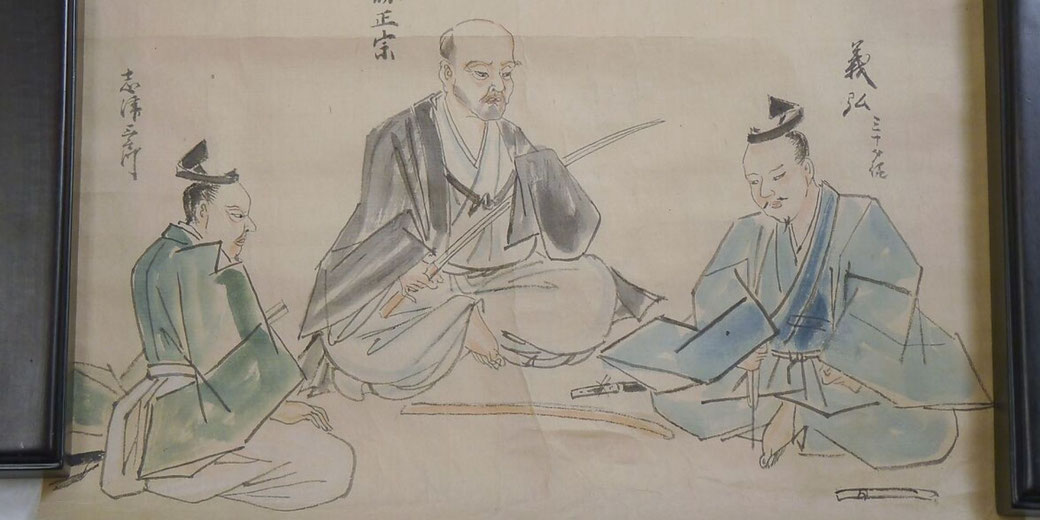
For centuries before the modern era, Japan operated under a rigid feudal order that organised society into clearly defined ranks and obligations.
At the top of this system stood the emperor, a sacred figure whose authority held symbolic value, and the shogun, the military ruler who controlled the government in practice.
Powerful regional lords known as daimyo ruled their territories through networks of loyal samurai warriors, who formed the military elite and followed strict codes of honour and service.
Beneath them lived farmers, artisans, and merchants, groups whose status depended upon their perceived contribution to society rather than their wealth.
The following sources provide insight into the organisation of Japanese feudal society, the role of the samurai, and the cultural ideas that guided behaviour within this system.
Source 1
“The feudal system has passed away like a dissolving view before the eyes of those who have lived in Japan during the last few years. But when they arrived there it was in full force, and there is not an incident narrated in the following pages, however strange it may appear to Europeans, for the possibility and probability of which those most competent to judge will not vouch. The lord and his retainer, the warrior and the priest, the humble artisan and the despised Eta or pariah, each in his turn will become a leading character in my budget of stories; and it is out of the mouths of these personages that I hope to show forth a tolerably complete picture of Japanese society.”
Contextual Information:
Algernon Bertram Freeman-Mitford (later Lord Redesdale) was a British diplomat who served at the British Legation in Japan in the 1860s. He arrived during the final years of the feudal era and witnessed the collapse of the shogunate during the Meiji Restoration of 1868. His book Tales of Old Japan, published in 1871, was one of the first English-language works to describe Japanese feudal society from first-hand experience.
Bibliographical Reference:
Freeman-Mitford, A. B. (1871). Tales of old Japan (Preface, pp. v–vi). Project Gutenberg. https://www.gutenberg.org/ebooks/13015
Copyright: Public domain.
Source 2
Of the inner life of the Japanese the world at large knows but little. The fact was that the Tycoon’s Government—with whom alone, so long as the Mikado remained in seclusion in his sacred capital at Kiôto, any relations were maintained—knew that the Imperial purple with which they sought to invest their chief must quickly fade before the strong sunlight which would be brought upon it so soon as there should be European linguists capable of examining their books and records. Now, however, there is no cause for concealment; the Roi Fainéant has shaken off his sloth, and his Maire du Palais, together, and an intelligible Government, which need not fear scrutiny from abroad, is the result.”
Contextual Information:
In this passage, Mitford uses two French terms to describe the relationship between the emperor and the shogun. ‘Roi Fainéant’ means ‘idle king’ and refers to the emperor, who had no real political power. ‘Maire du Palais’ means ‘mayor of the palace’ and refers to the shogun, who actually ran the country. Mitford is describing how the shogunate tried to keep foreigners from discovering that the emperor was merely a figurehead.
Bibliographical Reference:
Freeman-Mitford, A. B. (1871). Tales of old Japan (Introduction, pp. 1–2). Project Gutenberg. https://www.gutenberg.org/ebooks/13015
Copyright: Public domain.
Source 3
“Another class to which no allusion is made is that of the Gôshi. The Gôshi are a kind of yeomen, or bonnet-lairds, as they would be called over the border, living on their own land, and owning no allegiance to any feudal lord. Their rank is inferior to that of the Samurai, or men of the military class, between whom and the peasantry they hold a middle place. Like the Samurai, they wear two swords, and are in many cases prosperous and wealthy men claiming a descent more ancient than that of many of the feudal Princes.”
Contextual Information:
Mitford describes a class of people between the samurai warriors and the peasants. The passage makes clear that the samurai were ‘men of the military class’ who ranked above the peasantry, and that they were loyal retainers of the ‘feudal Princes’ (the daimyo). The reference to wearing two swords is significant because only the samurai class was legally permitted to carry both a long and a short sword.
Bibliographical Reference:
Freeman-Mitford, A. B. (1871). Tales of old Japan (Preface, pp. v–vi). Project Gutenberg. https://www.gutenberg.org/ebooks/13015
Copyright: Public domain.
Source 4
“In Japan as in Europe, when feudalism was formally inaugurated, the professional class of warriors naturally came into prominence. These were known as samurai, meaning literally, like the old English cniht (knecht, knight), guards or attendants—resembling in character the soldurii whom Caesar mentioned as existing in Aquitania, or the comitati, who, according to Tacitus, followed Germanic chiefs in his time.”
Contextual Information: Captain F. Brinkley was a British-born journalist and historian who lived in Japan for over forty years, serving as editor of the Japan Mail newspaper. His history of Japan was published in 1912 with the collaboration of Baron Kikuchi, former president of the Imperial University at Kyoto. This passage compares the samurai to European knights and explains the feudal lord-vassal relationship.
Bibliographical Reference:
Brinkley, F., & Kikuchi, D. (1912). A history of the Japanese people: From the earliest times to the end of the Meiji era. Project Gutenberg. https://www.gutenberg.org/ebooks/27604
Copyright: Public domain.
Source 5
“The samurai derived his income from land and could even indulge, if he had a mind to, in amateur farming; but the counter and abacus were abhorred. We knew the wisdom of this social arrangement. Montesquieu has made it clear that the debarring of the nobility from mercantile pursuits was an admirable social policy, in that it prevented wealth from accumulating in the hands of the powerful. The separation of power and riches kept the distribution of the latter more nearly equable. Commerce, therefore, in feudal Japan did not reach that degree of development which it would have attained under freer conditions.”
Contextual Information:
Inazo Nitobe was a Japanese educator and diplomat who was born into a samurai family in 1862, just before the end of the feudal era. He wrote Bushido: The Soul of Japan in English in 1899 to explain Japanese warrior culture to Western readers. This passage explains why the merchant class was placed at the bottom of the social hierarchy: the samurai despised trade and commerce, and society considered merchants less honourable than farmers and artisans because merchants produced nothing themselves.
Bibliographical Reference:
Nitobe, I. (1899). Bushido: The soul of Japan (Chapter IV). Project Gutenberg. https://www.gutenberg.org/ebooks/12096
Copyright: Public domain.
Source 6
“According to the census of 1890 the population of the Japanese empire is as follows:
Kwazoku (nobles) 3,768;
Shizoku (samurai) 2,008,641;
Heimin (common people) 38,441,052;
Total 40,453,461.”
Contextual Information:
David Murray was an American educator who served as an advisor to the Japanese Minister of Education during the 1870s. His book Japan, published in 1894, drew upon his years of personal experience living in the country and his access to Japanese government records. This census data from 1890 shows that the samurai (Shizoku) made up about 5% of the total population, while the common people (Heimin) made up about 95%.
Bibliographical Reference:
Murray, D. (1894). Japan (Chapter I, p. 18). Project Gutenberg. https://www.gutenberg.org/ebooks/29798
Copyright: Public domain.
Source 7
“As in England the political institutions of feudalism may be said to date from the Norman Conquest, so we may say that in Japan its rise was simultaneous with the ascendency of Yoritomo, late in the twelfth century. As, however, in England, we find the social elements of feudalism far back in the period previous to William the Conqueror, so, too, the germs of feudalism in Japan had been long existent before the period I have mentioned. Again, in Japan as in Europe, when feudalism was formally inaugurated, the professional class of warriors naturally came into prominence.”
Contextual Information:
In this passage, Nitobe explains how the feudal system came to power in Japan. Minamoto no Yoritomo was the first person to hold the title of shogun in 1192, after defeating his rivals and becoming the most powerful warlord in the country. The emperor granted him this title in recognition of his military dominance. This passage shows that to become shogun, a daimyo had to become the most powerful military leader in the entire country.
Bibliographical Reference:
Nitobe, I. (1899). Bushido: The soul of Japan (Chapter I). Project Gutenberg. https://www.gutenberg.org/ebooks/12096
Copyright: Public domain.
Source 8
“At the beginning of the eighteenth century there lived a daimio, called Asano Takumi no Kami, the Lord of the castle of Akô, in the province of Harima. Now it happened that an Imperial ambassador from the Court of the Mikado having been sent to the Shogun at Yedo, Takumi no Kami and another noble called Kamei Sama were appointed to receive and feast the envoy; and a high official, named Kira Kôtsuké no Suké, was named to teach them the proper ceremonies to be observed upon the occasion.”
Contextual Information:
This passage comes from the famous story of the Forty-Seven Ronin, one of the best-known tales in Japanese history. It shows the relationship between the emperor (the Mikado), the shogun (based at Yedo, modern-day Tokyo), and the daimyo (feudal lords who controlled castles and land in the provinces). The daimyo had to serve the shogun and follow his orders, which is the vassal’s obligation to the lord in a feudal system.
Bibliographical Reference:
Freeman-Mitford, A. B. (1871). Tales of old Japan (The Forty-Seven Ronins, pp. 3–4). Project Gutenberg. https://www.gutenberg.org/ebooks/13015
Copyright: Public domain.
Source 9
“And he trod on Kuranosuké’s face as he slept, and spat upon him. ‘Is not this Oishi Kuranusuké, who was a councillor of Asano Takumi no Kami, and who, not having the heart to avenge his lord, gives himself up to women and wine? See how he lies drunk in the public street! Faithless beast! Fool and craven! Unworthy the name of a Samurai!’”
Contextual Information:
In this scene from the story of the Forty-Seven Ronin, a samurai from the Satsuma domain publicly insults and physically attacks Kuranusuké, who is pretending to be a dishonoured samurai. The scene demonstrates the importance of honour in samurai culture and the fact that samurai could use physical violence against those they considered beneath them. The practice of kiri-sute gomen (‘permission to cut and leave’) allowed samurai to strike down anyone of a lower class who showed them disrespect.
Bibliographical Reference:
Freeman-Mitford, A. B. (1871). Tales of old Japan (The Forty-Seven Ronins, pp. 7–8). Project Gutenberg. https://www.gutenberg.org/ebooks/13015
Copyright: Public domain.
Source 10
“Chivalry is a flower no less indigenous to the soil of Japan than its emblem, the cherry blossom; nor is it a dried-up specimen of an antique virtue preserved in the herbarium of our history. It is still a living object of power and beauty among us; and if it assumes no tangible shape or form, it not the less scents the moral atmosphere, and makes us aware that we are still under its potent spell. The conditions of society which brought it forth and nourished it have long disappeared; but as those far-off stars which once were and are not, still continue to shed their rays upon us, so the light of chivalry, which was a child of feudalism, still illuminates our moral path, surviving its mother institution.”
Contextual Information:
Nitobe’s opening paragraph captures the relationship between feudalism and the warrior code of bushido. Japanese feudal society was divided into four classes based on Confucian ideas imported from China: samurai (warriors), farmers (peasants), artisans (craftspeople), and merchants (traders). This hierarchy was based not on wealth but on what Confucian philosophy considered each group’s moral contribution to society. Farmers ranked second because they grew food for everyone, and merchants ranked last because they produced nothing themselves.
Bibliographical Reference:
Nitobe, I. (1899). Bushido: The soul of Japan (Chapter I, p. 1). Project Gutenberg. https://www.gutenberg.org/ebooks/12096
Copyright: Public domain.