
Historical sources on the Great Schism of 1054
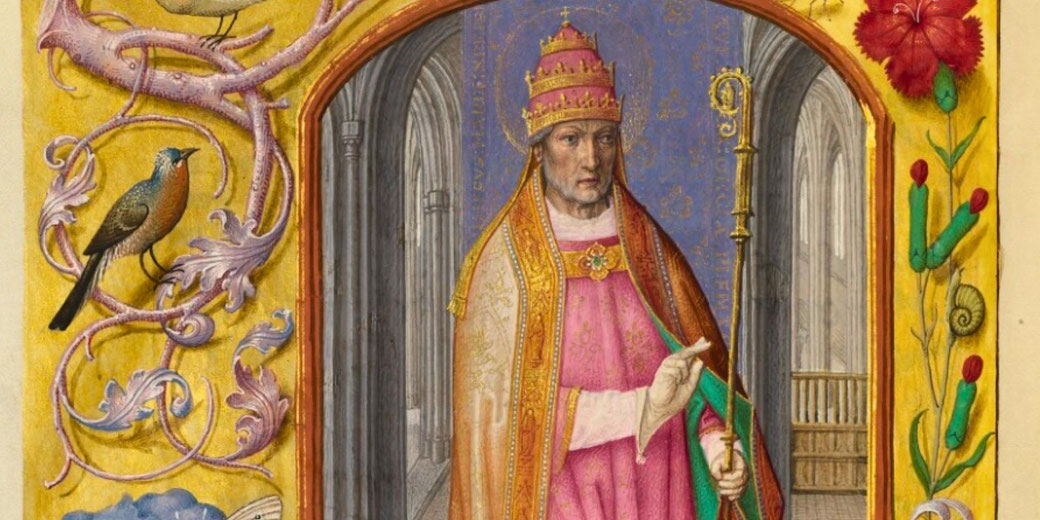
The Great Schism of 1054 was one of the most important events in Christian history, as it formalised the growing separation between the churches of Western Europe and the Eastern Roman Empire.
The sources on this page examine the religious disagreements, political rivalries, and cultural differences that contributed to the break between Rome and Constantinople.
They include contemporary and later accounts of disputes over church authority, doctrine, and worship, as well as descriptions of the mutual excommunications of 1054, the impact of Charlemagne’s imperial coronation, the deepening hostility caused by the Fourth Crusade, and later attempts to restore unity.
Source 1
"In his famous [widely read and highly influential] Encyclical [official letter sent to all bishops] Letter of invitation to the Eastern patriarchs, he [Patriarch Photius of Constantinople, writing in 867 CE] charged the whole Western church with heresy [holding beliefs the Church officially condemned] and schism [a formal split from the Church] for interfering with the jurisdiction [authority] over the Bulgarians, for fasting on Saturday, for abridging [shortening] the time of Lent by a week, for taking milk-food (milk, cheese, and butter) during the quadragesimal [forty-day Lenten] fast, for enforcing clerical celibacy [requiring priests to remain unmarried], and despising [looking down on] priests who lived in virtuous matrimony [honourable marriage], and, most of all, for corrupting the Nicene Creed [the official statement of Christian belief agreed at the Council of Nicaea in 325 CE] by the insertion of the Filioque [a Latin phrase meaning 'and the Son', added by Western churches to the Creed to say the Holy Spirit proceeds from both God the Father and God the Son], and thereby introducing two principles into the Holy Trinity."
"Pope Leo IX. sent three legates [official representatives] under the lead of the imperious [overbearing and domineering] Humbert to Constantinople, with counter-charges to the effect that Cerularius arrogated [claimed without right] to himself the title of 'oecumenical' [meaning 'universal', applying to the whole Christian world] patriarch; that he wished to subject the patriarchs of Alexandria and of Antioch; that the Greeks rebaptized the Latins; that, like the Nicolaitans [an early Christian group condemned for immoral behaviour], they permitted their priests to live in wedlock [marriage]; that they neglected to baptize their children before the eighth day after birth; that, like the Pneumatomachi [a group who denied the full divinity of the Holy Spirit] or Theomachi [literally 'fighters against God'], they cut out of the symbol [the Nicene Creed] the Procession of the Spirit from the Son [the Filioque clause: the Eastern Church argued the Holy Spirit proceeds from the Father alone, not from both the Father and the Son]. The legates were lodged in the imperial palace, but Cerularius avoided all intercourse [contact and communication] with them. Finally, on the 16th of July, 1054 [the date most commonly associated with the formal Schism], they excommunicated [officially excluded from the Church and its sacraments] the patriarch and all those who should persistently censure [criticise or condemn] the faith of the church of Rome or its mode of offering the holy sacrifice. They placed the writ [official written document] on the altar of the church of Hagia Sophia [the great cathedral of Constantinople, the most important church in the Eastern Christian world] with the words: 'Videat Deus et judicet' [Latin: 'Let God see and judge']. [Note: Cardinal Humbert's act of excommunication targeted Patriarch Cerularius and his immediate supporters specifically. It was not, at the time, understood as a permanent and total split between all Eastern and Western Christians. That wider understanding developed over the following centuries.]"
"Michael Cerularius (or Caerularius), who was patriarch from 1043 to 1059, renewed and completed the schism [the growing split between the Eastern and Western churches]. Heretofore [up to this point] the mutual anathemas [formal curses or condemnations] were hurled only against the contending [competing] heads and their party; now the churches excommunicated each other. The Emperor Constantinus Monachus courted [tried to win] the friendship of the pope for political reasons, but his patriarch checkmated [blocked and outmanoeuvred] him. Cerularius, in connection with the learned Bulgarian metropolitan [senior bishop] Leo of Achrida, addressed in 1053 a letter to John, bishop of Trani, in Apulia (then subject to the Eastern rule), and through him to all the bishops of France and to the pope himself, charging the churches of the West that, following the practice of the Jews, and contrary to the usage of Christ, they employ in the eucharist [the central Christian ceremony of Communion] unleavened bread [bread made without yeast]; that they fast on Saturday in Lent; that they eat blood and things strangled in violation of the decree of the Council of Jerusalem (Acts, ch. 15); and that during the fast they do not sing the hallelujah [a Hebrew expression of praise to God]. [Note: Cerularius had also ordered the closure of Latin-rite churches in Constantinople around 1052, roughly a year before this letter. Schaff dates the letter itself to 1053, but the closure of the Latin churches is confirmed by modern historical sources as occurring in 1052.]"
"During the Crusades [a series of military campaigns launched by Western European Christians from 1096 onwards, aimed at taking control of Jerusalem] the schism was deepened by the brutal atrocities [violent and horrifying acts] of the French and Venetian soldiers in the pillage [looting and destruction] of Constantinople (1204), the establishment of a Latin empire [the Crusaders set up a Western-controlled 'Latin Empire' in Constantinople that lasted until 1261], and the appointment by the pope of Latin bishops in Greek sees [church districts traditionally under Greek Orthodox authority]."
Contextual information:
Philip Schaff was a Swiss-American church historian who spent most of his career at Union Theological Seminary in New York. He wrote his multi-volume History of the Christian Church between the 1850s and his death in 1893, drawing on earlier theological scholarship and primary ecclesiastical records. The work is one of the most thorough pre-twentieth-century surveys of Christian history in the English language.
Bibliographical reference:
Schaff, P. (1910). History of the Christian Church, Vol. IV: Mediaeval Christianity, A.D. 590–1073 (§§70–71). Charles Scribner's Sons.
Copyright: Public domain.
Source 2
"The Romans had inflicted many injuries upon the Pontiff [the Pope, head of the Western Church] Leo, tearing out his eyes and cutting out his tongue, so that he had been compelled to call upon the King for help. Charles [Charlemagne, King of the Franks] accordingly went to Rome, to set in order the affairs of the Church, which were in great confusion, and passed the whole winter there. It was then that he received the titles of Emperor and Augustus [the supreme Roman imperial title], to which he at first had such an aversion [strong dislike] that he declared that he would not have set foot in the Church the day that they were conferred, although it was a great feast-day, if he could have foreseen the design [plan] of the Pope. He bore very patiently with the jealousy which the Roman emperors [the Byzantine emperors in Constantinople, who regarded themselves as the rightful heirs of the Roman Empire] showed upon his assuming these titles, for they took this step very ill; and by dint of [by means of] frequent embassies [diplomatic missions] and letters, in which he addressed them as brothers, he made their haughtiness [pride and arrogance] yield to his magnanimity [generosity of spirit], a quality in which he was unquestionably much their superior."
Contextual information:
Einhard was a Frankish scholar and close friend of Charlemagne who lived at the royal court. He wrote the Life of Charlemagne in approximately 817–830 CE, drawing on his personal knowledge of the king and on earlier records. It is the most detailed contemporary account of Charlemagne's reign.
Bibliographical reference:
Einhard. Life of Charlemagne (S. E. Turner, Trans., 1880, pp. 64–66). Harper and Brothers. (Original work written ca. 817–830 CE).
Copyright: Public domain.
Source 3
"At the same time that this palace was surrendered to the Marquis Boniface of Montferrat, did the palace of Blachernae [a major imperial palace complex in Constantinople] surrender to Henry, the brother of Count Baldwin of Flanders, on condition that no hurt should be done to the bodies of those who were therein. There too was found much treasure, not less than in the palace of Bucoleon [another great imperial palace in Constantinople]. Each garrisoned [stationed troops in] with his own people the castle that had been surrendered to him, and set a guard over the treasure. And the other people, spread abroad throughout the city, also gained much booty [stolen goods taken during warfare]. The booty gained was so great that none could tell you the end of it: gold and silver, and vessels and precious stones, and samite [a rich, heavy silk fabric], and cloth of silk, and robes vair [fur from a type of squirrel, used in expensive medieval clothing] and grey, and ermine [white fur worn by royalty and nobility], and every choicest thing found upon the earth. And well does Geoffry of Villehardouin the Marshal of Champagne, bear witness, that never, since the world was created, had so much booty been won in any city."
Contextual information:
Geoffrey de Villehardouin was a French nobleman and military commander who took part in the Fourth Crusade personally. He wrote this chronicle in approximately 1207–1213 CE as a firsthand account of events he had witnessed. The Fourth Crusade of 1202–1204 had originally set out to recapture Jerusalem, but it was redirected and ended with the sack of Constantinople, the capital of the Byzantine (Eastern Roman) Empire, by Western Crusader forces.
Bibliographical reference:
Villehardouin, G. de. Chronicle of the Fourth Crusade and the Conquest of Constantinople (F. T. Marzials, Trans., 1908, pp. 58–60). J. M. Dent. (Original work written ca. 1207–1213 CE).
Copyright: Public domain.
Source 4
"Excommunication (Latin ex, out of, and communio or communicatio, communion — exclusion from the communion [the community of the Church and its sacraments]), the principal and severest censure [official punishment], is a medicinal [intended to correct behaviour, not simply to punish], spiritual penalty that deprives [removes from] the guilty Christian of all participation in the common blessings of ecclesiastical [Church-related] society."
Contextual information:
The Catholic Encyclopedia was a major reference work published in fifteen volumes between 1907 and 1913 by the Robert Appleton Company in New York. It was written by Catholic scholars to provide authoritative explanations of Catholic teaching and church history. The article on excommunication was written by A. Boudinhon, a French canon lawyer.
Bibliographical reference:
Boudinhon, A. (1909). Excommunication. In The Catholic Encyclopedia (Vol. 5). Robert Appleton Company.
Copyright: Public domain.
Source 5
"Except those of the Armenians, Nestorians [members of an Eastern Christian denomination who split from the main church in 431 CE], and Abyssinians [Christians from the kingdom of Abyssinia, in present-day Ethiopia], all Eastern liturgies [official worship services] were originally written in Greek. Even the exceptions are only modified derivations [forms that developed and changed from] Greek originals. If, then, we take the language in which a rite [a set form of religious ceremony] was originally composed as our test, we must describe all Eastern liturgies as Greek."
Contextual information:
Adrian Fortescue was a British Catholic priest and scholar of Eastern Christianity who wrote extensively on liturgy in the early twentieth century. This article was written for the Catholic Encyclopedia, published in 1909, and addresses the languages and forms of worship used across the various Eastern Christian churches. It explains why Greek was the foundational liturgical language of the Christian East.
Bibliographical reference:
Fortescue, A. (1909). Greek Rites. In The Catholic Encyclopedia (Vol. 6). Robert Appleton Company.
Copyright: Public domain.
Source 6
"On 6 July [1439], however, the famous decree of union (Laetentur Coeli [Latin: 'Let the Heavens Rejoice', the opening words of the decree]), the original which is still preserved in the Laurentian Library at Florence, was formally announced in the cathedral of that city. The council was over, as far as the Greeks were concerned, and they departed at once."
"The emperor [Byzantine Emperor John VIII Palaeologus] remained faithful, but some of the Greek deputies [representatives], intimidated [frightened into submission] by the discontent prevailing amongst their own people, deserted their position and soon fell back into the surrounding mass of schism [the state of separation from Rome that most Eastern Christians continued to maintain]. The new emperor, Constantine [Constantine XI], brother of John Palaeologus, vainly [without success] endeavoured [attempted] to overcome the opposition of the Byzantine clergy [priests and church officials] and people. Isidore of Kiev was sent to Constantinople to bring about the desired acceptance of the Florentine 'Decretum Unionis' [Latin: 'Decree of Union'] (Laetentur Coeli), but, before he could succeed in his mission, the city fell (1453) before the advancing hordes of Mohammed II [the Ottoman Sultan Mehmed II, whose forces conquered Constantinople on 29 May 1453]. [Note: The Council of Florence (1438–1439) produced a formal agreement of reunion between the Eastern and Western churches, but the agreement was rejected by most Eastern Christians and never took effect. The council is described as having 'tried but failed' to reunite the churches.]"
Contextual information:
Léon van der Essen was a Belgian historian who wrote this article for the Catholic Encyclopedia. The Council of Florence began in 1438 at Ferrara, moved to Florence in 1439, and produced a formal decree of union between the Roman Catholic and Greek Orthodox churches on 6 July 1439. The union collapsed almost immediately, as the majority of Eastern clergy and ordinary Christians in Constantinople rejected the agreement reached by their delegates.
Bibliographical reference:
Van der Essen, L. (1909). Council of Florence. In The Catholic Encyclopedia (Vol. 6). Robert Appleton Company.
Copyright: Public domain.