
Historical sources on early Japanese history
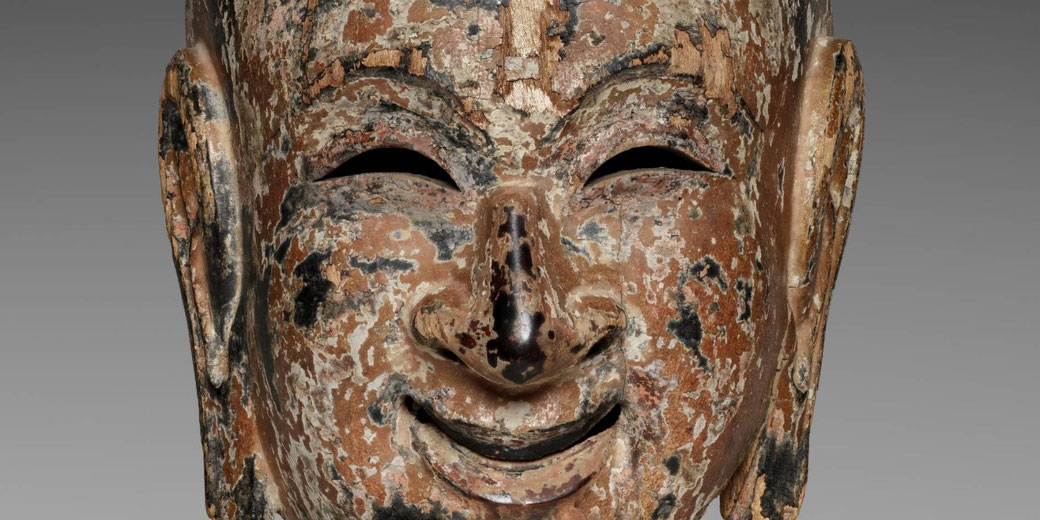
Across more than a millennium of recorded history, Japan developed a rich tradition of writing that preserved its myths, rulers, and systems of government, from the earliest chronicles to later accounts of court politics and military rule.
Texts such as the Kojiki and the Nihon Shoki provided the first written accounts of Japan’s origins and imperial line, which drew together oral traditions into enduring records.
Over time, these sources also revealed major shifts in power, including the rise of powerful court families such as the Fujiwara and the later dominance of military leaders like Minamoto no Yoritomo, who established a system in which real authority rested with the shogun rather than the emperor.
These sources allow us to trace how Japan’s political structure changed from an imperial court influenced by religion and aristocratic control into a society shaped by military leadership and ongoing conflict.
Source 1
Extract A
"The restoration of the administrative power to the Emperor in the middle of the seventh century, which was marked by the great legislative [law-making] measures already spoken of and by the re-modelling of the government on Chinese bureaucratic [official administrative] lines, prefaced [introduced] a period generally known as the 'Nara, or Heijo, epoch' (709–784), because the town of Nara, then chosen as the imperial capital, had the distinction of being the first city to hold that rank independently of changes of sovereign [ruler]. Hitherto [before this] it had been the custom for the Emperor and the heir apparent [next in line to the throne] to reside in different places, and of course there grew up about the palace of the prince material interests and moral associations opposed to a change of habitation [place of living]. Hence on his accession [rise] to the throne, he usually transferred the capital of the empire from the place occupied by his predecessor to the site of his own palace."
[Note: Brinkley dates the Nara epoch from 709, but the standard date accepted by most historians is AD 710, when the Empress Gemmyō formally established the capital at Nara.]
Extract B
"The Nara epoch owes its prominent place in history chiefly to the extraordinary zeal [enthusiasm] shown by the Court and the great nobles in promoting the spread of Buddhism. During the seventy-five years comprised in the epoch, no less than seven of the grandest temples ever seen in Japan were erected; a multitude of idols [religious statues] were cast, among them a gigantic Daibutsu [Great Buddha statue]; colossal bells were founded [cast in metal], and all the best artists and artisans [skilled craftspeople] of the time devoted their services to these costly works."
Contextual information:
Captain Frank Brinkley was a British-born military officer who settled in Japan and became one of the foremost Western authorities on Japanese history and culture. This multi-volume work, published in 1901, drew on both Japanese-language primary sources and Brinkley's decades of firsthand experience living in Japan.
Bibliographical reference:
Brinkley, F. (1901). Japan: Its history, arts, and literature (Vol. 1, Ch. 5). J.B. Millet Company.
Copyright: Public domain.
Source 2
Extract A
"Of all the mass of Japanese literature, which lies before us as the result of nearly twelve centuries of book-making, the most important Monument is the work entitled 'Ko-ji-ki' or 'Records of Ancient Matters,' which was completed in A.D. 712. It is the most important because it has preserved for us more faithfully than any other book the mythology, the manners, the language, and the traditional history of Ancient Japan. Indeed it is the earliest authentic connected literary product of that large division of the human race which has been variously denominated [named] Turanian, Scythian and Altaic [groups of peoples across Central and East Asia], and it even precedes [comes before] by at least a century the most ancient extant [still surviving] literary compositions of non-Aryan India."
Contextual information:
Basil Hall Chamberlain was a British scholar of Japanese language and culture who taught at the Imperial University of Tokyo. His 1882 English translation of the Kojiki was the first complete rendering of this foundational Japanese text into a European language. The Kojiki, completed in AD 712, is the oldest surviving work of Japanese literature and history.
Bibliographical reference:
Chamberlain, B.H. (1882). Ko-ji-ki, or Records of Ancient Matters (Introduction, Section I). Supplement to Transactions of the Asiatic Society of Japan, 10.
Copyright: Public domain.
Source 3
Extract A
"The Kojiki.—In A.D. 682 a number of Princes and High Officials were formally commissioned by the Emperor Temmu to prepare a 'History of the Emperors and of matters of high antiquity [ancient times].' Nothing is known of the result of their labours, but this measure led eventually to the compilation [putting together] of the Kojiki, as we learn from a passage in the Preface to that work. It was not completed, however, until A.D. 712. The Kojiki has fortunately been preserved to us. If the Kiujiki is excepted, as of doubtful authenticity, it is the earliest product of the Japanese historical muse [tradition of history-writing], and indeed the oldest monument [surviving record] of Japanese literature."
Extract B
"The Nihongi—Date and Authorship.—We now come to the Nihongi [also known as the Nihon Shoki] itself. It has no title-page or preface, and our information as to its date and authorship is derived from other sources. The Kōnin Shiki [a commentary on the Nihongi written between 810 and 824] informs us that it was completed and laid before the Empress Gemmiō in A.D. 720 by Prince Toneri and Yasumaro Futo no Ason. In addition to the thirty books which have come down to us, there was originally a book of genealogies [family histories] of the Emperors which is no longer extant [surviving]."
Contextual information:
William George Aston was a British diplomat and scholar who served in the British consular service in Japan. His 1896 translation of the Nihongi (also called the Nihon Shoki, or "Chronicles of Japan") was the first complete English version of Japan's second-oldest historical text, completed in AD 720, eight years after the Kojiki.
Bibliographical reference:
Aston, W.G. (1896). Nihongi: Chronicles of Japan from the earliest times to A.D. 697 (Vol. 1, Introduction). Kegan Paul, Trench, Trübner & Co.
Copyright: Public domain.
Source 4
Extract A
"This kind of 'supervising statesmanship' they [the Fujiwara family] continued, with more or less success, for four or five centuries. And during the greater part of that period they were the practical rulers of the Empire, so that it is about time to bring to a close this era specially denominated [called] 'imperialistic.' And there is no more convenient date than 794 A.D., when the Emperor Kwammu (782–805) located his capital at a place known as Uda, renamed Heian-kyō, or 'Capital of Peace,' but best known as Miyako or Kyōto."
Extract B
"A Buddhist monk, Dōkyō, was 'the most powerful subject in the Empire — head of the church, spiritual director and chief physician to the Empress.' He was even taken into the palace by his imperial mistress and given a kind of imperial title (Hōō) [a title normally reserved for a retired emperor]. And it is said that, 'incredible as it may sound, the monk was aiming at nothing less than supplanting [replacing] the line of the sun-goddess on the imperial throne of Japan.'"
[Note: The Dōkyō affair took place during the 760s at Nara. It was one of the key reasons why Emperor Kwammu later decided to move the capital away from Nara to Kyōto in 794 — he wanted to escape the political power that Buddhist monks and temples had built up around the old capital.]
Extract C
"This period might be entitled 'Fujiwara Bureaucracy.' As was stated at the close of the preceding chapter, the Fujiwara family began as early as 645 A.D. to monopolize [take control of] the civil offices and to control the imperial Court by a kind of 'supervising statesmanship.' It was perhaps the first case of a political 'ring' [a group working together to control power] in Japanese history."
Extract D
"But, none the less, they became 'the proprietors [owners] of the throne and dictated as to who should be made Emperor.' And Seiwa (859–876) enjoyed the double honor of being not only the first child emperor, but also the first male sovereign to reign under a regent [a person who governs on behalf of a young ruler]. And that was the first time that 'the great office of Regent was filled, not by an august [honoured] descendant of the sun-goddess but by a mere subject,' of the Fujiwara family. In fact, during the Fujiwara Bureaucracy it was only the children of Fujiwara consorts [wives] of the emperors who 'could hope to be placed on the throne.'"
Extract E
"It was during this era [the Heian period] that two powerful Buddhist sects [religious groups], the Tendai and the Shingon, were founded, the former by Saichō and the latter by Kūkai. The chief temple of the former was established on Mount Hiei, northeast of Kyoto; that of the latter on Mount Kōya in Yamato. Both of these sects belong to what is known as the Great Vehicle (Mahāyāna) [a major branch of Buddhism that emphasises compassion for all living beings]."
[Note: Buddhism had already been introduced to Japan centuries before the Heian period. What was new during this era was the rise of these specifically Japanese Buddhist sects — Tendai and Shingon — which became very popular and very powerful at the Heian court.]
Extract F
"The name of this era is a compound of Gen, meaning Minamoto, and Hei, meaning Taira. The former of these clans was known by its white flags and the latter by its red flags; so that one is naturally reminded of the Wars of the Roses in England."
Extract G
"In 1192, Yoritomo became Sei-i-Tai-Shōgun [meaning 'Great General who Subdues the Barbarians']. That title had heretofore [previously] been conferred [granted] only for limited special purposes; but now the authority of the office was general: 'to provide for the defense and tranquillity [peace] of the Empire at large.' And it also 'put the whole military class and the whole military resources of the Empire at his disposal' in case of need."
Contextual information:
Ernest Wilson Clement was an American educator and scholar who lived in Japan for many years and taught at several Japanese universities. His 1915 work was written as a concise overview of Japanese history for a Western readership, drawing on both Japanese-language sources and the scholarship of contemporaries such as Brinkley and Aston.
Bibliographical reference:
Clement, E.W. (1915). A short history of Japan (Chs. 3–5). University of Chicago Press. https://archive.org/details/in.ernet.dli.2015.168733
Copyright: Public domain.
Source 5
Extract A
"In the reign of the Empress Gemmyō (a.d. 710) the imperial residence was fixed at Nara. Up to this time the custom derived from antiquity [ancient tradition] had prevailed of changing the residence on the accession [coming to power] of each new emperor. But the court continued at Nara for a period of seventy-five years running through seven reigns; and in consequence Nara has always been looked upon with peculiar [special] reverence [deep respect], and is the seat of several of the most notable Buddhist and Shintō temples and structures."
Extract B
"In a.d. 794 during the reign of the Emperor Kwammu (a.d. 782–806) the capital was removed to Kyōto on the banks of the Kamogawa [Kamo River]. The situation and the environs [surroundings] are lovely, and justify the affectionate reverence with which it has ever been regarded. Here were built the palaces and offices for the emperor and his court. It was officially called Miyako, that is, residence of the sovereign."
Extract C
"For a period of four hundred years, from a.d. 645 to 1050, they [the Fujiwara family] monopolized nearly all the important offices in the government. The wives and concubines [secondary wives] of the feeble emperors were all taken from its inexhaustible [seemingly endless] repertoire [supply of family members]."
Contextual information:
David Murray was an American educator who served as an adviser to the Japanese Ministry of Education during the early Meiji period. His 1894 book was published as part of the popular Story of the Nations series, and it drew on his direct experience in Japan as well as the historical records available to him through his government connections.
Bibliographical reference:
Murray, D. (1894). Japan (Ch. 6). G.P. Putnam's Sons.
Copyright: Public domain.
Source 6
"The full title of the Tycoon was Sei-i-tai-Shogun, 'Barbarian-repressing Commander-in-chief.' The style [title] Tai Kun, Great Prince, was borrowed, in order to convey the idea of sovereignty [supreme authority] to foreigners, at the time of the conclusion of the Treaties [the trade agreements between Japan and Western nations in the 1850s and 1860s]. The title Sei-i-tai-Shogun was first borne [held] by Minamoto no Yoritomo, in the seventh month of the year A.D. 1192."
Contextual information:
Algernon Bertram Freeman-Mitford (later Lord Redesdale) was a British diplomat who served at the British Legation in Tokyo during the 1860s. His 1871 collection of Japanese stories and historical notes was one of the earliest popular English-language books to bring Japanese culture and history to a Western audience. This passage comes from a footnote in which Mitford explains the title of Shogun for his British readers.
Bibliographical reference:
Mitford, A.B. (1871). Tales of old Japan (Footnote 3 to "The Forty-Seven Rōnins"). Macmillan & Co.
Copyright: Public domain.
Source 7
Extract A
"The great clans [powerful families] of Taira and Minamoto appeared and alternately held the reins of government for nearly two centuries. Lawlessness and disorder prevailed. The leader who could command the most men and win the victory with his sword was master of the empire. All Japan became a military camp, the chieftains waging war against one another."
Extract B
"The Taira family was finally overthrown by the Minamotos, and the chief of the latter clan, Yoritomo, was raised to the supreme power. This man was the first to obtain from the imperial court in Kyoto the title of 'shogun' — generally spoken of in the West as 'tycoon.' From this time forward (1190–1867) the shogun was the real ruler of Japan. The mikado [emperor] was still the theoretical head of the state, descendant of the sun-goddess, and fountain of all honor, but he lived in the retirement and seclusion [isolation] of his court, never seen by his subjects, and all matters of government were attended to by the shogun."
Contextual information:
R.B. Peery was an American Methodist minister and educator who lived and worked in Japan during the Meiji period. His 1897 book was written as an accessible introduction to Japanese history and culture for a general American readership. This passage provides one of the clearest explanations of how the shogun's role differed from the emperor's — the emperor remained the ceremonial ruler, but the shogun held actual political and military power.
Bibliographical reference:
Peery, R.B. (1897). The gist of Japan (Ch. 2, pp. 41–42). Fleming H. Revell Company.
Copyright: Public domain.
Source 8
"This civil war — between the Taira and the Minamoto clans — culminated [reached its final point] in a naval battle. The former are credited with 500 junks [flat-bottomed sailing ships used in East Asia], which, in addition to the soldiers, were crowded with women and children and the fugitive [fleeing] emperor. At Dan-no-ura, on the Inland Sea, these were overtaken by the Minamoto with 700 vessels, and the smaller fleet was annihilated [completely destroyed]. This decisive action ended the civil war [known as the Genpei War, 1180–1185, which brought the Heian period to an end], but it created the system of Shogun rule, whereby all the governing of the country was in the hands of Yoritomo, the Emperor being a mere figure-head and puppet in his hands."
Contextual information:
Fred T. Jane was a British naval author and illustrator best known for founding Jane's Fighting Ships, the reference annual on the world's navies. His 1904 book on the Japanese navy included a historical overview of Japan's military history. This passage describes the Battle of Dan-no-ura in 1185, the final battle of the Genpei War, which ended both the war between the Taira and Minamoto clans and the Heian period itself.
Bibliographical reference:
Jane, F.T. (1904). The imperial Japanese navy (Ch. 1, pp. 5–6). W. Thacker & Co.
Copyright: Public domain.