
Historical sources on the Counter-Reformation
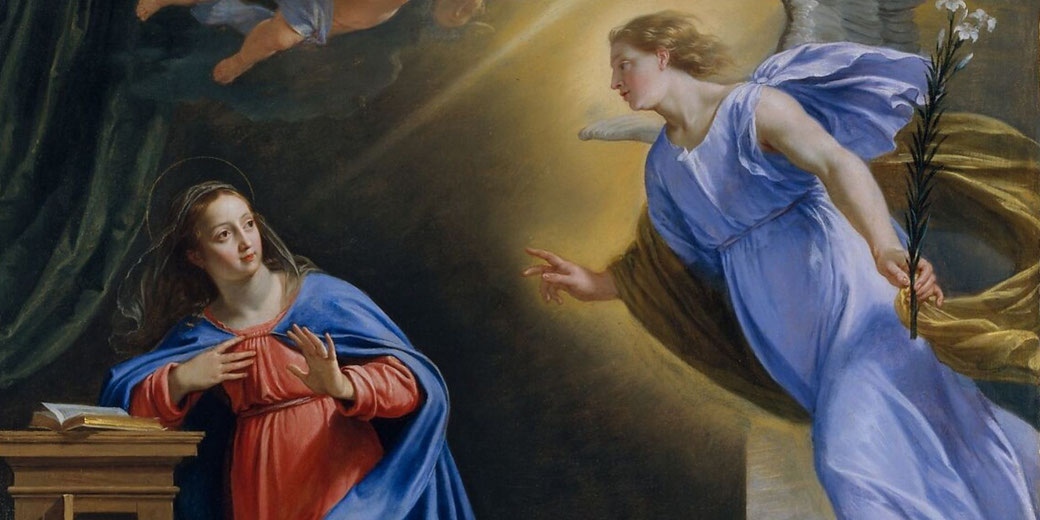
The Counter-Reformation was the Catholic Church’s response to the rapid spread of Protestant ideas in sixteenth-century Europe.
These sources trace the dispute from Martin Luther’s attack on indulgences and Church authority to the Council of Trent’s defence of Catholic doctrine, reform of clerical conduct, and condemnation of Protestant teachings.
They also show how the Catholic renewal continued through the missionary and educational work of the Jesuits and through Baroque art and architecture, especially in Rome.
Source 1
Extract A
"Our Lord and Master Jesus Christ, when He said Poenitentiam agite [Do penance / repent], willed that the whole life of believers should be repentance. This word cannot be understood to mean sacramental [relating to a church ceremony called a sacrament] penance, i.e., confession and satisfaction, which is administered [carried out] by the priests."
Extract B
"Every truly repentant Christian has a right to full remission [cancellation] of penalty and guilt, even without letters of pardon [official documents sold by the Church claiming to forgive sins, known as indulgences]. Every true Christian, whether living or dead, has part in all the blessings of Christ and the Church; and this is granted him by God, even without letters of pardon."
Extract C
"The true treasure of the Church is the Most Holy Gospel of the glory and the grace of God."
Contextual information:
Martin Luther was a German monk and university lecturer who became the central figure of the Protestant Reformation. He wrote these ninety-five propositions in October 1517, nailing them to the door of the Castle Church in Wittenberg, Germany, as a formal academic challenge to the Catholic Church's sale of indulgences. The document is widely regarded as the event that triggered the Protestant Reformation.
Bibliographical reference:
Luther, M. (1517). Disputation on the power and efficacy of indulgences (A. Spaeth, L. D. Reed, & H. E. Jacobs, Trans., 1915; pp. 29–38). A. J. Holman Company.
Copyright: Public domain.
Source 2
"If any are to be called heretics [people condemned by the Church for holding unacceptable beliefs] and schismatics [people who cause a split in the Church], it is not the Bohemians [followers of the Czech church reformer Jan Hus] nor the Greeks, for they take their stand upon the Gospel [the text of the Bible]. But you Romans are the heretics and godless schismatics, for you presume upon your own fictions and fly in the face of the clear Scriptures [the Bible] of God."
Contextual information:
Luther wrote this pamphlet in 1520, three years after posting the Ninety-Five Theses, as his conflict with the Catholic Church escalated toward his formal excommunication. In it, he argued that the Church had taken the seven sacraments captive, distorting them through unscriptural traditions. This passage captures the core Reformer principle that the Bible, not Church tradition or papal authority, is the final word on matters of faith.
Bibliographical reference:
Luther, M. (1520). A prelude on the Babylonian captivity of the Church (H. Wace & C. A. Buchheim, Trans., 1883). In H. Wace & C. A. Buchheim (Eds.), First principles of the Reformation. John Murray.
Copyright: Public domain.
Source 3
Extract A
"Doth it please you — unto the praise and glory of the holy and undivided Trinity, Father, and Son, and Holy Ghost; for the increase and exaltation [raising up] of the Christian faith and religion; for the extirpation [complete removal] of heresies [false beliefs condemned by the Church]; for the peace and union of the Church; for the reformation [correction] of the Clergy and Christian people; for the depression [suppression] and extinction of the enemies of the Christian name — to decree and declare that the sacred and general council of Trent do begin, and hath begun? They answered: It pleaseth us."
Extract B
"This sacred and holy, ecumenical [representing the whole Church], and general Synod [formal council] of Trent — lawfully assembled in the Holy Ghost, the same three legates [official representatives] of the Apostolic See presiding therein — considering the magnitude [great importance] of the matters to be treated of, especially of those comprised under the two heads, of the extirpating [completely removing] of heresies, and the reforming of manners [behaviour and morals], for the sake of which chiefly It is assembled..."
Extract C
"...and they shall all swear on the holy Gospels of God, that they will, setting aside every human affection, faithfully perform their duty. And they shall beware of receiving anything whatever, either before or after, on account of this examination; otherwise, both the receivers and the givers will incur the guilt of simony [the buying or selling of Church offices or sacred things], from which they shall not be capable of being absolved [forgiven by the Church], until after they have resigned the benefices [church positions that came with income] which they were possessed of in any manner whatsoever, even before this act."
Extract D — On Transubstantiation [the Church's teaching about what happens to the bread and wine during the Eucharist / Mass]
"And because that Christ, our Redeemer, declared that which He offered under the species [outward appearances] of bread to be truly His own body, therefore has it ever been a firm belief in the Church of God, and this holy Synod doth now declare it anew, that, by the consecration [the blessing performed by a priest during the Mass] of the bread and of the wine, a conversion is made of the whole substance of the bread into the substance of the body of Christ our Lord, and of the whole substance of the wine into the substance of His blood; which conversion is, by the holy Catholic Church, suitably and properly called Transubstantiation [the complete change of substance, with the bread and wine keeping their outward appearance]."
Extract E — On the Canon concerning Transubstantiation
"If any one saith, that, in the sacred and holy sacrament of the Eucharist [the church ceremony also known as the Mass or Holy Communion, in which bread and wine are blessed], the substance of the bread and wine remains conjointly [alongside] with the body and blood of our Lord Jesus Christ, and denieth that wonderful and singular [unique] conversion of the whole substance of the bread into the Body, and of the whole substance of the wine into the Blood — the species [outward appearances] only of the bread and wine remaining — which conversion indeed the Catholic Church most aptly calls Transubstantiation; let him be anathema [formally condemned and cast out of the Church]."
Extract F — On Scripture and Tradition
"...and they shall all swear on the holy Gospels of God, that they will, setting aside every human affection, faithfully perform their duty... But if any one receive not, as sacred and canonical [officially accepted as part of the Bible], the said books entire with all their parts, as they have been used to be read in the Catholic Church, and as they are contained in the old Latin vulgate edition; and knowingly and deliberately contemn [reject] the traditions aforesaid; let him be anathema [formally condemned and excluded from the Church]."
Contextual information:
The Council of Trent was the Catholic Church's formal response to the Protestant Reformation. It met in the northern Italian city of Trento across three separate periods between 1545 and 1563, convened by Pope Paul III. Its decrees covered doctrine and Church discipline, addressing questions about the authority of Scripture alongside Church tradition and condemning abuses such as simony.
Bibliographical reference:
Council of Trent. (1545-63). The canons and decrees of the sacred and oecumenical Council of Trent (J. Waterworth, Trans., 1848; pp. 13–14, 16, 19–20, 78, 82–83, 227). Dolman.
Copyright: Public domain.
Source 4
Extract A
"The Society of Jesus is a religious order founded by Saint Ignatius Loyola. Designated by him 'The Company of Jesus' to indicate its true leader and its soldier spirit, the title was Latinised [converted into Latin] into 'Societas Jesu' in the Bull [an official decree issued by the Pope] of Paul III approving its formation and the first formula of its Institute ('Regimini militantis ecclesia' [Governing the Church Militant], 27 Sept., 1540)."
Extract B
"The ministry [the active work and service] of the Society consists chiefly in preaching; teaching catechism [formal instruction in Christian doctrine], especially to children; administering the sacraments especially penance and the Eucharist; conducting missions in the parishes... From the very beginning the missionary labours of the Jesuits among the pagans [non-Christians] of India, Japan, China, Canada, Central and South America were as important as their activity in Christian countries."
Contextual information:
The Catholic Encyclopedia was a major English-language reference work produced by Catholic scholars in the United States between 1907 and 1913. The entry on the Society of Jesus was written by specialist contributors and drew on the order's own records. It provides a reliable summary of the Jesuits' founding and activities as they were understood in the early twentieth century.
Bibliographical reference:
The Catholic Encyclopedia. (1912). The Society of Jesus. In The Catholic encyclopedia (Vol. XIV). Robert Appleton Company.
Copyright: Public domain.
Source 5
Extract A
"One of the most vigorous and fertile [productive] of Italian architects and sculptors, b. [born] at Naples in 1598; d. [died] at Rome in 1680... In 1629 he became the architect of St. Peter's and superintendent of Public Works in Rome."
Extract B
"One of the most brilliant works of Bernini is the colonnade [a row of columns forming a covered walkway or enclosing a space] before St. Peter's. It proves the truth of the axiom [general principle] he laid down: 'An architect proves his skill by turning the defects of a site into advantages'... the ground available being limited on two sides by neighboring houses, Bernini avoided the danger of coming too close to the buildings by adopting the beautiful elliptic [oval] form of the colonnade, which encloses, nevertheless, as large a ground-surface as the Colosseum. The avenue thus formed is perhaps, the most beautiful one in the world... Four rows of Tuscan columns, placed to right and left and having altogether the form of an ellipse, traverse [cross] the piazza from one end to the other."
Extract C
"Today the canopy (baldacchino [a large ornamental canopy placed over the main altar of a church, in this case standing over the tomb of Saint Peter in St. Peter's Basilica]) is as universally condemned [widely criticised] as it was then (1633) admired. [Note: this judgement is a product of early-twentieth-century taste; modern art historians assess the Baldacchino far more positively as a landmark of Baroque design.]"
Contextual information:
Gerhard Gietmann wrote this entry for the 1907 edition of The Catholic Encyclopedia, a scholarly reference work published in New York. The article describes Bernini's career and his work at St. Peter's Basilica in Rome, where he held the position of chief architect from 1629. Bernini is the defining figure of Baroque architecture, a dramatic style the Catholic Church promoted in the seventeenth century as part of its effort to reassert its authority and inspire devotion.
Bibliographical reference:
Gietmann, G. (1907). Giovanni Lorenzo Bernini. In The Catholic encyclopedia (Vol. II). Robert Appleton Company.
Copyright: Public domain.