
Historical sources on daily life in ancient Rome
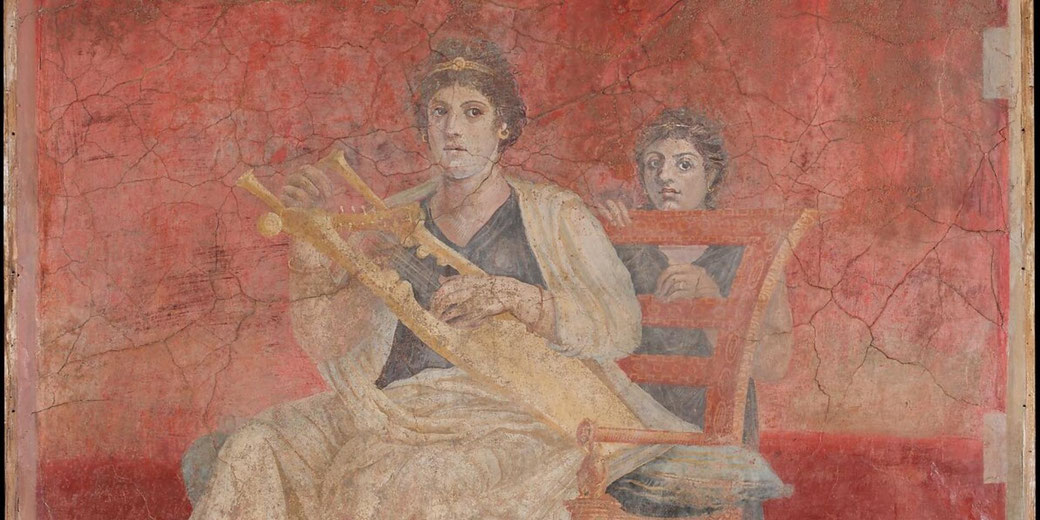
These historical sources examine daily life in ancient Rome from a range of ancient and modern perspectives. They explore how Romans lived in their homes, organised their families, earned a living, travelled through the city, enjoyed public entertainment, and experienced the crowded streets of the imperial capital.
The collection also examines the social structure of Roman society, the authority of the pater familias, the importance of occupations and trade guilds, and the engineering works that supported one of the largest cities of the ancient world.
Source 1
"It had been the ancient policy of the founders of cities to get together a multitude of people of obscure and low origin and then to spread the fiction that they were the children of the soil. In accordance with this policy, Romulus opened a place of refuge on the spot where, as you go down from the Capitol, you find an enclosed space between two groves. A promiscuous crowd of freemen and slaves [people who were free and people who were enslaved], eager for change, fled thither from the neighbouring states. This was the first accession of strength to the nascent [newly formed] greatness of the city. When he was satisfied as to its strength, his next step was to provide for that strength being wisely directed. He created a hundred senators; either because that number was adequate, or because there were only a hundred heads of houses who could be created. In any case they were called the 'Patres' [Fathers] in virtue of their rank, and their descendants were called 'Patricians.'"
Contextual information:
Titus Livius, known as Livy, was a Roman historian who lived from around 59 BCE to 17 CE. He spent much of his life writing Ab Urbe Condita, a monumental history of Rome from its founding, which was commissioned with the support of Emperor Augustus. Book I covers the legendary kings of Rome, including Romulus, the city's founder.
Bibliographical reference:
Livy. The History of Rome (1912, Rev. Canon Roberts, Trans.; Book I, ch. 8). E. P. Dutton and Co. (Original work written ca. 27–9 BCE).
Copyright: Public domain.
Source 2
Extract A
"Who at cool Praeneste, or at Volsinii amid its leafy hills, was ever afraid of his house tumbling down? Who in modest Gabii, or on the sloping heights of Tivoli? But here we inhabit a city propped up for the most part by slender flute-players [the buildings are held up by thin wooden props, like the ones used by street musicians]: for that is how the bailiff patches up the cracks in the old wall, bidding the inmates sleep at ease under a roof ready to tumble about their ears. No, no, I must live where there are no fires, no nightly alarms. Ucalegon [a neighbour, borrowed from a character in Virgil's Aeneid who loses his house to fire] below is already shouting for water and shifting his chattels; smoke is pouring out of your third-floor attic above, but you know nothing of it; for if the alarm begins in the ground-floor, the last man to burn will be he who has nothing to shelter him from the rain but the tiles, where the gentle doves lay their eggs."
Extract B
"When the rich man has a call of social duty, the mob makes way for him as he is borne swiftly over their heads in a huge Liburnian car [a large, curtained litter carried on the shoulders of slaves, named after a type of fast ship from Liburnia on the Adriatic coast]. He writes or reads or sleeps as he goes along, for the closed window of the litter induces slumber. Yet he will arrive before us; hurry as we may, we are blocked by a surging crowd in front, and by a dense mass of people pressing in on us from behind: one man digs an elbow into me, another a sedan-pole; one bangs a beam, another a wine-cask, against my head. My legs are be-plastered with mud; huge feet trample on me from every side, and a soldier plants his hobnails firmly on my toe."
Contextual information:
Decimus Junius Juvenalis, known as Juvenal, was a Roman satirical poet who wrote in the late first and early second centuries CE. His Satires describe life in Rome with sharp criticism of the city's noise and social inequalities. Satire 3 takes the form of a speech by a character called Umbricius, who is leaving Rome and listing his reasons for doing so, giving a vivid picture of what daily life in the city was like for ordinary people.
Bibliographical reference:
Juvenal. Satires (1918, G. G. Ramsay, Trans.; Satire 3, pp. 39, 47). William Heinemann; G. P. Putnam's Sons. (Original work written ca. 110–127 CE).
Copyright: Public domain.
Source 3
"And yet he was second to none of his predecessors in munificence. At the dedication of his amphitheatre [the Flavian Amphitheatre, now known as the Colosseum, which Titus formally opened in 80 CE] and of the baths which were hastily built near it he gave a most magnificent and costly gladiatorial show. He presented a sham sea-fight too in the old naumachia [a flooded arena used to stage mock naval battles], and in the same place a combat of gladiators, exhibiting five thousand wild beasts of every kind in a single day."
Contextual information:
Gaius Suetonius Tranquillus, known as Suetonius, was a Roman biographer and historian who lived around 69–122 CE. He worked as a private secretary to the Emperor Hadrian and had access to imperial archives. His work The Twelve Caesars provides biographies of Rome's first twelve emperors, including the Emperor Titus, whose reign lasted from 79 to 81 CE.
Bibliographical reference:
Suetonius. Life of Titus (1914, J. C. Rolfe, Trans.; Vol. II, ch. 7, p. 321). William Heinemann; Macmillan Co. (Original work written ca. 121 CE).
Copyright: Public domain.
Source 4
"But of all his measures the most commended was his distribution of the people by their trades into companies or guilds [known in Latin as collegia]; for as the city consisted, or rather did not consist of, but was divided into, two different tribes, the diversity between which could not be effaced and in the meantime prevented all unity and caused perpetual tumult and ill-blood, reflecting how hard substances that do not readily mix when in the lump may, by being beaten into powder, in that minute form he combined, he resolved to divide the whole population into a number of small divisions, and thus hoped, by introducing other distinctions, to obliterate the original and great distinction, which would be lost among the smaller. So, distinguishing the whole people by the several arts and trades, he formed the companies of musicians, goldsmiths, carpenters, dyers, shoemakers, skinners, braziers [metalworkers who work with brass or bronze], and potters; and all other handicraftsmen he composed and reduced into a single company, appointing every one their proper courts, councils, and observances [meetings and religious ceremonies]."
Contextual information:
Plutarch was a Greek historian and biographer who lived around 46–120 CE. His Lives of the Noble Greeks and Romans pairs famous Greek and Roman figures in a series of biographical essays. His Life of Numa Pompilius covers the legendary second king of Rome, who was credited with creating many of Rome's early institutions, including the trade guilds.
Bibliographical reference:
Plutarch. Life of Numa Pompilius (J. Dryden, Trans., revised A. H. Clough; ch. 17). Little, Brown and Company. (Original work written ca. 100 CE).
Copyright: Public domain.
Source 5
Extract A
"Those persons made up the Roman familia [household], in the sense nearest to its English derivative, who were subject to the authority of the same Head of the House (pater familias [father of the family]). These persons might make a host in themselves: wife, unmarried daughters, sons real or adopted, married or unmarried, with their wives, sons, unmarried daughters, and even remoter descendants (always through males), yet they made but one familia in the eyes of the Romans. The Head of such a family—'household' or 'house' is the nearest English word—was always sui iuris ['independent,' 'one's own master'], while the others were alieno iuri subiecti ['dependent']."
Extract B
"The authority of the pater familias [father of the family] over his descendants was called usually the patria potestas [the power of a father], but also the patria maiestas [fatherly authority], the patrium ius, and the imperium paternum. It was carried to a greater length by the Romans than by any other people, a length that seems to us excessive and cruel. As they understood it, the pater familias had absolute power over his children and other agnatic [related through the male line] descendants. He decided whether or not the newborn child should be reared; he punished what he regarded as misconduct with penalties as severe as banishment, slavery, and death; he alone could own and exchange property—all that his descendants earned or acquired in any way was his: according to the letter of the law they were little better than his chattels [possessions]."
Extract C
"With her marriage, the Roman woman reached a position not attained by the women of any other nation in the ancient world. No other people held its women in such high respect; nowhere else did women exert so strong and beneficent [beneficial] an influence. In her own house the Roman matron [married woman, known as a matrona] was absolute mistress. She directed its economy and supervised the tasks of the household slaves, but did no menial work herself. She was her children's nurse, and conducted their early training and education."
Extract D
"The accessories had become really of more importance than the bathing itself and justify the description of the bath under the head of amusements. In places where there were no public baths, or where they were at an inconvenient distance, the wealthy fitted up bathing places in their houses, but no matter how elaborate they were, the private baths were merely a makeshift at best."
Contextual information:
Harold Whetstone Johnston was Professor of Latin at Indiana University and wrote The Private Life of the Romans in 1903 as a classroom handbook for high school and university students. The book describes Roman domestic life during the later Republic and early Empire, drawing on ancient literary and archaeological sources. Johnston aimed to make Roman social history accessible to students without advanced knowledge of Latin.
Bibliographical reference:
Johnston, H. W. (1903). The Private Life of the Romans (§§17, 31, 90, 376, pp. 12, 21, 64, 247). Scott, Foresman and Company.
Copyright: Public domain.
Source 6
"The Grecian [Greek] cities are thought to have flourished mainly on account of the felicitous [fortunate] choice made by their founders, in regard to the beauty and strength of their sites, their proximity to some port, and the fineness of the country. But the Roman prudence was more particularly employed on matters which had received but little attention from the Greeks, such as paving their roads, constructing aqueducts, and sewers, to convey the sewage of the city into the Tiber. In fact, they have paved the roads [the viae, or roads of the empire, which connected Rome to all parts of its territories], cut through hills, and filled up valleys, so that the merchandise may be conveyed by carriage from the ports."
Contextual information:
Strabo was a Greek geographer and historian who lived from around 64 BCE to 24 CE. His Geography, written in seventeen books, describes the known world from the perspective of a Greek intellectual living during the reign of Augustus. Book V covers Italy, and Strabo compares Roman and Greek approaches to urban planning and infrastructure.
Bibliographical reference:
Strabo. Geography (H. C. Hamilton & W. Falconer, Trans.; Vol. I, Book V, ch. 3, §8, p. 349). George Bell and Sons. (Original work written ca. 7 BCE–23 CE).
Copyright: Public domain.