
Historical sources on relative dating techniques
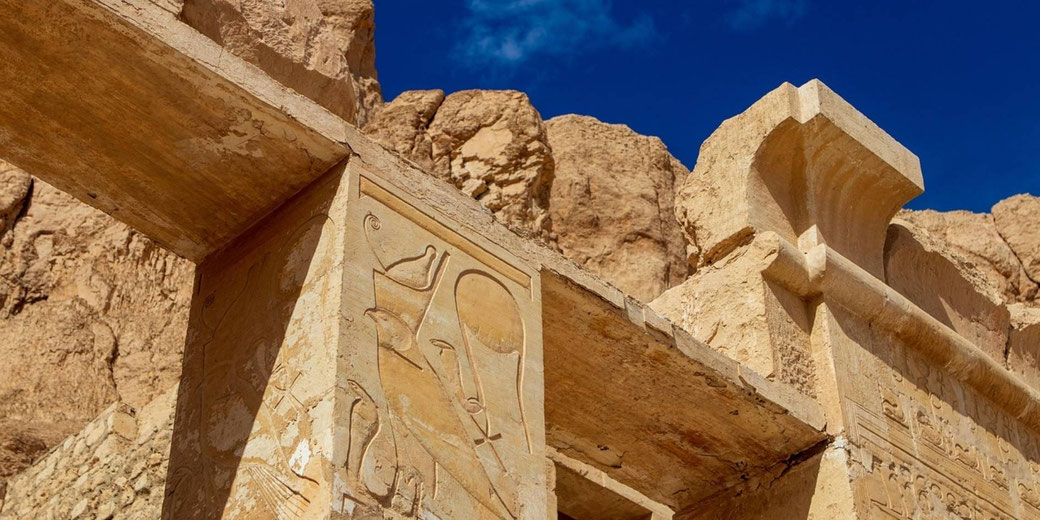
The sources below trace the development of relative dating techniques through the work of early geologists and archaeologists, who established the principles used to interpret the age and sequence of past human activity.
They show how archaeologists used stratigraphy, typology, and artefact analysis to establish chronological sequences without relying on exact dates, and they also highlight the importance of careful recording and scientific testing in avoiding errors, such as the exposure of the Piltdown Man hoax.
Together, they provide a clear foundation for understanding how relative dating developed as a key method in the study of the ancient past.
Source 1
"ARCHAEOLOGY (from Gr. ἀρχαῖα, ancient things, and λόγος, theory or science), a general term for the study of antiquities. The precise application of the term has varied from time to time with the progress of knowledge, according to the character of the subjects investigated and the purpose for which they were studied. At one time it was thought improper to use it in relation to any but the artistic remains of Greece and Rome, i.e. the so-called classical archaeology (now dealt with in this encyclopaedia under the headings of Greek Art and Roman Art); but of late years it has commonly been accepted as including the whole range of ancient human activity, from the first traceable appearance of man on the earth to the middle ages."
"For practical purposes it is now convenient to separate the sphere of archaeology in its relation to the study of the purely artistic character of ancient remains, from that of the investigation of these remains as an instrument for arriving at conclusions as to the political and social history of the nations of antiquity; and in this work the former is regarded primarily as 'art' and dealt with in the articles devoted to the history of art or the separate arts, while 'archaeology' is particularly regarded as the study of the evidences for the history of mankind, whether or not the remains are themselves artistically and aesthetically valuable."
Contextual information:
This entry was written by Charles Hercules Read, who was Keeper of British and Medieval Antiquities at the British Museum. The 11th edition of the Encyclopædia Britannica was published between 1910 and 1911 by Cambridge University Press and is considered one of the most authoritative English-language reference works of its era.
Bibliographical reference:
Read, C. H. (1911). Archaeology. In Encyclopædia Britannica (11th ed., Vol. 2). Cambridge University Press.
Copyright: Public domain.
Source 2
Extract A
"Archaeology is the latest born of the sciences. It has but scarcely struggled into freedom, out of the swaddling clothes of dilettante speculations. It is still attracted by pretty things, rather than by real knowledge. It has to find shelter with the Fine Arts or with History, and not a single home has yet been provided for its real growth. All other sciences deal with the things around us; with subjects which may, or may not, affect us. Even medical sciences are concerned with the mechanical structure of the body, rather than with the nature and abilities of the mind. But the science which enquires into all the products and works of our own species, which shows what man has been doing in all ages and under all conditions, which reveals his mind, his thoughts, his tastes, his feelings,—such a science touches us more closely than any other."
Extract B
"A town site is always recognised by its mounds of crumbling mud brick, strewn with potsherds if in Upper Egypt, or with burnt red bricks on the later mounds of the Delta. … Generally it is possible to date the latest age of a town by the potsherds lying on the surface; and to allow a rate of growth of 20 inches a century down to the visible level; if that gives a long period we may further carry down the certainly artificial level by 4 inches in a century for the Nile deposits when in the cultivated ground. For instance, there are mounds in the Delta about 40 feet high, ending about 500 A.D.; this gives about 40 feet of rise, equal to about 2400 years, or say 2000 B.C., for the age at the present ground level."
Extract C
"Besides the discrimination of sites there is a vast subject in the discrimination of objects and of styles. The first requisite acquirement of a digger—his archaeological experience—consists in discriminating and distinguishing the differences between products of various dates. An Egyptian copper adze of the ages of middle prehistoric, late prehistoric, early dynastic, IIIrd, VIth, XIIth, or XVIIIth Dynasties can be told at a glance, and we only need more dated examples to be able to separate them still more finely. A cutting-out knife, a pair of tweezers, a comb, can be dated almost as certainly. But it is when we can look not only to differences of form, but also to variations of colour and texture, that we have the widest scope for discrimination."
Extract D
"Pottery is, however, the greatest resource of the archaeologist. For variety of form and texture, for decoration, for rapid change, for its quick fall into oblivion, and for its incomparable abundance, it is in every respect the most important material for study, and it constitutes the essential alphabet of archaeology in every land. Think for a moment how few people know the appearance of a common jug a century old, how the crocks of Georgian times have all vanished, and new forms are made. Even of decorated china not one piece in a thousand in England is before the last century, and not one in a million is three centuries old; so rapidly does breakable ware perish, and become unknown. This not only prevents its being handed on from earlier times, as ornaments or weapons may descend, but it prevents the copying of older forms, and gives a free scope to rapid variation."
Extract E
"After finding things the first consideration is to record and preserve all the information about them. The most ignorant dealer or plunderer may be a very successful digger, but he will not care for the value of a record. Recording is the absolute dividing line between plundering and scientific work, between a dealer and a scholar. … The unpardonable crime in archaeology is destroying evidence which can never be recovered; and every discovery does destroy evidence unless it is intelligently recorded. Our museums are ghastly charnel-houses of murdered evidence; the dry bones of objects are there, bare of all the facts of grouping, locality, and dating which would give them historical life and value."
Contextual information:
Sir William Matthew Flinders Petrie (1853–1942) was a British archaeologist who is often called the "father of modern archaeology." He developed the methods of stratigraphic excavation and sequence dating during his excavations in Egypt, beginning in the 1880s. This book, published in 1904, was the first systematic English-language manual of archaeological field methods.
Bibliographical reference:
Petrie, W. M. F. (1904). Methods and aims in archaeology (pp. vii, 10–11, 14, 16, 48). Macmillan and Co.
Copyright: Public domain.
Source 3
"If a solid body is enclosed on all sides by another solid body, of the two bodies that one first became hard which, in the mutual contact, expresses on its own surface the properties of the other surface... At the time when any given [layer] was being formed, all the matter resting upon it was fluid, and, therefore, at the time when the lowest [layer] was being formed, none of the upper [layers] existed."
Contextual information:
Nicolaus Steno (Niels Stensen, 1638–1686) was a Danish scientist who worked in Italy during the 1660s. His 1669 work on the formation of rock layers and fossils established three of the foundational principles of geology and stratigraphy, including the principle of superposition. He is recognised as the founder of modern stratigraphy.
Bibliographical reference:
Steno, N. (1916). The prodromus of Nicolaus Steno's dissertation concerning a solid body enclosed by process of nature within a solid (J. G. Winter, Trans.). Macmillan. (Original work published 1669).
Copyright: Public domain.
Source 4
"The primary arrangement has been by form—that is to say, that the spears, bows, clubs, and other objects above mentioned, have each been placed by themselves in distinct classes. Within each there is a sub-class for special localities, and in each of these sub-classes, or whenever a connection of ideas can be traced, the specimens have been arranged according to their affinities, the simpler on the left and the successive improvements in line to the right of them."
"For this purpose ordinary and typical specimens, rather than rare objects, have been selected and arranged in sequence, so as to trace, as far as practicable, the succession of ideas by which the minds of men in a primitive condition of culture have progressed from the simple to the complex, and from the homogeneous to the heterogeneous."
Contextual information:
Augustus Henry Lane Fox Pitt-Rivers (1827–1900) was a British army officer and archaeologist who pioneered the typological method of classifying artefacts. This paper, delivered to the Anthropological Institute in 1874 and published in 1875, laid out his method of arranging objects by form in developmental sequences. His collection, arranged typologically, became the founding collection of the Pitt Rivers Museum at the University of Oxford.
Bibliographical reference:
Lane Fox, A. H. [Pitt-Rivers]. (1875). On the principles of classification adopted in the arrangement of his anthropological collection, now exhibited in the Bethnal Green Museum. Journal of the Anthropological Institute of Great Britain and Ireland, 4, 293–308. Reprinted in Pitt-Rivers, A. H. L. F. (1906). The evolution of culture, and other essays (J. L. Myres, Ed.). Clarendon Press.
Copyright: Public domain.
Source 5
"On the 21st of November, 1953, Drs. J. S. Weiner, K. P. Oakley, and W. E. Le Gros Clark, of the University of Oxford and the British Museum (Natural History), published in the Bulletin of the British Museum a gruesome [frightening] tale of skulduggery [dishonest activity]. The Piltdown bones, the famous remains upon which the genus and species Eoanthropus dawsoni were based, are not genuine fossils. The mandible [jaw bone] and canine tooth are those of an ape—most probably an orangutan—that have been deliberately altered so as to resemble fossil specimens. This is not all. Careful examination has revealed that the flint 'implements' found in the Piltdown gravel are not of local origin. Thus Piltdown Man, long regarded by many as the most important of all fossil human types, is nothing more than a carefully prepared hoax [trick]."
"When Oakley applied his fluorine test to the Piltdown specimens in 1949, the entire skull—cranium and jaw alike—yielded unexpectedly little fluorine; whereas a genuine fossil from the nearby Piltdown [deposits] contained about ten times as much. His 1949 tests did not, however, differentiate between cranium and jaw. In 1950 Oakley repeated his tests, with more refined techniques, and found that the jaw and canine contained very much less fluorine than did the cranial [skull] bones. Obviously, the jaw had not been buried as long as the cranium."
Contextual information:
William L. Straus Jr. (1900–1981) was an American physical anthropologist at Johns Hopkins University who specialised in primate anatomy and human evolution. His article, first published in Science magazine in February 1954 and reprinted in the Smithsonian Institution's Annual Report for 1954, provided the first detailed public account of how the Piltdown forgery was exposed through fluorine testing and other chemical analyses conducted by Kenneth Oakley, Joseph Weiner, and Wilfrid Le Gros Clark at the British Museum.
Bibliographical reference:
Straus, W. L., Jr. (1955). The great Piltdown hoax. In Annual report of the Board of Regents of the Smithsonian Institution … for the year ended June 30, 1954 (Smithsonian Institution Publication 4190, pp. 363–372). U.S. Government Printing Office.
Copyright: This is a work of the United States Government, published by the U.S. Government Printing Office in 1955, and is in the public domain under 17 U.S.C. § 105.
Source 6
"In 1947 a young Bedouin shepherd, searching for a stray goat in the ravines west of the Dead Sea, cast a stone into a hole in the cliff and heard the sound of breaking pottery. When he investigated, he found several tall jars containing leather scrolls wrapped in linen cloth. This accidental discovery led eventually to the recovery of the remains of about six hundred manuscripts in eleven caves near a ruin called Qumran."
Contextual information:
This passage comes from the catalogue of the Smithsonian Institution's 1965 exhibition, "The Dead Sea Scrolls of Jordan," which toured American museums. The introductory article was written by Frank Moore Cross, a professor at Harvard University who was one of the principal editors of the Dead Sea Scrolls.
Bibliographical reference:
Cross, F. M. (1965). Introduction. In Smithsonian Institution, Scrolls from the wilderness of the Dead Sea (p. 5). Smithsonian Institution.
Copyright: This publication was produced by the Smithsonian Institution and is in the public domain as a work of the United States Government under 17 U.S.C. § 105.