
Historical sources on the Battle of Lake Trasimene
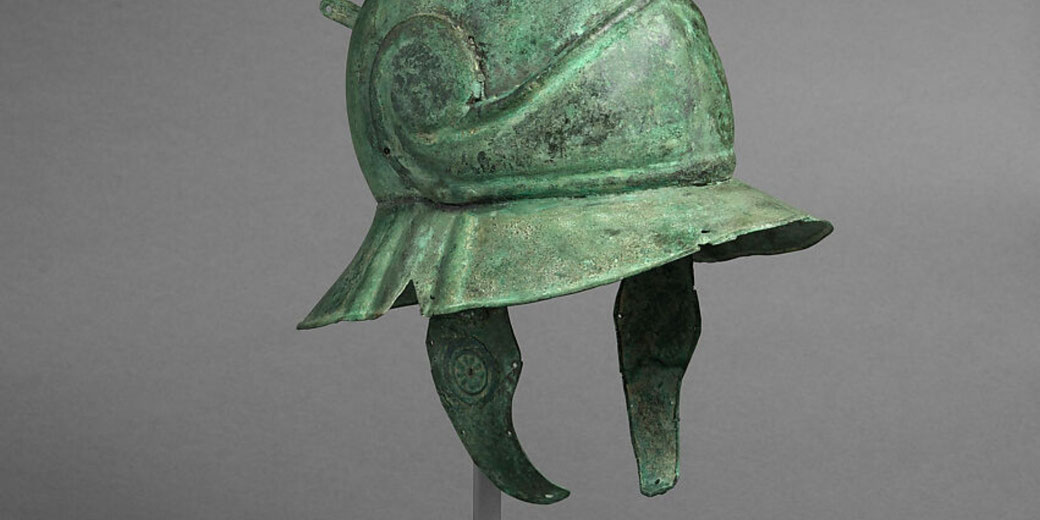
The Battle of Lake Trasimene, fought in 217 BC during the Second Punic War, was one of the most devastating defeats in Roman military history.
After crossing the Alps and invading Italy, Hannibal led his Carthaginian army through central Italy and lured the Roman consul Gaius Flaminius into a carefully planned ambush beside Lake Trasimene.
Ancient historians provide valuable accounts of the campaign, the battle itself, and its aftermath. The sources below, written by the Greek historian Polybius and the Roman historian Livy, describe Hannibal's march into Italy, Flaminius' decisions before the battle, the surprise attack carried out in heavy fog, and the panic that followed in Rome.
Source 1
[3.2] "First I shall indicate the causes of the above war between Rome and Carthage, known as the Hannibalic war [the war fought between Rome and Carthage from 218 to 201 BC, named after the Carthaginian general Hannibal], and tell how the Carthaginians invaded Italy, broke up the dominion [power and authority] of Rome, and cast the Romans into great fear for their safety and even for their native soil, while great was their own hope, such as they had never dared to entertain, of capturing Rome itself."
[3.56] "So Hannibal mustered [gathered together] his forces and continued the descent; and on the third day after passing the precipitous [dangerously steep] path just described he reached the plains. From the beginning of his march he had lost many men by the hands of the enemy, and in crossing rivers, and many more on the precipices and dangerous passes of the Alps; and not only men in this last way, but horses and beasts of burden in still greater numbers."
[3.77] "Hannibal, who was wintering in Cisalpine Gaul [the region of northern Italy between the Alps and the Apennine mountains, occupied by Celtic peoples the Romans called Gauls], kept the Roman prisoners he had taken in the battle in custody [under guard], giving them just sufficient to eat, but to the prisoners from the allied states he continued to show the greatest kindness, and afterwards called a meeting of them and addressed them, saying that he had not come to make war on them, but on the Romans for their sakes; and therefore if they were wise they should embrace his friendship; for he had come first of all to re-establish the liberty of the peoples of Italy, and also to help them to recover the cities and territories of which the Romans had deprived them. Having spoken so, he dismissed them all to their homes without ransom [without demanding money in exchange for their release], his aim in doing so being both to gain over the inhabitants of Italy to his own cause and to alienate [turn away] their affections from Rome, provoking at the same time to revolt those who thought their cities or harbours had suffered damage by Roman rule. [This passage describes events after the Battle of the Trebia in December 218 BC. Polybius records that Hannibal followed the same policy of releasing Italian allies without ransom again after the Battle of Lake Trasimene in 217 BC.]"
[3.84] "The day was exceedingly misty [thick with fog]; and as soon as the greater part of the Roman line was in the valley, and the leading maniples [tactical units of the Roman infantry] were getting close to him, Hannibal gave the signal for attack; and at the same time sent orders to the troops lying in ambush on the hills to do the same, and thus delivered an assault upon the enemy at every point at once. Flaminius was taken completely by surprise, and fell in the battle after showing great personal gallantry [courage in fighting]. As many as fifteen thousand Romans fell in the valley, who could neither yield nor defend themselves, being habituated [trained by habit] to regard it as their supreme duty not to fly or quit their ranks: but the mist was so thick, and the enemy were charging down from the upper ground at so many points at once, that not only were the Centurions and Tribunes [Roman army officers of different ranks] unable to relieve any part of the line that was in difficulties, but were not even able to get any clear idea of what was going on. A number of men, however, amounting perhaps to six thousand, who were in the van [at the front of the column], cut their way through the enemy and cleared the defile [narrow passage between the hills and the lake]; they could not, however, render any help to their comrades from the higher ground, owing to the thick mist. They laid down their arms and surrendered on condition of their lives being spared. Such was the end of the final engagement between the Romans and Carthaginians in Etruria [the region of central Italy north of Rome, roughly equivalent to modern Tuscany]. [The ancient sources record the year of the battle using the Roman calendar; modern historians translate this to 217 BC.]"
Contextual information:
Polybius was a Greek historian who lived from approximately 200 to 118 BC. He interviewed survivors of the Second Punic War, later crossed the Alps himself to trace Hannibal's route, and spent years in Rome with access to Roman leaders and records. He wrote The Histories to explain how Rome became the dominant power in the Mediterranean world in a period of fifty-three years.
Bibliographical reference:
Polybius. The Histories (W. R. Paton, Trans., 1922; Vol. II, pp. n.p.). William Heinemann / Harvard University Press. (Original work written ca. 150s BC).
Copyright: Public domain.
Source 2
[XXII.3] "Flaminius had no intention of keeping quiet even if the enemy had done so, but now that he saw the possessions of the allies of Rome plundered and pillaged almost before his very eyes, he felt it to be a personal disgrace that an enemy should be roaming at will through Italy and advancing to attack Rome with none to hinder him. All the other members of the council of war were in favour of a policy of safety rather than of display; they urged him to wait for his colleague, that they might unite their forces and act with one mind on a common plan, and pending his arrival they should check the wild excesses of the plundering enemy with cavalry and the light-armed auxiliaries [lightly equipped supporting soldiers]. Enraged at these suggestions he dashed out of the council and ordered the trumpets to give the signal for march and battle; exclaiming at the same time: 'We are to sit, I suppose, before the walls of Arretium, because our country and our household gods are here. Now that Hannibal has slipped through our hands, he is to ravage Italy, destroy and burn everything in his way till he reaches Rome, while we are not to stir from here until the senate summons C. Flaminius from Arretium as they once summoned Camillus from Veii.'"
[XXII.4] "Flaminius had reached the lake at sunset. The next morning, in a still uncertain light, he passed through the defile [the narrow strip of land between the hills and the lake], without sending any scouts on to feel the way, and when the column began to deploy [spread out into battle formation] in the wider extent of level ground the only enemy they saw was the one in front, the rest were concealed in their rear and above their heads. When the Carthaginian saw his object achieved and had his enemy shut in between the lake and the hills with his forces surrounding them, he gave the signal for all to make a simultaneous attack, and they charged straight down upon the point nearest to them. The affair was all the more sudden and unexpected to the Romans because a fog which had risen from the lake was denser on the plain than on the heights; the bodies of the enemy on the various hills could see each other well enough, and it was all the easier for them to charge all at the same time. The shout of battle rose round the Romans before they could see clearly from whence it came, or became aware that they were surrounded."
[XXII.3] "While the consul was occupied in these propitiatory [religious] ceremonies and also in the enrolment of troops, information reached Hannibal that Flaminius had arrived at Arretium, and he at once broke up his winter quarters. There were two routes into Etruria, both of which were pointed out to Hannibal; one was considerably longer than the other but a much better road, the shorter route, which he decided to take, passed through the marshes of the Arno, which was at the time in higher flood than usual."
[XXII.7] "This was the famous battle at Trasumennus [Lake Trasimene; ancient authors spell the name in different ways, including 'Thrasymene' and 'Trasumennus'], and a disaster for Rome memorable as few others have been. Fifteen thousand Romans were killed in action; 1000 fugitives were scattered all over Etruria and reached the City by divers [various] routes; 2500 of the enemy perished on the field, many in both armies afterwards of their wounds. Other authors give the loss on each side as many times greater, but I refuse to indulge in the idle exaggerations to which writers are far too much given, and what is more, I am supported by the authority of Fabius, who was living during the war. Hannibal dismissed without ransom those prisoners who belonged to the allies and threw the Romans into chains."
[XXII.8] "Accordingly the citizens took refuge in a remedy which for a long time had not been made use of or required, namely the appointment of a Dictator [a magistrate given supreme power in times of crisis, appointed for a maximum of six months]. As the consul by whom alone one could be nominated was absent, and it was not easy for a messenger or a despatch to be sent through Italy, overrun as it was by the arms of Carthage, and as it would have been contrary to all precedent for the people to appoint a Dictator, the Assembly invested Q. Fabius Maximus with dictatorial powers and appointed M. Minucius Rufus to act as his Master of the Horse [the Dictator's second-in-command, who commanded the cavalry]. They were commissioned by the senate to strengthen the walls and towers of the City and place garrisons in whatever positions they thought best, and cut down the bridges over the various rivers, for now it was a fight for their City and their homes, since they were no longer able to defend Italy."
[XXII.12] "It was the wariness not the impetuosity [recklessness] of the Dictator that was the immediate cause of his alarm; he had not yet tested his inflexible resolution. He began to harass and provoke him by frequently shifting his camp and ravaging the fields of the allies of Rome before his very eyes. Sometimes he would march rapidly out of sight and then in some turn of the road take up a concealed position in the hope of entrapping him, should he come down to level ground. Fabius kept on high ground, at a moderate distance from the enemy, so that he never lost sight of him and never closed with him. Unless they were employed on necessary duty, the soldiers were confined to camp. When they went in quest of wood or forage [animal feed] they went in large bodies and only within prescribed limits. A force of cavalry and light infantry told off [assigned] in readiness against sudden alarms, made everything safe for his own soldiers and dangerous for the scattered foragers of the enemy. He refused to stake everything on a general engagement [a full battle involving all forces], whilst slight encounters, fought on safe ground with a retreat close at hand, encouraged his men, who had been demoralised by their previous defeats, and made them less dissatisfied with their own courage and fortunes."
Contextual information:
Titus Livius, known as Livy, was a Roman historian who lived from around 59 BC to 17 AD. He wrote his monumental history of Rome, covering events from the city's foundation to his own lifetime, during the reign of the emperor Augustus. Book XXII covers the year 217 BC, from the events leading up to the Battle of Lake Trasimene through to the aftermath of the Battle of Cannae.
Bibliographical reference:
Livy. The History of Rome (Rev. Canon Roberts, Trans., 1905; Book XXII, pp. n.p.). J. M. Dent / E. P. Dutton. (Original work written ca. 27–25 BC).
Copyright: Public domain.