
Historical sources on archaeological excavations
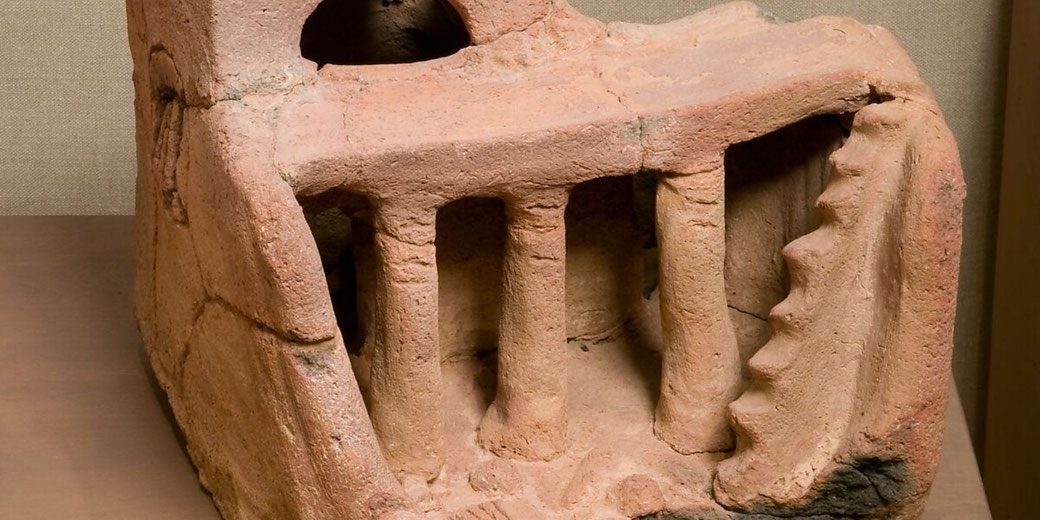
Archaeology is about much more than digging up old objects. These sources introduce the methods archaeologists use to find, record, and interpret evidence from the past.
They begin with Flinders Petrie’s argument that careful recording separates archaeology from treasure-hunting, then move to epigraphy, papyrology, and stratigraphy as ways of reading inscriptions, ancient documents, and layers of earth.
The final sources show how modern tools such as lidar and ground-penetrating radar allow archaeologists to survey sites before excavation begins.
Source 1
"The two objects of excavations are (1) to obtain plans and topographical [relating to the layout of the land and its features] information, and (2) to obtain portable antiquities. For the purpose of securing antiquities it is necessary to guard against the ignorance, the carelessness, and the dishonesty of the men employed. The best way to protect the interests of the work is to give rewards for all the things that are found, commonly called 'the bakhshish system.'"
"A town site is always recognised by its mounds of crumbling mud brick, strewn with potsherds [broken pieces of pottery] if in Upper Egypt, or with burnt red bricks on the later mounds of the Delta. Whenever a native begins to describe a site in Lower Egypt, one inquires if there is red brick, and if so there is no need to listen further. Generally it is possible to date the latest age of a town by the potsherds lying on the surface; and to allow a rate of growth of 20 inches a century down to the visible level; if that gives a long period we may further carry down the certainly artificial level by 4 inches in a century for the Nile deposits when in the cultivated ground." [Petrie used this method of reading the layered build-up of a mound to work out the age of a settlement at Tell el-Hesi in Palestine in 1890. Other archaeologists had observed layering before him, including Heinrich Schliemann at Troy and General Augustus Pitt-Rivers in Britain, but Petrie is the figure most closely tied to bringing this layer-by-layer method into standard excavation practice.]
"Many of these requirements can well be undertaken by different people; in fact, not a single living person combines all of the requisite [necessary] qualities for complete archaeological work. But all of these requirements must be fulfilled by different members in a party, if they are to command success as well as deserve it. In all points, imagination and insight, the sense of all the possibilities of a case, is to be the medium of thought both in theoretical and in practical affairs."
"After finding things the first consideration is to record and preserve all the information about them. The most ignorant dealer or plunderer may be a very successful digger, but he will not care for the value of a record. Recording is the absolute dividing line between plundering and scientific work, between a dealer and a scholar. The most blue-blooded dilettante [amateur who dabbles in a subject without serious study] collector who digs to possess fine things, but records no facts about them, is below the level of the dealer who will publish an illustrated priced catalogue, and state what was found together, and the details of the discovery. The unpardonable crime in archaeology is destroying evidence which can never be recovered; and every discovery does destroy evidence unless it is intelligently recorded."
Contextual information:
Sir William Matthew Flinders Petrie was an English archaeologist and Egyptologist who excavated dozens of sites across Egypt and Palestine between 1880 and 1926, and who held the first chair of Egyptology at University College London. He published Methods and Aims in Archaeology in 1904 to set out the standards and methods he had developed over a quarter of a century of fieldwork, aiming to turn excavation from a hunt for treasure into a careful, recorded science.
Bibliographical reference:
Petrie, W. M. F. Methods and Aims in Archaeology (1904, Macmillan; pp. 5-6, 10, 33, 48-49). Macmillan and Co.
Copyright: Public domain.
Source 2
"EPIGRAPHY, a term used to denote (1) the study of inscriptions [words cut or scratched onto a hard surface such as stone or metal] collectively, and (2) the science connected with the classification and explanation of inscriptions. It is sometimes employed, too, in a more contracted [narrower] sense, to denote the palaeography [the study of old styles of handwriting and lettering], in inscriptions. Generally, it is that part of archaeology which has to do with inscriptions engraved on stone, metal or other permanent material (not, however, coins, which come under the heading Numismatics [the study of coins and currency])."
Contextual information:
The Encyclopaedia Britannica's eleventh edition was compiled by a large team of scholars and specialists and published in 1911, and is widely regarded as one of the most scholarly general encyclopaedias ever produced in English. This entry defines epigraphy as the branch of archaeology concerned with classifying and explaining inscriptions, which is the work carried out by an epigrapher.
Bibliographical reference:
Various authors. Encyclopaedia Britannica (1911, Cambridge University Press; Vol. 9, p. 9). Cambridge University Press.
Copyright: Public domain.
Source 3
"The hundred and fifty-eight texts included in this first volume of the Oxyrhynchus Papyri are selected from the twelve or thirteen hundred documents at Oxford in good or fair preservation which up to the present time we have been able to examine, and from the hundred and fifty rolls left at the Gizeh Museum. The present work is accordingly devoted to first century B.C. or first century A.D. papyri [ancient writing material made from the pith of the papyrus plant], with the exception of the theological and some of the classical fragments, and the 'Petition of Dionysia' (No. ccxxxvii), which on account of its great size and importance we wished to publish as soon as possible."
Contextual information:
Bernard Grenfell and Arthur Hunt were English papyrologists who, from 1896, excavated the rubbish mounds of the ancient Egyptian town of Oxyrhynchus and recovered tens of thousands of papyrus fragments containing literature and legal documents alongside private letters. This preface to their first published volume, dated 1898, describes the correspondence and legal records a papyrologist sorts through and dates for publication.
Bibliographical reference:
Grenfell, B. P., & Hunt, A. S. The Oxyrhynchus Papyri, Part I (1898, Egypt Exploration Fund; Preface). Egypt Exploration Fund.
Copyright: Public domain.
Source 4
"The aqueous [formed by the action of water] rocks, sometimes called the sedimentary, or fossiliferous, cover a larger part of the earth's surface than any others. They consist chiefly of mechanical deposits (pebbles, sand, and mud), but are partly of chemical and some of them of organic origin, especially the limestones. These rocks are stratified, or divided into distinct layers, or strata. The term stratum means simply a bed, or any thing spread out or strewed over a given surface; and we infer that these strata have been generally spread out by the action of water, from what we daily see taking place near the mouths of rivers, or on the land during temporary inundations [floods]."
Contextual information:
Sir Charles Lyell was a Scottish geologist whose work in the 1830s established that the earth's rock layers had built up gradually over immense periods through ongoing natural processes. This passage comes from his student textbook, published to explain the basic classification of rock types and to define the layered, or stratified, nature of sedimentary rock that gives the study of stratigraphy its name.
Bibliographical reference:
Lyell, C. The Student's Elements of Geology (1871, John Murray; ch. I). John Murray.
Copyright: Public domain.
Source 5
"Lidar, which stands for Light Detection and Ranging, is a remote sensing method that uses light in the form of a pulsed laser to measure ranges (variable distances) to the Earth. These light pulses, combined with other data recorded by the airborne system, generate precise, three-dimensional information about the shape of the Earth and its surface characteristics. A lidar instrument principally consists of a laser, a scanner, and a specialized GPS receiver." [Archaeologists fly lidar equipment over a site before any digging begins, since the laser pulses can pick out the outline of buried walls, mounds, or roads hidden under vegetation or soil.]
Contextual information:
This explanation is published by the National Oceanic and Atmospheric Administration, a scientific agency of the United States government responsible for monitoring the weather and the oceans. The agency maintains public information pages explaining the remote sensing technologies it uses, including lidar, which archaeologists have adopted as a survey tool since the early 2000s.
Bibliographical reference:
National Oceanic and Atmospheric Administration, National Ocean Service. What is lidar? (n.d.). https://oceanservice.noaa.gov/facts/lidar.html
Copyright: This is a work of the United States Government and is in the public domain under 17 U.S.C. § 105.
Source 6
"Ground penetrating radar (GPR) is an electromagnetic [relating to the combined electrical and magnetic field produced by a moving electric charge] geophysical method that transmits radio wave pulses at select center frequencies into the ground to study the subsurface. GPR capitalizes on the effects that the electrical properties of matter (i.e., dielectric permittivity, electrical conductivity, and magnetic permeability) have on electromagnetic (EM) energy propagation. If a wave pulse encounters a material interface of sufficiently different electromagnetic properties, some of the energy is reflected back while the remainder continues to propagate." [Archaeologists use ground-penetrating radar before excavation to detect buried walls, graves, or other features without having to dig first, since the returning pulses show where the ground beneath the surface changes.]
Contextual information:
This explanation is published by the United States Environmental Protection Agency, a federal government agency responsible for protecting human health and the environment, which uses ground-penetrating radar to study soil and groundwater. The same electromagnetic pulse technology has been adopted by archaeologists as a non-invasive survey method for locating buried structures before they commit to digging.
Bibliographical reference:
United States Environmental Protection Agency. Ground penetrating radar (GPR) (n.d.). https://www.epa.gov/environmental-geophysics/ground-penetrating-radar-gpr
Copyright: This is a work of the United States Government and is in the public domain under 17 U.S.C. § 105.