
Historical sources on ancient Egyptian hieroglyphs
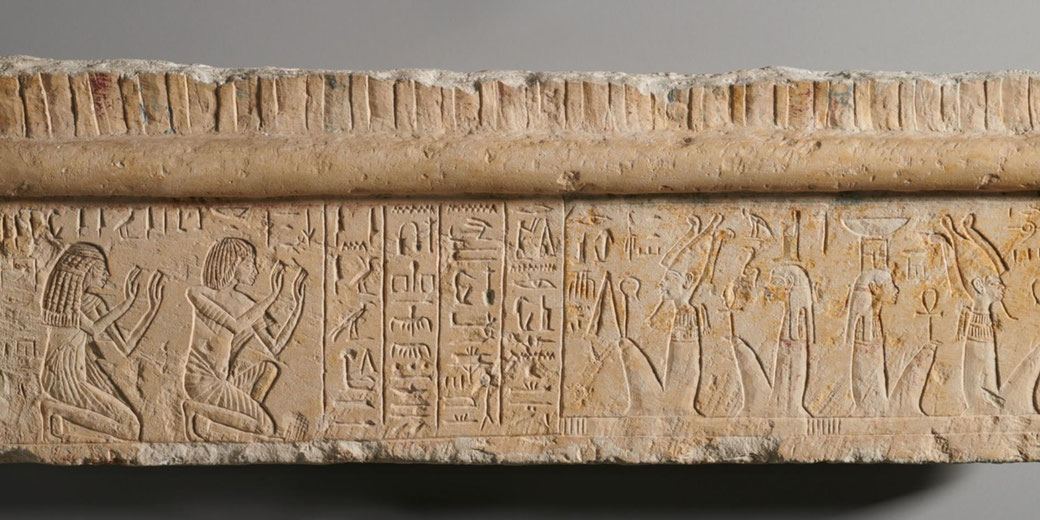
Ancient Egyptian hieroglyphs were one of the most recognisable writing systems of the ancient world, and they allowed scribes to record royal names, religious ideas, official inscriptions, and works of literature for thousands of years.
These sources explore how hieroglyphs developed from picture signs into a sophisticated system that could express both objects and sounds.
They also explain the honoured position of scribes, the flexible direction of hieroglyphic writing, and the importance of the Rosetta Stone in helping modern scholars read Egyptian inscriptions again.
Source 1
Extract A
"The Literature of ancient Egypt is the product of a period of about four thousand years, and it was written in three kinds of writing, which are called hieroglyphic, hieratic, and demotic [three different scripts]. In the first of these the characters were pictures of objects, in the second the forms of the characters were made as simple as possible so that they might be written quickly, and in the third many of them lost their picture form altogether and became mere symbols. Egyptian writing was believed to have been invented by the god Tehuti, or Thoth, and as this god was thought to be a form of the mind and intellect and wisdom of the God who created the heavens and the earth, the picture characters, or hieroglyphs as they are called, were held to be holy, or divine, or sacred."
Extract B
"The scribes [trained writers] who studied and copied these books were also specially honoured, for it was believed that the spirit of Thoth, the twice-great and thrice-great god, dwelt in them. The profession of the scribe was considered to be most honourable, and its rewards were great, for no rank and no dignity were too high for the educated scribe."
Contextual information:
Sir Ernest Alfred Wallis Budge (1857-1934) was Keeper of the Egyptian and Assyrian Antiquities at the British Museum in London for over thirty years. He published The Literature of the Ancient Egyptians in 1914 as an introduction to Egyptian literary culture for general readers, drawing on his decades of work with original papyri and inscribed monuments.
Bibliographical reference:
Adapted from Budge, E. A. W. (1914). The literature of the ancient Egyptians (pp. 1-2). J. M. Dent & Sons.
Copyright: Public domain.
Source 2
Extract A
"The ancient Egyptians expressed their ideas in writing by means of a large number of picture signs which are commonly called Hieroglyphics. They began to use them for this purpose more than seven thousand years ago, and they were employed uninterruptedly [without stopping] until about B.C. 100, that is to say, until nearly the end of the rule of the Ptolemies [a dynasty of Greek kings who ruled Egypt from 305 to 30 BC] over Egypt."
Extract B
"Hieroglyphic characters may be written in columns or in horizontal lines, which are sometimes to be read from left to right and sometimes from right to left. There was no fixed rule about the direction in which the characters should be written, and as we find that in inscriptions which are cut on the sides of a door they usually face inwards, i.e., towards the door, each group thus facing the other, the scribe and sculptor needed only to follow their own ideas in the arrangement and direction of the characters, or the dictates [demands] of symmetry. To ascertain [find out] the direction in which an inscription is to be read we must observe in which way the men, and birds, and animals face, and then read towards them."
Extract C
"The need for characters which could be employed to express sounds only caused the Egyptians at a very early date to set aside a considerable number of picture signs for this purpose, and to these the name of phonetics [the study of speech sounds] has been given. Phonetic signs may be either syllabic [representing a group of sounds] or alphabetic [representing a single letter sound]."
Contextual information:
Budge first published Easy Lessons in Egyptian Hieroglyphics in 1899 as an introductory textbook for students of the Egyptian language, and it went through multiple editions into the 1920s. At the time he wrote it, Budge was working daily with hieroglyphic inscriptions at the British Museum, and the book set out to make the hieroglyphic system accessible to non-specialists.
Bibliographical reference:
Adapted from Budge, E. A. W. (1922). Easy lessons in Egyptian hieroglyphics with sign list (4th ed., pp. 1, 10-11, 30). Kegan Paul, Trench, Trübner & Co. (Original work first published 1899)
Copyright: Public domain.
Source 3
Extract A
"The famous slab of black basalt which stands at the southern end of the Egyptian Gallery in the British Museum, and which has for more than a century been universally known as the 'Rosetta Stone,' was found at a spot near the mouth of the great arm of the Nile that flows through the Western Delta to the sea, not far from the town of 'Rashîd,' or as Europeans call it, 'Rosetta.' According to one account it was found lying on the ground, and according to another it was built into a very old wall, which a company of French soldiers had been ordered to remove in order to make way for the foundations of an addition to the fort, afterwards known as 'Fort St. Julien.' The actual finder of the Stone was a French Officer of Engineers, whose name is sometimes spelt Boussard, and sometimes Bouchard [Pierre-François Bouchard, 1771-1822], who subsequently rose to the rank of General, and was alive in 1814. He made his great discovery in August, 1799."
Extract B
"It was assumed correctly that the oval, or 'cartouche' [an oval frame drawn around a royal name in hieroglyphs] as it is called, always contained a royal name."
Extract C
"Both de Sacy and Åkerblad began their labours by attacking the Demotic [a simplified, everyday script used by ordinary Egyptians] equivalents of the cartouches [ovals containing royal names], i.e. the ovals containing royal names in the hieroglyphic text. In 1818 Dr. Thomas Young compiled for the fourth volume of the 'Encyclopædia Britannica' (published in 1819) the results of his studies of the texts on the Rosetta Stone, and among them was a list of several alphabetic Egyptian characters to which, in most cases, he had assigned correct values. He was the first to grasp the idea of a phonetic principle in the reading of the Egyptian hieroglyphs, and he was the first to apply it to their decipherment [the process of working out what the signs meant]. Warburton, de Guignes, Barthélemy and Zoëga all suspected the existence of alphabetic hieroglyphics, and the three last-named scholars believed that the oval, or cartouche, contained a proper, or royal name. But it was Young who first proved both points, and successfully deciphered the name of Ptolemy on the Rosetta Stone, and that of Berenice on another monument. In 1822 the list of alphabetic Egyptian characters that had been drawn up by Young was corrected and greatly enlarged by J. F. Champollion [Jean-François Champollion, 1790-1832, a French scholar], who, between that date and the year of his death, correctly deciphered the hieroglyphic forms of the names and titles of most of the Roman Emperors, and drew up a classified list of Egyptian hieroglyphs, and formulated a system of grammar and general decipherment which is the foundation whereon all later Egyptologists [scholars who study ancient Egypt] have worked."
Contextual information:
Budge wrote The Rosetta Stone as an official booklet for the British Museum in 1913, printed by order of the Museum's Trustees and sold at the Museum for sixpence. It was intended to give visitors a clear account of the Stone's discovery and how scholars used it to decipher hieroglyphs over the course of the nineteenth century.
Bibliographical reference:
Adapted from Budge, E. A. W. (1913). The Rosetta Stone (pp. 1, 7-9, 11). British Museum.
Copyright: Public domain.