
Historical sources on archaeology
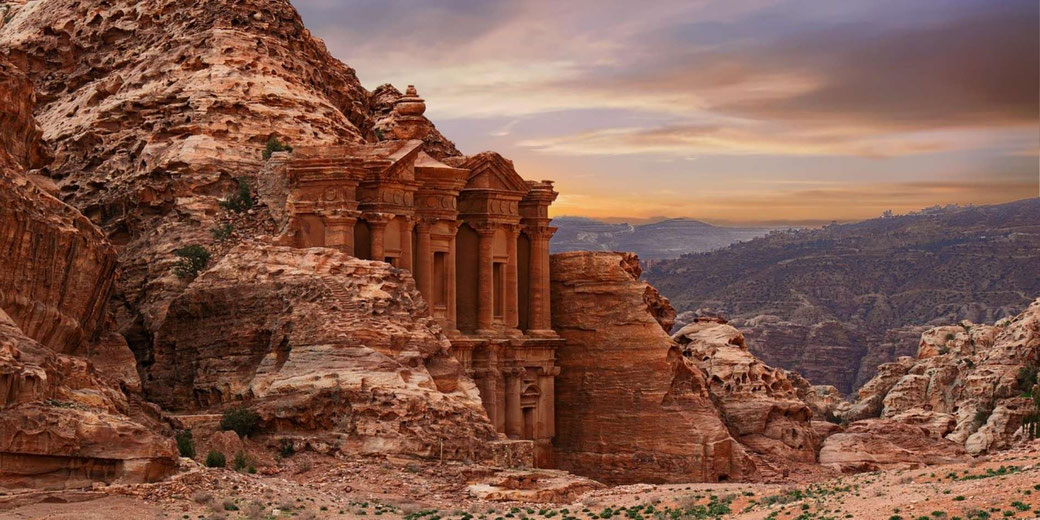
These sources on archaeology give students a strong starting point for investigating how archaeologists discovered, recorded, interpreted, and dated the ancient past.
They include famous first-hand accounts from Howard Carter at Tutankhamun’s tomb, Arthur Evans at Knossos, and Hiram Bingham at Machu Picchu, alongside extracts that explain archaeological method, the value of careful excavation, the danger of looting, and the use of scientific dating such as radiocarbon analysis.
They show that archaeology was a disciplined effort to recover evidence, record its original position, and use that evidence to build reliable knowledge about past societies, sites, and beliefs.
Source 1
Extract A
"For the moment — an eternity it must have seemed to the others standing by — I was struck dumb with amazement, and when Lord Carnarvon, unable to stand the suspense any longer, [asked] anxiously, 'Can you see anything?' it was all I could do to get out the words, 'Yes, wonderful things.'"
Extract B
"All next day we worked at high pressure, and ere long [soon] uncovered what proved to be a sunken staircase cut in the living rock of the valley's bed. The deeper we descended the more evident it became that a find of importance was before us. It was late in the evening when a doorway, blocked and sealed, was disclosed. The seals were those of a king — King Tutankhamen! And then beyond all doubt we knew that we were on the edge of a great discovery. I spare you my feelings!"
Extract C
"It had always been my wish and intention even as far back as 1889 to start excavating, but for one reason or another I had never been able to begin. However, in 1906 with the aid of Sir William Garstin, who was then adviser to the Public Works, I started to excavate in Thebes. I may say that at this period I knew nothing whatever about excavating, so I suppose with the idea of keeping me out of mischief, as well as keeping me employed, I was allotted a site at the top of Sheikh Abdel Gurna. I had scarcely been operating for 24 hours when we suddenly struck what seemed to be an untouched burial pit. This gave rise to much excitement in the [Department of Antiquities], which soon simmered down when the pit was found to be unfinished."
Contextual information:
Howard Carter (1874–1939) was a British archaeologist who, together with his wealthy patron Lord Carnarvon, discovered the nearly intact tomb of the ancient Egyptian Pharaoh Tutankhamun in the Valley of the Kings on 4 November 1922. This book, written in the months immediately following the discovery, is Carter's own account of one of the most dramatic moments in the history of archaeology.
Bibliographical reference:
Carter, H., & Mace, A. C. (1923). The tomb of Tut·ankh·Amen: Discovered by the late Earl of Carnarvon and Howard Carter (Vol. 1). Cassell. Extract A: p. 96; Extract B: pp. 96–97; Extract C: Introduction by Lady Burghclere, pp. 19–20.
Copyright: Public domain.
Source 2
Extract A
"THE [digs] carried out by me from 1900 onwards on the site of Knossos, which brought to light the [ancient] Palace and its [buildings], were [described step by step] in my [detailed] and [well-illustrated] Reports in the Annual of the British School at Athens. Of the extent of the great building the view opposite, showing its remains from the East, and the '[mound of earth hiding the ruins]' on which it stood, will give the best idea. It [covered] fully six acres of ground."
Extract B
"As a [first] step, however, to any such [project] it was necessary to [create] a system of [sorting] which should cover the [huge area] occupied by the [ancient] Cretan [culture]. With this object I had already [presented findings] to the [Anthropology] Section of the British Association, at its Cambridge Meeting in 1904, a [starting] plan for [grouping] the [different stages] of the [ancient] civilisation of Crete, and for which I then [chose] to [suggest] the term 'Minoan'. An outline of this [plan], by which this Minoan Civilisation was divided into three main [Parts] — Early, Middle, and Late — each with three [smaller stages], was [put forward] by me to the [Pre-Greek] Section of the Archaeological Congress at Athens in 1905, of which I was a President."
Contextual information:
Sir Arthur Evans (1851–1941) was a British archaeologist who began excavating the site of Knossos on the island of Crete in 1900. His discoveries revealed a previously unknown ancient civilisation, which he named "Minoan" after the legendary King Minos of ancient Greek stories. This book, the first volume of his major four-volume work on Knossos, was published in 1921 and summarises over two decades of excavation and research.
Bibliographical reference:
Evans, A. (1921). The palace of Minos: A comparative account of the successive stages of the early Cretan civilization as illustrated by the discoveries at Knossos (Vol. 1). Macmillan. Extract A: Preface, p. v; Extract B: Preface, p. vi.
Copyright: Public domain.
Source 3
Extract A
"All other sciences deal with the things around us; with subjects which may, or may not, affect us. Even medical sciences are concerned with the [physical] structure of the body, rather than with the nature and abilities of the mind. But the science which [looks into] all the products and works of our own [kind], which shows what man has been doing in all ages and under all conditions, which [uncovers] his mind, his thoughts, his tastes, his feelings — such a science touches us more closely than any other."
Extract B
"Pottery is, however, the greatest resource of the archaeologist. For variety of form and texture, for decoration, for rapid change, for its quick fall into [being forgotten], and for its [unmatched] abundance, it is in every respect the most important material for study, and it [makes up] the essential alphabet of archaeology in every land."
Extract C
"Of late years the notion of digging merely for profitable [loot], or to [bring] a new excitement to the [bored], has spread unpleasantly — at least in Egypt. A [permission] to dig is sought much like a [grant of monastery lands at the Dissolution]: the man who has influence or [pushiness], a title or a [business] connection, claims to try his luck at the spoils of the land. Firstly in every subject there is the essential division between those who work to live, and those who live to work — the [money-making] and the scientific or artistic aim; — those who merely do what will best provide them a living, and those whose work is their honour and the end of their being."
Contextual information:
Sir William Matthew Flinders Petrie (1853–1942) is widely regarded as the founder of modern scientific archaeology. Over a career spanning more than four decades he excavated over fifty sites in Egypt and Palestine, and was one of the first archaeologists to insist on careful, systematic recording of everything found on a dig. This book, published in 1904, was one of the earliest practical handbooks of archaeological method ever written.
Bibliographical reference:
Petrie, W. M. F. (1904). Methods & aims in archaeology. Macmillan. Extract A: Preface, p. vii; Extract B: Chapter II ("Discrimination"), pp. 15–16; Extract C: Chapter I ("The Excavator"), pp. 1–2.
Copyright: Public domain.
Source 4
Extract A
"The traveller who makes it his object to loot a country of its [old objects], smuggling objects out of it and [hiding] the sources from which they are obtained, does a distinct [harm] to archaeological science. Although he may [add to] collections, public or private, half or more than half of the scientific value of his [finds] is destroyed by the fact that their [place of origin] is kept secret or falsely stated. Such action is [the same as] tearing out whole pages from a history and destroying them for ever, for each [object from the past], whatever it may be, is in its way a part of history, whether of politics, arts, or [culture]."
Extract B
"The object of archaeological travel and excavation is not to collect [old objects] so that they may be arranged according to the existing [lists] of museums, but to collect fresh information to [add to] and correct what we now know, to make our knowledge of the past more complete and useful."
Contextual information:
How to Observe in Archaeology was published in 1920 by the Trustees of the British Museum as a practical guide for travellers who might come across ancient sites or objects during their journeys in the Near and Middle East. It was edited by Sir George Francis Hill (1867–1948), Keeper of Coins and Medals at the British Museum, and drew on contributions from leading archaeologists of the day.
Bibliographical reference:
Hill, G. F. (Ed.). (1920). How to observe in archaeology. British Museum. Extract A: Chapter I ("Introductory"), p. 2; Extract B: Chapter I, p. 2.
Copyright: Public domain.
Source 5
"STONEHENGE ([from the Old English word meaning] 'hanging stones'), a [ring] of huge standing stones, situated on Salisbury Plain, Wiltshire, England, about 7 [miles] north of Salisbury. Until [fairly] recent times the surrounding [area] was in a state of nature with merely a thin [layer] of [grass] [mixed with] tufts of heath and dwarf thistles, but bare of trees and shrubs and altogether [without] the works of man, with the exception of a series of [ancient burial mounds] of the Bronze Age which, singly and in groups, [dotted] the [land]. It is safe to say that no [ancient] monument in Great Britain has given rise to more [debate] as to its origin, date and purpose; and although the few [ancient] stones still [standing] are but a small portion of the original structure they are still [impressive] enough to [fill with wonder] the passing traveller, and mysterious enough to puzzle the [person who studies ancient remains]."
Contextual information:
The Encyclopædia Britannica, 11th Edition (1910–1911) is one of the most famous and respected English-language reference works ever produced. The article on Stonehenge was written by Robert Munro (1835–1920), a Scottish archaeologist and President of the Society of Antiquaries of Scotland, and describes the monument as one of the most studied and puzzling ancient sites in Britain.
Bibliographical reference:
Munro, R. (1911). Stonehenge. In Encyclopædia Britannica (11th ed., Vol. 25, pp. 933–934). Cambridge University Press.
Copyright: Public domain.
Source 6
"Another important [atomic] clock used for dating purposes is based on the [breaking down] of the [type of carbon known as] carbon-14, which has a [half-life — that is, the time it takes for half of it to disappear] of 5,730 years. Carbon-14 is produced continuously in the Earth's upper atmosphere as a result of the [collision] of nitrogen by neutrons from cosmic rays. This newly formed [radiocarbon] becomes [spread evenly] with the [non-radioactive] carbon in the carbon dioxide of the air, and it eventually finds its way into all living plants and animals. In effect, all carbon in living [things] contains a [fixed] proportion of radiocarbon to [non-radioactive] carbon. After the death of the organism, the amount of radiocarbon gradually decreases as it [turns back into] nitrogen-14 by [radioactive decay]. By measuring the amount of [radioactivity] remaining in [natural materials that were once alive], the amount of carbon-14 in the materials can be calculated and the time of death can be determined."
Contextual information:
This extract is from a general-interest publication by the United States Geological Survey (USGS), a scientific agency of the United States federal government. The section explains radiocarbon dating — the method of determining the age of once-living materials by measuring how much carbon-14 remains in them — which was invented by American chemist Willard Libby in 1949 and earned him the Nobel Prize in Chemistry in 1960.
Bibliographical reference:
U.S. Geological Survey. (2001). Radiometric time scale. In Geologic time (USGS General Interest Publication). U.S. Government Printing Office. https://pubs.usgs.gov/gip/geotime/radiometric.html
Copyright: Public domain. This is a work of the United States federal government and is not subject to copyright protection in the United States under 17 U.S.C. § 105.
Source 7
"Hardly had we rounded the [point of land] when the character of the stonework began to improve. A flight of beautifully constructed terraces, each two hundred yards long and ten feet high, had been recently [cleared] from the jungle by the [local people]. Crossing these terraces, I entered the [untouched] forest beyond, and suddenly found myself in a maze of beautiful granite houses! They were covered with trees and moss and the growth of centuries, but in the dense shadow, hiding in bamboo thickets and tangled vines, could be seen, here and there, walls of white granite [stone blocks] most carefully cut and [perfectly] fitted together."
Contextual information:
Hiram Bingham III (1875–1956) was an American explorer and academic from Yale University. In July 1911, guided by a local farmer, Bingham climbed a steep jungle-covered ridge above the Urubamba River in Peru and became the first outsider to document the ancient Inca citadel now known as Machu Picchu. This book, published in 1922, is his account of that expedition and the site's remarkable stone buildings.
Bibliographical reference:
Bingham, H. (1922). Inca land: Explorations in the highlands of Peru (Chapter XVII, "Machu Picchu," pp. 320–322). Houghton Mifflin.
Copyright: Public domain.