
Weird words and funny slang terms from WWI we still use today
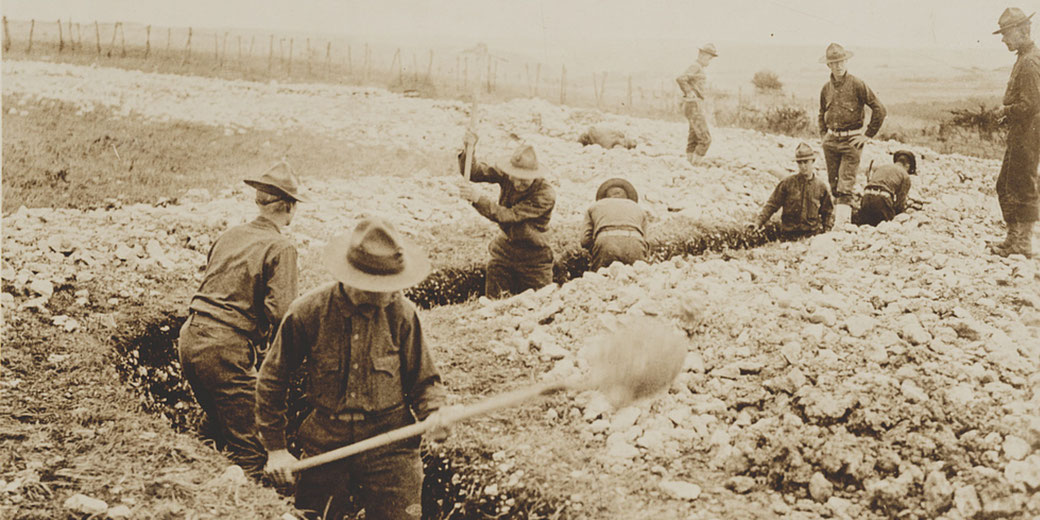
Between 1914 and 1918, many soldiers who fought in the mud-soaked trenches of France and Belgium and on other fronts created more than just makeshift shelters and improvised tools, and they also created a new way of speaking.
Faced with industrialised warfare and unspeakable conditions that brought daily threats to survival, they had begun to coin expressions that often described the absurd and the terrifying side of daily trench life.
Many of the strange phrases they invented travelled home with them and, remarkably, still appear in everyday English speech more than a century later.
Why did language change during WWI?
At the start of the war, traditional military terms often struggled to describe what soldiers saw and felt under shellfire and gas attacks, which came alongside relentless machine-gun fire.
Words that had worked for earlier campaigns failed to explain a world filled with craters and barbed wire, littered with corpses, so troops then began to invent slang that could match the scale and strangeness of the conflict.
Among the men who served, many came from working-class backgrounds and carried strong regional dialects.
When they arrived at the front, they met others from distant parts of Britain or from across the empire, such as India, Australia, Canada, and New Zealand.
Australian troops brought terms like "fizzer" for punishment or "bluey" for a red-haired soldier or a blanket, while Scottish regiments contributed their own regional expressions.
Often, they found that standard English could not carry the emotional weight or irony they needed, so new terms filled the gap.
In many cases, words were passed along rapidly from one unit to another, altered slightly each time until their original source faded from memory.
At the same time, trench life demanded speed and efficiency, as men often had only seconds to shout warnings or insults, and slang offered a faster way to communicate.
In dugouts and temporary camps, soldiers spoke in shorthand expressions that usually made sense only to those who had lived the same moments.
As such, jokes, exaggerations, and sarcastic commentary filled the air during quiet hours.
Gradually, a full unofficial vocabulary had begun to form, reinforced by trench newspapers such as The Wipers Times, which helped spread humour and slang by means of parody and humour that mocked officers and the war.
Importantly, this language also helped to build morale for many of them. Soldiers used slang to cope with the fear of death and the dull routines that sat beside the incompetence of some officers.
Humour often allowed them to take control of their surroundings in small ways, since by giving new names to familiar horrors, they made them seem less frightening.
The words they used became shields as much as weapons. One officer reportedly complained in a letter home about "the unmilitary language of the trenches," but such protests did little to stop its spread.
Sometimes, officers tried to suppress this slang, and they saw it as sloppy or defiant.
Yet it continued, since it helped men make sense of a war that official language often failed to explain.
Manuals issued by the War Office occasionally listed common expressions, but they often missed the point.
In 1918, attempts to record slang included pamphlets and later works like Edward Fraser and John Gibbons' Soldier and Sailor Words and Phrases (1925), which even these could not capture the full richness of trench speech.
The real purpose of the slang focused on survival, not on accuracy. Its meaning came from use, not from rules.

Common slang and terms from WWI
Blighty
Among the most widespread and lasting terms was “Blighty,” which referred to Britain itself.
Soldiers spoke of going “back to Blighty” as a dream. The word ultimately derived from the Persian vilāyat, which meant province or foreign land and passed into Urdu and Hindi as vilāyatī, which people used to describe the British.
British troops in India had adopted it and had changed its meaning to refer to home.
Over time, a “Blighty wound” came to mean an injury serious enough to send a soldier home, but not bad enough to kill or permanently disable him.
The term had appeared frequently in trench publications, and this had fixed it in the wider soldier vocabulary.
No Man's Land
Equally vivid was “no man’s land,” which had existed in legal English since the medieval period but had taken on new meaning on the battlefield.
It referred to the area between opposing trenches, where barbed wire and mud, cut by artillery craters, made movement deadly.
Any soldier who entered it did so with the knowledge that return was unlikely.
Chat
Among the more unexpected terms to survive was “chat.” In the trenches, “chats” referred to lice that infested soldiers’ clothing.
When a man said he was “chatting,” he meant he was picking lice off his uniform.
Eventually, the word came to mean informal talk, and that meaning replaced the original one entirely.
In memoirs and interviews, some veterans later recalled entire evenings spent "chatting" by candlelight.
Binge
Another expression to shift meaning during the war was “binge.” Previously a Yorkshire dialect term that referred to the soaking of wooden vessels, it became slang for a heavy drinking session during leave.
After the war, civilians adopted it for other types of excess, and it still describes episodes of doing too much today.
During the post-war celebrations and the 1920s culture of leisure, the term had become more popular.
Strafe
As for “strafe,” British troops borrowed the word from German propaganda, especially the phrase Gott strafe England! (“May God punish England!”).
The term became shorthand for almost any heavy bombardment, especially those delivered by aircraft or artillery.
Its clipped, foreign-sounding edge gave it a fitting tone of violence.
Dud
A shell that failed to explode was called a “dud.” Among soldiers, this meant safety, since a dud shell did not kill.
However, it also carried mockery. Something that failed to meet expectations became a “dud,” and the term moved easily into post-war usage.
It crossed over into American slang as well, where it took on similar meanings.
Cushy
Also common was “cushy,” a word that entered English through Urdu and was derived from the Persian khush, which meant pleasant.
A “cushy job” meant an assignment with little danger or hardship. In an environment where risk was constant, such tasks were fairly rare and highly prized.
Soldiers used the word both seriously and sarcastically, and it became a fixture of barrack-room conversation.
Over the Top
The phrase “over the top” described the act of leaving the trench to begin an attack.
Soldiers who went “over the top” exposed themselves to machine-gun fire and barbed wire, often with little hope of reaching the enemy line.
In civilian life today, the expression means showiness or excess, yet it still hints at the original idea of going too far and paying a price for it.
Plus, many, many more
Terms such as “kip” for sleep, “brass” for officers, “scrounge” for stealing or borrowing supplies, and “barrack-room lawyer” for a know-it-all all became part of the soldier’s daily speech.
Each showed a different aspect of army life, from rest to authority to complaint.
Some of these expressions later appeared in American G.I. slang during World War II, especially "scrounge," which showed the long-term influence of WWI vocabulary.
From the trenches to the home front
After the Armistice in 1918, former soldiers re-entered civilian life with memories, scars, and language that the war had formed.
Their slang travelled with them into factories, pubs, shops, and homes, so gradually words that once belonged to trench life became part of ordinary speech.
American and Commonwealth soldiers, too, carried versions of these terms home, and they adapted them to their own national vocabularies.
Soon, writers for novels and newspapers began using the terms to show realism, and memoirists did so as well.
Some of the slang lost its sharpness but gained a kind of informal respect, so authors used it to show grit, honesty, or humour.
Comedians incorporated the expressions into their acts, and audiences usually found them easy to understand.
Eventually, children who had never seen a battlefield repeated terms like “dud” or “kip” without any knowledge of where they came from.
Radio broadcasts and theatre performances helped spread the words even further, so the language of war gradually crossed generations.
Even now, few people today realise that expressions such as “chat,” “binge,” or “cushy” once belonged to men who faced gas and shells, plus the lice that lived in their uniforms.
The words have survived as language oddities and as quiet reminders of the experience that created them.
Each time someone complains about a “dud” product or talks about a “chat” with a friend, they echo voices from a century ago.
Ultimately, the soldiers of the First World War changed language partly because they needed it to match their reality.
Their words captured fear, grief, nonsense, and defiance. By creating slang that expressed what official terms could not, they left behind a living record.
That influence survives in speech, passed down in conversation rather than textbooks.