
From maggots to marmalade: The gross and unappetizing foods of WWI trench warfare

The mud and misery of the Western Front between 1914 and 1918 revealed the painful truth behind Napoleon Bonaparte's famous saying that an "army marches on its stomach".
In fact, logistics determined the outcome of the Great War as much as artillery shells or machine-gun fire. The British Army faced the enormous task of feeding millions of men stranded in static warfare, which meant that daily rations became the obsession of every soldier from the muddy salients of Ypres to the chalky trenches of the Somme.
Unfortunately, the quality of this food often hovered between barely edible and utterly repulsive.
Why was food in WWI trenches so bad?
The sheer scale of the conflict created immediate serious supply problems for the Army Service Corps (ASC) since the supply of the front line required a long supply chain that started at depots in Britain and then moved to base ports like Le Havre or Boulogne.
As a result, food lost its freshness long before it reached the reserve trenches due to a journey that often took days or even weeks.
Bread baked at base depots turned stale and hard by the time it arrived at the hands of a private in a forward listening post, while fresh meat was a luxury that often spoiled before it could be cooked.
Therefore, the reliance on tinned goods became absolute.
Unfortunately, conditions on the front lines made proper cooking almost impossible even though regulations officially required hot meals for the men.
Kitchens were situated miles behind the fighting lines to avoid enemy shelling, so the food arrived within large metal containers known as "dixies".
Runners carried heavy dixies through miles of communication trenches, where they dodged sniper fire and waded through waist-deep mud.
The stew or tea contained within the vessels was almost always cold and set like jelly by the time it reached the hungry troops.
What is more, hygiene standards within the trenches were non-existent as mud got into everything including the food.
When a soldier ate his ration of bully beef he often consumed the grit and filth of the trench floor along with the meat.
Clean drinking water was scarce, so water brought to the front within petrol cans often retained the foul taste of fuel.
Regardless, cooks attempted to mask this flavour with excessive amounts of chlorine and this resulted in tea that tasted like a swimming pool.
The very unclean environment encouraged the rapid spread of flies during the summer months on the Somme in 1916.
Such insects would land on latrines and rotting bodies in No Man's Land before they settled on the soldiers' food where they transferred disease and dysentery with horrific efficiency.
Rats
The trenches supported a large population of vermin that competed fiercely with the soldiers for their limited rations.
Two main species plagued the Western Front which were the black rat and the brown rat.
The brown rat was particularly feared due to its very large size and appetite.
Soldiers reported seeing rats as large as domestic cats gorged on the plenty of flesh from unburied corpses and the discarded scraps of army rations.
Such rodents were so fearless that they shocked the men as they would scurry over the faces of sleeping men and gnaw through canvas haversacks to reach the food inside.
Rats infested every dugout, so if a soldier left a piece of bread unattended for only a few seconds he would find it vanished or covered in rodents that swarmed over it.
They spoiled food stores with their droppings and urine and spread Weil’s disease and other infections among the troops.
Men attempted to secure their food and they hung it from the roof of the dugout on wires, but the rats often showed remarkable agility as they moved around such obstacles.
The mental toll of the sound of claws scratching against tins and wood throughout the night added to the intense strain of trench life.
Hunting rats became a grim sport for the soldiers when boredom set in so terriers were sometimes brought into the trenches to dispatch the vermin where they killed scores within a single hour.
Soldiers used bayonets, shovels, and rifles to cull the population but the numbers remained overwhelming.
The reproductive rate of the rats combined with the endless supply of food provided by the rubbish left by the war meant the infestation was a permanent feature of the soldier's daily existence.
Bully beef
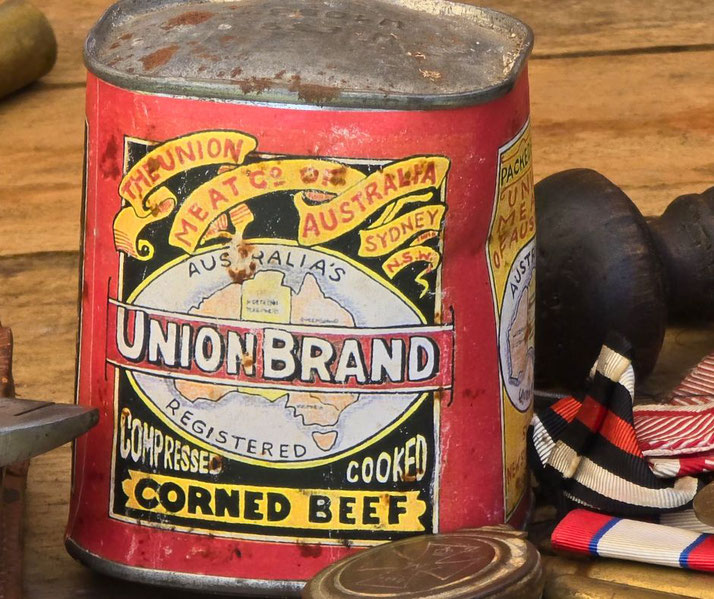
The main part of the British soldier's diet was "bully beef" which was a tinned corned beef that was the primary source of protein.
The name derived from the French boeuf bouilli meaning boiled beef. Fray Bentos was the most infamous brand associated with the war as it was produced within Uruguay and shipped by the millions to the Western Front.
Each 12-ounce tin contained a compressed block of salted beef and jelly-like fat. It was a reliable source of calories that did not spoil and was the ideal ration for an army incapable of providing fresh meat.
Temperature dictated the texture and taste of bully beef, since, during the freezing winters of 1916 and 1917, the fat within the tin solidified into a hard white wax.
Soldiers had to chip away at the contents with bayonets or knives to extract the meat.
The heat of summer turned the fat into a sickening oily liquid that coated the beef.
The high salt content provoked intense thirst and this was a dangerous side effect when fresh water was rationed or contaminated.
Men devised various methods to make bully beef more edible, so they fried it with crushed hardtack biscuits to create rissoles or mixed it into stews to add bulk.
The boredom of eating the same metallic-tasting meat day after day and month after month led to widespread resentment.
Soldiers supposedly cheered when a shell destroyed a supply dump of bully beef as they preferred hunger to another meal of the dreaded substance.
Maconochie Stew
Maconochie Bros of Aberdeen produced a tinned meat and vegetable stew that became closely connected with the food horrors of the First World War.
The label promised a nutritious meal of sliced turnips, carrots, and beef within a rich gravy, but when soldiers opened a tin of Maconochie it revealed a very different reality.
The contents usually consisted of a thin, watery broth that contained pieces of gristle that were hard to recognise and a few pale vegetables.
The main thing people noticed about Maconochie was its smell, which the soldiers frequently compared it to a manure heap or a damp dog.
To eat Maconochie cold was a punishment in itself, as the animal fats once more solidified into white globs that coated the mouth and throat.
Soldiers understood that warming the stew was essential to make it taste better, but to heat a tin within the trenches created many problems.
A small fire risked attracting the attention of German snipers and solid fuel tablets were precious.
Also, the smell intensified when heated and got into the dugout and clung to woollen uniforms.
The effect of Maconochie on soldiers' stomachs was well known due to the high fat content and poor quality of the meat.
It often caused severe indigestion and flatulence. Soldiers referred to it as the "man-killer".
As a result, the Maconochie tin became a symbol of the government's inability to provide quality food.
Trench cake
Families on the home front attempted to add to the poor army rations, and they sent parcels to their loved ones.
The British postal service was very efficient as it handled over 12 million letters and parcels a week by 1917.
Among the knitted socks and cigarettes, soldiers often found a "trench cake". This was a dense fruit cake made without eggs and designed to survive the journey to France and remain edible for weeks.
The recipes for trench cake used ingredients available under rationing within Britain.
Cooks used vinegar and baking soda as raising agents in place of eggs and added cocoa, spices, and dried fruit to mask the blandness of the flour.
The resulting cake was heavy, dry, and incredibly durable. It needed to withstand the rough handling of the postal system and the damp conditions of the dugouts.
Soldiers valued such cakes more for the emotional connection to home than for their taste, so the act of sharing a slice of trench cake became a ritual that bonded the men within a section.
The cake often arrived stale or crushed but it offered a sweet relief from the savoury boredom of bully beef.
The texture was sometimes so hard that men joked it could be used as a weapon or a sandbag but they ate every crumb with gratitude.
Jammy bread
Finally, bread and jam became the other staple of the trench diet but the bread supplied to the front was rarely the fresh loaves depicted on recruitment posters.
It was often baked days earlier at base depots, and arrived at the front green with mould or rock-hard.
Soldiers replaced bread with "hardtack" biscuits when supply lines faltered. These Huntley & Palmers biscuits were essentially flour and water baked until they were as hard as tiles.
Therefore, men had to soak them in water or tea so that they did not break their teeth.
However, jam made the hardtack and stale bread edible, so the army issued millions of tins of jam, of which the Tickler's brand was the most common.
Soldiers bitterly complained that the only flavour available was Plum and Apple. A popular trench song mocked this lack of variety, and asked "What's happened to the strawberry?"
Rumours persisted that the jam contained turnips or wood chips to bulk out the fruit content.
The tins themselves were used for secondary purposes when soldiers fashioned them into simple "jam tin bombs" filled with explosives and scrap metal.
What is more, the sugar within the jam provided a important energy boost, so soldiers slathered the sticky substance over their biscuits to mask the taste of weevils or mould.
However, it attracted wasps in the summer, and added another layer of irritation to the meal, while the consumption of so much sugar combined with a lack of dental hygiene led to widespread tooth decay among the troops.
The simple combination of biscuit and cheap jam remained the most consistent flavour of the war and was a sweet and sticky memory for the generation that survived the trenches.