
The 4 most lethal chemical weapons used in WWI
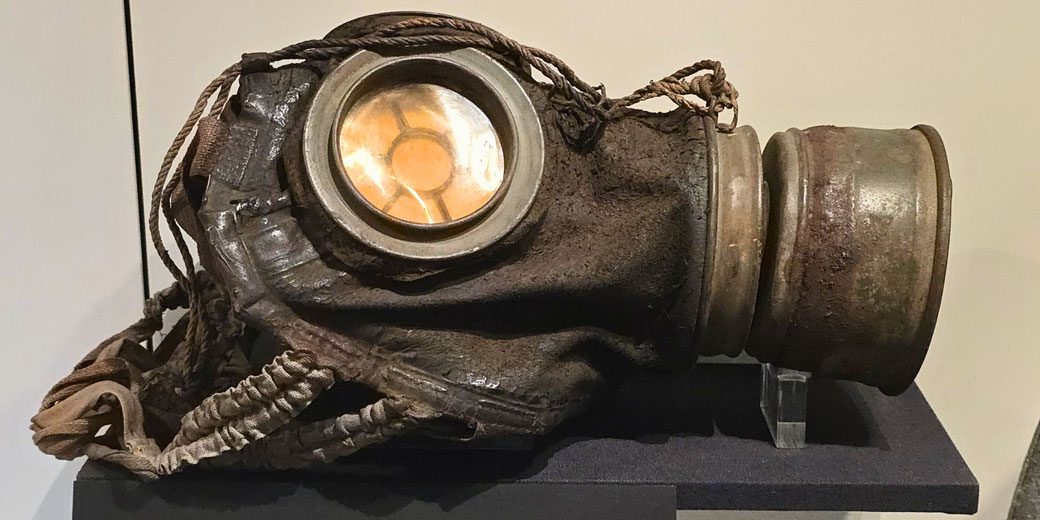
As the First World War dragged into a bloody stalemate across the Western Front, military scientists introduced a new weapon that changed combat: chemical gas.
Designed to infiltrate trenches, disable entire battalions, and bypass barbed wire and machine guns, it delivered injury and death in silent, invisible waves.
Over the course of the war, an estimated more than 1.3 million soldiers had suffered gas exposure, and about 90,000 of them died as a direct result, making chemical weapons one of the most feared aspects of trench warfare.
What were 'weaponised gases'?
During the war, weaponised gases meant toxic chemical agents that were usually used to disable or kill, since they attacked the human body through inhalation, skin contact, or long exposure.
Unlike conventional weapons that relied on impact or firepower, these compounds operated invisibly, often with delayed symptoms that gave soldiers false confidence before their bodies began to fail.
Initially, gas warfare relied on good wind conditions and open delivery systems.
Cylinders that stood along the front often released clouds of gas toward enemy trenches, while later developments allowed artillery shells and projectors, such as the Livens Projector introduced in 1917.
This change increased the range of gas attacks and made them more unpredictable, particularly during large-scale offensives where terrain and weather shaped the direction and effect of each cloud.
Early examples include the British use of gas shells at the Battle of Loos in September 1915.
At first, armies did not fully understand the long-term effects of gas exposure.
While some soldiers died immediately from choking and lung failure, many others returned from the front with chronic bronchitis, scarring of the respiratory tract, and permanent blindness.
As knowledge of gas symptoms grew, tactics for using them changed as well.
Combined assaults that used gas to flush soldiers from cover before bombarding them with shells became a common practice in many sectors, and some gases, especially those with delayed effects, were chosen for their ability to disable rather than kill.
Eventually, both sides made gas attacks a normal part of battlefield planning in many operations.
By the final year of the war, gas attacks had become so common and so heavy that very few front-line units escaped them.
Frontline soldiers carried gas masks alongside rifles, and commanders adjusted battle plans around the likelihood of gas exposure.
The war was once fought by sight and sound and became a conflict where the unseen could cripple a battalion in minutes.
1. Tear gas
During the early months of the war, French troops sometimes used ethyl bromoacetate, a substance that caused intense eye irritation and respiratory discomfort.
The French command hoped to confuse rather than kill, but it often produced temporary blindness, uncontrollable coughing, and skin irritation, which made it difficult for troops to hold a line or operate weapons.
Soon after, German forces responded by developing their own compounds that included xylyl bromide.
In January 1915, they used artillery shells filled with tear gas against Russian troops at Bolimów.
Although the frigid temperatures rendered the gas ineffective, the event was the first recorded instance of a large-scale chemical attack.
Despite the disappointing outcome, German High Command learned valuable lessons, and their scientists included figures like Fritz Haber, and they refined their formulas and adjusted for environmental factors, which led to more effective deployment later on the Western Front.
Often, tear gas was used in combination with more lethal agents. By forcing soldiers to remove their masks or flee their positions, tear gas created conditions that made subsequent attacks more deadly.
While rarely fatal on its own, it consistently disrupted unit cohesion and inflicted panic during moments when clarity of action mattered most.
2. Mustard gas
By July 1917, during German operations near Ypres, a new compound had entered the war that proved far more destructive than anything previously used on the Western Front.
Mustard gas, or sulphur mustard (C4H8Cl2S), did not kill instantly either. Instead, it inflicted delayed but horrific injuries.
Victims experienced painful blisters across the skin, swelling in the eyes that often led to blindness, and internal damage that developed hours after contact.
The first confirmed use occurred at Langemarck during the Third Battle of Ypres.
Unlike earlier gases that dispersed quickly, mustard gas settled into the soil and clung to surfaces.
It remained active for days, so contaminated areas became impossible to live in and dangerous to enter.
Soldiers who walked through recently shelled terrain often absorbed the agent through their clothing and boots, only to develop severe symptoms later that night.
Even if they had worn gas masks, the vapour could enter through the seams of their uniforms, exposing the skin and eyes.
By design, mustard gas crippled rather than killed, as the goal was to fill medical stations with long-term casualties, put pressure on supply lines and sap the morale of enemy forces.
British reports attributed around 2,000 deaths and more than 160,000 non-fatal injuries to mustard gas, though precise numbers remain difficult to confirm.
As the war progressed, the combined effect of mustard gas became very clear. It overloaded medical units with thousands of cases that healed very slowly, many of which ended in permanent disfigurement or chronic illness.
3. Chlorine gas
At the Second Battle of Ypres in April 1915, German forces released over 160 tonnes of chlorine gas from pressurised cylinders in an action that launched the first successful chemical assault on a Western Front battlefield.
As a pale green cloud advanced across no man's land, Allied soldiers (many without any protective equipment) initially mistook it for smoke until they collapsed coughing and gasping for air.
Chlorine attacked the respiratory system by reacting with moisture in the lungs to form hydrochloric acid, which caused severe internal burning and suffocation.
Many died within minutes, while others staggered out of the trenches, coughing up blood, only to collapse from respiratory failure a few metres later.
Canadian troops of the 1st Canadian Division held the line under immense pressure.
Although the Germans created a gap nearly six kilometres wide in the Allied line, they failed to exploit it, largely because their own troops hesitated to enter the contaminated area.
Even with its tactical limitations, chlorine’s psychological impact was immediate and very intense.
As gas warfare developed, chlorine became one component of more advanced gas mixtures.
Its effectiveness decreased once soldiers began receiving basic masks, and improvised countermeasures such as urine-soaked cloths became widespread immediately after the first attacks.
Early gas assaults often occurred before widespread gas training and inflicted thousands of deaths and introduced a form of warfare that frightened even hardened veterans.
Over time, chlorine lost its popularity to more sophisticated gases, yet its initial deployment remains one of the war’s most defining and terrifying moments.
4. Phosgene gas
Soon after chlorine was first used, both French and German chemists developed phosgene (COCl₂), a compound that caused far more deaths with fewer immediate symptoms.
Released in high concentrations or combined with chlorine for enhanced effect, phosgene had a faint smell of mouldy hay, which made it difficult to detect.
Exposure caused gradual fluid build-up in the lungs, which led to suffocation hours after the initial contact, often while the victim slept or marched back from the front.
During quiet periods on the line, phosgene killed silently. Soldiers often failed to recognise the danger until it was too late to apply protective gear.
This delay led to more deaths, because victims received no early medical help.
Phosgene was first used by the Germans in December 1915 near Ypres. By the end of the war, phosgene had caused more gas-related fatalities than all other agents combined and caused about 85 percent of all recorded chemical deaths.
Phosgene’s power came from its hidden nature. Unlike mustard gas, which burned on contact, or chlorine, which caused immediate choking, phosgene bypassed the body’s alarm systems.
It allowed for surprise attacks that inflicted maximum casualties with minimal warning.
Its widespread use changed how armies organised their front-line units, and it pushed them to develop better detection systems and faster response drills, along with new methods that could predict enemy intentions.
How could soldiers protect themselves?
At the start of gas warfare, soldiers had no protection at all. Many tried to shield themselves with handkerchiefs soaked in water or urine, which provided partial defence against chlorine gas but nothing against phosgene or mustard.
As attacks became more frequent, militaries scrambled to provide gas masks, and by mid-1915, troops had received fabric hoods treated with chemical neutralisers.
These early models, such as the British P Helmet and later the PH Helmet, impaired vision, absorbed moisture, and quickly became ineffective in sustained exposure.
Later designs introduced filtered respirators, which improved airflow and removed harmful particles before they reached the lungs.
The British Small Box Respirator was adopted in 1916 and included a hose leading to a filter box and a mouthpiece, offering reliable protection when worn correctly.
Similar German masks such as the GM15 generally provided a tighter seal and replaceable filters.
Both versions became standard issue, and troops received training on how to detect gas, apply masks rapidly, and continue fighting under exposure.
By late 1916, the British had produced over 30 million gas masks.
Even with improved gear, challenges remained. Some gases damaged exposed skin, especially mustard gas, which bypassed masks altogether.
Others settled into the ground or clung to clothing, leading to exposure long after the battle ended.
Troops needed to stay alert during attacks and during routine patrols and clean-up operations as well.
In reality, protection required discipline, fast reflexes, and the knowledge that a few seconds of hesitation could prove fatal.
Attempts to ban their use
Before the war began, world leaders had already recognised the threat posed by chemical weapons.
At the Hague Conferences of 1899 and 1907, major powers agreed to avoid using poison gas in warfare.
However, once conflict erupted, these agreements quickly collapsed under the pressure of military necessity.
As casualties mounted and public outrage grew, calls for a ban became louder, especially from nations whose troops had suffered repeated gas attacks.
In 1925, the Geneva Protocol officially banned the use of chemical and biological weapons in future conflicts.
While the treaty did not prevent signatories from storing or researching such weapons, it showed a change in international ideas about what was acceptable.
Major signatories included the UK, France, Germany, and the USSR, while the United States did not ratify the agreement until 1975.
The suffering of gas victims during the Great War, many of whom lived for decades with the physical and emotional consequences, had helped create widespread opposition to their continued use.
One of the more well-known victims was Adolf Hitler, who temporarily lost his sight after a mustard gas attack in October 1918.
However, chemical weapons never fully disappeared. Stockpiles remained, and some nations resumed use during later conflicts, such as the Iran-Iraq War in the 1980s.