
The horrible conditions women worked under during the Industrial Revolution
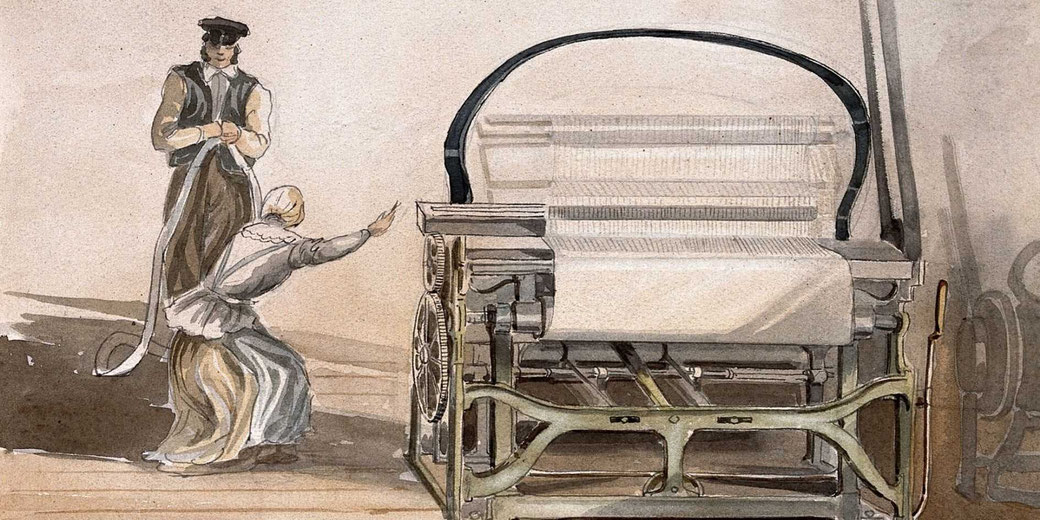
In the 1780s, Britain’s factories and workshops that operated across growing industrial regions pulled women into paid employment in greater numbers than ever before.
As cotton mills opened across Lancashire and steam-powered equipment spread throughout England’s industrial cities, women filled roles that demanded long hours that tested their physical endurance.
Many entered textile mills, matchstick factories, or metal workshops to support their families, and although wages remained low, their labour had become vital to the operation of the industrial economy.
By the 1830s, women formed almost one third of the factory workforce, particularly in the textile sector, where they and children often made up the majority of workers.
Women’s entry into factory work
By the early 19th century, textile manufacturers in many districts had created a system that relied heavily on cheap, easily controlled labour to maintain high output and low production costs.
Employers increasingly hired women and children, who lacked political influence and accepted wages far below those of adult men.
As a result, towns such as Manchester and Preston attracted large numbers of young women from nearby villages, many of whom came from agricultural households that had lost access to land or seasonal work.
Mills such as Quarry Bank in Styal employed many young women in dormitory-style housing that restricted their independence, although its more protective style of management was not typical of the harsher conditions found in most urban factories.
Inside spinning rooms and weaving sheds, women put up with shifts that often ran from dawn until nightfall.
Over time, they faced rising quotas and tighter supervision as steam-powered machinery increased productivity.
Dust and heat often filled the air as mechanical noise created dangerous working environments, and since factory owners had little incentive to put worker safety first, injuries and illness had become common.
The 1833 Factory Commission Report recorded widespread abuse and failure to care for workers, though factory inspectors had rarely enforced meaningful change when they visited at all, since many received advance warning or faced pressure from local mill owners.
Work outside the textile industry
As industrialisation spread into other sectors, women entered jobs in mining, match production, ceramics, and small-scale metalwork.
In coalfields near Durham and South Wales, women who worked in the pits hauled heavy carts underground, and they often had to navigate narrow shafts on hands and knees.
Injuries from falling rocks, collapses, or equipment failures occurred frequently, yet wages often remained too low for families to survive without female labour.
After public concern had grown, Parliament passed the Mines and Collieries Act in 1842, which banned women and children under ten from underground mining.
However, factory owners criticised the act as disruptive to output, and newspapers offered mixed responses, with some who said it was overdue and others who denounced it as interference in family income.
However, in many cases the law displaced women into other trades with very little legal control rather than addressing the wider causes of their exploitation.
Some found work above ground, where they sorted coal, or in brick-making yards, where conditions remained physically demanding and wages continued to fall below the level needed for basic survival.
Elsewhere, across Britain, thousands of women worked in match factories, where they dipped splints into white phosphorus paste.
Over time, repeated contact had caused necrosis of the jaw, a disease later known as “phossy jaw,” which left workers with severe facial damage and often proved fatal.
Although some medical professionals raised concerns during the 1840s, wider public awareness and acceptance of the disease did not take hold until later in the century.
Symptoms included chronic pain and abscesses, along with the gradual decay of facial bone, which often required surgical removal.
Medical professionals raised concerns in journals such as The Lancet, but factory owners delayed reforms to avoid slowing production.
Meanwhile, in the metal trades of Birmingham, women stamped out buttons and polished goods, then packaged items under close supervision.
Conditions remained cramped and poorly lit, and supervisors imposed fines for errors, slow work, or talking during shifts.
Domestic servants, seamstresses, and piecework
Although factory jobs expanded rapidly, many working-class women still found employment in domestic service or the sewing trades, especially in larger towns and cities.
In towns such as London, Bristol, and Edinburgh, middle-class families who could afford paid help hired female servants to cook, clean, wash, and care for children.
Servants lived inside the homes of their employers, and they often worked up to sixteen hours each day with little privacy and no guaranteed time off.
Dismissal could occur without notice, and abuse by employers went largely unchallenged.
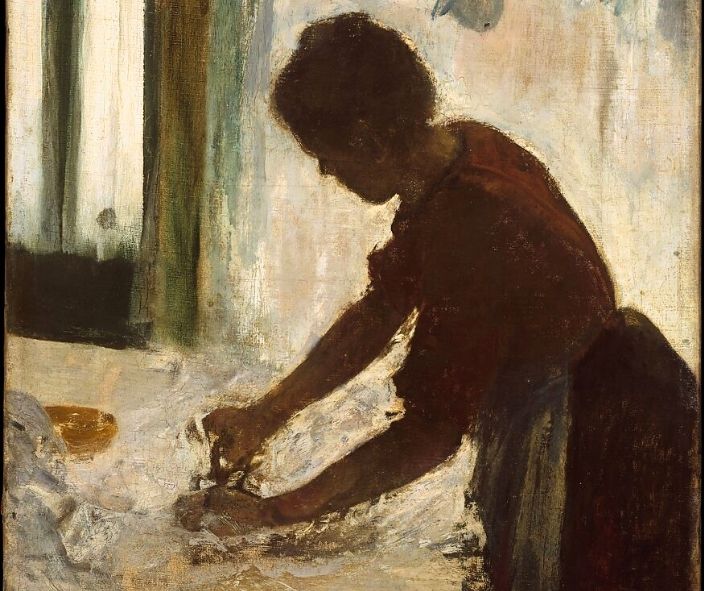
At the same time, many women worked from home, where they sewed garments or laundered clothes for small payments.
Contractors paid by the piece, which forced seamstresses to complete large quantities of work to earn a liveable income.
As a result, many worked into the night by candlelight, which damaged their eyesight and caused long-term strain to their hands and backs.
For widows, single mothers, or women with infants who needed to care for children at home, this remained the only realistic form of employment, yet it left them exposed to financial instability, especially when contractors delayed or withheld payments.
In 1843, journalist Henry Mayhew described the desperate situation of needlewomen in London as "the most wretched of all human creatures."
The fight for better wages and rights
Throughout industrial Britain, employers in most industries paid women significantly less than men for the same work.
In cotton mills, women weavers might receive half the pay of male workers who did the same job despite producing the same quantity of cloth.
In some cases, men earned up to 20 shillings per week while women received only 9 or 10.
Union organisers frequently opposed female membership because they feared that women’s presence in the workforce weakened wage demands and threatened job security for men.
The Amalgamated Society of Engineers, for example, restricted its membership to male workers only.
As a result, female workers often lacked support from organised groups or legal protection, especially in industries outside textiles.
Sadly, public attitudes in many communities, which often drew on traditional ideas about gender, also treated women’s contributions as less important.
Moralists and reformers joined many politicians in claiming that working women neglected their maternal responsibilities and weakened traditional values.
Rather than examining why women entered factories, critics focused on their supposed failure to maintain family stability.
In reality, many women became the primary earners in households affected by male unemployment, injury, or abandonment.
Even when they earned too little to escape poverty, their wages provided food, coal, and shelter for entire families.
How things slowly improved
Over time, in many industrial centres, working women who laboured in factories and workshops began to protest poor conditions and organise collectively.
As early as the 1830s, women in Yorkshire and Lancashire joined strikes and marched in protests, then presented petitions to lawmakers in which they demanded shorter hours and safer environments.
Earlier writers such as Mary Collier, who was a poet and former washerwoman active in the 1730s, gave voice to female labourers through poetry.
Although she did not take part in industrial protest herself, her work highlighted the struggles of working women in previous generations.
In 1833, middle-class reformers such as Lord Ashley helped pass the Factory Act, which introduced some limits on child labour.
While women workers protested conditions during the period, their influence on this legislation remained limited, and it did not extend meaningful protections to adult women.
Eventually, joint campaigns by workers and reformers helped pass the Ten Hours Act in 1847, which limited the working day for women and young people specifically in textile mills.
Employers often avoided this law when they required workers to complete unpaid tasks before or after their shift, and actual enforcement remained inconsistent.
Wealthy social reformers such as Florence Nightingale, who later drew attention to female health and welfare issues, worked primarily within middle-class reform networks, and Josephine Butler, who focused on the repeal of the Contagious Diseases Acts, but was not directly involved in industrial workplace reform.
On the factory floor, many women relied more on unofficial support networks such as neighbourhood assistance and savings clubs, along with shared childcare arrangements.
These networks allowed many to survive decades of difficult work with dignity and mutual care.