
Trains, terror, and technological change: 19th century hysteria about railways
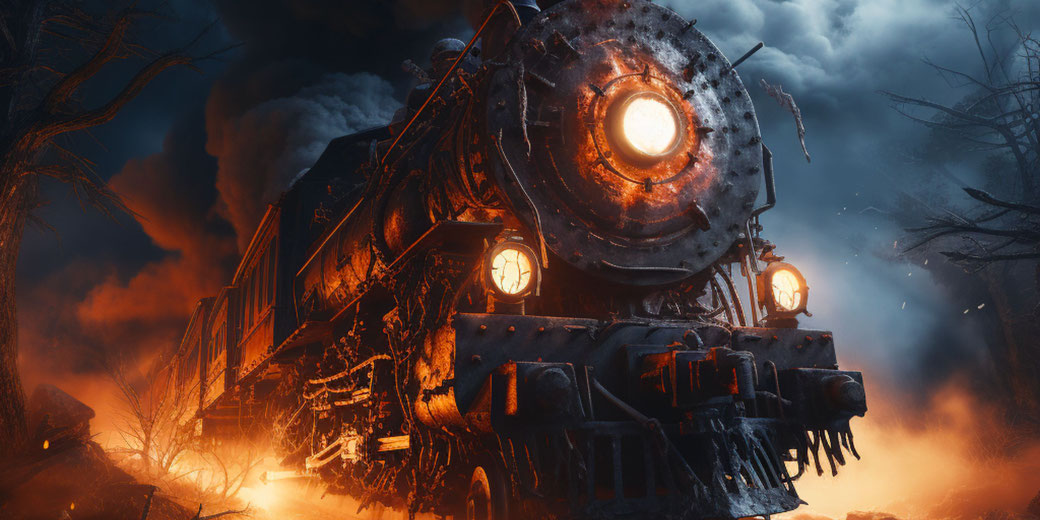
By the early 1830s, Britain’s towns and countryside had begun to change under the weight of iron tracks and the roar of steam engines.
Towns that once dozed quietly beside canals now trembled as locomotives thundered past and tore through farmland and ancient paths.
While engineers praised the age of machine-powered travel, growing numbers of medical professionals, clergymen, and ordinary citizens expressed deep concern that, for many communities, the railway had unleashed something disruptive and unnatural that many observers described as dangerous.
The birth of the 'iron horse'
When George Stephenson’s Rocket won the Rainhill Trials in 1829 by reaching speeds of nearly 30 miles per hour, few believed such velocity could ever be practical for human travel.
As the Rocket outpaced five other competitors and established the basic design for future locomotives, observers became convinced that the world had entered a new era.
Soon after, the opening of the Liverpool and Manchester Railway in 1830 drew thousands of spectators, among whom were important public officials.
During the ceremony, William Huskisson, Member of Parliament, stepped onto the tracks, was struck by a locomotive, and later died from his injuries.
His death cast a shadow over the celebration and became the first widely publicised fatality involving railway technology.
As railway construction advanced rapidly during the next two decades and engineers laid down over 6,000 miles of track that linked industrial cities with rural districts, many communities experienced the railway as an unwelcome force that arrived in their fields, disrupted their farming routines, and reduced the value of their land.
As a result, opponents filed legal objections, refused land access, and at times sabotaged construction sites.
By the mid-1830s, protests in many districts had grown more vocal. Some pamphlets condemned the railway as destructive to the environment, and cartoons depicted trains flattening wildlife or ploughing through sacred sites.
Among many country dwellers, fears spread that iron tracks brought fire and noise without warning, as trains killed livestock and scared children.
Speed, sickness, and pseudoscience
Among medical circles, speed remained the most pressing concern, since some doctors and commentators warned that no human body could safely endure motion faster than twenty miles per hour, a belief that was especially widespread during the 1820s.
As more case reports appeared, terms such as “railway madness” entered everyday language.
Physicians warned of physical and mental breakdowns because some patients experienced nausea, confusion, and memory lapses after travel.
During the 1860s, more doctors and journalists had focused on an illness that they called “railway spine.”
The condition typically appeared after minor collisions, when victims reported long-term symptoms such as fatigue or back pain despite showing no external injury.
As disputes had escalated, doctors presented competing theories. Some argued that microscopic trauma had damaged the spinal cord, while others dismissed the symptoms as hysteria or faking illness.
As journals such as The Lancet and the British Medical Journal had published different opinions, the debate turned into a matter of national discussion.
As legal cases had multiplied, judges and juries faced the challenge of evaluating claims based on disputed medical explanations.
As newspapers had published summaries of trials and printed interviews with both victims and railway officials, public concern deepened as many passengers began to fear both collision and invisible harm caused by motion itself.
Fears for women's safety
From the beginning, social reformers expressed concern about the railway’s impact on traditional gender roles.
Victorian moral codes typically placed heavy emphasis on female modesty, and the idea of women travelling alone in enclosed compartments without attendants caused widespread discomfort.
Private carriages lacked corridors, preventing escape or observation once the train had left the station.
As incidents of harassment and assault were reported in popular journals, including accounts of the 1864 murder of Thomas Briggs on a train running along the North Kent Line, which observers often described as the first recorded railway murder, women’s groups began calling for changes to carriage design and layout.
In response, railway companies introduced ladies-only compartments and issued safety instructions to female passengers.
Many advice columns told women to avoid eye contact, carry smelling salts, and stay seated during journeys.
Some etiquette manuals even recommended that unmarried women should only travel with male escorts.
At the same time, religious voices warned that train journeys encouraged women to abandon moral restraint by placing them outside the influence of family and church.
Preachers denounced railway day trips as a source of temptation, particularly when companies offered Sunday tickets to holiday destinations.
They linked railway travel to gambling and heavy drinking that encouraged scandalous behaviour, and argued that women exposed to this environment would lose their virtue.
How many rail accidents were there?
Early railway technology often lacked the safety features that later generations took for granted.
As trains ran on single lines, signals operated manually, and communication between stations depended on flags or bells, accidents occurred with worrying regularity.
Each one helped to increase public anxiety and reinforced a common belief that railways were naturally unsafe.
The Versailles accident of 1842 involved an engine explosion and fire that killed over 50 people and horrified observers across Europe.
Passengers became trapped inside locked carriages and burned alive as rescuers struggled to break open doors.
In Britain, the Clayton Tunnel disaster of 1861 led to 23 deaths and widespread criticism of poor signalling systems.
As newspapers printed detailed accounts of injuries, complete with sketches of mangled wheels and shattered windows, public attention turned to safety and the prevention of future crashes, and editors demanded reforms.
Parliament passed the Regulation of Railways Act 1844, which required affordable third-class travel and minimum standards such as covered seating, though improvements like carriage lighting and advanced braking systems developed more gradually through later initiatives.
Railways also had begun adopting electric telegraph systems for safer communication between stations, with the first experiments in the late 1830s and more widespread use during the 1850s.
Still, public confidence recovered slowly, especially among first-time travellers.
Resistance to progress
By the 1850s, critics of the railway system began to argue about long-term cultural effects as well as immediate fears, as traditionalists claimed that trains weakened local identity by drawing distant towns together and encouraging mass migration.
Especially in farming communities, resentment grew as prices fluctuated and railway companies acquired land by legal force.
Economic fears also shaped resistance, as many workers in older industries, such as canal transport or horse-drawn coaching, saw their livelihoods vanish, and as they lost their traditional jobs.
They wrote pamphlets blaming railways for urban poverty and social disruption.
During the investment bubble that people knew as “railway mania,” thousands of investors had lost money on dishonest investment schemes.
As some railway projects, such as the Direct London and Exeter Railway, had never laid any track, suspicion grew that railways enriched dishonest promoters while bankrupting ordinary citizens.
In literature and art, the train often appeared as a symbol of chaos, and satirical prints by artists such as George Cruikshank depicted locomotives with monster faces that seemed to devour villages or crash into cathedrals.
Charles Dickens had survived a rail crash in 1865 and described the terrifying silence that followed the collision in The Signal-Man, where he blended supernatural fear with mechanical disaster.
Poets like Alfred Tennyson captured the mixed feelings of the age in lines such as 'Let the great world spin forever down the ringing grooves of change,' showing both awe and unease in response to rapid technological change.
Public debate increasingly described the railway as a source of loss: a loss of safety and stability that seemed to strip travellers of control.