
The dangers and disasters of early steam technology
During the early Industrial Revolution, steam power transformed many workshops and mines, along with new forms of machine-powered transport, since it provided a mechanical force far stronger than human or animal labour.
As they converted water into high-pressure vapour, engineers developed the ability to move heavy machinery and drive locomotives or other factory equipment on a scale that wind and water power could not achieve.
From the beginning, however, this power often came at a terrible cost, as boilers frequently exploded and engines failed without warning, which left thousands of workers who suffered injury or death from unsafe machines.
Lack of safety knowledge
From the final decades of the 18th century, inventors such as James Watt and Richard Trevithick built engines that converted steam pressure into motion, since the engines drove pistons and rotated gears to force water out of mine shafts.
Watt developed his separate condenser around 1765 and secured the patent in 1769, and this allowed his low-pressure engines to operate with improved fuel efficiency.
Trevithick’s high-pressure models, which first appeared around 1801 with his "Puffing Devil," produced greater output than Watt’s designs.
In 1804, his “Penydarren” locomotive was the first recorded instance of a steam engine hauling a load along rails, although it damaged the cast-iron tracks and could not be used safely again and again.
However, the increase in pressure pushed the limits of available materials and exposed weaknesses in boiler construction.
Iron plates were made from wrought iron and were held together by rivets, and they were likely to split into separate layers after repeated heating and cooling, especially when exposed to uneven temperatures.
Importantly, operators often lacked accurate instruments to monitor pressure, and some early boilers still ran without reliable safety valves.
Although safety valves were introduced by the early 19th century and became increasingly common, many operators ignored them or allowed them to fall into disrepair.
Instead, workers often guessed operating limits by sound, and they watched for slight bends in the boiler shell and listened for changes in engine rhythm.
Since water used in boilers came from rivers or ponds, it frequently left mineral deposits that narrowed internal pipes and blocked heat transfer, which caused steam to build up behind blockages that no one could see.
As a result, pressure increased rapidly inside boilers that had already shown signs of wear and weakness in their structure.
Many factory owners, who were intent on high production rates, regularly ordered workers to override safety features or increase fuel supply beyond recommended levels.
As a result, they forced machines to run at unsafe temperatures and pressures, which meant that the chances of mechanical failure multiplied.
Some early demonstrations of high-pressure engines experienced failures, but no confirmed record exists of a Trevithick locomotive exploding in 1803.
Concerns about safety were valid, and experimentation with high-pressure designs still continued.
As engineers continued to expand the use of steam in textiles and mining, as well as in transport, they did so without a full or reliable understanding of the long-term effects of heat stress, metal fatigue, and internal corrosion.
Without formal qualifications or standardised training, many mechanics relied on trial and error to operate dangerous machines that, if mishandled, could explode with great force.
Public disasters and growing alarm
By the 1810s, fatal accidents had become more frequent as steam engines appeared across many new sectors of industry.
In 1815, a terrible explosion at a woollen mill in Leeds killed six workers and injured more than a dozen.
The boiler was unable to withstand internal pressure and shattered with such force that pieces of metal smashed through walls and windows, injuring passers-by and causing a wave of public fear.
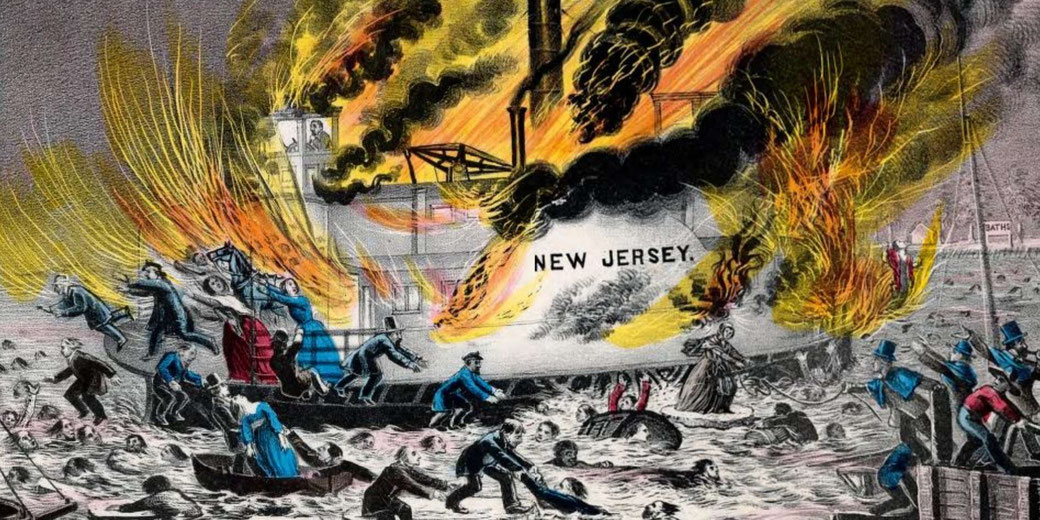
Soon after, steamships introduced a new set of dangers. On 14 June 1838, the Pulaski was a sidewheel steamship that carried passengers along the U.S. East Coast and suffered a boiler explosion at night.
The starboard boiler burst without warning, hurling hot water and metal fragments across the deck and tearing the vessel apart off the coast of North Carolina.
Of the nearly 200 passengers and crew, only around 60 survived. Families from Savannah and Charleston, along with Wilmington, lost relatives in what became one of the deadliest steamship disasters of its time.
Among the dead was Charles Ridgeway, the ship’s engineer.
However, railways proved just as hazardous. Several such accidents occured across British lines in the mid-19th century, where victims included passengers and railway workers who had no protection against the blast or the scalding steam that followed.
As rescue crews arrived, they found bodies burned and badly torn, with survivors who suffered severe injuries that often led to infection.
At the time, antiseptics had not yet entered regular medical use, and doctors lacked effective treatments for deep tissue burns.
Gradually, reports of such disasters began to fill the headlines in industrial cities.
Parents feared for their sons who worked in engine rooms. Workers demanded changes, and engineers who worked with steam technology started to speak publicly about the need for higher safety standards.
The slow rise of engineering standards
At first, governments largely failed to respond to the rising number of fatalities.
Manufacturers, fearing higher costs and interference, argued that compulsory inspection would discourage innovation and reduce output.
As a result, legislation remained weak or entirely absent. No central authority regulated boiler construction, and very few operators held formal qualifications.
Then, in 1855, the Manchester Steam Users’ Association formed to promote safer boiler design and encourage voluntary inspections.
Among its members was William Fairbairn, who had written extensively about boiler safety and metallurgy.
However, membership remained limited, and many factories continued to use ageing boilers with patched seams and thinning walls.
In some cases, managers had hired unqualified inspectors who approved machines that showed clear signs of damage. In others, no inspections occurred at all.
Over time, engineers called for mandatory pressure gauges, improved metallurgy, and stricter construction standards.
They argued that thicker plates and reinforced rivets, together with new testing methods, could prevent the types of failures that killed so many workers.
Still, widespread enforcement took years. During the 1860s and 1870s, boiler explosions remained relatively common, and newspapers regularly published casualty lists from textile mills and railway stations, along with crowded engine rooms.
Between 1880 and 1890, the United States recorded more than 1,200 boiler explosions, according to early safety reports, many of which caused deaths.
Lessons from tragedy
Eventually, national governments began to act. In the United States, the Steamboat Inspection Service, which had existed since 1852, expanded its authority under legislation in 1893 to enforce stricter inspections and professional standards.
Britain followed with legislation that required formal engineering training, regular inspection of industrial boilers, and the removal of dangerously outdated equipment.
Insurance companies also played a role, as they refused to cover machinery that failed to meet safety standards.
This forced many companies to modernise their equipment or risk financial loss.
Over time, this pressure helped bring improvements in design and training, together with effective oversight, which gradually reduced the frequency of disastrous failures.
However, accidents continued, and in 1905, a cast-iron heating boiler exploded at the Grover Shoe Factory in Brockton, Massachusetts.
The blast killed 58 people and injured over 150 more. Investigators found the boiler had suffered internal corrosion, and management had delayed replacing it to save money.
The explosion destroyed most of the factory, and it left behind a scene of destruction that shocked the country.
Later inquiries confirmed that the disaster could have been avoided with regular inspection and responsible maintenance.
As the 20th century progressed, engineers developed safer boilers that used stronger steel alloys and automatic pressure controls, along with improved fail-safes.
Nevertheless, the slow pace of reform meant that thousands of people died before authorities made safety a priority.