
Shell Shock: The psychological scourge of WWI
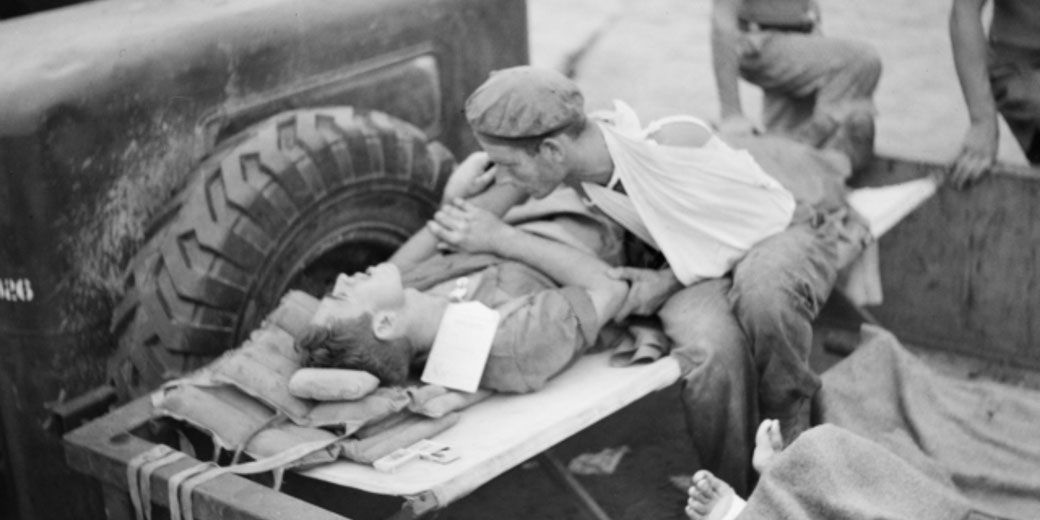
Nowhere in history had the human mind arguably endured such ongoing trauma as it did in the trenches of the First World War, where the horrors of industrial warfare mutilated bodies on a massive scale and fractured minds in ways that medical science struggled to explain.
One of the most severe and least understood consequences of the war was a condition that scarred an entire generation and chalelnged military medicine for decades.
As nations mobilised millions of men into battlefields that bristled with never-ending artillery fire amid tangled barbed wire and dense machine-gun positions, a silent and growing crisis took root behind the front lines: the widespread mental collapse of those who were sent to fight.
What is shell shock?
At first, British doctors used the term 'shell shock' in 1915 to refer to physical damage caused by the blast from exploding shells.
Initially, some had assumed that blast waves disrupted the brain. However, many soldiers who showed symptoms had never experienced direct exposure to explosions, which had led doctors to reconsider the condition as psychological in nature.
Those affected often displayed a wide range of symptoms, with physical signs such as tremors, paralysis and uncontrollable shaking, sensory losses like deafness and blindness, and psychological effects including nightmares, amnesia, mutism, and emotional detachment.
Eventually, it had become increasingly clear that shell shock was more than a consequence of physical injury and represented a psychological response to prolonged and inescapable trauma.
Ordinary combat fatigue produced temporary exhaustion, and shell shock left men completely incapacitated and stripped them of their ability to carry out basic tasks or even speak.
At times, some collapsed suddenly under the strain of battle, while others had deteriorated gradually, so that they had lost their sense of identity and become unrecognisable to those around them.
At its core, shell shock involved the complete breakdown of the mind's defences, which had been overwhelmed by the relentless horrors of trench warfare.
According to medical reports, such men had often been described as being in a dreamlike or vacant state.
They reacted neither to voices nor to physical stimuli, and they lived in a dazed silence.
While the British Army had officially recorded more than 80,000 cases during the war, the actual number was likely much higher, as many symptoms were disguised behind gentler terms like "nervous debility" or "lack of moral fibre."
This figure also excluded many Commonwealth and colonial troops, whose diagnoses often went unrecorded or were inconsistently reported.
Similar conditions appeared in other armies as well, with the French referring to la guerre des nerfs and the Germans diagnosing Kriegsneurose, although their statistics were often incomplete or suppressed.
What caused shell shock?
To survive in the trenches, soldiers often endured weeks of relentless bombardment, lived in filth, and constantly expected death.
Artillery fire could often last for days, and it sent shockwaves through the trenches that churned the earth, mutilated corpses, and left survivors deafened and disoriented.
Often, men stood watch over comrades who were dying or tried to sleep amid the screams of the wounded, while the omnipresent threat of gas attacks, snipers, and surprise raids ensured that no moment brought true safety.
Over time, psychological strain frequently deepened under the weight of monotony, where soldiers passed months surrounded by lice, rats, disease, and decomposing bodies.
Dugouts frequently collapsed or flooded, and the air smelled of excrement, rot, and unwashed bodies.
At home, letters brought reminders of a life that had grown unreal, and when soldiers witnessed the death or disfigurement of close friends, it produced emotional wounds that never healed.
For many, the combination of extreme physical hardship and the constant presence of death gradually overwhelmed any capacity for endurance.
Importantly, soldiers were taught to suppress fear and keep a stoic front under all circumstances.
As a result, internal collapse often remained invisible until a breakdown forced medical evacuation.
Among officers, where expectations of discipline and leadership remained high, symptoms were concealed or dismissed until they became impossible to ignore.
What appeared as sudden madness frequently followed months of internal struggle, and what seemed like cowardice often masked unbearable psychological suffering.
Medical records later revealed numerous examples of men, such as Gunner Herbert Turl or Private Percy Blennerhassett, whose steady deterioration had culminated in total psychological collapse after prolonged front-line service.
How was shell shock treated?
At the start of the war, military doctors responded to shell shock with confused, inconsistent practices that often showed a complete misunderstanding of the soldiers' needs, because some believed it reflected men faking illness rather than a genuine condition.
For example, in certain facilities, electric shock therapy or exposure to simulated battlefield sounds aimed to "correct" the soldier's behaviour by brute force, while others used punishment or public shaming to force recovery.
Due to the lack of consistent medical understanding, treatments frequently varied widely and sometimes inflicted more harm than healing, and, as a result, they also varied by class and rank: enlisted men were often subject to disciplinary measures, whereas officers more frequently received rest cures and medical care.
Gradually, more modern approaches appeared at institutions like Craiglockhart War Hospital in Edinburgh, which operated as a military psychiatric facility between 1916 and early 1919.
Under the guidance of doctors such as W.H.R. Rivers and Arthur Brock, patients were encouraged to speak about their trauma.
These therapies, influenced by the work of Freud and other early psychologists and particularly by Freud's theory of repression and the "talking cure," aimed to help patients control their memories by telling their stories.
Activities such as gardening, painting, and writing supplemented these methods and gave men a way to express pain that they could not speak about directly.
Still, many patients had received little rest before they were sent back to the front.
As the war continued, the volume of cases had increased, and the British Army grew less tolerant of shell shock.
Eventually, in early 1918, the military banned the term and replaced it with phrases like "not yet diagnosed (nervous)" or "anxiety state," which removed official recognition of the condition.
Courts-martial sometimes sentenced men to death for desertion or cowardice, unaware or indifferent to the possibility that they had become incapacitated from psychological injury.
Although 306 such executions occurred across the British and Commonwealth forces, later reviews led to the posthumous pardon of all 306 men in 2006 under the Armed Forces Act, acknowledging that many had suffered from undiagnosed war trauma.
Well-known victims of shell shock
The British poets Wilfred Owen and Siegfried Sassoon were among the best-known figures to suffer from shell shock, and both served as officers and witnessed the worst of the war.
In 1917, both were admitted to Craiglockhart, where their friendship and shared experiences produced some of the most powerful poetry about the psychological impact of modern warfare.
Their writing revealed the invisible wounds carried by soldiers. Owen's Dulce et Decorum Est and Sassoon's Repression of War Experience captured the horror that silence could not express.
After his treatment, Owen returned to the front and died in action shortly before the armistice, and Sassoon survived and became a vocal critic of the war.
Other figures such as war artist Paul Nash and writer Robert Graves also documented their trauma through creative work, which showed how shell shock permeated the artistic output of the so-called "Lost Generation."
Even though many ordinary soldiers left behind no poetry or paintings, their letters, diaries, and case files, which record equally vivid testimony of minds left unsettled by sustained violence and fear.
Visual artists such as Otto Dix and John Singer Sargent also contributed to this legacy, with works like Gassed which captured the devastation that photography and prose could not convey alone.
A painful legacy
Once the armistice ended the fighting in 1918, the psychological effects of the war lasted for decades in those who had survived.
Many veterans continued to suffer ongoing nightmares and panic attacks, felt emotional numbness, and lived with a lasting sense of not fitting into ordinary life.
In post-war Britain, thousands of men were kept in hospitals or were unemployed, often misunderstood by a society that preferred to forget the war's cost.
By 1921, official records showed more than 65,000 British veterans were receiving war pensions for psychological disorders, though many more probably went untreated.
Eventually, military psychiatry adapted to recognise similar symptoms under new terms such as "combat fatigue" or "war neurosis," and modern clinicians later identified these as forms of what is now called post-traumatic stress disorder (PTSD).
The term itself was only formally introduced in 1980 by the American Psychiatric Association in the DSM-III, although earlier classifications such as "gross stress reaction" had appeared in DSM-I in 1952.
Its clinical roots went directly back to the suffering of First World War soldiers.
Yet the foundation for understanding such trauma came from the experiences of World War I soldiers, whose suffering first forced the medical world to confront the lasting damage war could inflict on the human mind.
Today, monuments to shell shock victims stand in several countries as recognition of the immense psychological toll caused by industrial warfare.
Researchers continue to explore the archives of letters, poetry, and military records, which help them understand the scale of mental suffering caused by the war.
By doing so, they help ensure that the silent pain of shell shock is not forgotten, and that those who endured it are remembered for both their sacrifice and their struggle to reclaim their shattered selves.