
The Schlieffen Plan: Strategic genius or fundamentally flawed design?
In the final days of peace before August 1914, German military leaders turned to a strategy they believed could deliver what they hoped would be a swift and clear victory in the event of a continental war.
They had spent over a decade refining a detailed invasion plan that aimed to defeat France quickly and that would then transfer forces to halt Russian advances.
It drew inspiration from past victories and rested on rigid calculations of time and distance estimates, along with assumptions about enemy response, and it appeared to offer, at least on paper, a clear answer to the threat of encirclement.
However, when tested in the opening weeks of the First World War, it collapsed fairly quickly under the weight of faulty assumptions and logistical strain, which left its designers blind to political consequences they had largely ignored.
Germany’s two-front war problem
At the start of the twentieth century, Germany’s military planners faced what seemed to be an increasing likelihood of war on two fronts.
France was still determined to recover Alsace-Lorraine after its defeat in the Franco-Prussian War and posed a constant threat to the west, while Russia’s population grew and its infrastructure grew steadily, and this raised concerns in the east.
After France and Russia signed a military convention in 1892 and confirmed their alliance in 1894, German planners feared that a coordinated attack from both directions might stretch their resources dangerously thin.
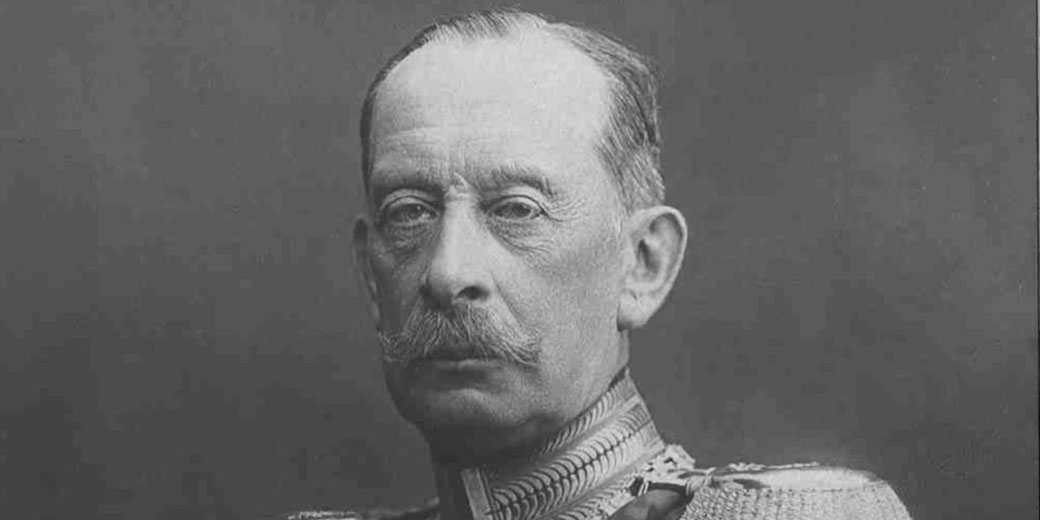
To head off that scenario, Field Marshal Alfred von Schlieffen was Chief of the General Staff between 1891 and 1906 and looked for a plan that he believed would allow Germany to eliminate one enemy quickly before it turned to face the other.
His final report outlining the concept was completed in December 1905, just before his retirement.
Importantly, Schlieffen had calculated that Russia would need far longer to mobilise its army due to poor infrastructure and slow administration and organisation.
Based on railway and intelligence estimates, he expected Russian forces to take at least six weeks, and perhaps longer to become fully operational.
That estimate became the foundation of his plan. France, by contrast, would mobilise quickly and would probably launch an early offensive.
French military doctrine at the time centred on Plan XVII and focused on a direct assault to recapture Alsace-Lorraine, which reinforced Schlieffen's belief that France could be defeated with a wide encirclement from the north in most cases.
Schlieffen had concluded that if Germany could rapidly defeat France in a matter of weeks, it could then transport its armies eastward by rail to engage the Russians before they gained momentum.
His entire framework hinged on that narrow timeframe as he saw it.
How the Schlieffen Plan was meant to work
Between 1897 and 1905, Schlieffen developed a series of battle plans that relied on speed and geographic exploitation, pursued within a plan for calculated envelopment.
The complete memorandum that became most associated with his strategy was written in December 1905, as a theoretical exercise rather than a plan ready for wartime use.
He drew from the 1870 campaign and tried to avoid a frontal assault through the fortified Alsace-Lorraine region by launching a massive flanking attack through Belgium and Luxembourg instead.
That manoeuvre would allow German forces to swing down through northern France, encircle Paris from the west, and force France to surrender swiftly if events went to plan.
The left wing faced French forces directly along the border and would remain defensive, while the right wing would carry the weight of the offensive.
Although his memorandum did not define exact troop numbers, later interpretations assigned the right wing approximately 700,000 to 750,000 men, a figure that varied under Moltke's later command.
Critically, the plan required a strict commitment to timetables, since German forces would follow an exact sequence of marches and rail movements, supported by supply columns and by engineers who repaired infrastructure as they advanced.
The army needed to cover hundreds of kilometres across enemy territory without significant delay.
Germany’s extensive and modern rail network offered a major advantage that helped coordinate these movements across long distances.
Although it required an invasion of neutral Belgium, Schlieffen had assumed that the Belgian army would probably offer minimal resistance.
He also had believed that Britain, bound by the 1839 Treaty of London to protect Belgian neutrality, might issue diplomatic protests but would not, in his view, enter the war fast enough to affect its outcome.

Flawed timetable assumptions
According to Schlieffen’s calculations, German armies would reach and encircle Paris within six weeks.
That manoeuvre would cut French supply lines and demoralise its population, which Schlieffen expected would force political collapse sooner rather than later.
Once France fell, Germany would transfer its troops east by rail and deal with Russia before it could launch a serious offensive.
On paper, the operation appeared logical and efficient to its planners. The German General Staff treated the plan as a mechanical sequence rather than a series of military engagements subject to uncertainty and morale factors, along with the risk of external interference.
However, from the outset, the plan carried serious structural weaknesses from the start.
It allowed no room for delay or deviation. Each step depended on the flawless execution of the previous one, and any disruption risked unravelling the entire operation.
Troops would march on a rigid timetable, and commanders lacked the flexibility to respond to changing battlefield conditions.
Logistics relied on overextended supply lines and untested coordination across multiple army groups.
If the right wing stalled, failed to pivot, or lost unity, the plan would falter.
Why the Schlieffen Plan failed
Another flaw stemmed from its political naivety. By violating Belgian neutrality, Germany risked British intervention.
Even with this risk, Schlieffen and his successors had believed that Britain’s small army and distant position would prevent it from intervening effectively.
That assumption proved inaccurate in practice. On 4 August 1914, after Germany had invaded Belgium, Britain issued an ultimatum demanding withdrawal, and since that ultimatum expired, Britain declared war.
The German army faced Belgian resistance that proved more stubborn than expected and also found itself fighting against an experienced British Expeditionary Force of approximately 80,000 men initially, which expanded in the following weeks.
Initial clashes at Mons and Le Cateau demonstrated the professional quality of British troops and delayed the German advance.
Additionally, Schlieffen misjudged Russia’s capacity to mobilise to some extent.
Although earlier intelligence supported the six-week window, Russian railway expansion and reforms that sped up mobilisation in the years before the war had allowed them to move faster than anticipated.
As early as mid-August 1914, Russian forces launched offensives into East Prussia, which led to the Battle of Tannenberg from 26 to 30 August, and because of that development, German commanders shifted units from the western front to the east, and this weakened the essential right wing that Schlieffen had placed at the centre of his design.
Moltke’s changes in 1914
When the war began, Helmuth von Moltke the Younger, who had succeeded Schlieffen in 1906, oversaw the implementation of a modified version of the plan.
He had already reduced the number of troops assigned to the right wing and strengthened the centre and left, fearing that Schlieffen’s original deployment left those areas too exposed.
He also chose to exclude a march through the Netherlands, which Schlieffen had included in his 1905 memorandum.
This decision, which the Kaiser supported, preserved Dutch neutrality but further limited battle options.
As a result, the flanking force that advanced through Belgium lacked the overwhelming weight Schlieffen had considered essential.
Nevertheless, Moltke ordered the operation forward, and he expected speed and coordination to compensate for reduced numbers.
During August 1914, German forces entered Luxembourg and Belgium, and they quickly occupied major towns, but they faced fierce resistance at Liège and Namur in particular.
Belgian defenders used modern forts and artillery, and they relied on delay tactics to stall the advance, which bought time for Allied forces to assemble.
German troops suffered losses and faced logistical delays as they attempted to restore damaged rail lines and move heavy equipment across rivers and defensive obstacles.
Meanwhile, British troops joined French forces on the battlefield and formed a defensive line that slowed German progress further.
At the same time, the French suffered heavy casualties during the Battle of the Frontiers, launched under Plan XVII, which showed the flaws in their offensive strategy but also delayed German progress.
First Battle of the Marne
By early September, German armies had advanced close to Paris, but their strength had been sapped by several weeks of marches and battles that imposed heavy logistical strain.
Coordination between units broke down and communication lines became unreliable, which pushed commanders into local decisions that disrupted the overall plan.
From 5 to 12 September, the Allies launched a coordinated counteroffensive at the First Battle of the Marne.
That engagement forced a German withdrawal and ended any hope of a rapid French defeat, and because German forces had pulled back to the Aisne River and dug defensive trenches, the war shifted from manoeuvre to stalemate.
German casualties by the end of the Marne campaign likely totalled around 220,000 to 250,000, based on contemporary estimates.
Soon after, the Western Front turned into a network of trenches that would stretch from the North Sea to the Swiss border.
German planners designed the Schlieffen Plan to prevent a prolonged war, and it had failed, and due to that failure, Germany now faced almost exactly the scenario Schlieffen had feared: a war on two fronts, with France unbroken and Russia increasingly aggressive.
Moltke was overwhelmed by the disaster that unfolded and lost the Kaiser’s confidence and was replaced by Erich von Falkenhayn by the end of September.
The ongoing Schlieffen Plan debate
Over time, historians have examined closely the Schlieffen Plan and identified a number of internal problems.
Although it appeared exact and mathematically sound, it rested on assumptions that proved false in several vital areas in the face of actual conflict.
Its timelines did not account for choices made by the enemy, infrastructure damage, or the exhaustion of troops who marched over long distances.
Its violation of Belgian neutrality provoked stronger resistance and a wider war than German leaders had anticipated.
Its lack of operational flexibility left no room for adaptation when events changed.
In the late 1990s, historian Terence Zuber argued that the plan known today was a later reconstruction based on Schlieffen's military exercises and notes, and that no fixed, workable "Schlieffen Plan" ever existed.
While this interpretation remains controversial, it has prompted renewed debate about the actual nature of German pre-war planning.
Even if Moltke had retained the exact structure outlined by Schlieffen, modern assessments suggest that the plan still would have struggled in many respects.
France had developed new railway systems and defensive strategies, while Russia had reformed its mobilisation practices.
The basic starting idea that Germany could knock France out in a matter of weeks and then defeat Russia relied on a view of European warfare that already looked outdated by 1914.
As events in 1914 demonstrated, modern war had become harder to fit into simple formulas and dependent on adaptability, not rigid planning.
It relied on speed and certainty, and German planners treated geography as the main guide rather than strategic depth, so the Schlieffen Plan showed the limits of pre-war military theory.
It did not collapse due to a single misstep but rather failed as a result of overconfidence in untested predictions.
Germany’s belief in a short war unravelled within weeks, and the cost of that misjudgement reshaped the twentieth century.
The Schlieffen Plan became a symbol of strategic failure, since its problem lay in its refusal to bend when the realities of war demanded it, rather than in any lack of drive.