
How hundreds were tricked into spending millions to live in a country that never existed

During the early 1820s, at a time when Britain’s growing middle class increasingly looked for wealth through foreign investment and emigration, a newly 'discovered' Central American republic called Poyais, which drew public attention.
When MacGregor advertised it as a prosperous colony with fertile soil, gold-lined rivers, and a British-style government already in place, the country appeared to offer many of the things that families needed to start a better life, since forged documents, glowing pamphlets, and the confident promises of one man guided hundreds to sell their homes, board ships, and unknowingly walk into one of the most devastating financial hoaxes in British history.
Who was Gregor MacGregor?
Originally born in Glengyle, Stirlingshire, in December 1786, Gregor MacGregor came from a family that traced its family line to the Highland outlaw Rob Roy.
As a young man, he followed a typical path for someone of minor landowning family background who had bought a commission in the British Army.
After a period of ordinary service, he had resigned in 1810 and had travelled to South America, since conflicts against Spanish rule offered new chances for advancement.
Soon after his arrival, MacGregor joined revolutionary leaders such as Simón Bolívar and took part in campaigns across Venezuela and New Granada.
At first, he had held a real command, but his habit of exaggerating his achievements became clear.
In 1817, he led a private expedition to seize Spanish-held Amelia Island off the coast of Florida, where he briefly proclaimed the Republic of the Floridas, but he retreated and left others to hand the island to the United States.
The following year, he tried to take control of the Mosquito Coast, an area thinly settled and claimed by various British-aligned indigenous groups.
George Frederic Augustus, who was the Miskito king, had relatively limited power and often relied on British support to keep his position.
MacGregor claimed to possess a formal land grant from him, although no original document has been found, and most historians think the claim was probably made up or greatly exaggerated.
After he had failed to establish a settlement, he returned to Britain, yet he used his experiences to build a convincing story that deceived hundreds.
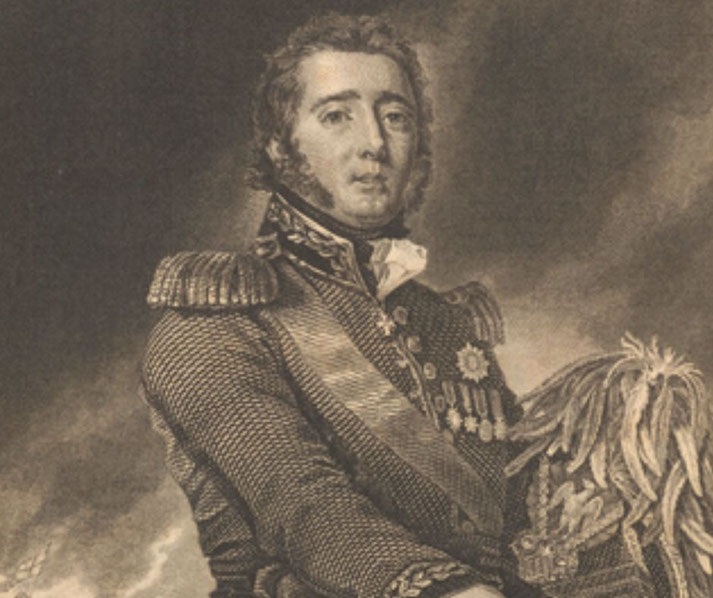
How MacGregor created the imaginary country of Poyais
When he arrived in London in 1821, MacGregor specifically claimed that George Frederic Augustus had granted him a large territory for colonisation.
He named this land the Republic of Poyais and announced that he had accepted the position of “Cazique,” or hereditary prince.
To build credibility, he described Poyais as a constitutional monarchy that he claimed followed British law, complete with civil institutions and a working economy.
He claimed that British engineers had already constructed roads and buildings, and he insisted that European settlers would receive land, titles, and quick opportunities to earn money.
To support the story, MacGregor published a guidebook called Sketch of the Mosquito Shore, including the Territory of Poyais, printed by William Clowes in 1822.
It provided detailed maps, descriptions of how fertile the soil was, claims of mineral wealth, and even the text of a Poyaisian constitution.
At the same time, he sold government bonds, printed currency, and made a list of civil and military jobs available for the colony.
He promised land grants of up to 100 acres per settler, often at prices much lower than usual.
When he appointed fellow Britons to imagined positions in the Poyaisian cabinet and gave them ceremonial titles, he added further credibility to the project.
In London, he opened the Poyaisian Office, where investors could buy land at attractive rates and where prospective settlers got instructions, passports, and promises of work.
Many purchasers believed they had secured important positions in a stable colony backed by the British government.
Some had even met MacGregor in person and had been impressed by his confident manner and clear explanations.
Estimates from the time of how much money he raised vary, but he had likely obtained between £150,000 and £200,000 through bond sales and land grants before suspicions began to surface.
The sophistication of the Poyais scam
Since he understood the political and economic climate after the Napoleonic wars in Britain, MacGregor created a fraud that appealed directly to the hopes of the rising middle class.
Many had only small savings and looked for opportunities in overseas ventures, particularly those connected with Britain’s growing influence in South America.
Poyais appeared to offer what many believed was the stability of British rule and the profit potential of a new frontier.
Importantly, MacGregor’s documents did not generally look careless or amateurish.
Instead, they included seals, signatures, and formatting that copied the style of official government correspondence.
He even produced certificates of naturalisation, land registry papers, and deeds of nobility.
What is more, he introduced government bonds for the Republic of Poyais and sold them to investors on the London financial market with promised interest rates similar to those of other Latin American countries.
Many investors, eager to participate in what seemed like a safe venture, largely assumed that Poyais was equal to Colombia or Chile.
To make the deception seem real, MacGregor staged musical performances of the Poyaisian national anthem and commissioned paintings of the capital city of St Joseph.
In public speeches, he described the colony’s supposed schools, law courts, port facilities, and trading houses.
He gave interviews to newspapers and spoke with confidence about the diplomatic relations he intended to establish with other governments.
Each part of the deception had a clear purpose and generally reinforced the idea of a thriving republic ready to receive new settlers.
The tragic outcomes for the people who arrived in 'Poyais'
In September 1822, the first group of settlers departed from Leith aboard the Honduras Packet, which carried around seventy passengers, although exact numbers vary by source.
A few months later, another vessel, the Kennersley Castle, transported around two hundred additional settlers.
Most came from Scottish cities such as Edinburgh and Glasgow and included skilled tradespeople, merchants, and entire families.
Many had sold everything they owned to afford the voyage and purchase land in Poyais.
They carried legal-looking documents, certificates of ownership, and printed brochures that showed them what to expect upon arrival.
When the settlers reached the Mosquito Coast, they saw only undeveloped jungle and shoreline, with no buildings, roads, or welcoming officials appeared.
The capital city of St Joseph did not exist, and no supply stations or farming plots had been prepared.
The surrounding land, which was filled with swamps and thick vegetation, made construction almost impossible.
When they were left with no shelter, the settlers attempted to build crude huts and search for food and clean water.
As conditions worsened and cases of malaria, yellow fever, and dysentery began to spread rapidly among the group, within weeks dozens had died and survivors found themselves without medical aid or clear leadership.
The promised support from MacGregor never arrived. Eventually, a British naval vessel that was patrolling the region received word of the crisis and transported the remaining survivors to safety in Belize and Jamaica.
By the time the rescue was completed in 1823, more than 180 settlers had died.
Letters from survivors described shallow graves dug into the mud, children who succumbed to illness within days, and desperate efforts to survive on jungle plants and rainwater.
What happened after the scam was revealed?
Shortly after the arrival of survivors in Jamaica, word reached London about the disaster and journalists began investigating the story, quickly uncovering the lack of formal recognition of Poyais by either the British government or any legitimate foreign power.
Public outrage followed quickly and newspapers published critical articles that identified MacGregor as the creator of the deception.
Some investors reported their losses to the authorities, and the Poyais Office in London ceased operations.
That is when the legal cases began, but British courts had little precedent for a crime involving the invention of an entire country.
Before any charges could be enforced, MacGregor had fled to France, where he tried the scheme again.
In Paris, he had printed a new set of Poyais bonds and had attempted to convince French investors to support a revised version of the project during which he used many of the same forged documents and had again promised what seemed like high returns.
In 1825, French officials arrested him and placed him on trial for fraud at the Cour d'assises, and the court found him not guilty.
The reasons for the decision remaining unclear because his lawyers argued that unclear parts of the law made prosecution difficult.
Even after the fraud became public, MacGregor continued to defend his actions.
He returned to Britain and became involved in small financial schemes. However, former supporters cut ties with him, and his remaining money slowly ran out.
For those who had lost their families or fortunes, the damage could not be undone.
Some continued to seek compensation, while others fell into poverty. The Poyais case prompted many cautious investors to look more closely at overseas colonial schemes, and it added to growing doubt about risky investments tied to Latin America.
What happened to Gregor MacGregor?
Eventually, in 1838, MacGregor sailed to Venezuela and asked the government to recognise him as a veteran of the independence wars.
He requested a military pension, and Venezuelan authorities awarded him citizenship and included him in a general pension program for independence veterans.
He lived in Caracas with his wife, Doña Josefa, who was a cousin of Bolívar, and maintained the title of Cazique until his death in 1845.
After his death, the Venezuelan government conducted a formal funeral with military honours where officials praised his service to the revolution, but carefully ignored the later scandal that had defined the final two decades of his life.
In Britain, memories of the Poyais fraud faded slowly, and some historians later revisited the event as a striking example of how persuasive a well-crafted lie could become.
The Poyais deception showed how misplaced trust in official-looking paperwork, together with common beliefs about imperial authority, allowed fraudsters to cause devastating harm.
His story showed both the dangers of unchecked speculation and the power of illusion during an age of conquest and colonisation.