
What were penal colonies and why were they so horrible?
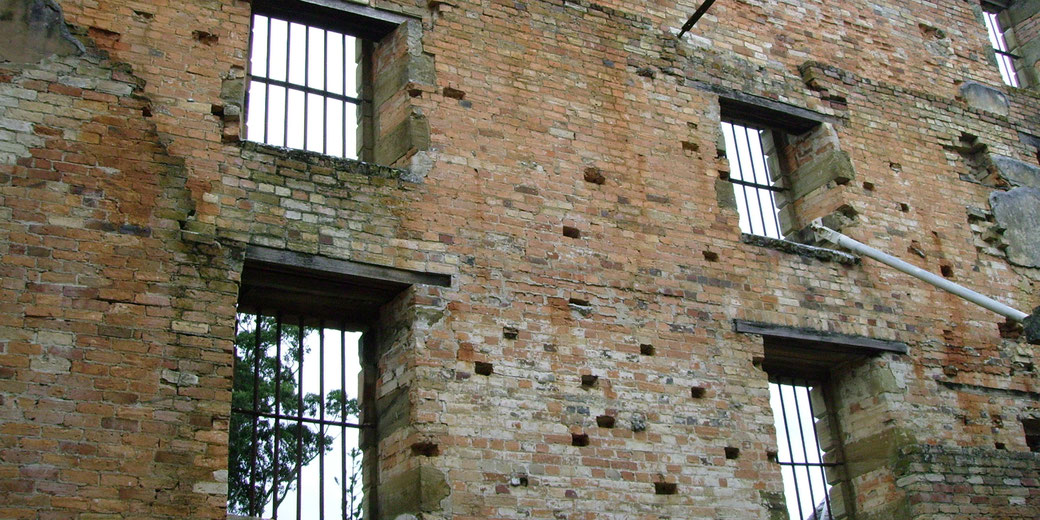
In 1787, eleven ships that carried over 700 convicts left Britain and headed for a distant, largely unknown land. By the time the First Fleet arrived at Botany Bay under the command of Captain Arthur Phillip, an era of punishment by exile had begun and it changed lives and the way the colonies developed.
While governments defended the use of penal colonies as necessary, the experience for those sent across the sea became a history of cruelty that relied on forced labour and ended in slow destruction.
What was a 'penal colony'?
A penal colony was a distant settlement that imperial powers used to remove convicted criminals from their home society and place them under strict control in foreign lands.
Officials usually expected prisoners who had been sentenced to transportation to endure years of brutal physical labour under constant watch.
In practice, these colonies often became places of forced servitude and psychological suffering.
Authorities viewed convict labour as a practical resource. Instead of locking prisoners away, governments relocated them across oceans and forced them to work on roads, harbours, fortifications, and farms.
Convicts did not earn wages, and their survival often depended on how much work they completed under punishing conditions.
At the same time, penal colonies allowed Britain and France to reduce the pressure on domestic prisons since overcrowding in gaols had reached breaking point by the late eighteenth century.
As a result, reformers argued that transportation would reduce costs and act as a deterrent.
The British Parliament had passed the Transportation Act in 1718 and this law created an official legal basis for exiling criminals overseas.
In Britain’s case, transportation also became an alternative to capital punishment, so judges handed down sentences of seven or fourteen years, knowing most prisoners would never return.
In French colonies, administrators included political enemies, repeat offenders, and colonial rebels in the transport lists and they sent them to places such as French Guiana or New Caledonia with no hope of release.
After the suppression of the Paris Commune in 1871, the newly formed French Third Republic exiled thousands of Communards to New Caledonia.
When were penal colonies first used?
By the early seventeenth century, England had begun to use transportation to the American colonies.
The system sent criminals to labour on plantations in Virginia and Maryland, where they became workers without freedom.
Some were sentenced for theft or forgery, while others were rounded up from city streets and shipped overseas as vagrants or troublemakers.
After the American Revolution in 1776, Britain lost access to these colonies and turned its attention to the Pacific.
By 1784, Parliament had passed legislation to resume transportation, which led to the dispatch of the First Fleet in 1787.
After the First Fleet reached New South Wales in 1788, Britain began a process that lasted for eighty years.
The Australian continent received over 160,000 convicts, including around 25,000 women, many of whom were forced to remain permanently after serving their sentences.
The First Fleet consisted of ships such as HMS Sirius, Charlotte, and Scarborough, which carried prisoners, marines, and supplies.
As settlement expanded, new penal stations were created in Van Diemen’s Land, Norfolk Island, and Western Australia.
Approximately 75,000 convicts were sent to Van Diemen’s Land.
By contrast, the French system developed slightly later but used a similar model.
In 1852, France opened a penal settlement in French Guiana that soon became infamous.
Known as Devil’s Island, it housed thousands of men in one of the most dangerous environments on earth.
The authorities later added settlements in New Caledonia, which also took in large numbers of prisoners and political exiles.
Estimates suggest that between 40% and 75% of prisoners in French Guiana died during their sentence, depending on the time period and conditions.
Meanwhile, the Russian Empire relied on penal exile across its own very large territories.
From the seventeenth century, prisoners were marched or transported to Siberia, where they endured forced labour in mines, logging camps, or railway construction sites.
The term katorga described these brutal penal assignments, many of which became death sentences in all but name.
What was it like to live in a penal colony?
Convicts in penal colonies often faced grim conditions that many prisoners found unbearable.
They lived in overcrowded barracks or makeshift huts, usually surrounded by fences, guards, or natural barriers designed to prevent escape.
Daily life followed a strict routine of physical labour, poor food, and violent punishment.
For instance, in the Australian system, chain gangs worked under armed supervision and they laid roads, dug ditches, or hauled timber.
Those who refused orders, attempted escape, or spoke out faced flogging with the cat-o'-nine-tails, solitary confinement, or additional years added to their sentence.
Records show that some prisoners received hundreds of lashes during a single punishment session.
At Norfolk Island, British officials established a penal outpost for repeat offenders, and it particularly became known for deliberate cruelty.
Survivors described starvation, forced silence, and beatings so frequent that men begged to die rather than endure another day.
Some prisoners committed murder so they could be executed and escape the torment.
French colonies inflicted similar suffering. At Devil’s Island, prisoners lived in wooden huts that swarmed with insects and sat in the middle of snake-infested jungle and disease-ridden swamps.
Convicts suffered from malaria, dysentery, and yellow fever, and their chances of survival decreased with every passing month.
Escape was still nearly impossible, since the coastline offered no safe landing, and the interior was too dangerous to cross.
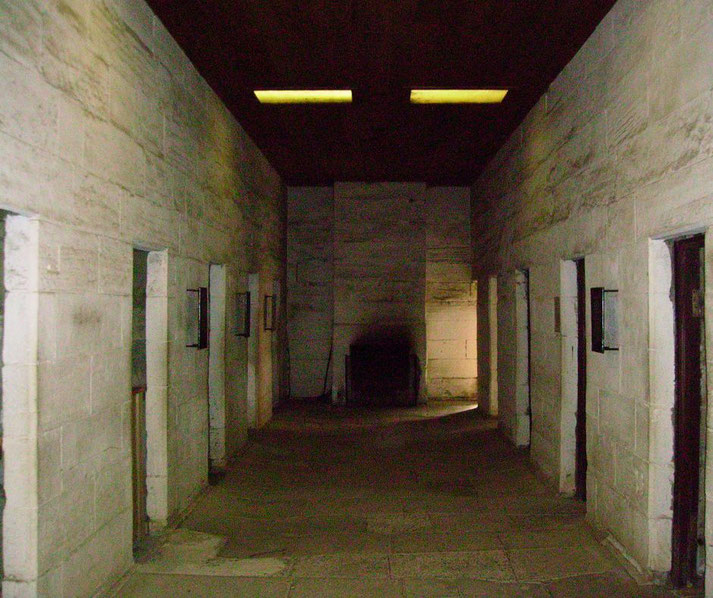
Alfred Dreyfus was one of the most famous prisoners who endured years of solitary confinement after being falsely accused of treason in 1894.
Authorities transferred him to Devil's Island in 1895, where his treatment included chains, humiliation, and complete isolation and highlighted the system’s inhumanity and drew public outrage.
He remained on Devil's Island until 1899.
In both the British and French systems, convicts often died without medical care or proper burial, since labourers who collapsed were sometimes left where they fell.
In many of these settlements, punishment had become a machine with no concern for human life or dignity.
In Australia, women sent to institutions like the Parramatta Female Factory faced overcrowding that turned into exploitation and routine abuse.
Were the penal colonies successful?
By official measures, penal colonies appeared to deliver results. British authorities used them to relieve domestic prisons, remove undesirable individuals, and help establish permanent settlements in New South Wales, Van Diemen’s Land, and Western Australia.
The infrastructure of early Australia included roads, buildings, and farms, and it owed much to convict labour.
Officials claimed that forced labour reformed prisoners. Sentences were meant to teach obedience and discipline, while the chance of a free life at the end promised rehabilitation.
In theory, a convict could earn a ticket of leave and eventually become a productive settler.
The system began under Governor Macquarie in 1810 and allowed prisoners limited freedom if they behaved well.

However, most did not. Even after receiving freedom, many former convicts faced likely rejection by society, poverty, or permanent monitoring.
In many cases, ex-convicts found it impossible to escape their past or find honest work.
Many who struggled to rebuild their lives drifted into criminal gangs, alcoholism, or extreme poverty.
French penal colonies often proved even less effective because administrators rarely allowed prisoners to return to France.
Instead, convicts who completed their sentences were forced to settle in the colony and live under police surveillance.
They could be arrested again at any time. Political prisoners often disappeared into the system, with no trial and no release date.
Eventually, journalists and humanitarian groups exposed the system’s cruelty and failure as reports described very high death tolls and widespread abuse that grew worse under corrupt prison officials.
Evidence of sadism, sexual violence, and starvation turned public opinion against the entire enterprise.
French journalist Albert Londres wrote 1923 reports that shocked the public, and he became a leading voice in exposing these abuses.
Why were penal colonies phased out?
By the mid-nineteenth century, attitudes toward punishment had begun to shift. In Britain, a growing movement for penal reform argued that transportation failed to deter crime, wasted government funds, and inflicted unnecessary suffering.
Campaigners such as Elizabeth Fry and William Wilberforce highlighted the moral cost of using exile and forced labour as a justice system.
During the 1850s and 1860s, political leaders began closing transportation routes, and as a result, the British government stopped sending convicts to eastern Australia by 1852, to Van Diemen’s Land by 1853, and to Western Australia by 1868.
A select committee report in 1863 drew strong influence from reformers such as William Gladstone and criticised the entire transportation system and sped up its decline.
Attention turned instead to domestic prisons, where reformers could influence conditions and rehabilitation efforts more directly.
In France, support for ending the system grew much more slowly, and by the early twentieth century the horror stories that came from Devil’s Island and Guiana made the system impossible to ignore.
Detailed reports by journalists exposed extreme violence that led to widespread death from disease and to the lifelong loss of civil rights for those labelled as undesirables.
After World War II, France finally closed its overseas penal colonies. The last prisoners left in 1953 and this departure ended a chapter of punishment defined by exile that combined forced labour with cruelty built into the system.
In later decades, historians and survivors recounted what the official records often tried to hide: that penal colonies did not correct criminals or protect society and that they broke people, buried them in silence, and used their bodies to build empires.