
The Pals Battalions of WWI: Charging into war with your best friends
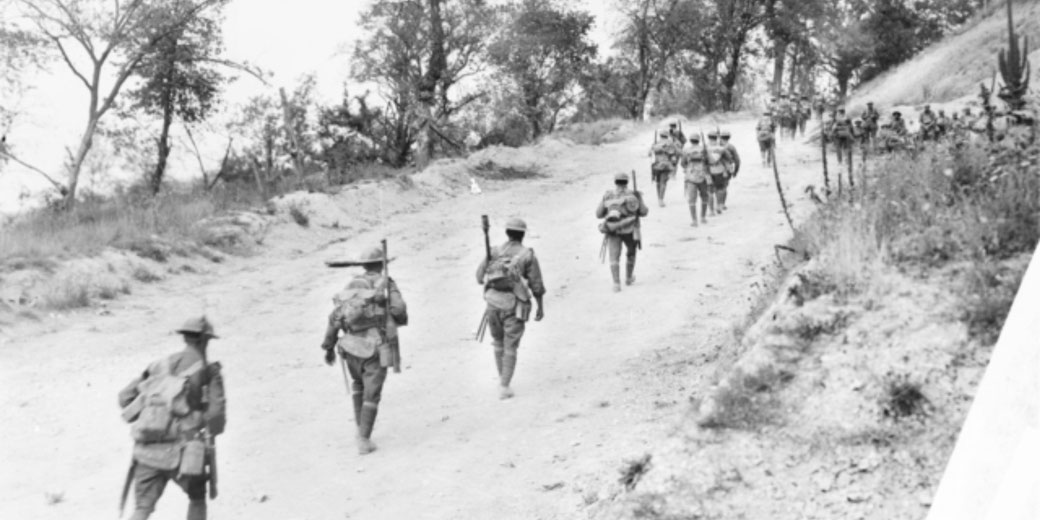
During the first months of Britain’s involvement in the Great War, many thousands of young men queued outside town halls and recruitment stations in response to a powerful mix of peer loyalty and patriotic urgency.
In cities such as Liverpool and Leeds, and in industrial Manchester, co-workers and schoolmates who came from the same neighbourhoods enlisted together, often encouraged by employers, local councillors, or ministers who promised they would remain side by side.
In some areas, almost entire streets joined at once. But, as those battalions marched off to war in 1915 and 1916, few understood that this shared loyalty would eventually lead to the destruction of entire communities on the fields of the Somme and elsewhere.
What were the 'Pals Battalions'?
At the start of World War I in August 1914, British military leaders recognised that their small, professional army could not realistically match the very large continental conscript armies of France or Germany.
Unlike its European counterparts, Britain did not rely on national conscription and instead had depended on voluntary enlistment to fill the ranks, and as a result, Secretary of State for War Lord Kitchener launched a recruitment drive to form a new volunteer force, soon known as "Kitchener’s Army."
To support this plan, officials introduced the idea of the “Pals Battalions,” a system which was designed to attract significant numbers of men so that they could enlist and fight alongside friends, workmates, or members of local clubs.
After a group of City clerks in London petitioned to form a unit together in late August 1914, the War Office agreed to the idea.
Because the Pals scheme appealed directly to emotional and social ties, it created battalions with close bonds inside the units and high initial morale.
Over the next several months, towns and cities across Britain raised their own units, for which recruitment was often organised by local leaders and by local organisations.
In Manchester, businessmen helped fund the creation of the 17th to 20th Battalions of the Manchester Regiment.
Meanwhile, in Liverpool, organisers formed four battalions that were filled with commercial employees and dockworkers, along with smaller numbers of professionals.
Elsewhere, the 11th Battalion of the East Lancashire Regiment became known as the “Accrington Pals,” and eventually included around 1,100 recruits from the surrounding area.
Some units drew from specific professions, such as the Glasgow Tramways Battalion or the Stockbrokers’ Battalion, while others formed around religious groups or sporting associations.
Each of these battalions often carried with it a sense of identity tied to place, occupation, or shared experience.
For recruitment officers and local leaders, this model offered a practical way to boost enlistment numbers quickly.
For the men themselves, it promised a sense of familiarity and companionship that offered some reassurance as they prepared to face the unknown.
Why did so many sign up?
Initially, a powerful surge of patriotism swept across much of Britain, fuelled by government posters and newspaper articles that used emotional appeals from political and religious leaders.
As the war grew more serious in late 1914, enlistment turned into a kind of public show.
In many neighbourhoods, young men felt pressure from official propaganda as well as from friends and families inside tight-knit communities.
The Pals scheme intensified this because it offered a structured way for men to enlist in groups, and this process often included public declarations or marches to the recruiting station.
As a result, many young men saw enlistment as both a duty to their country and an obligation to their friends and local identity.
Employers encouraged it, promising to hold positions open and even pay partial wages, while some schools urged their senior students to join together, and churches organised group enlistments among congregations.
Once a few members of a social group had enlisted, others followed quickly to avoid embarrassment or exclusion.
Importantly, the scheme relied on the belief that familiarity would soften the brutality of war.
So, recruits expected to live, train, and fight alongside trusted companions, which reduced anxiety and increased enthusiasm.
In working-class towns, factory workers enlisted with the men whom they saw daily on the shop floor, while in middle-class districts, clerks and bank staff joined as office units.
Newspapers even published lists of names, and parades featured entire battalions from a single town, which reinforced a shared sense of purpose.
By the end of 1915, around sixty Pals Battalions had formed across Britain. Each brought with it a story of shared courage and local pride, accompanied by unspoken fears.
Though no one knew what lay ahead, they trusted each other and believed that, together, they would endure it.
How the Pals Battalions were trained for war
After recruitment, the battalions began their change from civilians into soldiers.
Initially, training conditions were badly organised and often inadequate, so large numbers of men trained in local parks or on borrowed farmland, frequently without uniforms or proper equipment.
Officers made up drills with broom handles or wooden rifles while they waited for supplies.
Still, the shared identity of the units maintained enthusiasm and discipline during this early phase.
Over time, as resources improved and training moved to special training camps, the battalions received uniforms and rifles, together with more structured instruction.
At camps like Ripon, Heaton Park in Manchester, and Salisbury Plain, men practised how to dig trenches and how to fire live ammunition, and they also conducted bayonet charges.
Training exercises also included gas drills and basic field tactics, though many of these were based on outdated ideas about modern warfare.
Officers in Pals Battalions often came from the same community as their men and were sometimes former schoolmasters, businessmen, or retired soldiers.
This closeness helped build trust, though it occasionally led to problems when senior staff lacked the authority or battlefield knowledge required for command.
Nevertheless, the battalions developed strong identities as units, with their own nicknames and jokes that grew into unit traditions.
During this period, morale remained high, as letters sent home often described cold weather and poor food during long marches, yet few complained.
One Leeds recruit wrote to his sister, and he described frostbite in his boots and the cheerful singing of his mates in the early morning.
Many still viewed the war as a grand adventure, and few grasped the full horror of what awaited them in the trenches of France and Belgium.
After they had completed several months of preparation, most Pals Battalions crossed to France in late 1915 or early 1916, where they rotated through quieter sectors of the front line to gain experience before being committed to major battles.
What happened when they finally entered battle?
On 1 July 1916, many Pals Battalions entered combat for the first time in what was the first day of the Battle of the Somme.
British commanders had spent weeks preparing a massive offensive, supported by a long artillery bombardment meant to destroy enemy fortifications and cut wire defences.
However, German troops were protected by deep dugouts and heavily built bunkers, and they survived the shelling and waited for the infantry to advance.
When the whistles blew and Pals Battalions climbed from their trenches, they advanced in long lines as ordered.
In places like Serre and La Boisselle, machine-gun fire erupted almost immediately.
As the Accrington Pals advanced toward Serre, they suffered around 584 casualties out of approximately 720 within the first twenty minutes.
In the space of a few hours, whole platoons vanished. The Leeds Pals experienced heavy losses, with around 250 men killed or wounded before they reached the enemy wire.
Casualties spread quickly across the front, and local newspapers struggled to keep up with the lists of names.
Since the men in each unit came from the same communities, the losses came in the same places and were terrible.
One Lancashire street lost nearly all its young men in a single day. Offices and factories found entire departments had been wiped out, and mothers received multiple telegrams.
Churches held funerals for brothers and cousins, along with neighbours, all at once.
The emotional blow that followed was felt particularly in towns where Pals Battalions had been a source of pride, and it permanently altered local memory.
After the Somme, surviving Pals units continued to fight in later battles, including the fighting at Arras and Ypres, then later at Passchendaele.
However, the make-up of their units changed. Replacements came from other areas, and over time, the shared local character of the battalions disappeared.
When the British government introduced the Military Service Act in January 1916, which implemented conscription, the Pals model lost relevance, and new recruits joined a broader system that no longer preserved those early community ties.
Did the Pals Battalions help win the war?
Tactically, the Pals Battalions did not provide any special military advantage, since, like other parts of Kitchener’s Army, they lacked battlefield experience, and many suffered heavy losses due to poor planning and outdated tactics enforced by rigid orders.
Still, their role in the war effort cannot be dismissed. Since they encouraged enlistment during the war’s early phase, they helped Britain raise a mass army at a time when speed and scale were essential.
At home, the Pals model helped strengthen community unity and public support for the war, as citizens watched their friends and relatives train and depart, then read the letters that arrived from the front.
Their involvement helped keep the war visible in everyday life and created a sense of shared sacrifice.
When casualties began to mount, that same visibility turned to sorrow, and the loss of a battalion often became a local tragedy.
Many towns probably never fully recovered from the shock.
After the war, the memory of the Pals Battalions had changed the way Britain understood the conflict, since memorials and school plaques, and also parish records, all kept their names.
In towns such as Accrington, the names of every fallen soldier had been carved into stone tablets which were displayed in local halls.
As such, their story gradually became part of local identity, and their fate was a warning about the risks of allowing sentiment to dictate military organisation.
In places like Accrington and Barnsley, and in the city of Sheffield, the story of the Pals is both a source of honour and a reminder of the cost of collective sacrifice.