
Who killed James Scobie, to trigger the Eureka Rebellion?
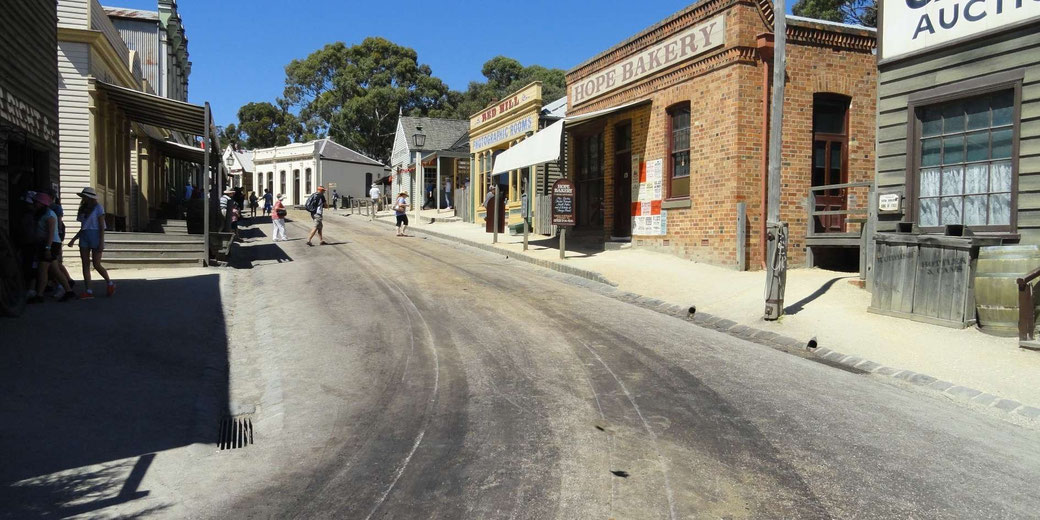
On the night of 6 October 1854, a Scottish gold miner named James Scobie was struck over the head and killed outside a hotel on the Ballarat goldfields, and within weeks his death had triggered the most famous armed rebellion in Australian history.
The murder itself was unremarkable by the violent standards of the Victorian diggings, yet the corrupt acquittal that followed it exposed the deep failures of colonial justice and ignited fury among thousands of miners.
From the burning of the Eureka Hotel to the formation of the Ballarat Reform League and the bloody assault on the Eureka Stockade in December 1854, the chain of events that began with Scobie’s death would ultimately force democratic reform across the colony of Victoria.
A Scottish miner arrives at the diggings
James Scobie was born on 29 November 1826 in Auchterarder, a small town in Perthshire, Scotland.
He trained as a stonemason, and in December 1852 he and his younger brother George arrived in the Colony of Victoria aboard the ship Moselle, drawn by the same promise of gold that had pulled tens of thousands of immigrants to Australia since the first discoveries in 1851.
By 1854, Scobie had settled on the Eureka lead at Ballarat, one of the richest goldfields in the colony.
At this point, the goldfields were simmering with resentment. Every miner, whether they found gold or not, had to pay a monthly licence fee of thirty shillings to the colonial government.
Police regularly conducted so-called “licence hunts,” arresting any digger who could not produce a valid licence on the spot.
Miners saw these hunts as harassment, and they accused the police of extortion and bribery.
In August 1853, more than 5,000 miners had signed a petition to Lieutenant-Governor Charles La Trobe, demanding reform of the licence system and an end to police corruption.
La Trobe ignored the petition, and the situation on the goldfields continued to worsen.
The night at the Eureka Hotel
Late on the night of 6 October 1854, two miners went looking for a drink at the Eureka Hotel on the Ballarat goldfields: James Scobie and his companion Peter Martin.
The hotel was owned by James Francis Bentley, an Englishman born in Surrey in 1818, who had a reputation for intimidation and close ties to local police.
When Scobie and Martin arrived, they found the hotel shut up for the night.
According to the eyewitness testimony that Peter Martin later gave at the Supreme Court trial in Melbourne, Scobie went up to one of the front windows of the hotel.
A hand broke through the window and struck him. Scobie then tried to force his way inside, but Martin convinced him to leave, and the two men walked about 100 to 150 yards in the direction of Scobie’s tent.
As they moved away, a group of men and a woman followed them. The woman shouted that Scobie had broken the window.
Martin was knocked to the ground, and one of the men struck Scobie over the head with a weapon that Martin described as resembling a “battle-axe,” which other accounts identify as a shovel.
Martin ran to fetch a doctor, but by the time he returned, Scobie was already dead.
Why did the magistrates let Bentley go?
An inquest into Scobie’s death was held on the same afternoon, 7 October, at the Ballarat magistrate’s court.
James Bentley and his hotel staff denied any involvement in the killing. A formal judicial inquiry followed on 12 October, presided over by Gold Fields Commissioner Robert Rede and Police Magistrate John D’Ewes, with Assistant Commissioner Johnston also sitting on the bench.
The problem was that D’Ewes, one of the presiding magistrates, had a well-known financial relationship with the accused.
As a police magistrate, D’Ewes held authority over the issuing of business licences in the Ballarat area, and he had borrowed considerable sums of money from several hotel owners, including Bentley.
During an adjournment in the proceedings, police constables John Dougherty and Michael Costello observed Bentley entering D’Ewes’ private office, where he stayed for approximately ten minutes.
When the hearing reconvened, D’Ewes and Rede announced that the evidence against Bentley was insufficient and discharged the accused.
Witnesses who had given testimony unfavourable to Bentley reported being aggressively cross-examined by D’Ewes throughout the proceedings, which only deepened the miners’ suspicion that the verdict had been predetermined.
Five thousand angry miners
News of Bentley’s acquittal spread rapidly across the goldfields, and on 17 October 1854 approximately 5,000 miners gathered near the site of the Eureka Hotel for a mass meeting.
Peter Lalor, a young Irish-born civil engineer who had arrived at the Eureka goldfield in 1853, acted as secretary of the organising committee.
The crowd demanded that the colonial government reopen the investigation into Scobie’s death and hold a new trial.
After the main body of the crowd dispersed, a smaller group of miners remained at the site.
Their anger was no longer containable, and the group attacked the Eureka Hotel and burned it to the ground, forcing the Bentleys to flee for their lives.
Colonial authorities arrested three miners for arson: Thomas Fletcher and Andrew McIntyre, along with Henry Westerly.
Troops were sent from Melbourne to reinforce the police presence at Ballarat, and authorities increased the frequency of licence hunts in what the diggers interpreted as a punitive response.
The arrest of the three miners, who many on the goldfields considered heroes rather than criminals, pushed the situation closer to open conflict.
Justice in Melbourne’s Supreme Court
As community pressure mounted, new evidence came to light. Key depositions were collected from Mary Ann Welch and her son Bernard Welch, as well as from Michael Welsh, a waiter at the Eureka Hotel, whose testimony directly implicated the Bentleys and two staff members: the barman William Hance and the hotel clerk Thomas Farrell, a former chief constable.
A petition was sent to the new Lieutenant-Governor, Sir Charles Hotham, demanding a proper investigation.
Hotham agreed to order a commission of inquiry.
On 18 November 1854, the case of Queen v. James Francis Bentley, Catherine Bentley, William Henry Hance and Thomas Farrell came before the Supreme Court of Victoria in Melbourne, presided over by Judge Redmond Barry.
The jury delivered its verdict on 20 November: Bentley and Hance were found guilty of the manslaughter of James Scobie, as was Farrell, and all three were sentenced to three years of hard labour on the roads.
Catherine Bentley, who was pregnant at the time of the trial, was found not guilty. On the same afternoon, Judge Barry presided over the trial of the hotel rioters: Fletcher received three months and McIntyre four months, with Westerly given the heaviest sentence of six months.
Separately, the Riot Enquiry Commission, chaired by Evelyn Sturt, reported on 17 November 1854 that the original decision to discharge Bentley had been “opposed to the evidence and facts elicited.”
The commission recommended the dismissal of Police Magistrate D’Ewes, whose corrupt financial ties to Bentley were now fully exposed, and the removal of Police Sergeant-Major Milne for bribery.
Governor Hotham acted quickly, dismissing both men on 20 November.
From a murder to a rebellion
Unfortunately, the conviction of Bentley did not calm the situation at Ballarat, as the simultaneous imprisonment of the hotel rioters infuriated the miners.
On 11 November 1854, approximately 10,000 people gathered at Bakery Hill in Ballarat for a mass meeting that formally established the Ballarat Reform League, with John Basson Humffray elected as chairman.
The League adopted a charter that demanded manhood suffrage, the abolition of the mining licence, and fair parliamentary representation for the goldfields.
On 29 November, the League held another meeting at Bakery Hill after learning that Governor Hotham had refused to release the imprisoned rioters.
In a dramatic act of defiance, the miners voted to burn their licences. The next day, 30 November, a provocative licence hunt by police and soldiers turned the situation from protest into armed resistance.
Peter Lalor was elected as the miners’ military commander, and over the next two days roughly 1,000 rebels constructed a crude stockade on the Eureka lead.
In the early hours of 3 December 1854, nearly 300 soldiers and police attacked the stockade.
The battle lasted less than twenty minutes. At least 22 miners and 6 soldiers were killed, and 113 miners were arrested.
Lalor was wounded and lost his left arm, then went into hiding for several weeks.
Thirteen miners were sent to Melbourne for trial on treason charges, but public sympathy was overwhelmingly on the side of the diggers, and all thirteen were acquitted.
James Scobie is buried in the Ballarat Old Cemetery, where his brother George erected a monument in his memory.
The headstone is topped by a broken column, a symbol of a life cut short. Scobie could never have known that his death outside a hotel on a cold October night would set in motion the events that forced democratic reform in Victoria.