
How much better were German trenches than the British in WWI?
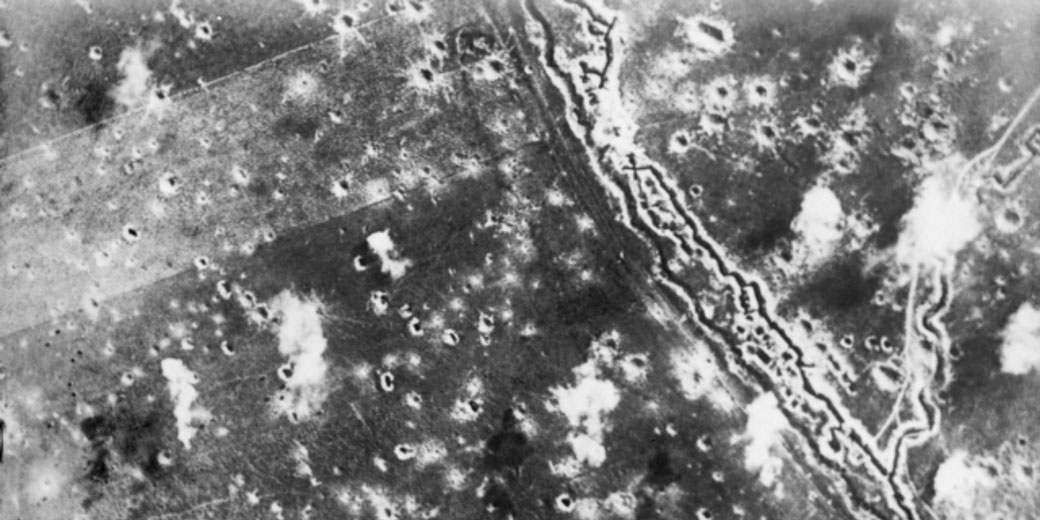
During the winter of 1914–15, soldiers of the British Expeditionary Force captured their first German trenches near Neuve Chapelle and climbed down into underground rooms furnished with wallpaper, electric lighting, and wooden floors situated up to twelve metres below the surface.
The contrast between these underground defences and their own waterlogged ditches was a shock, but this difference came from very different military ideas rather than simple engineering skill.
Why were trenches built?
Following the First Battle of Ypres in November 1914, both sides recognised that modern firepower made traditional open-field movement suicidal, as artillery barrages and machine-gun fire, capable of delivering 600 rounds per minute, forced armies underground.
The Race to the Sea, which took place between September and November 1914, saw both German and Allied forces attempt to outflank each other northward until they reached the English Channel.
When this movement failed to break the deadlock, commanders ordered their troops to dig defensive positions that would protect them from the terrible effects of industrial weaponry.
By December 1914, a continuous line of trenches stretched 700 kilometres from the Swiss border to the North Sea; however, military planners on both sides at first viewed these earthworks as short-term measures because generals believed the stalemate would break during the spring offensives of 1915.
The trenches, although, stayed in place for four years, and their presence changed warfare, as soldiers could no longer advance across open ground without suffering terrible losses.
As a result, attackers needed to cross No Man’s Land, typically 200 to 300 metres of crater-pocked wasteland, under direct machine-gun fire before they reached enemy positions.
This situation in battle made defensive earthworks essential for survival on the Western Front.
The strategic situation guided how each side approached trench construction in ways that influenced the conduct of the war for the next four years.
Germany occupied important industrial regions of northern France, including most of the French coalfields and steel-producing areas, and German High Command decided to defend these gains behind fortified lines that could withstand prolonged Allied assaults.
On the other hand, Britain and France needed to drive the Germans from occupied territory.
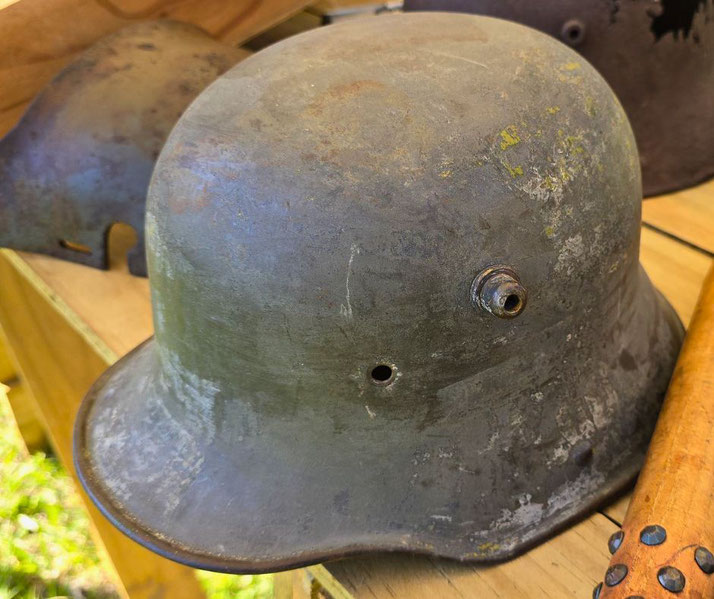
What were the British trenches like?
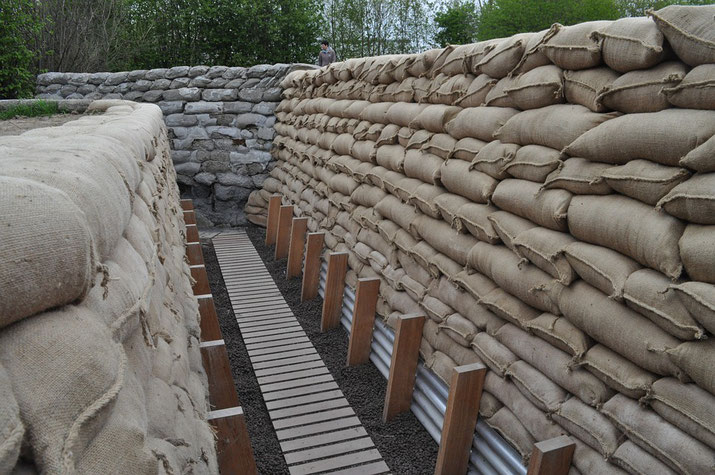
British trenches followed a standard pattern set out in training manuals distributed in 1915.
This incluced the fire trench, where soldiers stood watch, which measured roughly two metres deep and one metre wide.
Behind it ran the support trench, positioned 70 to 100 metres back, and further behind sat the reserve trench that housed troops who waited for orders to move to forward positions.
Communication trenches connected these parallel lines and created a grid that allowed troops to move without exposing themselves to enemy fire, though soldiers still had to make their way through narrow, muddy passages that often collapsed under artillery bombardment.
Engineers constructed British trenches in a zigzag pattern with fire bays roughly five metres long separated by traverses, and this design stopped enemy soldiers who entered the trench from firing down its entire length.
Parapets built from sandbags at ground level provided firing positions, and duckboards, wooden slats laid across the trench floor, offered some protection from the mud that built up during rain.
Dugouts carved into the trench walls provided basic shelter and typically extended only one or two metres into the earth, which left soldiers vulnerable to shell fire that could easily reach such shallow excavations.
Chronic drainage problems troubled British trenches throughout the war because the water table in Flanders sat close to the surface, particularly around Ypres where much of the British line crossed reclaimed marshland.
Sandbag walls collapsed under heavy bombardment or long periods of rain, and constant repair work consumed enormous amounts of labour simply to keep trenches passable.
As a result, trench foot, a fungal infection caused by prolonged exposure to cold, wet conditions, disabled thousands of soldiers.
During the winter of 1914–15, British hospitals treated over 20,000 cases of this debilitating condition that could render men unfit for service for months.
The temporary nature of British trench construction reflected official military thinking that placed offensive action above all other considerations.
Field Service Regulations (FSR), the British Army’s operational handbook, warned against heavy fortifications because commanders believed strong defensive works would weaken offensive spirit and make soldiers reluctant to leave protected positions.
General Douglas Haig, who commanded British forces from December 1915, argued that comfortable trenches would weaken the aggressive mentality needed for successful attacks, and this meant British soldiers lived in conditions that deteriorated quickly without constant maintenance and offered limited protection from the weather or enemy fire.
What were the German trenches like?
In comparison, German engineers approached trench construction as a long-term engineering project that required the same care and planning given to large building projects at home.
After they established their defensive line in late 1914, the German Army brought in specialist mining companies to design advanced defence systems.
Oberste Heeresleitung, the German High Command, set aside large amounts of resources for trench improvement throughout 1915 and 1916, and this investment in defence works reflected Germany’s strategic decision to hold captured territory rather than waste resources on costly offensives that might fail to secure further ground.
Deep dugouts, called Stollen, formed the main part of German defensive systems and were excavated up to twelve metres below the surface where they stayed safe from most artillery fire.
Underground chambers contained bunks, cooking facilities, and storage rooms that allowed soldiers to live in relative comfort between tours of duty in forward observation posts.
Timber frames supported concrete ceilings that could withstand all but the heaviest artillery shells, and electric generators powered lighting systems in main dugouts that turned underground areas into places where soldiers could live for extended periods.
Stairways with 20 or more steps descended to these chambers and provided quick access to the surface when British attacks began, which allowed machine-gun crews to climb from safety and man their weapons within minutes of an assault starting.
Whenever possible, the Germans chose high ground for their trench lines and gained tactical advantages that British forces who struggled in low-lying areas could not match.
Around the Somme in 1916, German positions occupied chalk ridges that provided natural drainage and a clear view of British lines below, and engineers drove horizontal tunnels into hillsides to create bombproof shelters that required no vertical shafts.
The chalk subsoil allowed deeper digging than the clay and sand that made up much of the British sector, and this advantage in the type of ground enabled German engineers to construct more secure defensive positions than their British counterparts could achieve in less favourable terrain.
German defensive systems used multiple trench lines that sometimes ran back three kilometres from the front and created defence in depth that could absorb attacking forces even if forward positions fell.
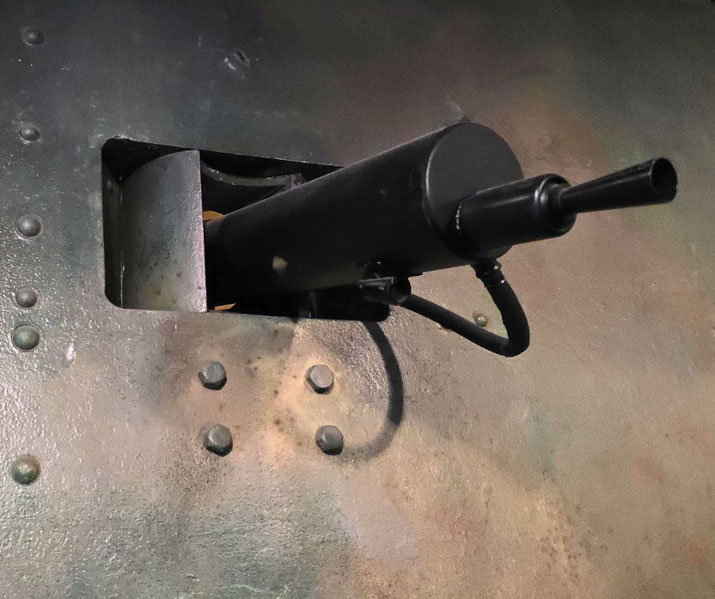
Barbed wire entanglements protecting German trenches reached up to 30 metres deep in some places, and machine-gun posts in reinforced concrete pillboxes, called Mebu (an abbreviation of Mannschaften-Eisenbeton-Unterstände), provided overlapping fields of fire across No Man’s Land.
Construction of the Hindenburg Line during the winter of 1916–17 showed the highest level of German trench engineering, with concrete bunkers, communication tunnels, and extensive underground facilities that together created an exceptionally strong defensive system.
As such, German forces withdrew to these prepared positions in Operation Alberich during March 1917.
So, which were better?
As defensive positions, German trenches worked far more effectively than their British counterparts because their depth provided stronger protection from artillery bombardment, which formed the main weapon of trench warfare.
British soldiers who attacked German positions during the Somme offensive in July 1916 discovered that week-long preliminary bombardments failed to destroy German dugouts, and when the barrage lifted, German machine-gunners climbed from their shelters and inflicted 57,000 British casualties on the first day of the battle alone.
The ability of German soldiers to survive intense bombardments and then return to their weapons showed the clear advantage in battle that deep dugouts provided over the shallow excavations that typified British defensive works.
This engineering strength cost British forces tens of thousands of casualties during major offensives throughout 1916 and 1917.
The comfort and safety of German trenches also improved soldier morale during the long months of trench warfare when troops had to endure extended periods in forward positions without relief.
Dry, heated dugouts with proper sanitation facilities reduced disease rates when compared with British trenches where soldiers stood in water for days at a time, and German troops could rest between tours of duty in front-line positions because their reserve trenches offered genuine shelter rather than limited protection from the elements.
This difference in living conditions affected combat performance because well-rested, healthy soldiers fought more effectively than exhausted troops who suffered from exposure and illness.
German defensive successes in 1916 and 1917 owed much to the better conditions created by their engineering.
British trenches, however, carried out their intended role adequately, since they provided enough protection for troops who prepared offensive operations without creating permanent fortifications that might discourage aggressive tactics.
The lighter construction allowed British forces to abandon positions and advance more easily than if they had poured huge resources into permanent defences.
During the final months of the war in 1918, when mobile warfare returned to the Western Front, elaborate German defensive systems turned into burdens rather than strengths.
German troops who had grown used to deep, comfortable dugouts then had to move rapidly across open country, and the mental effect of leaving prepared positions harmed German morale during the retreats to the Hindenburg Line and afterwards.
The comparison between German and British trenches showed how strategic doctrine guided practical construction in ways that influenced everything from casualty rates to the length of the war.
German engineering strength in trench building grew from their commitment to defensive warfare on the Western Front, and their trenches met their main aim of holding captured territory against repeated Allied assaults.
Meanwhile, British trenches stayed deliberately basic because British strategy placed attack above defence, since commanders believed that heavy investment in comfortable defensive positions would weaken the offensive spirit needed to drive German forces from occupied France and Belgium.
In the end, the German trenches worked better as defensive fortifications, since the Germans designed them for that purpose, whereas British trenches carried out a more limited role as temporary positions from which to launch assaults against German lines.