
How the Enclosure Acts changed rural Britain forever
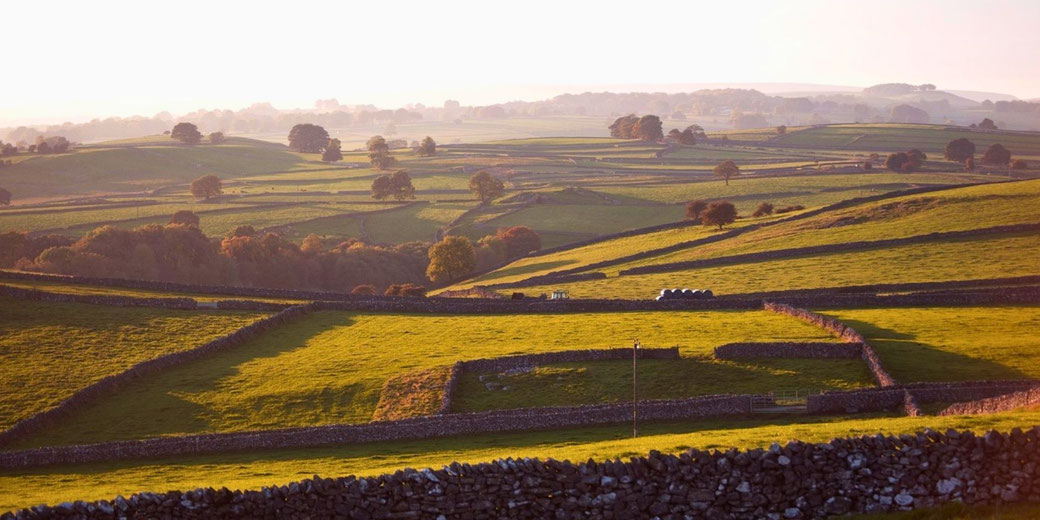
When common fields were converted into private property, the Enclosure Acts changed rural Britain in important ways.
Between 1750 and 1830, over 4,000 acts of Parliament, which legally transferred millions of acres from shared use into enclosed estates, broke up traditional farming systems and replaced them with profit-driven agriculture.
As landowners gained full control over these new plots, many villagers who had depended on shared land for survival found that they lost their land and their homes, or were forced into urban labour markets that grew rapidly due to industrial growth.
By 1914, around 6.8 million acres of land had been enclosed under parliamentary authority.
How enclosure began
In England during the late medieval and Tudor periods, many landowners had already begun to fence off common land in response to growing demand for wool, which offered higher profits than traditional grain farming.
Although the open-field system still dominated most rural areas, where villagers shared scattered strips of land and relied on communal pastures, that system had come under pressure as landlords prioritised enclosed sheep pastures over subsistence farming.
By 1517, unrest had grown so severe that Cardinal Wolsey launched an official inquiry into illegal enclosures, and between 1536 and 1603.
Also, numerous royal commissions were issued, which assessed disputes and recorded complaints, though the exact number is uncertain because records are incomplete.
In 1607, the Midland Revolt saw widespread protests across Northamptonshire and Warwickshire as peasants destroyed hedges and fences to reclaim common land.
Over time, reformers such as Thomas More and John Hales warned that enclosure would disrupt village life and push the poor into extreme poverty.
They argued that closing off land removed access to vital resources, such as grazing rights and firewood, and turned self-sufficient farmers into vagrants.
Officially, the monarchy expressed concern in proclamations and inquiries, yet it rarely punished large landowners, who used gaps in the law and their influence to keep control over land that became more and more valuable.
As the rural population expanded across the sixteenth century, many landlords took advantage of rising prices and social unrest to rework their estates.
They often did this when they evicted tenants and when they joined their land into larger farms.
Although some tenants received monetary compensation, most had lacked the legal power to resist enclosure, and few had possessed the means to acquire new plots elsewhere.
For many, enclosure meant permanent exclusion from agricultural independence.

The legal revolution of parliamentary enclosure
After 1750, enclosure gained firm legal backing as Parliament passed thousands of private acts that allowed individual villages to redistribute land and officially cancel common rights.
Each act applied to a specific locality, yet together they changed much of the structure of English agriculture.
Importantly, these acts introduced an official process in which landowners worked with local commissioners to survey open fields and map new boundaries, then they assigned parcels according to prior ownership or usage claims.
Usually, large landowners started the process when they petitioned Parliament and paid the legal fees, and then they appointed commissioners who often shared their class interests.
In practice, this system often rewarded the wealthy and excluded the poor, who either held no documented rights or could not afford to pay the fees associated with claiming small allotments.
Even when compensation had been granted, it rarely matched what had been lost.
After 1801, the General Enclosure Act made many procedures for parliamentary enclosures the same in different places, although it did not remove the need for individual acts in each case.
Passed with the goal of reducing costs and making administration simpler, the act sped up enclosure even more, especially during the Napoleonic Wars, when Britain faced grain shortages and sought to increase domestic food production.
Enclosure, now presented as a patriotic necessity, advanced rapidly under legal protection and political support.
Impact on agriculture and economic production
Under the open-field system, scattered plots and shared customs had often limited improvements in farming; however, enclosure allowed landowners to restructure farms for greater efficiency.
With full control over enclosed plots, they introduced new techniques such as the Norfolk four-course rotation, which improved soil fertility without fallow periods, and they adopted modern tools that increased yields.
In counties such as Norfolk and Leicestershire, enclosed farms did better than older systems because they combined new technology with improved land management, while similar improvements appeared in Lincolnshire.
Agricultural reformers such as Lord Townshend promoted crop rotation, and inventors like Jethro Tull developed the seed drill in the early 1700s, and both groups helped encourage this shift.
As a result, agricultural output rose sharply, which fed a growing population and reduced reliance on imported grain.
Because large farms required fewer workers, rural labourers increasingly migrated to industrial towns and cities, where they joined the new factory workforce.
Between 1750 and 1850, millions across Britain had moved from the countryside into towns such as Manchester and Birmingham, or into rapidly growing centres like Leeds.
Wealth generated by agricultural profits often went into spending on transport and building projects, such as turnpike roads and canals, along with bridges, which further supported economic expansion.
At the same time, many landowners had redesigned their estates either when they created decorative parklands that showed new ideas about beauty in the countryside or when they turned their farms into businesses that aimed to make as much profit as possible.
The increased revenue also allowed some landlords to fund industrial ventures, and this created a clear connection between rural change and urban growth.
Displacement and social disruption
As enclosure spread, many poor people lost more than access to land, and they lost their way of life.
Before enclosure, many villagers had relied on common rights to graze animals, collect wood, or grow vegetables.
Once those rights vanished, thousands found themselves unable to support their families, and some attempted to stay when they worked as wage labourers on the very land they once helped manage, but many others left in search of work elsewhere.
Women had previously gathered fuel and food or tended garden plots, and they found their roles diminished, and children were more frequently sent into wage labour to supplement household income.
According to contemporary accounts, the emotional cost of displacement often left lasting scars on rural society.
In The Deserted Village, which was published in 1770, Oliver Goldsmith described how enclosure led to depopulation and despair, along with the destruction of once-thriving communities.
He portrayed landlords as men who sacrificed tradition and kinship ties for the sake of wealth and appearance, replacing useful land with decorative gardens and artificial ruins.
As more families lost their sources of income, parish authorities struggled to meet rising demands for poor relief.
In response, some counties adopted the Speenhamland system in the 1790s, which attempted to supplement low wages with food allowances based on the cost of bread and the size of a worker’s household.
Critics argued that it encouraged dependence and deterred employers from offering fair wages, while supporters believed it was the only means of survival for those displaced by enclosure.
After 1834, the Poor Law Amendment Act replaced this system with workhouses, which made aid stricter and more severe, and it pushed those uprooted by rural change even further to the edge of society.