7 things you didn’t know about the eastern front in 1914

Public memory of the First World War often centres on Flanders fields and the Somme, along with the trench lines that scarred northern France.
By contrast, the Eastern Front generally saw larger territorial shifts and more frequent massive encirclements, with millions of casualties in only a few months.
From East Prussia to the Carpathians, several empires failed under the strain of poor planning and outdated infrastructure, as well as the the terribly brutal demands of modern warfare.
1. Was initially seen as a sideshow
At the start of August 1914, German strategy relied on the Schlieffen Plan, which aimed to encircle Paris before Russia could mount a serious attack.
Nearly all German army units gathered on the western border while only the Eighth Army, under General Maximilian von Prittwitz, defended East Prussia.
German leaders at first expected Austria-Hungary to contain Russian advances in the south, so they could concentrate on France.
Initially, German calculations had assumed Russia would take several weeks to mobilise.
This expectation had been based on the 1904 to 1905 Russo-Japanese War and Russia’s undeveloped railway network, which had given Germany confidence that it had time.
However, between 17 and 20 August, General Rennenkampf’s First Army and General Samsonov’s Second Army crossed into East Prussia near Gumbinnen and Allenstein.
German commanders now faced the unexpected reality of a large-scale invasion earlier than expected.
As a result, the Eastern Front shifted rapidly from a secondary front to a high-priority zone.
German reinforcements had originally been destined for France, and they had to be redirected east.
By late August, the need to repel Russia from German territory had become impossible to ignore, which forced the High Command to divide attention and manpower, plus transport resources between both fronts.
2. The Russian army was poorly equipped
The Russian Empire could field millions of men, yet its supply system lagged far behind.
Poor industrial output and limited arms stockpiles left Russian soldiers under-supplied from the beginning, and an unreliable transport network made the problem worse.
In some cases, units entered combat with over 30 percent of recruits who lacked rifles and were ordered to retrieve weapons from fallen comrades.
What is more, artillery units often ran out of shells during long battles.
At the same time, communication failures added to the difficulties, as Russian commanders often transmitted orders over radio channels without codes, which allowed German intelligence to monitor and predict their plans.
As a result, German forces gained a consistent advantage by using intercepted orders.
In addition, the transport system lacked the capacity to support long operations.
This is because Russian railways were fewer and slower, with key hubs like Warsaw and Brest-Litovsk, which were unable to move supplies quickly enough.
As winter approached, shortages of warm clothing and food increased the toll. The Russian army, enormous on paper, began to collapse under the combined pressure of lack of funding and poor organisation, together with exposure to modern industrial warfare.
3. Austro-Hungarian army was also ill-prepared
From the outset, the Austro-Hungarian Empire had spread itself too thin. Its army launched offensives into both Serbia and Russian Poland, without the strength to conduct two campaigns at once.
The two-front commitment left forces in Galicia exposed and poorly coordinated.
Troops suffered several devastating defeats at the hands of General Nikolai Ivanov’s Russian forces in late August and September, which included the major loss of Lemberg during the Battle of Galicia from 26 to 30 August.
Importantly, the empire’s internal structure contributed to its battlefield failures, due to the fact that soldiers came from across its multilingual population.
This created serious communication issues between officers and enlisted men.
Also, commands issued in German or Hungarian often had to be relayed by interpreters, which led to delay and confusion during combat.
Additionally, the supply situation deteriorated quickly, so soldiers lacked artillery support, food, and medical treatment.
Chief of the General Staff Conrad von Hötzendorf faced rising criticism as losses exceeded 300,000 by September.
The army’s ability to hold ground or regain drive fell. Repeated retreats and collapsing morale led to mass desertions in some units.
German support remained limited during 1914, and Austria-Hungary had already begun to depend on assistance from its ally to prevent further collapse on its eastern flank.
4. Battle of Tannenberg was a major German victory
By late August, Germany faced a crisis in East Prussia. With two Russian armies that pressed forward from different directions, General Prittwitz suggested a retreat beyond the Vistula.
Berlin immediately replaced him with General Paul von Hindenburg and his chief of staff, Erich Ludendorff.
They responded quickly, and they chose to concentrate forces against General Samsonov’s Second Army, which had advanced too far west and lost contact with Rennenkampf’s First Army due to poor coordination and inadequate support.
Importantly, German intelligence had intercepted Russian communications, which revealed Samsonov’s route and schedule.
With this information, the Germans moved their troops by rail from Marienburg and launched a flanking move that encircled the Russian forces near Tannenberg between 26 and 30 August.
The result was disastrous for Russia, as over 90,000 men were captured and another 30,000 were killed or wounded.
Samsonov shot himself rather than return to face the Tsar.
Many people in the German public celebrated the victory, but the wider situation remained unstable.
General Rennenkampf’s First Army still operated in the region, and Russian reinforcements continued to arrive.
Yet Tannenberg secured East Prussia for the time being and elevated Hindenburg and Ludendorff into national importance, which granted them the authority to direct operations across the Eastern Front for the rest of the war.
The name "Tannenberg" was chosen in part to symbolise revenge for the Teutonic defeat at Grunwald in 1410, a narrative which Ludendorff publicly encouraged to strengthen national morale.
5. It was a huge drain on German resources
After the Russian invasion in August, German military planners had to divert resources that had originally been reserved for the Western Front.
Two army corps were I Reserve and XVII Corps, and they had been pulled from the advance on Paris and redirected to East Prussia just days before the Battle of the Marne.
That transfer weakened German momentum in France and contributed to the failure of the Schlieffen Plan.
Subsequently, the need to maintain operations in the east required a permanent and large-scale commitment.
The transport of men and supplies over hundreds of kilometres included weapons, and it tied up vital railway infrastructure, especially along routes like the Berlin to Königsberg line.
Supply trains became vulnerable to attack, and constant movement over long distances slowed down the deployment of reinforcements and reserves.
At the same time, Germany’s industrial base struggled to meet the demand for shells, boots, winter clothing, and replacement rifles for both fronts.
The government expanded war production, but delays and shortages continued, and military officials had to choose constantly between priorities.
By December, the Eastern Front had become a drain on manpower and logistics that forced Germany in part into the long war it had desperately hoped to avoid.
6. The first aircraft downed by another aircraft
In September 1914, a moment occurred that showed one of the first steps toward a new kind of warfare.
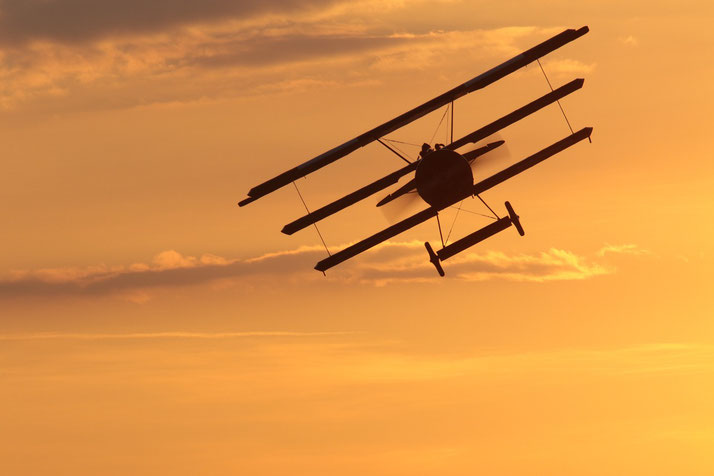
On 8 September near Lviv, Russian pilot Pyotr Nesterov flew a Morane-Saulnier monoplane and spotted an Austro-Hungarian reconnaissance aircraft crewed by Baron Friedrich von Rosenthal and observer Franz Malina.
Since he lacked any onboard weapons, Nesterov steered his aircraft into the enemy plane and rammed it mid-air, which destroyed both aircraft.
The impact sent both machines to the ground and killed all involved. Nesterov’s action was the first recorded case of one aircraft bringing down another in combat, and it showed the growing importance of air power on the modern battlefield.
Already known as a pioneer of stunt flying, Nesterov had now shown that aircraft could be used to attack as well as for reconnaissance.
At the time, aircraft worked primarily as scouts, but Nesterov’s death made clear that the skies were rapidly becoming a theatre of war.
Soon after, militaries across Europe began to arm planes with rifles and pistols, then eventually mounted machine guns.
As the war progressed, aerial dogfights became more common Though often overlooked, the Eastern Front had already witnessed the earliest development of aerial combat, where new ideas came from desperation and necessity.
7. It caused the Russian Revolution
By late 1914, Russia had already suffered nearly 1.8 million casualties, and wounded soldiers filled trains and hospitals as military cemeteries multiplied across the empire.
At home, food shortages and rising prices led to widespread unrest in many cities.
Factories in major cities could not keep up with the growing demand for war supplies, and transport failures left some areas without bread or coal.
Public anger grew, as many families received no information about missing or dead soldiers, and desertion increased as morale crumbled.
Workers in Petrograd began to organise strikes, and rural unrest escalated due to forced taking of grain.
Reports of strikes in Moscow and Petrograd increased through the winter, and economic trouble plus government inaction drove them.
The imperial government was already viewed with suspicion and appeared incapable of managing the crisis or protecting the population from hunger and loss.
Rasputin's influence over court appointments and military decisions had expanded, and it had only deepened the sense that the government did not work well.
Military defeat had combined with economic collapse to weaken the base of the regime.
Tsar Nicholas II was more isolated from political advisers and reluctant to reform his administration, and he largely failed to address the growing anger.
The revolution did not begin until 1917, and the war’s first year highlighted the extent of Russia’s weaknesses in its state and economy.
The rising failures on the Eastern Front helped speed up, over time, the loss of public trust in the Tsar's rule and laid the groundwork for future revolt.