
When steel giants ruled the waves: The era of dreadnought battleships
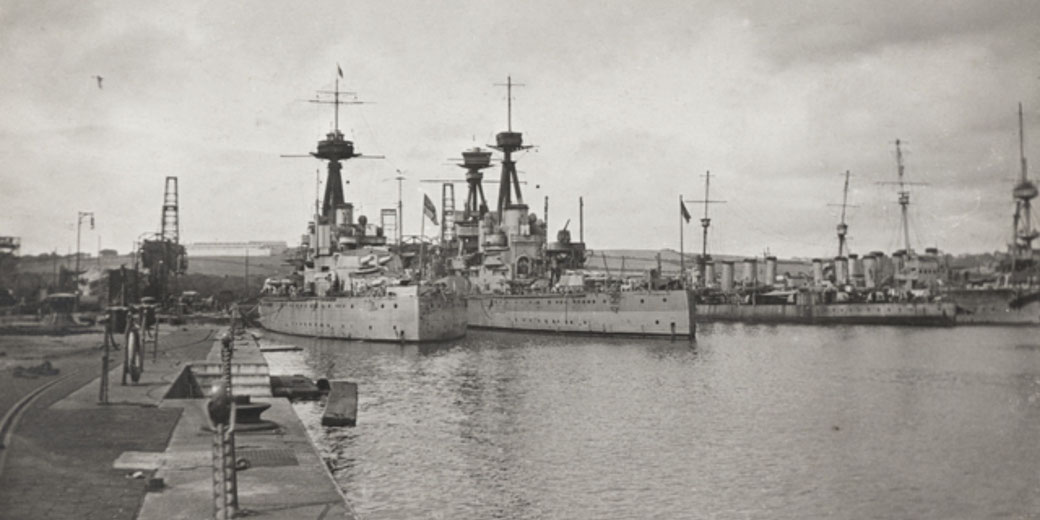
At the dawn of the twentieth century, the world's oceans connected continents through trade routes that were worth billions, and in practice only massive warships that carried heavy guns could protect these vital trade routes.
The introduction of HMS Dreadnought in 1906 revolutionised naval warfare so completely that almost every battleship that had been built before her became obsolete overnight.
This single vessel triggered an international arms race that drained national budgets, changed naval strategy, and contributed to the tensions that led to the First World War.
The Pre-Dreadnought Era
Throughout the late nineteenth century, battleships had grown increasingly powerful as steam engines had replaced sails and iron hulls had given way to steel armour.
By the 1890s, the typical battleship generally carried a mixed armament of guns in various calibres.
A vessel might mount four 12-inch guns in two turrets alongside twelve 6-inch quick-firing weapons, plus dozens of smaller guns that were meant to repel torpedo boat attacks.
Naval architects believed that this arrangement made sense because different weapons served different tactical purposes at varying ranges.
Admiral Sir John Fisher was appointed First Sea Lord of the Royal Navy in 1904 and questioned these accepted ideas.
He recognised that recent battles, particularly the Russo-Japanese War of 1904-1905, had shown the importance of long-range gunnery.
At the Battle of Tsushima on 27-28 May 1905, Japanese battleships destroyed the Russian Baltic Fleet after they had opened fire at distances of more than 7,000 yards.
The smaller calibre guns mounted on both sides proved useless at such ranges.
Only the heaviest weapons could reliably strike enemy vessels before they closed to point-blank distance.
The pre-dreadnought battleships also suffered from limited speed. Most vessels could barely manage 18 knots, which meant they found it hard to choose when and where to engage enemy fleets.
Fisher understood that flexible tactics at sea required greater speed. Steam turbine technology, which had been developed for commercial shipping, offered a promising solution.
The turbine produced more power than traditional reciprocating engines and generated less vibration, which improved accuracy for long-range gunnery.
Inception of the Dreadnought
Construction of HMS Dreadnought began at Portsmouth Dockyard on 2 October 1905.
The Royal Navy completed her in the very short time of one year and one day, and they launched the vessel on 10 February 1906.
King Edward VII himself attended the ceremony, and he recognised how important the vessel was for British naval power.
The ship displaced 17,900 tons and mounted ten 12-inch guns that were arranged in five turrets.
Eight of these weapons could fire on either broadside, and this created an extremely heavy weight of fire.
The revolutionary design incorporated Parsons steam turbines, which gave Dreadnought a top speed of 21 knots.
This made her faster than any other existing battleship and allowed the Royal Navy to control the terms of any battle against enemy fleets.
The ship's main battery could engage targets at ranges up to 20,000 yards, well past the effective distance of pre-dreadnought vessels.
Fire control systems allowed all the main guns to fire together in salvoes, which made it easier for spotters to observe where shells landed and to adjust their aim accordingly.
HMS Dreadnought carried a secondary armament of twenty-seven 12-pounder guns that were meant purely for defence against torpedo boats.
The designers eliminated all medium-calibre weapons, concluding that engagements would occur either at extreme ranges that required heavy guns or at close quarters where small quick-firing weapons sufficed.
This all-or-nothing approach to armament distribution became the defining characteristic of the dreadnought type.
A Global Race for Naval Supremacy
Germany responded to Dreadnought's appearance with considerable alarm, and Kaiser Wilhelm II had already committed his nation to building a powerful fleet under Admiral Alfred von Tirpitz's ambitious naval programme.
The First Navy Law of 1898 had authorised construction of nineteen battleships, but Dreadnought's launch made these vessels obsolete before completion.
Germany laid down its first dreadnought, SMS Nassau, on 22 July 1907. The vessel mounted twelve 11-inch guns and displaced 18,900 tons, slightly larger than her British predecessor.
The British government reacted to German construction by speeding up its own building programme.
Between 1906 and 1914, Britain completed thirty-one dreadnought battleships and nine battlecruisers, vessels that sacrificed armour for greater speed and that relied on their higher speed for protection.
Germany managed to build nineteen dreadnoughts during the same period. This competition put heavy pressure on both nations' budgets.
In 1909, the British Parliament debated the "We want eight, and we won't wait" campaign, which referred to demands for eight new dreadnoughts in a single year.
Chancellor of the Exchequer David Lloyd George opposed such spending, but public pressure forced the government to authorise the construction.
Other naval powers eventually joined the dreadnought race. For example, the United States laid down USS South Carolina and USS Michigan in December 1906, on which they incorporated superfiring turrets that allowed one gun mounting to fire over another.
Japan completed Settsu and Kawachi by 1912, and this helped it maintain its position as the dominant Pacific power.
Meanwhile, France, Italy, Russia, and Austria-Hungary all developed dreadnought programmes that aimed to keep pace with these naval developments.
By 1914, the world's navies had built or were building approximately 150 dreadnought-type battleships.
Key Battles Involving Dreadnoughts
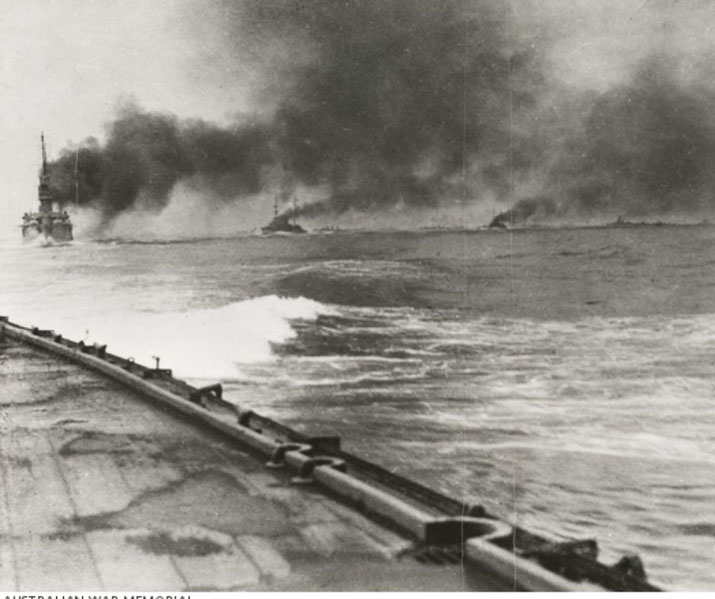
The Battle of Jutland on 31 May 1916 became the largest naval engagement of the First World War in European waters.
The British Grand Fleet under Admiral Sir John Jellicoe deployed twenty-eight dreadnought battleships against sixteen German vessels commanded by Vice Admiral Reinhard Scheer.
The engagement occurred in the North Sea, which lay off the coast of Denmark's Jutland peninsula.
Initial contact began around 14:20 hours when British and German cruiser forces apparently encountered each other by chance.
The main fleets joined battle at approximately 18:30 hours. British battlecruisers under Admiral Sir David Beatty had already suffered very heavy losses, with HMS Indefatigable and HMS Queen Mary destroyed by magazine explosions.
Jellicoe's battleships deployed from cruising formation into a single battle line crossing ahead of the German fleet, and this gave them the tactically better position known as "crossing the T".
German ships suddenly found themselves under concentrated fire from the entire British line.
Scheer executed an emergency turn away under cover of smoke and torpedo attacks, and he broke contact before his fleet suffered terrible damage.
The Germans turned back towards the British line around 19:00 hours, possibly due to confusion about enemy positions.
Jellicoe again deployed his forces to cross the German line of advance, forcing Scheer to make a second emergency turn.
The battle continued into the night, with numerous confused actions between smaller vessels and, by dawn on 1 June, the German fleet had escaped back to its bases.
Technological Evolution and Obsolescence
Dreadnought design advanced rapidly between 1906 and 1918, especially during the years immediately before the war.
HMS Orion was completed in 1912, and she mounted ten 13.5-inch guns and displaced 22,200 tons.
The Queen Elizabeth class was completed in 1915, and it carried eight 15-inch guns, burned oil fuel instead of coal, and achieved speeds of 24 knots.
These vessels cost approximately £3 million each, an enormous sum that made up a significant portion of Britain's defence budget.
Ultimately, the development of aircraft carriers and submarines gradually rendered battleships obsolete.
During the Second World War, carrier-based aircraft demonstrated that they could sink battleships without coming within range of their guns.
The Japanese attack on Pearl Harbor on 7 December 1941 destroyed or damaged eight American battleships, and this showed that even modern capital ships were vulnerable to air attack.
Also, the sinking of HMS Prince of Wales and HMS Repulse by Japanese aircraft on 10 December 1941 confirmed that battleships could no longer operate without air cover.
The last battleship completed was HMS Vanguard in 1946, but she never fired her guns in anger.
The age of the battleship ended quietly with decommissioning ceremonies rather than a final great battle.
The dreadnought era had lasted just four decades, yet it consumed enormous resources and drove international competition.
These steel giants often symbolised national prestige and military might, but technological change had already made them relics of a vanished age of warfare.