
Australian convict life: The brutal reality
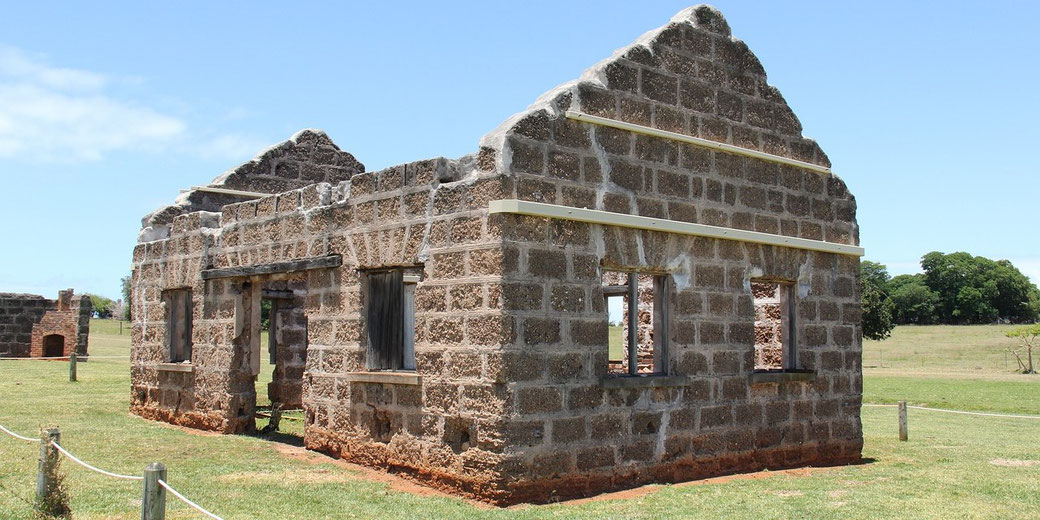
When Britain’s prisons had overflowed in the 1780s, the government selected an unfamiliar and distant destination to send away its unwanted convicts.
Over the next eighty years, more than 160,000 convicts arrived across the Australian colonies under sentence, most of whom had committed petty crimes and lacked the means to defend themselves in court.
When it turned punishment into forced relocation, Britain created a brutal system that relied on strict discipline and supervised labour to build a colony that few had chosen and many would never leave.
The origins of the convict system
During the final decades of the eighteenth century, crime in Britain increased sharply, particularly in cities where overcrowded housing and long-term poverty created easy opportunities for theft and fraud among the unemployed.
As a result, thousands found themselves prosecuted for minor offences such as pickpocketing, shoplifting, and stealing food.
Since the criminal code had defined hundreds of crimes as capital offences, many of those convicted technically faced the death penalty, but public discomfort with mass executions pushed courts toward sentencing alternatives.
The Black Act of 1723 and emergency legislation passed in 1776 that authorised the use of decommissioned ships as floating prisons showed how legal changes worsened the overcrowding crisis, which then prompted a search for more permanent solutions.
Gradually, transportation became the preferred response, which removed offenders from society and did not require the expense of imprisonment or the spectacle of execution.
At the same time, the collapse of Britain’s penal colonies in North America had left the government with no overseas destination for its convicts.
As such, officials searched for a new location, and by 1786, they had selected Botany Bay in New South Wales.
The First Fleet was commanded by Captain Arthur Phillip and departed from Portsmouth in May 1787 and arrived in January 1788 after a very difficult voyage.
Among the eleven ships was HMS Sirius, and the fleet transported around 736 convicts, of whom 188 were women.
Around 48 individuals, from both the convicts and the crew, died during the journey.
Within days of landing, Phillip moved the settlement to Sydney Cove, where work began immediately to clear land, raise shelters, and establish order among the transported population.
Initially, transportation served three aims: to remove criminals, populate a distant colony, and establish a strategic outpost.
Convicts received sentences of seven years, fourteen years, or life, and many never returned.
Judges handed down transportation sentences without considering age, gender, or personal situation, which meant that children as young as nine and elderly offenders in their seventies arrived in chains.
One such child was John Hudson, a chimney sweep who had been tried at age nine and transported at around thirteen for stealing clothing and a pistol.
After they had landed, they found themselves at the mercy of officials, isolated from their families and stripped of any legal power to challenge their treatment.
What was life like for Australian convicts?
Almost every convict who got off the ships faced a world controlled by military command and physical labour.
Many joined government work gangs, which were supervised by armed overseers who enforced discipline and expected total obedience.
From dawn until dusk, convicts built roads, quarried stone, carried timber, or dug irrigation ditches while watched by men who carried whips and loaded muskets.
Since most lacked previous experience in such labour, their work often failed to meet what officials wanted, and in many cases punishments followed swiftly.
Rations typically included salted meat and hard biscuits, barely sufficient to sustain those forced into hard labour.
Flogging generally remained the most common penalty for defiance, slowness, or disrespect.
A convict might receive twenty-five, fifty, or even one hundred lashes from the cat-o’-nine-tails, which tore skin, exposed muscle, and caused significant physical damage.
For repeated offences or serious rule-breaking, convicts risked transfer to secondary punishment stations, which included Norfolk Island, Port Arthur, and Moreton Bay.
Each of these locations developed a widely known reputation for cruelty. At Port Arthur, for example, the Separate Prison system confined convicts in solitary cells and enforced silence, often with hoods to prevent any interaction.
There, commandants imposed starvation diets, solitary confinement, leg irons, and psychological torture to maintain control.
In effect, the colony created penal colonies within the penal colony.
Meanwhile, convicts who behaved well could be assigned to private settlers, where they worked as farm labourers, servants, blacksmiths, or domestic workers.
Some masters offered better conditions than the government, but others inflicted physical and verbal abuse without consequence.
Male settlers frequently forced female convicts into sexual relationships, and few women possessed the resources to protect themselves or resist.
The prison reformer Elizabeth Fry later campaigned for inspections of female convict ships and greater protection for women during their sentences.
As a result, many gave birth to children under circumstances shaped by coercion and a dependent, fearful relationship with those who controlled their lives.
Occasionally, convicts attempted escape, though very few succeeded. Since the Australian bush offered little shelter and great distance between settlements, most who escaped died of starvation or were captured and punished more severely.
Bushrangers who remained at large became folk figures in later folklore, but in reality, their lives often involved hunger, isolation, and brief periods of terror.
One such figure was Matthew Brady, a former convict who escaped in Van Diemen's Land and led a small gang before he was captured and hanged in 1826.
After they had been captured, they were paraded before other convicts as warnings and often received increased sentences, hard labour, or execution.
A better life?
After years of service, a small number of convicts were able to receive conditional pardons or tickets of leave, which allowed them to live and work with limited freedom inside the colony.
A ticket of leave might be granted after half a sentence had been completed, though former convicts remained under close observation, and any breaking of the rules could result in the loss of privileges.
Some used their freedom to learn trades, purchase land, or establish small businesses, especially in less settled areas where labour remained scarce and social divisions less rigid.
A few succeeded in dramatic ways, and Mary Reibey had been sentenced to transportation for horse theft as a teenager and became a respected merchant and charity worker whose image now appears on the Australian twenty-dollar note.
Francis Greenway was a convicted forger and designed many of Sydney’s earliest public buildings as the colony’s official architect.
However, these exceptions were noticeable precisely because most freed convicts found themselves trapped in poverty, without the savings, education, or connections required to move into better-paid work.
Social shame stayed strong, particularly among free settlers and colonial officials who made clear differences between the convict-born and those who arrived without a sentence.
Children of convicts often hid their family background, and by the late nineteenth century, many Australians had rewritten their family histories to avoid any connection with the transported.
In the 1840s and 1850s, the Anti-Transportation League grew rapidly, especially in Van Diemen's Land and South Australia, as opposition to convict shipments grew stronger.
Despite this, former convicts and their descendants played an important role in building the colony’s labour force and the infrastructure that supported its growing economy.
Transportation officially ended in 1868 with the arrival of the Hougoumont, which brought Irish political prisoners to Western Australia.
Although government propaganda sometimes framed transportation as an opportunity for rehabilitation, in practice, the system usually put punishment ahead of reform.
Convicts often arrived in chains, laboured under coercion, and suffered from violence and abuse for years before they received even limited independence.
While some managed to rebuild their lives under these conditions, for most convicts, the experience of transportation continued to be largely defined by physical suffering and by the long shadow of a criminal sentence imposed by a distant government that kept them in a state of control by powerful officials.