
The dramatic rise and slow fall of the British Empire
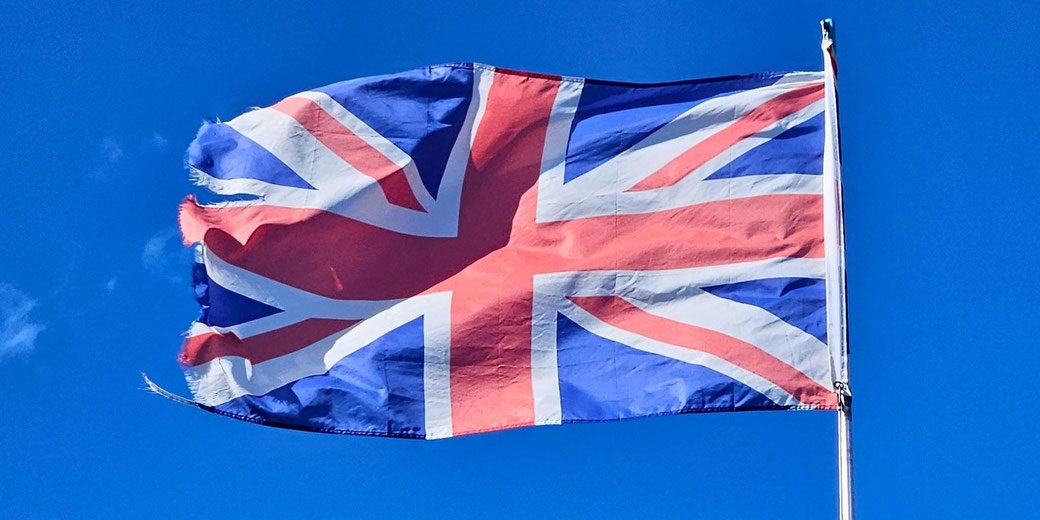
Over three centuries, the British Empire grew into the most extensive colonial power the world had seen. At its height during the early 20th century, it ruled over nearly a quarter of the world’s land surface and population.
Trade networks, military campaigns, and a strict administrative system often enabled it to extract immense wealth, spread its institutions, and enforce its control across continents.
Yet its decline, although slower than its rise, unfolded with violent clashes and ongoing resistance that produced permanent change.
The dawn of empire
By the end of the 15th century, as Spain and Portugal carved out very profitable empires in the Americas and Asia, England remained a minor maritime player.
However, in 1497, John Cabot’s voyage across the Atlantic in the Matthew had been carried out under commission from Henry VII and reached Newfoundland.
This early contact demonstrated that England had begun to look outward, yet it did not pursue sustained colonisation until the late 16th century.
In 1607, the founding of Jamestown in Virginia marked England’s first lasting colonial foothold in North America, followed by the 1620 establishment of the Plymouth Colony by religious separatists.
Gradually, English presence expanded into the Caribbean, where sugar cultivation began to dominate small islands such as Barbados and Jamaica.
These early ventures quickly became profitable since they largely depended on enslaved African labour and exports to English markets.
By the mid-18th century, enslaved Africans had come to make up around 90 percent of the population in colonies like Jamaica.
Meanwhile, merchants backed by the Crown operated as privateers, who raided Spanish vessels and colonies in a way that weakened Spain’s grip and helped England assert itself as a colonial competitor.
During the later 17th century, English ambitions widened again, this time towards Asia.
The East India Company was founded in 1600 with a royal charter and built fortified trading posts along the Indian coastline and formed alliances with local rulers.
By 1757, Company troops under Robert Clive had defeated the Nawab of Bengal at the Battle of Plassey.
As a result, Britain gained control of India’s wealthiest province, which provided a huge source of revenue and increased its influence over the entire subcontinent.
In 1765, the Mughal emperor granted the East India Company the Diwani of Bengal, Bihar, and Orissa, which allowed the Company to collect land revenue directly.

How the British empire became very rich
From the 18th century onwards, the empire grew richer as it extracted resources, expanded its slave-driven plantations, and developed industry at home.
Caribbean sugar remained a major export, cultivated under an unfair plantation system that generated vast profits.
At the same time, British traders sold manufactured goods such as textiles, metalware, and firearms in Africa, where they purchased enslaved people and shipped them across the Atlantic to labour in the colonies.
That triangular trade involved Britain, West Africa, and the Americas and strongly supported the early imperial economy.
Meanwhile, the conquest of Bengal allowed the British to tax Indian peasants heavily and redirect Indian agriculture towards exportable cash crops.
This enriched British shareholders but caused hardship across the countryside.
Cotton produced in India or the American South was shipped to English textile mills, where cheap factory labour turned it into finished goods, and, as a result, Britain dominated global markets and increased its dependence on colonial supplies.
After 1815, Britain came out of the Napoleonic Wars as the world’s leading naval and commercial power.
Although the Congress of Vienna restored European monarchies and stabilised borders, it indirectly supported a period of British power at sea, often called the Pax Britannica.
This allowed the Royal Navy to patrol key maritime routes and enforce British economic interests, while banks in London funded large building projects such as railways and ports in Latin America, Africa, and Asia.
At the same time, British companies secured mineral rights in southern Africa, timber concessions in Burma, and rubber plantations in Malaya.
Since colonies acted as both suppliers of raw materials and guaranteed buyers of British exports, they became vital to the industrial economy.
The iron grip of colonial administration
To maintain control over distant territories across many regions, the British developed a centralised administrative structure backed by legal authority, military presence, and racial hierarchies.
In settler colonies such as Canada and Australia, where British migrants formed the majority, Britain granted limited forms of self-government.
These parliaments mimicked British institutions and often excluded Indigenous populations from power.
However, in Asia, Africa, and the Caribbean, direct rule or tightly supervised indirect rule remained the norm.
In India, after the 1857 rebellion, the British Crown abolished the East India Company and appointed a Viceroy to oversee the colony.
A large bureaucracy staffed by British officials and English-speaking Indian clerks managed everything from taxation to railway schedules.
Telegraphs, rail lines, and canals, which were built with Indian labour and British capital, allowed faster communication and transport, especially during famines, rebellions, or troop movements.
Across Africa, the British imposed indirect rule in many places by appointing tribal chiefs, who then enforced colonial laws.
In Nigeria, Lord Lugard developed this system to reduce administrative costs and strengthen imperial control.
It often disrupted existing power structures and gave collaborators official authority.
In settler territories like Rhodesia or Kenya, British officials confiscated Indigenous land, imposed racial segregation, and relied on forced labour for cash crop production.
Schools and churches promoted English language and values, while legal codes reinforced imperial authority and dismissed local customs as inferior or illegitimate.
Rebellion against British control
By the early 20th century, opposition to British rule had grown stronger across the empire, as nationalist movements grew stronger and were led by educated elites who demanded political rights and an end to imperial control.
Their strategies varied, but many adopted either legal protest, grassroots organising or open rebellion.
Often, repression followed immediately, yet resistance grew stronger in response.
In Ireland, decades of agitation for Home Rule built up to the 1916 Easter Rising, which failed militarily but shifted public opinion after the British executed its leaders.
The later war of independence led to the formation of the Irish Free State in 1922.
Meanwhile, in India, Mohandas Gandhi’s leadership of a non-violent independence movement attracted widespread support.
Mass boycotts of British goods, salt marches, and protests placed immense pressure on colonial authorities, particularly after events like the Amritsar Massacre on 13 April 1919, when British troops under General Dyer fired on unarmed civilians and killed at least 379 people.
Across Africa and the Middle East, revolts broke out in Palestine, Egypt, Sudan, and Nigeria.
In Kenya, the Mau Mau uprising during the 1950s challenged British control, and the colonial administration responded with mass arrests, torture, and forced relocations.
In Malaya, insurgents fought against both British and Commonwealth troops during the Emergency period.
Since colonial rule relied on small numbers of officials supported by local elites, any sustained rebellion threatened to unravel the imperial system.
Decolonization: How the empire fell apart
After 1945, the British Empire began to dissolve under the weight of economic strain and military fatigue, together with rapidly changing world politics.
The Second World War had left Britain heavily indebted, while its cities lay damaged and its industries outdated.
At the same time, the United States and the Soviet Union were now global superpowers, opposed old-style colonialism, and promoted self-determination, especially among newly independent states.
In 1947, Britain withdrew from India, which became two separate states: Hindu-majority India and Muslim-majority Pakistan.
Partition caused one of the largest migrations in history, with between 10 and 15 million people displaced, and triggered violence.
Although estimates vary, the death toll likely exceeded several hundred thousand and may have reached over one million.
Within a few years, Britain also left Burma, Ceylon, and Malaya. Soon after, political movements across Africa won independence through negotiation, protest, or armed struggle.
Ghana led the way in 1957, followed by Nigeria, Kenya, and others.
Yet not all transitions happened peacefully. In Kenya, the British detained thousands of suspected Mau Mau supporters and used brutal tactics to maintain control.
In southern Africa, white settler resistance slowed decolonisation, and in Rhodesia, Ian Smith’s regime unilaterally declared independence in 1965, and this decision led to years of conflict.
In 1956, the Suez Crisis demonstrated the limits of British global power when American financial pressure and international diplomatic opposition forced Britain to withdraw its forces.
Elsewhere, Britain clung to key outposts such as Hong Kong and the Falkland Islands, although it recognised that its global influence had shrunk.
By the 1980s, the empire had been reduced to a handful of small territories.
What did the British Empire give the world?
Although the British Empire disappeared, many of its institutions continued in former colonies, and many languages and administrative structures survived alongside them.
English remained widely spoken across Africa, Asia, and the Caribbean, and it became a common world language.
Parliamentary systems, common law, and civil services based on the British model were adopted by many independent states, some of which retained the monarchy as a symbolic head of state.
Infrastructure that had been built during the colonial period continued to influence economic life in many regions.
Railways, bridges, and ports, which often followed an extractive purpose, still provided the foundations for post-independence development.
The Indian railway network and the port of Singapore were both developed under British control and remained crucial to national economies.
Cricket and rugby had once been tools of imperial culture and became national obsessions in places such as India, Pakistan, and the West Indies.
Trade routes created under empire evolved into global supply chains that linked markets across continents.
Yet the long-term costs of empire proved severe. Famines in India and mass displacements in Africa were joined by the redrawing of borders in the Middle East and caused instability that, in many places, persisted long after independence.
The artificial borders of Nigeria and Iraq were drawn with little regard for ethnic divisions and triggered decades of conflict.
Colonised peoples endured decades of racial discrimination and cultural suppression that locked in economic disadvantage.
Education systems often excluded local histories and replaced them with British narratives that denied or distorted colonial violence.
Today, historians continue to debate the moral and material effects of empire.
Some argue that it brought political organisation and economic integration, and others, on the other hand, emphasise that it spread inequality and exploited human lives.
Whatever the interpretation, the British Empire left a powerful mark on the modern world through the pursuit of power and profit that aimed at ever tighter control, rather than through accident or idealism.