
The 'Anzac Legend' and its influence on Australians
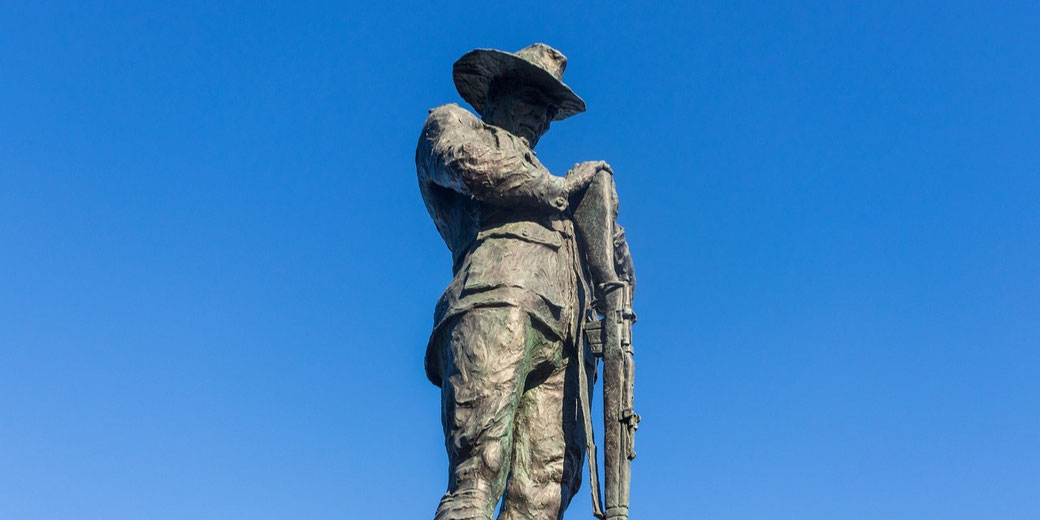
Each year on 25 April, many Australians gather in silence at dawn to honour soldiers who died in a failed campaign that was fought on distant shores in 1915.
Over time, the events at Gallipoli have come to seem more than a military memory, and they have transformed into a national myth that claims to show the character of the Australian people to many observers.
It began in loss, and the Anzac Legend has influenced how Australians speak about courage and sacrifice as part of Australian identity, and it continues to influence national life in clear ways.
Birth of the legend
When Australian and New Zealand soldiers landed at Gallipoli in the early hours of 25 April 1915, the first waves included men from the 3rd Brigade of the Australian Imperial Force, who came ashore at what would later be known as Anzac Cove.
They faced steep ridges and well dug-in Ottoman resistance, and confused orders made rapid progress impossible.
Although the Allied plan had aimed to secure control of the Dardanelles and connect with Russia, the reality on the beaches of Anzac Cove was chaos.
Many soldiers died before they reached the cliffs, and those who survived endured snipers and disease, along with poor supplies in cramped trenches carved into unforgiving terrain.
Soon after the campaign began, reports filtered back to Australia, though the details of strategy and setbacks were often unclear or softened, and much public attention focused on the qualities of the soldiers rather than the outcome of the operation.
This lack of clear detail diverted attention from strategy and setbacks. Charles Bean was Australia’s official war correspondent and later official historian, and he described the Anzacs in terms that emphasised mateship and humour under fire, and he also stressed endurance without complaint.
He wrote that the Anzacs were defined by their 'independent spirit and democratic instinct,' and he presented them as the truest reflection of national ideals.
His accounts helped form a version of events that often left out military failings and instead suggested that the campaign had shown something permanent about the national spirit.
By the time the last troops evacuated the peninsula in December 1915, over 26,000 Australians had been wounded and more than 8,000 had died, compared to around 87,000 Ottoman, 21,000 British, and 2,700 New Zealand deaths.
Still, the story that took hold in newspapers, speeches, and public memory focused on the imagined birth of the nation rather than on the failure of the campaign.
According to this narrative, Gallipoli had come to be seen as turning a young country into a mature one, which proved that its citizens could show loyalty and bravery, with initiative under the hardest conditions.
Growth in popularity
After the war ended, local communities across Australia built memorials to honour the dead and commemorate their service.
This had begun with the first official Anzac Day ceremonies which were held on 25 April 1916 in cities such as Brisbane, Sydney, and London.
Anzac Day quickly became, for many communities, one of the country’s most serious commemorations.
At first, services focused on grief and respect, but over time, they also began to reinforce the image of the Anzac as a moral standard for all Australians.
Public schools taught students to view the Gallipoli landing as a source of pride, and ceremonies increasingly centred on national identity rather than only remembrance.
During the Second World War, comparisons between past and present soldiers helped strengthen the legend’s influence.
Veterans of Gallipoli were often portrayed as the earlier models of those who fought in Tobruk and later campaigns in Greece and New Guinea.
Political speeches, recruiting posters, and newsreels encouraged many Australians to believe that the qualities shown at Anzac Cove continued to guide the men of the Second AIF.
Leaders made the Anzac soldier a symbol of continuity, and this choice created a narrative that gave purpose to the new war effort and comfort to families whose sons had again gone to fight.
Later, during the 1960s and 1970s, public interest in Anzac Day began to wane as memories of the two world wars had faded and Australia’s involvement in Vietnam had led many to question the meaning of military service.
Even so, the legend regained popularity for many Australians in the 1980s, especially after the release of Peter Weir’s Gallipoli film in 1981, which presented the campaign as tragic, moving, and heroic.
The film starred Mel Gibson and Mark Lee, and it depicted the pointlessness of war and the sacrifice of youth through a moving tale of mateship and loss.
The film reached wide audiences and introduced younger Australians to the story through emotionally powerful storytelling that emphasised friendship and sacrifice, followed by a sharp sense of betrayal.
By the 1990s and early 2000s, some new generations began to travel to Gallipoli for dawn services, and they often described the trip as a kind of pilgrimage, and media coverage portrayed them as young Australians who renewed their connection to national values.
Their presence helped renew interest in the legend for many people, as their visits drew sustained public notice.
Governments funded centenary commemorations, including the 2015 dawn service at Anzac Cove, which drew more than 10,000 Australians.
School programs expanded their focus on Anzac history, and major sporting events introduced ceremonies that honoured the fallen before the first whistle.

Its influence on Australian culture
Across many parts of national life, the Anzac Legend has influenced how many Australians describe ideal qualities such as bravery and loyalty, and persistence.
The digger became a common symbol of the fair-minded, selfless Australian, someone who preferred action over words, valued mateship over status, and stood firm in the face of difficulty.
Politicians often referred to the Anzac spirit during speeches about floods and fires, along with other national challenges.
For instance, Prime Minister John Howard invoked the 'Anzac tradition' in 2003 when addressing Australian involvement in Iraq, and he presented it as a guiding example of courage and duty.
He used the image of the soldier as a source of inspiration and unity.
Within schools, teachers often introduced the Anzacs as role models for students to admire.
Lessons included primary source accounts and war poetry, alongside detailed battlefield descriptions, often supported by federal programs such as the Simpson Prize, which encouraged students to explore Anzac history through critical inquiry.
Yet the emphasis frequently remained on character traits rather than critical engagement with military history.
As a result, students were often taught that Gallipoli was important for its military significance and for what it supposedly showed about the true nature of the Australian people.
Meanwhile, cultural institutions reinforced this view. The Australian War Memorial presented exhibitions that often highlighted individual courage and sacrifice, and they often framed stories in emotional terms.
Television coverage of Anzac Day marches regularly included interviews with veterans and their families, which helped create a sense of connection across generations.
Sporting matches added ceremonial elements that joined service with respect and honour, set beside the competitive tone of sport, and the AFL Anzac Day clash between Collingwood and Essendon was a chief example.
Over time, the legend became, for many Australians, a set of ideals applied to civilian life, used to explain what Australians admired and expected from one another during times of hardship.
Even those who had no family connection to the military often saw the Anzac spirit as part of what it meant to be Australian.
Problems with the legend
As public interest in the legend continued, historians and commentators began to raise questions about what had been excluded from the story.
Many noted that the traditional image of the Anzac, who was a white, male, Anglo-Celtic soldier, often ignored the experiences of Indigenous Australians, migrants, women, and others who had also contributed to the war effort.
For example, Aboriginal and Torres Strait Islander soldiers were often denied formal recognition both during and after their service.
Approximately 800 to 1,000 Indigenous men fought in the First World War, yet they were frequently omitted from official accounts and excluded from postwar benefits.
Their absence from early accounts created a misleading impression of who fought and died for Australia.
At the same time, critics pointed out that the legend often avoided the brutal realities of war.
While it celebrated sacrifice and endurance, it rarely addressed the trauma and morale breakdowns, along with poor decisions that plagued the Gallipoli campaign.
Some veterans themselves expressed unease with how Anzac Day events had become showy, and they argued that remembrance should focus on grief and warning, not performance and pride.
There were also concerns about how the legend affected political discussion. By presenting military service as morally pure, it sometimes discouraged debate about Australia’s involvement in later conflicts, such as Korea, Vietnam, Iraq, and Afghanistan.
Leaders who invoked the Anzac spirit to justify policy decisions often left little room for dissent, as critics who questioned the use of force could be seen as disrespecting the memory of the fallen.
In response to these issues, academic historians produced more detailed and balanced studies of Gallipoli and the wider First World War.
Their work highlighted planning failures and imperial agendas, plus the suffering of ordinary soldiers.
New research also showed how memory and myth-making operated in the decades after the war, and it showed how governments, media, and cultural institutions helped form what Australians came to believe about their past.
Does it have a future?
Even with these challenges, the Anzac Legend still holds a powerful position in Australian public life for many Australians, but its meaning continues to shift.
Dawn services often attract large crowds in many towns and cities, and the language of remembrance stays familiar across generations.
However, some surveys suggest that younger Australians feel less emotionally invested in the legend, and many now approach Anzac Day as a moment of respect rather than deep personal attachment.
Gradually, some institutions have begun to respond, and the Australian War Memorial has expanded its exhibits to include the experiences of Indigenous soldiers, nurses, and peacekeepers, and many school programs now encourage critical thinking and historical inquiry alongside commemoration.
Some educators use Anzac Day as a starting point for discussions about historical accuracy and inclusion, plus a clear warning about romantic views of war.
Recent surveys suggest that a majority of Australians continue to support Anzac commemorations, and younger respondents are more likely to view them as symbolic rather than deeply personal. The Lowy Institute Poll is one example.
As Australia’s population becomes more varied, and as global events shift national priorities, the future of the Anzac Legend may depend on whether it can evolve to include a wider range of stories and perspectives.
If it continues to show only a narrow version of the past, its relevance may fade.
However, if it becomes a way to recognise sacrifice without glorifying war, and if it encourages thoughtful remembrance rather than unquestioning celebration, the legend may continue to hold meaning for generations to come.