
The Angels of Mons: Divine intervention or war propaganda?
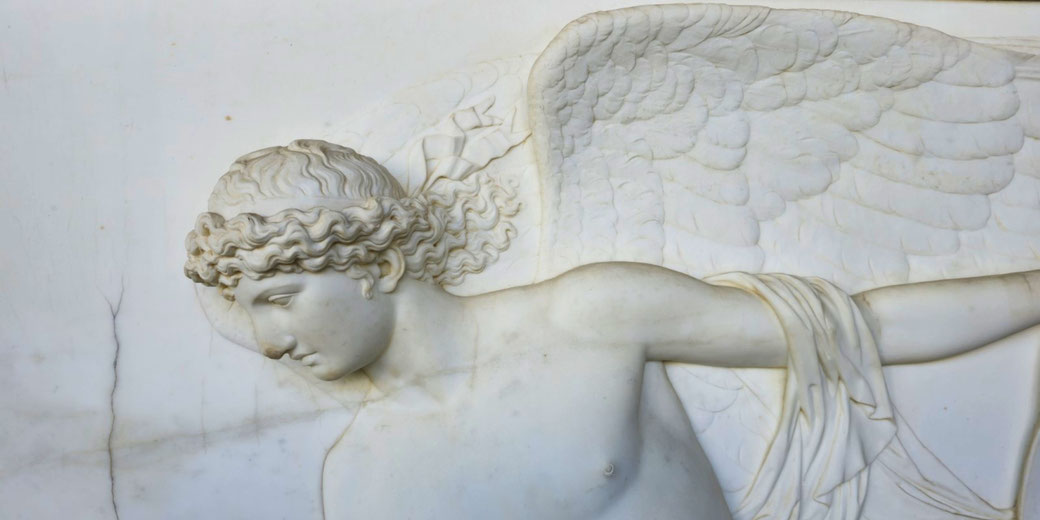
During the desperate British retreat from Mons in August 1914, one story spread with apparently remarkable speed and emotional impact.
Some claimed that angelic beings had descended from the sky and protected British soldiers from German attack, which, according to later retellings, seemed to halt the enemy and ensure the army’s escape.
As soldiers and newspaper editors, as well as church leaders, repeated the tale, it became a national legend that for many encouraged belief that God favoured Britain, but it also raised questions about propaganda, emotional survival, and the power of fiction in wartime.
The Battle of Mons: August 23, 1914
On 23 August 1914, the British Expeditionary Force confronted the German First Army near the Belgian town of Mons, which was its first major battle of the war.
The British infantry, who were trained in rapid and disciplined rifle fire, managed to hold off the German advance throughout the day, and they faced a much larger force.
Along the banks of the Mons–Condé Canal, British soldiers inflicted what wartime estimates claimed were 5,000 German casualties (although modern figures suggest the actual number was likely closer to 2,000 to 2,500), while suffering approximately 1,600 of their own.
However, as the Germans deployed more reinforcements and manoeuvred to outflank the British positions, the threat of encirclement became impossible to ignore, so General Sir John French ordered a general retreat late that afternoon.
In his later memoirs, he wrote of the "superhuman endurance" shown by his men as they withdrew.
Over the next thirteen days, British forces withdrew across Belgium and northern France, and they covered more than 300 kilometres under constant pursuit.
Many rearguard units fought desperate holding actions to delay the Germans and allow the main force to escape destruction.
At home, the public struggled to understand what had happened. Military censorship had restricted reporting from the front, and newspaper articles had often relied on vague bulletins that concealed the scale of the withdrawal.
As such, fear and uncertainty deepened, and people began to rely on rumours and personal letters.
In this kind of environment, strange and inspiring stories began to circulate, and some claimed that British soldiers had received miraculous protection during the battle.
The first accounts of supernatural protection
Soon after the retreat, Arthur Machen was a Welsh author and journalist and published a fictional short story titled The Bowmen in the Evening News on 29 September 1914.
The piece appeared in a column called “The Living Age,” which often featured imaginative fiction.
His story described English soldiers under siege who called upon Saint George for aid.
In response, ghostly archers from Agincourt appeared, who rained arrows upon the enemy and allowed the British to escape.
Although clearly fictional, the story was quickly misunderstood.
Within days, readers sent letters claiming that the story had described real events.
Some letter writers wrote anonymously or cited second-hand information and insisted that British soldiers near Mons had seen angelic figures in the sky or witnessed mysterious forces stepping in to block the German advance.
According to the accounts that followed, the angels either hovered above the battlefield or stood between the lines, and they formed a barrier of light that shielded the British as they retreated.
In some versions, Saint George led a phantom army on horseback, while in others, the glowing forms of winged beings watched silently from the clouds.
Gradually, these stories appeared in newspapers such as The Times, and religious pamphlets like The Church Times mentioned the stories in commentary and letters pages, sometimes without support but often without careful checking.
Although most soldiers denied seeing anything themselves, many had heard the rumours from chaplains, nurses, or comrades.
The growing number of reports created a sense that the story was genuine, even though no two accounts described the same event in the same way.
As a result, the myth found acceptance among civilians desperate to believe that God had favoured Britain’s cause.
Religious interpretations and public reaction
Not surprisingly, many churches quickly embraced the story and treated it as evidence of heavenly intervention.
Anglican ministers in particular, some of whom were senior clergy, spoke of the angels in sermons, while the Bishop of London delivered sermons referencing support from God.
However, there is no clear record of him explicitly endorsing the story of the angels, but religious pamphlets celebrated the tale as a sign that the British army had fought under God’s protection.
For those who had already lost sons or husbands at the front, the idea offered powerful reassurance that their sacrifices had not gone unnoticed by heaven.
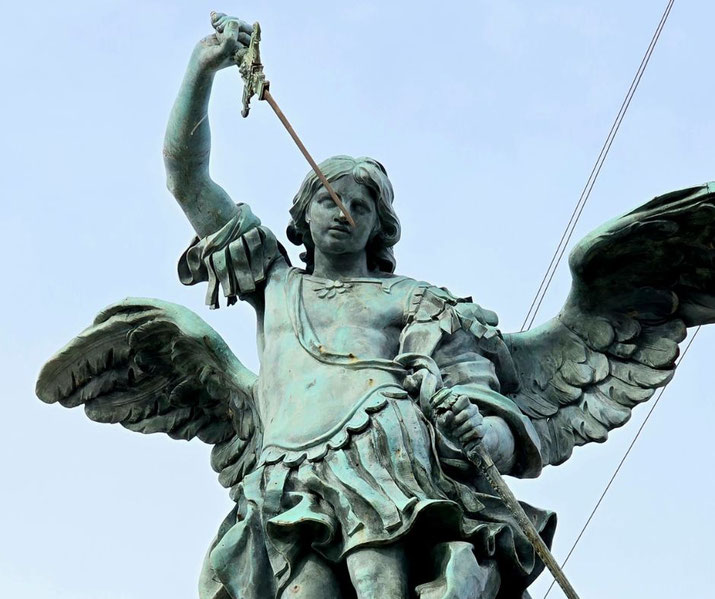
Soon after the first reports, publishers had printed illustrated pictures of the event, which often showed radiant angels who hovered above trench lines or who wielded swords beside retreating soldiers.
These images circulated quite widely, especially among religious communities and grieving families.
Many clergymen drew connections between the angelic protectors at Mons and the English victory at Agincourt.
It suggested that the same moral rightness spanned the centuries, which led to the fact that the public began to view the war as a military struggle and as a spiritual battle between good and evil.
Meanwhile, Arthur Machen became increasingly distressed by the response to his story.
He issued several statements insisting that The Bowmen had no factual basis, and he warned readers not to mistake fiction for truth.
Nonetheless, his efforts made little difference. Once the story had entered the public imagination, it took on a life of its own and became impossible to take back.
Wartime propaganda and the role of myth
By late 1914, the British government had formed the War Propaganda Bureau under Charles Masterman, which worked to guide public opinion, and it had used respected journalists and writers with established reputations, along with a range of visual artists.
The bureau included literary figures such as Arthur Conan Doyle, Rudyard Kipling, and H.G. Wells, whose work often blurred the lines between truth and patriotic narrative.
Although no records indicate that the Bureau created the Angels of Mons story, it did nothing to stop it since officials likely saw its value as a tool for boosting morale and reinforcing the moral justification for war.
Indeed, the story aligned with the central themes of British wartime propaganda, as it portrayed British soldiers as honourable and protected by God, and it cast the Germans as aggressors rejected by heaven.
Therefore,the tale spread easily and required no official endorsement to gain widespread acceptance.
Its emotional force largely came not from facts but from its appeal to collective belief and national purpose.
Among soldiers at the front, reactions were mixed. Some repeated the story as a curiosity or shared it in jest, while others found comfort in the idea that unseen forces watched over them.
Few claimed to have witnessed the angels themselves, and the repetition of the tale, both in letters and in the press, helped establish it as a widely accepted part of the early war narrative.
Is there any value in the moral of the story?
After the war ended in 1918, the story of the Angels of Mons faded from public view as the nation turned its attention to mourning and rebuilding.
However, folklore researchers and cultural scholars who worked alongside academic historians began to examine the event more closely.
Many saw the tale as a case study in the creation of wartime myth, driven by fear, religious longing, and the absence of reliable information.
Over time, analysts noted that belief in the story probably showed more about early twentieth-century British society than about the war itself.
The readiness with which many people accepted supernatural explanations showed deep spiritual uncertainty and a need for reassurance in the face of mass death.
Scholars argued that the angel myth helped people cope with the chaos of war, and it turned a confused battlefield into a place of moral clarity.
Occasionally, the myth resurfaced in novels or documentaries, where it appeared as either a mystery or a metaphor.
A few minor writers continued to claim that secret documents had confirmed the angels’ presence, but no credible evidence has ever appeared.
More serious studies, such as David Clarke’s The Angel of Mons: Phantom Soldiers and Ghostly Guardians, examined the story through a historical and cultural lens.
In historical records, there are no verified accounts from officers or war correspondents who witnessed any supernatural event at Mons.
As a last note, Arthur Machen died in 1947 and repeatedly expressed frustration at how his story had been accepted as fact.
He insisted until the end of his life that the tale of saintly archers had been nothing more than fiction in his view, meant to capture the courage of soldiers under impossible conditions.