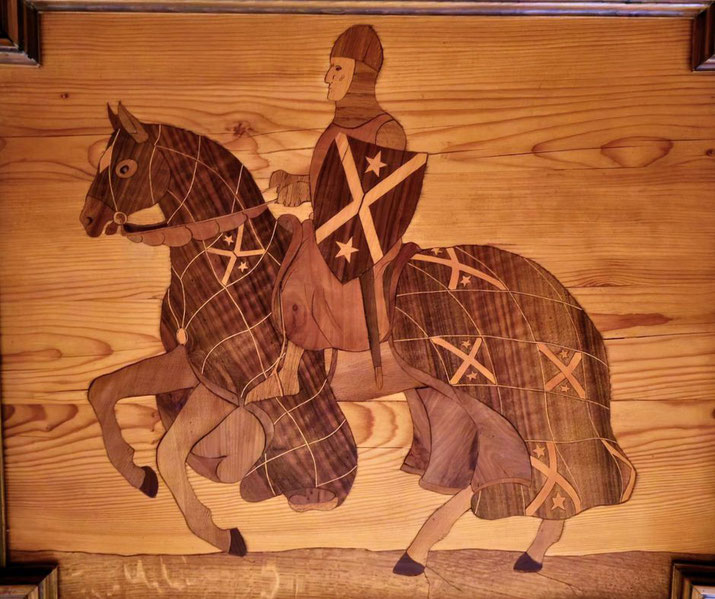
What were medieval knights?

During the Middle Ages, knights formed a trained group of mounted warriors who fought for kings and nobles across Europe.
Their preparation usually began in childhood and trained them for war, tournaments, and service within the feudal system.
Alongside their military duties, ideas about honour, loyalty, and courage helped create the chivalric customs that people later connected with knighthood.
Historical development of the knight
The knight was a medieval warrior who usually fought on horseback. He wore heavy armour and carried weapons such as a sword or shield.
The history of the knight had started before the Middle Ages, and historians can trace early mounted warriors to the 8th century under Charlemagne.
During the 10th and 11th centuries, knights had become more important because mounted troops gave rulers a fast and powerful striking force.
Knights had a central place in the feudal system, which organised much of society in medieval Europe.
In return for military service, many knights received grants of land called fiefs from their lords, and they collected income from those estates.
This arrangement, which people often called 'mutual obligation', had tied military service, landholding, and lordship into one system.
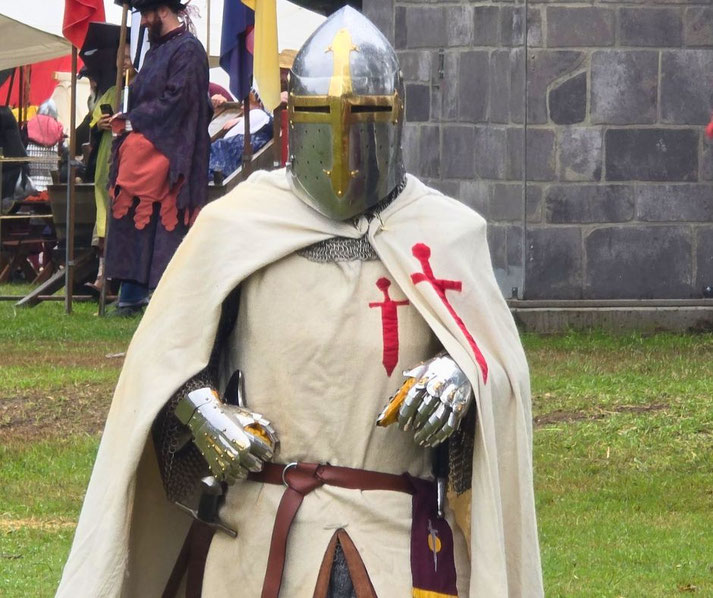
What role did knights play in battle?
In battle, knights usually fought in the front line and tried to break enemy formations through force and speed.
Commanders also used them to pursue beaten troops, to support sieges, and to take part in surprise attacks.
As warfare had changed, the role of the knight had changed as well. Armies had adjusted their tactics, had improved battlefield equipment, and had reorganised their troops.
Heavy plate armour had given knights stronger protection against sword blows and spear thrusts, and that protection had also made some knights more effective on foot.
For that reason, the mounted knight had become less dominant in some battles.

Battle of Hastings in 1066
The Battle of Hastings in AD 1066 was a major battle between the Normans and the Anglo-Saxons.
Norman knights wore chain mail armour and formed a strong force against Anglo-Saxon troops, many of whom carried shields and swords.
At Hastings, knights had used a tactic called feigned flight. They pretended to retreat, drew parts of the Anglo-Saxon line out of position, and then turned back to attack.
That method had helped break the Anglo-Saxon defence and had led to the Norman conquest of England.
The code of chivalry
Knights followed a code of chivalry that set standards for behaviour on the battlefield and in daily life.
The code stressed honour, courage, and loyalty to a lord. Knights were expected to protect weaker people, show mercy to beaten enemies, and avoid harming women and children.
The Catholic Church had encouraged the growth of this code because church leaders believed that warriors needed moral rules.
They wanted knights to defend the Church, fight heresy, and support Christian causes.
Even so, the chivalric code was not always followed, and its meaning had varied from place to place across Europe.

Jousting and tournaments
Knights took part in jousts and tournaments to improve their fighting skills. These events also drew crowds, and many people watched them as public entertainment.
In a joust, two knights charged at one another on horseback with shields and lances and tried to knock each other from the saddle.
Tournaments involved larger contests in which groups of knights fought one another across a set field.
How to become a knight
To become a knight, a boy usually needed noble birth and years of training in combat.
At about the age of seven, he could begin life as a page in the household of a lord or knight.
There, he learned manners, riding, weapon use, and other skills that prepared him for knighthood.
As he grew older, he could take on harder duties and further training. In some cases, a lord had tested a young man’s courage and fighting ability through military service or another difficult task.
There was no fixed age for knighthood, so training, experience, and the judgement of a lord had determined when a young man was ready.
Once knighted, he received armour and weapons and owed military service to his liege.
Some knights had also worked as soldiers for hire and fought for payment. The Church opposed that custom because church leaders believed that knights should fight for causes they considered just.
The knighting ceremony
One of the most important stages in becoming a knight was the ceremony in which he received his arms and armour.
This ceremony usually took place after many years of training.
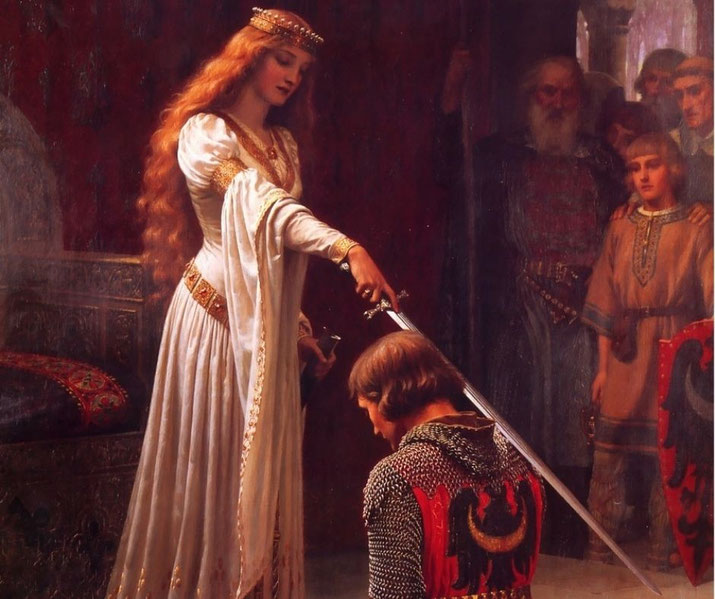
During the ritual, the young man who was about to receive knighthood would be stripped to his underclothes, and a belt would remain around his waist.
The king or lord would tap him on the shoulders with a sword to confer knighthood.
After that, the new knight promised to protect his lord and his lands.
He then received new clothing, a suit of armour, and a helmet. He also received weapons such as swords, lances, or shields.
At the end of the ceremony, people presented him to the public, and he rode on horseback to display his new rank.
What happened to medieval knights?
During the 15th century, knights had become less important because gunpowder weapons and cannons had changed warfare.
These weapons could strike from a distance and reduced the value of close combat with swords and lances.
The rule that knighthood usually belonged to noblemen had also kept commoners out of this military class.
Many commoners wanted to fight, yet they could not pay for the costly armour and equipment that knights needed.
As military methods had continued to change, the knight had lost much of his old place on the battlefield, and the institution of knighthood had slowly faded in military importance.