
Quipu: The secrets of the ancient Incan communication system
The people of the Inca Empire and its government never developed a written script, much to the surprise of many people today.
Instead, they used a system of cords and knots known as quipu to record information, which allowed trained specialists to store census data, tax obligations, and agricultural inventories.
Spanish observers in the sixteenth century often commented on what they saw as their reliability, but modern scholars have struggled to decode the meanings that may be hidden in the remaining examples.
What are 'quipu'?
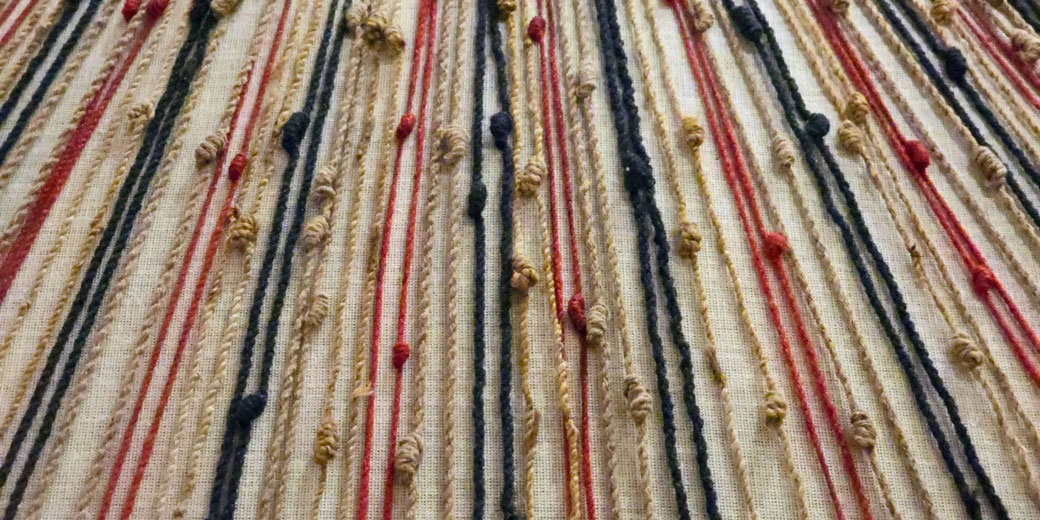
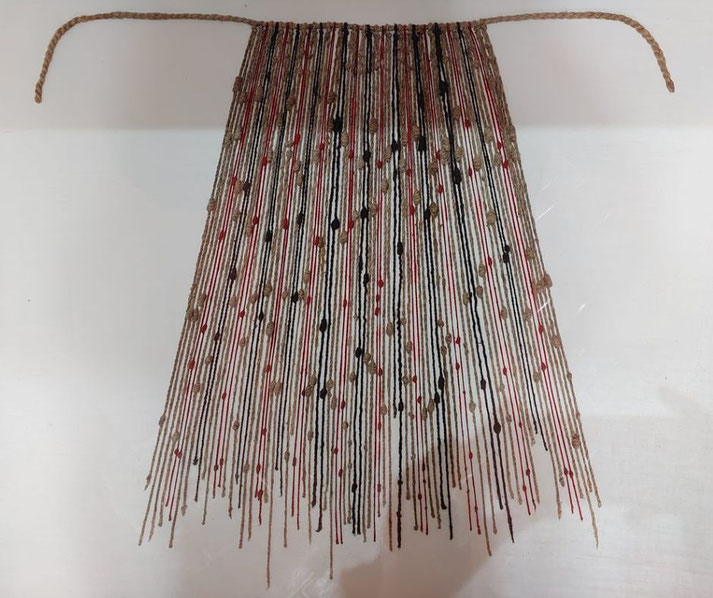
Quipu, which was the Quechua word for "knot", consisted of a primary horizontal cord from which multiple pendant cords hung, each tied with knots placed carefully.
Each cord held information that was encoded in the material's colour and fibre, together with the direction of its twist, as well as in the type and placement of knots.
Typically, overhand knots indicated digits two through nine, figure-eight knots marked the number one, and long knots represented numbers in multiples of ten.
The position of each knot along the cord determined its place value in a decimal system.
According to early colonial reports, quipucamayocs, who were government-trained record keepers, could read quipu fluently and used them to calculate labour quotas and the organisation of resources that supported military preparation.
For example, Felipe Guaman Poma de Ayala wrote that these specialists stored accounts and historical records on cords.
Meanwhile, Juan de Betanzos stated that the Incas kept records of oral traditions and royal histories using quipu, though he did not describe how they were used during readings.
Training for quipucamayocs took place in yachaywasi, or "houses of learning," where they mastered the use of fibre, colour codes, knot types, and place value over several years.
Often, the quipu included grouping by level, with pendant cords connected to subsidiary ones that displayed subtotals and categories.
The structure resembled an early form of accounting chart. Colour combinations may have indicated social roles or economic categories.
For instance, red could refer to soldiers or tribute, while yellow might denote maize or gold.
Surviving examples show that some quipu may contain several hundred pendant cords, each of which carried multiple variables that could be read together.
Origin and use
At Caral in the Andes, which was a coastal site dated to around 2500 BCE, excavators uncovered bundled cords that might have been early memory tools.
Although those samples lack knot patterns that indicate numerical meaning, they hint at a longstanding tradition in which people used fibre for symbolic recording.
Later, the Wari civilisation had probably produced quipu that clearly used decimal arrangements and likely served as a precursor to Inca forms.
Once the Inca had expanded under leaders such as Pachacuti and Topa Inca Yupanqui, the use of quipu became part of government administration, as officials often sent quipucamayocs to local centres, where they collected local data and transmitted it to central authorities.
Under the mit’a labour system, quipu typically recorded the amount of labour each household owed, the type of work required, and the region to which labourers were sent.
Both Pachacuti and his son Topa Inca Yupanqui promoted a systematic expansion of this bureaucratic infrastructure, which ensured standardised collection and practices for sharing out across the empire.
To organise tribute, quipu reportedly recorded exact counts of textiles, llama herds, chicha (fermented maize beer), and preserved foodstuffs delivered to state warehouses.
These records even helped guide the redistribution of resources during festivals, natural disasters, or military campaigns.
For instance, in times of drought, warehouse managers referred to quipu to identify available surpluses and arrange deliveries to affected districts.
In addition to economic use, quipu may have held ritual or family information.
According to some Spanish accounts, priests and nobles used special quipu in religious ceremonies and during readings of ancestral lineages.
Although few examples survive with confirmed story content, some scholars believe that cord structures, colour sequences, and cord arrangement patterns may encode historical or ceremonial knowledge.
Sabine Hyland, for instance, has proposed that some quipu from the Chanka region may encode phonetic elements and personal names.
How are they made?
To construct a quipu, artisans typically selected fibres from camelids such as alpacas or llamas, or from cotton in lowland areas.
Then, they spun the fibres in either an S-twist or a Z-twist, with each cord varying in thickness and texture.
Occasionally, cords featured decorative wrappings or looped attachments, while in some cases, dyes like cochineal for red and indigo for blue required acquisition through tribute from particular regions.
Quipu were typically tied to a main cord from which the pendant cords hung, and each pendant could support additional subsidiary cords, which allowed the device to hold layered and highly structured information.
As a result, some quipu may have exceeded a metre in length and contained hundreds of cords.
Their construction required standardised techniques that demanded accuracy and considerable time, suggesting that the Inca maintained workshops dedicated to their production.

Deciphering the Quipu code
In the 1920s, Leland Locke’s research had shown that quipu followed a mathematical logic based on place value and decimal grouping.
Many remaining examples contain numbers that align with expected records, such as inventory tallies or tribute amounts.
When scholars compared knot types, positions, and totals, they confirmed that the quipu reliably stored quantitative data.
Later, Gary Urton argued that quipu may have used binary coding principles as well.
Based on properties such as twist direction, knot type, attachment method, and colour, he proposed that each cord could carry several layers of meaning.
In fact, he calculated combinations of these variables and estimated that over 1500 unique units of information could be created, potentially allowing for non-numeric content.
Today, his Harvard Khipu Database Project continues to document and analyse these variables using modern software tools.
Interestingly, at the site of Puruchuco, researchers uncovered a group of quipu that appeared to form a single administrative dataset.
When researchers analysed the arrangement of pendants, they found that the quipu stored related information such as item type together with quantity and redistribution patterns.
In some cases, the structure resembled a modern spreadsheet, where categories were broken into subcategories with matching totals.
At Inkawasi, archaeologists discovered quipu alongside labelled maize storage containers, which helped them to cross-reference cord content with physical evidence.
However, attempts to find narrative meaning have to date had little success.
Without bilingual inscriptions or paired texts, identifying linguistic content has generally proven difficult.
Some quipu may have acted as memory prompts for oral performance, which allowed quipucamayocs to recall stories or laws in sequence.
However, the loss of cultural knowledge after the Spanish conquest removed most records of how these cords were interpreted in practice.
Forever a mystery?
By the late sixteenth century, colonial authorities became suspicious of quipu, and they accused them of hiding messages that went against Christianity or perpetuating non-Christian beliefs.
In response, Spanish officials destroyed many quipu or banned their use entirely.
The Third Council of Lima in 1583 formally condemned their use in Christian teaching, and, consequently, the tradition of reading and making them disappeared within a few generations.
Only fragments of the original knowledge of how to interpret them survived.
Today, around 600 quipu are held in museum collections, with the largest repositories at the Museo Nacional de Arqueología in Lima and international institutions such as the Peabody Museum at Harvard.
However, most examples lack documentation about their original use or context.
Without linked oral traditions or translations, researchers must rely on structure and comparison to decode their contents.
Some descendant communities, particularly in the Andes, have recently begun to reconnect with quipu as cultural symbols and memory tools in educational or heritage projects.
Although full decipherment may never occur, quipu continue to show the Inca’s skill at managing large stores of resources and communicating without a writing system.