
The Prayer Book Rebellion of 1549 and the religious resistance to Edward VI
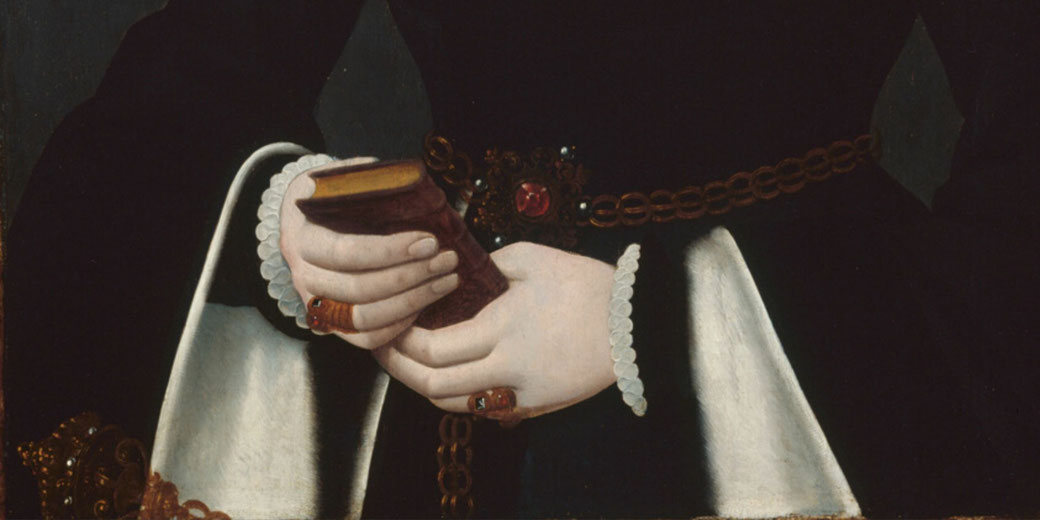
The Prayer Book Rebellion began in the summer of 1549, during a time of political uncertainty and rapid religious change in England.
King Edward VI inherited the throne on 28 January 1547 when he was just nine years old. This left the kingdom in the hands of Protestant reformers.
The new government, which was being led by the Duke of Somerset, launched a large-scale campaign to change the nation’s religion, but its policies provoked violent resistance in parts of the country.
What was the Book of Common Prayer?
Edward Seymour, Duke of Somerset and Lord Protector of England, directed reforms that aimed to remove Catholic rites and require a single form of Protestant worship.
Central to these changes was the Book of Common Prayer, a church text written by Archbishop Thomas Cranmer. The Act of Uniformity (January, 1549) made its use mandatory from Whitsunday, 9 June 1549.
It replaced the Latin rites of the Catholic Mass with English prayers and changed key parts of belief and ritual.
In regions where conservative beliefs stayed strong, particularly in the West Country, the new service provoked anger and confusion, especially among those who neither understood the religious reasons nor welcomed the loss of long-standing ceremonies.
The start of the rebellion
The rebellion began in Cornwall, a county where attachment to the old religion had remained especially strong, and where many parishioners spoke Cornish as their first language and knew very little English.
In early June 1549, shortly after the new prayer book had been formally introduced, a group assembled at Bodmin in open protest against its imposition.
This initial outbreak of resistance coincided with the first mandated use of the Book of Common Prayer in churches across England, and the discontent quickly spread across the Tamar River into neighbouring Devon.
At Sampford Courtenay, villagers restored the Latin Mass and forcibly removed the Protestant priest, which was seen as a serious escalation by those in London.
As word of the resistance spread, other parishes joined the cause, and the uprising swelled into a wider revolt that involved over 6,000 armed men who advanced eastwards across the countryside.
One of the leading figures was Humphrey Arundell, a Cornish gentleman who took command of the rebel forces with support from local figures such as Robert Welsh, a vicar from Devon.
What did the rebels demand?
Rebel leaders soon issued a list of demands, which they delivered to the king’s commissioners. They called for the immediate restoration of the Latin Mass, the return of the Six Articles of 1539, the dismissal of married clergy, and the reinstatement of papal authority.
One demand read: "We will have the Bible and all books of scripture in Latin again, for we be informed that otherwise the lay and lewd people do abuse them."
Their complaints showed rejection of the religious changes, but economic hardship also contributed to the unrest.
Severe agricultural depression had reduced incomes after repeated crop failures, and the rise in enclosure of common land (the privatisation that displaced many rural labourers) had placed severe pressure on the rural poor.
The government had recently introduced a tax on sheep, designed to limit flock growth and support grain farming, and this measure added further resentment, especially in a region dependent on pastoral agriculture.
How the government responded
In response to the growing threat, the government sent troops, although initial talks had failed to stop the violence.
Somerset dispatched royal commissioners and local gentry, who included Sir Peter Carew, to resolve the situation through talks, but their efforts only made tensions worse.
By mid-July, the rebels had encircled Exeter and laid siege to the city from 2 July to 6 August, during which they attempted to break its defences.
Inside the walls, food supplies ran low and panic spread, yet the defenders, including Mayor John Blackaller and Sir Gawen Carew, held out.
Outside the city, rebel forces maintained pressure and awaited further action from the government.
To defeat the uprising, Somerset ordered John Russell, 1st Earl of Bedford, to lead a royal army into the region.
Russell’s force included professional English soldiers and a group of foreign mercenaries, probably German Landsknechts, whose training and weapons later proved to be quite important.
In late July, Russell launched his campaign at the Battle of Fenny Bridges and achieved a victory against the rebel forces. At Clyst Heath on 5 August, government forces again defeated the rebels, killed hundreds in open combat and executed an estimated 900 captured prisoners in a single day, according to contemporary reports.
On 17 August 1549, Russell attacked the last major rebel stronghold at Sampford Courtenay, where the remaining forces suffered a final defeat.
Royal suppression of the rebellion
The aftermath of the rebellion saw many executions and severe reprisals.
Historians estimate that over 4,000 people died during the suppression, a toll that included members of the clergy as well as local landowners and ordinary villagers.
In towns and villages across Devon and Cornwall, government officials conducted investigations and often carried out punishments under martial law, which bypassed standard judicial procedures.
The scale of the response shocked even some Protestant supporters, who questioned whether such force had been necessary to restore order.
Many survivors held lasting anger against the crown and its agents, and resentment remained in local memory for generations.
However, the rebellion’s failure did not halt the religious reforms. It actually revealed how weak support for Protestantism was in parts of the kingdom.
Somerset’s failure to anticipate or contain the crisis had weakened his political position and had created an opportunity for his rivals.
In October 1549, the Council removed him from power. They arrested him around 11 October and imprisoned him in the Tower of London.
He was replaced by John Dudley, Earl of Warwick, who adopted a more practical approach to further reforms.
Under his leadership, religious change continued, but the government became more cautious in how it enforced new measures.
The Prayer Book Rebellion exposed the deep religious disagreements in Tudor England.
It demonstrated that enforced conformity could provoke violent backlash when communities felt excluded from political decisions made in London.
The government succeeded in crushing the rebellion, but it learned that authority depended on more than law and edict.