
How Pizarro ruthlessly brought down the mighty Inca empire
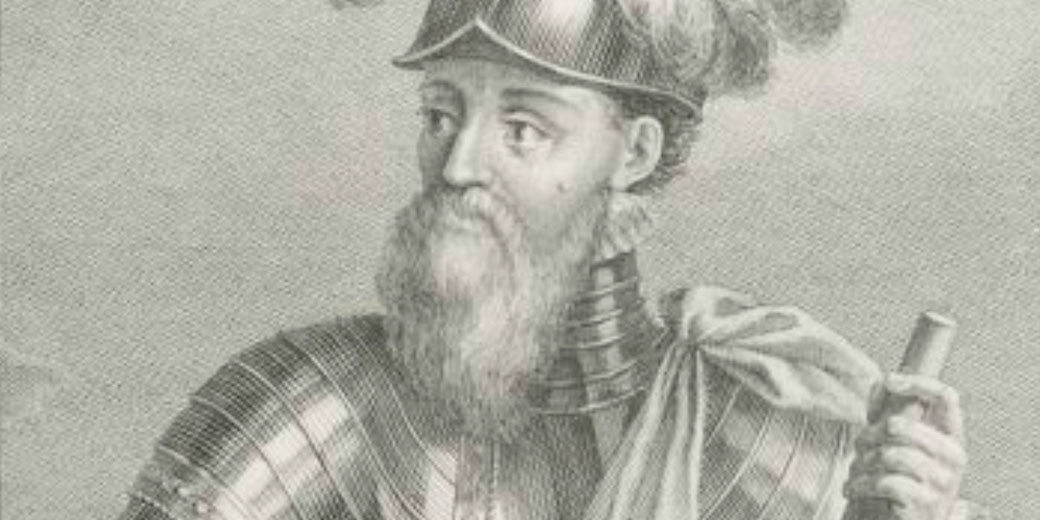
When Francisco Pizarro entered the highlands of Peru in 1532, he did not encounter a fragile society on the edge of collapse.
Instead, he faced a well organised imperial system that controlled over 4,000 kilometres of mountain terrain and held sway over millions of people.
However, by the time his conquest was complete, he had largely removed its political leaders, seized much of its wealth, and reduced many of its people to colonial subjects under foreign rule.
The making of a conquistador
Pizarro was born around 1478 in the Spanish town of Trujillo, the illegitimate son of Gonzalo Pizarro, an infantry colonel, and a local woman named Francisca González.
He spent his childhood without the privileges of nobility and never received a formal education, which left him unable to read or write.
As such, he largely relied on scribes and clerks to draft documents for him throughout his adult life.
During his early years, he worked as a swineherd and performed other low-status jobs.
Eventually, he left for the New World in 1502 and settled on the island of Hispaniola, as he hoped to find opportunities unavailable to him in Spain.
After some years of minor colonial service, he joined Vasco Núñez de Balboa’s 1513 expedition across the Isthmus of Panama, where he witnessed the Pacific Ocean for the first time.
When Balboa was later arrested and tried on the orders of Pedro Arias Dávila, Pizarro carried out the arrest and then aligned with the new governor instead.
Over the next two decades he built a reputation for being generally regarded as dependable and aggressive as a colonial enforcer.
He participated in expeditions and managed settlements in Panama, which often earned him land and Indigenous labourers.
By the early 1520s, he began to hear detailed accounts from Indigenous traders about a great kingdom to the south, where gold flowed through temples and rulers commanded large armies.
Pizarro's search for the Inca Empire
In 1524, Pizarro formed a private venture with fellow Spaniard Diego de Almagro and the priest Hernando de Luque.
Their aim was to finance exploratory voyages along the Pacific coast in search of this mysterious kingdom.
Early expeditions faltered due to storms, starvation, and attacks from local peoples, and they returned to Panama with little to show except a growing belief that a wealthy empire lay farther south.
By 1526, Pizarro reached Tumbes, a town on the northern edge of the Inca Empire.
There, according to later Spanish accounts, he observed stone buildings, advanced irrigation systems, and well-fed inhabitants dressed in fine textiles.
Indigenous messengers brought him golden ornaments and silver dishes as gifts, which reinforced his determination to return with official support.
He also took several locals with him, both to serve as guides and to help learn the Quechua language.
After he had returned to Spain in 1528, he secured a royal commission known as the Capitulación de Toledo, granted in July 1529 by King Charles I.
This decree gave him the title of Governor over lands to be conquered south of Panama, referred to as "New Castile".
The title was important and effectively required Pizarro to enforce it by successful conquest.
When he returned to the Americas in early 1531, he brought only 168 men, 27 horses, a few cannons, but had a complete confidence in his purpose.
How Pizarro conquered the Inca
t the moment of Pizarro’s arrival, the Inca Empire faced a serious internal crisis. A recent smallpox epidemic, likely introduced via coastal contact years earlier, had killed the emperor Huayna Capac around 1527 along with his designated heir, which caused a bloody succession struggle between two surviving sons, Huascar in Cusco and Atahualpa in Quito.
By the time Pizarro marched inland in 1532, Atahualpa had already defeated and captured Huascar, which consolidated his claim to the throne.
Soon after he learned of Pizarro’s presence, Atahualpa agreed to meet him at the town of Cajamarca.
On 16 November 1532, the Inca ruler entered the town with thousands of attendants, some estimates suggest as many as 7,000, all of them unarmed because they believed the Spaniards had come to offer tribute.
However, Pizarro had arranged an ambush. A Dominican friar named Vicente de Valverde, who approached Atahualpa with a Bible, demanded that he accept Christianity and Spanish rule.
When the emperor dismissed the priest and cast the book aside, Pizarro gave the order to attack.
At once, the Spaniards who had hidden themselves in buildings around the square opened fire and charged on horseback, which immediately created panic among Atahualpa’s attendants.
They slaughtered hundreds and seized the emperor. They dragged him into custody while his forces fled in chaos.
Remarkably, not a single Spanish soldier died during the confrontation. Pizarro held Atahualpa hostage and demanded a ransom.
The Inca ruler offered to fill a large room, which was traditionally described as measuring approximately 6.7 by 5.2 metres, with gold and two others with silver, in the hope of purchasing his freedom.
Over the following months, the Inca elite rapidly removed sacred artefacts from temples, palaces and treasuries, and they delivered tonnes of gold and silver to Cajamarca.
Contemporary Spanish accounts reported that the ransom eventually reached over 6,000 kilograms of gold and more than 12,000 kilograms of silver.
The treasure had been melted down and divided among the conquistadors, and Pizarro had reportedly received the largest share, with contemporary writers estimating the total at over 15.5 million pesos de oro.
Despite the payment Pizarro held a mock trial and executed Atahualpa on 26 July 1533, accusing him of plotting an uprising.
Shortly after the execution, Pizarro installed a puppet emperor named Tupac Huallpa and began the march to Cusco.
When he entered the Inca capital in November 1533, he found it largely undefended.
Spanish accounts described the city as full of stone palaces, temples, and paved streets.
Although the empire still had soldiers, the shock of Atahualpa’s death severely weakened central authority and the civil war left lasting effects that prevented a coordinated response.
Inca general Quizquiz continued resistance briefly in Cusco but, according to Spanish reports, was eventually killed by his own men during the retreat.
Later, Manco Inca Yupanqui attempted to revive resistance and launched a siege of Cusco in 1536.
His forces, which chroniclers claimed numbered over 100,000, surrounded the city and used siege towers and projectiles that they set alight.
They put sustained heavy pressure on the garrison and nearly overwhelmed the Spaniards, who held out within the city walls until reinforcements arrived.
A lack of supplies and internal rivalries among Inca factions weakened the campaign, so eventually Manco withdrew into the Vilcabamba region, where he established a remnant Inca state that held out for several decades.
Pizarro's governorship of Peru
Once secure in Cusco, Pizarro turned his attention to establishing a permanent colonial presence.
He founded the city of Lima on 18 January 1535 and chose a coastal site with access to maritime routes, fertile land and the nearby Rimac River.
He named the city "Ciudad de los Reyes" in honour of the Biblical Magi, though the name Lima quickly became more widely used.
From Lima he distributed land and Indigenous labourers to his supporters through the encomienda system, which granted Spaniards the right to take wealth and labour from the local population under the excuse of religious conversion and protection, although exploitation was widespread.
Meanwhile, relations with his former ally Diego de Almagro broke down. Almagro had been given authority over territories south of Cusco, which encouraged him to explore Chile.
When that venture failed to produce wealth, he returned north and found that Pizarro had secured all major cities and political appointments.
Resentment turned into open conflict. In 1538 their forces clashed at the Battle of Las Salinas near Cusco.
Pizarro’s men won the battle, captured Almagro, and executed him shortly afterward.
That victory brought short-term stability to Spanish rule in Peru, yet it also split loyalties among the conquistadors.
Many widely regarded Pizarro as arrogant in manner, and his conduct proved greedy when he distributed land and labour to supporters and took steps to keep the spoils of conquest to himself.
Tensions between rival factions, known as the Pizarros and the Almagristas, persisted beneath the surface.
His later years and the death of Pizarro
By 1541, Pizarro had surrounded himself with family members and loyal followers in key posts in order to protect his rule against internal threats.
However, his centralisation of power and his role in Almagro’s death ultimately left him vulnerable.
On 26 June 1541, a group of Almagro’s supporters led by Juan de Rada forced their way into his palace in Lima.
Although Pizarro fought back with sword in hand, he was stabbed repeatedly and collapsed in a pool of blood.
The assassins fled and the city fell into chaos, and local officials buried Pizarro’s body in the cathedral, where it had been unidentified for centuries.
In 1977, forensic examination identified a body thought to be his in a crypt beneath the cathedral.
Eventually royal governors reasserted control and transformed the colonial administration into the more centralised Viceroyalty of Peru.
Was Pizarro a hero or a villain ... or both?
Judgement of Pizarro depends heavily on perspective. In Spain, he brought large sums of wealth to the crown and claimed new lands for the empire.
In Peru, his actions destroyed a civilisation, brought famine and forced labour, and replaced a well organised society with a brutal colonial regime.
His tactics made systematic use of deception, relied on the seizure of leaders as hostages to extract treasure, and culminated in engineered trials that ended in execution, and these actions would not meet any modern ethical standard.
Still, he did not operate in a vacuum. The Inca Empire had already suffered internal breakdowns caused by civil war, disease and succession disputes.
Pizarro took advantage of those conditions deliberately, breaking the empire apart piece by piece rather than facing it on the battlefield as a unified power.
Contemporary critics such as Bartolomé de las Casas condemned the cruelty of such conquests, highlighting the moral cost of Spanish expansion.
Ultimately, his conquest introduced centuries of colonial rule that changed the Andes completely.
He enriched himself and his followers at a great human cost, which clearly demonstrated how a few determined invaders could unravel even the most stable imperial system by exploiting a narrow window created by disease and civil war.
They systematically manipulated rival claimants so that they failed to unite and they applied extreme brutality to intimidate opponents.
In modern Peru, his reputation continues to be a subject of debate, as national identity continues to struggle with the memory of both Inca heritage and Spanish colonisation.