
The pope as a prince: The political power of the Papal States
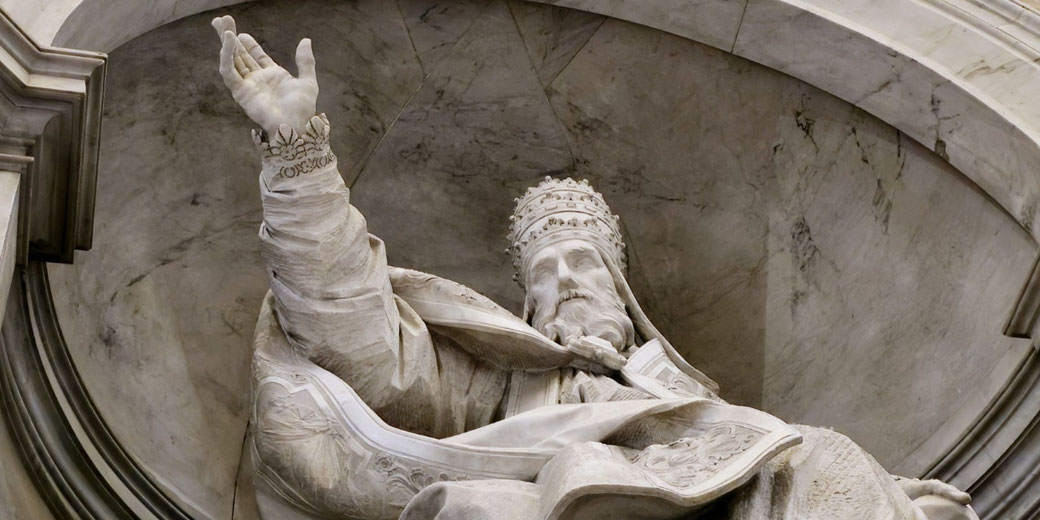
For over a thousand years, the pope generally governed as both a spiritual leader and a political ruler in his own right. As ruler of the Papal States, he usually collected taxes, issued laws, maintained armies, and controlled territory which stretched across central Italy.
From the eighth century until the fall of Rome to the forces of the Kingdom of Italy in 1870, successive popes held temporal, or worldly, power that often rivalled kings and emperors, by which it commanded obedience within the Church and across cities and provinces, as well as on battlefields.
How the Papal States were formed
After the collapse of the Western Roman Empire in 476, the Italian Peninsula soon fragmented into competing regions that were ruled by local nobles and foreign powers, especially Byzantines and Germanic invaders.
With imperial control weakened, the bishops of Rome gradually assumed wider public responsibilities.
By the late sixth century, Pope Gregory I often directed food distribution and infrastructure repairs, then organised military defence when required, especially during periods of famine or siege.
As imperial authority from Constantinople had grown increasingly remote, the papacy regularly filled the gap in administration that imperial officials had left behind, and it drew on earlier titles such as Patricius Romanorum, which implied that they had public leadership.
In 754, a major turning point arrived. Pope Stephen II secured an alliance with Pepin the Short, king of the Franks, who had recently gained legitimacy from papal endorsement.
Pepin defeated Lombard king Aistulf and granted a strip of land in central Italy to the pope.
Known as the Donation of Pepin, this gift largely formed the basis of the Papal States and provided the pope with formal territorial sovereignty.
The land included cities such as Ravenna and Perugia, though Rome itself was not part of the original donation.
This created a continuous band of papal control between the Tyrrhenian and Adriatic Seas, which at its height expanded to nearly 18,000 square miles.
To justify this authority, later popes also used the Donation of Constantine, a fake Roman imperial document that claimed Emperor Constantine had granted sovereignty over the western empire to Pope Sylvester I. Although humanist Lorenzo Valla exposed the document as a fake around 1440, it had already worked for centuries as a powerful political tool for many popes. At the same time, the pope’s position as successor to Saint Peter added religious legitimacy to his political role. As a result, the papacy came to hold a dual identity that joined religious teaching with rule like a prince.
The papacy and medieval power politics
By the eleventh century, papal involvement in secular politics had become firmly established.
At this time, the Investiture Controversy demonstrated how popes could challenge kings directly.
When Pope Gregory VII prohibited lay rulers from investing bishops with ecclesiastical authority, Emperor Henry IV resisted, so Gregory excommunicated the emperor, prompting Henry’s dramatic journey to Canossa in 1077 to seek forgiveness.
This episode illustrated how spiritual punishments could at times be used to influence political obedience.
Also, in the Papal States themselves, papal rule largely followed feudal customs, since the pope appointed governors and legates, or papal representatives, to manage provinces.
Meanwhile, the Curia worked as a central office that handled legal disputes and financial administration, and it managed communication with foreign courts.
By the thirteenth century, the Curia had developed into a well organised system that processed appeals from across Christendom.
In practice, some regions resisted papal interference, as republican communes, especially in northern cities such as Bologna and Florence, clashed with papal officials and claimed local control whenever the opportunity arose.
Florence, for example, saw prolonged conflict in particular between papal-aligned Guelfs and imperial-aligned Ghibellines.
At the same time, external threats forced the papacy to act defensively. Holy Roman Emperors frequently claimed control over northern Italy, which led to repeated military campaigns.
To counter these invasions, the popes allied with regional powers such as the Normans, whose leader Robert Guiscard helped Pope Gregory VII escape imperial forces in 1084.
Although these alliances proved unstable, they helped preserve papal independence.
In 1177, Emperor Frederick Barbarossa signed the Treaty of Venice following his defeat at Legnano in 1176, which re-established peace and affirmed papal independence, though it did not explicitly define territorial sovereignty.
So, from this point, the Papal States operated with increasing administrative detail and military preparedness.
Renaissance wealth and temporal authority
During the fifteenth and sixteenth centuries, the popes took on the role of rulers like princes with new energy.
They used wealth from Church revenues and taxation, and they funded large building projects and ordered works of art, and they strengthened defences around key towns, which often glorified their authority.
Popes such as Sixtus IV and Leo X rebuilt Rome into a centre of spiritual authority and temporal splendour.
Under Sixtus IV, construction of the Sistine Chapel began, while Julius II initiated the rebuilding of St. Peter’s Basilica.
Their use of art and architecture reinforced the pope’s role as a monarch whose authority rested on tradition and on public display.
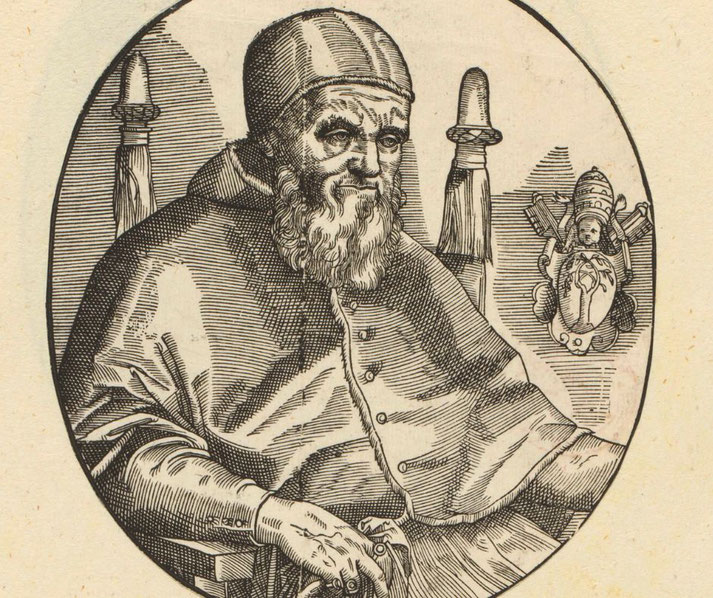
Among the most politically active popes was Alexander VI of the Borgia family. He used his office to secure power for his children, especially Cesare Borgia, who led military campaigns across central Italy.
With papal backing, Cesare seized cities such as Urbino and Forlì, defeated rival families and secured the territory.
Meanwhile, Pope Julius II led armies in person and reclaimed rebellious towns across the Papal States.
In 1506, he established the Swiss Guard, a permanent military unit that was recruited from Catholic Swiss regions, and whose main job was to protect the pope and his household.
At the same time, the papacy carried its influence across the Atlantic. After the Spanish and Portuguese had discovered new trade routes and lands, Pope Alexander VI issued the bull Inter caetera in 1493, which divided the non-European world between the two kingdoms.
The 1494 Treaty of Tordesillas confirmed this division through direct negotiations between Spain and Portugal, with limited papal involvement.
Although the treaty concerned overseas territories, it was based on earlier papal claims to moral authority over Christian rulers.
That authority, however, attracted criticism.
By the early sixteenth century, discontent over corruption and Church abuses had intensified.
Martin Luther’s condemnation of indulgences in 1517 began the Protestant Reformation, which challenged the legitimacy of papal authority in both religious and political matters.
As a result, the Catholic Church launched the Counter-Reformation, and it reasserted papal control in southern Europe and tried to restore stability in the Papal States through more disciplined rule.
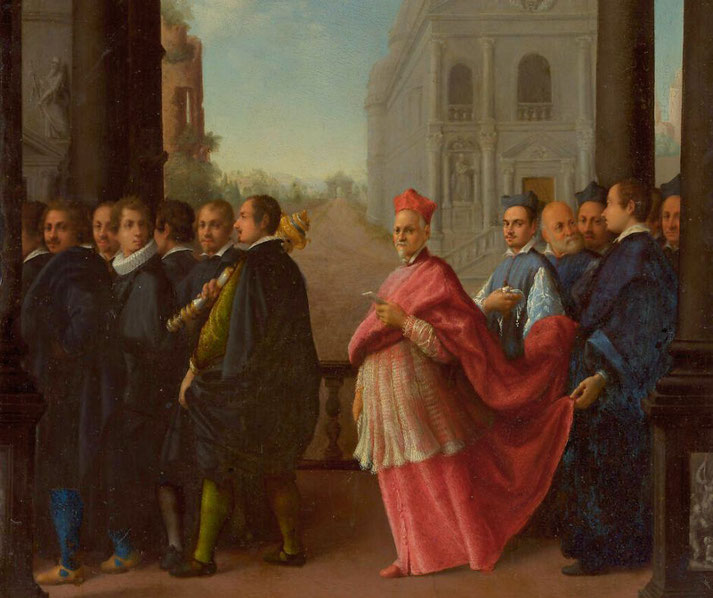
Decline and fall of the Papal States
During the eighteenth century, Enlightenment thinkers criticised feudal privileges and rule by church officials, and this criticism placed increasing pressure on the Papal States.
Internally, papal administration often stayed conservative and slow to reform, and revolutionary movements abroad that had begun to threaten the old order added to the pressure.
On 15 February 1798, French troops entered Rome, arrested Pope Pius VI, and proclaimed a Roman Republic.
French officials introduced secular laws and seized Church property, then expelled religious orders from Rome.
Pius VI died in exile the following year. Although papal rule returned in 1814 after Napoleon’s defeat, it had already suffered serious blows to its legitimacy.
In the decades that followed, nationalist movements in Italy worked to unify the peninsula under a single kingdom.
For many revolutionaries, the Papal States seemed to symbolise outdated theocracy and foreign interference.
During the 1848 revolutions, Pope Pius IX fled Rome temporarily, as a second Roman Republic formed under leaders such as Giuseppe Mazzini.
After his return under French protection, the pope opposed Italian unification and refused to yield any territory.
By 1860, the tide had turned. Victor Emmanuel II’s forces, led by Count Cavour and backed by nationalist volunteers, took control of most of the Papal States.
Although their territory had once spanned around 17,000 square miles, by this point they had already shrunk considerably.
Only Rome stayed under papal control, since for ten more years French troops that were stationed in the city shielded the pope from further attack.
On 20 September 1870, with France at war with Prussia, those troops withdrew, so Italian troops entered Rome unopposed, and the city became the capital of the newly unified Italian state.
However, Pope Pius IX rejected the legitimacy of the new government, refused to recognise the loss of his territory, and declared himself a prisoner within the Vatican.
He issued the Non Expedit, Latin for "it is not expedient," which forbade Catholics from taking part in the political institutions of the Italian kingdom.
For nearly sixty years, popes lived in self-imposed isolation, and the “Roman Question” stayed unresolved, until on 11 February 1929, the Lateran Treaty ended the dispute.
Pope Pius XI and Benito Mussolini’s government signed an agreement that created the sovereign state of Vatican City.
So, in exchange for recognising the Italian monarchy, the pope received full independence and 750 million lire in a combination of cash and government bonds.
From that point forward, the papacy abandoned territorial rule, and it kept its status as a global religious authority with far-reaching diplomatic influence.
The Lateran Treaty and the birth of Vatican City
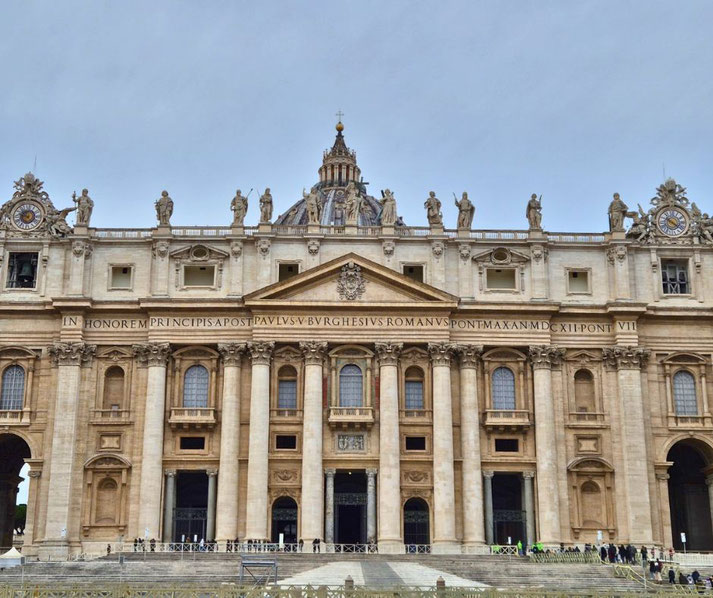
The Lateran Treaty, beyond its immediate provisions, had profound symbolic significance.
It marked a reconciliation between the Italian state and the Catholic Church, healing a wound that had festered for nearly six decades.
The birth of Vatican City, the world's smallest independent state, ensured that the Pope could exercise his spiritual duties without interference while acknowledging the realities of the modern nation-state system.